Guide to Asbestos Trust Fund Claims - (800) 291-0963

Asbestos Exposure & Ovarian Cancer

Ovarian Cancer Asbestos Exposure - MesotheliomaHelp.Center

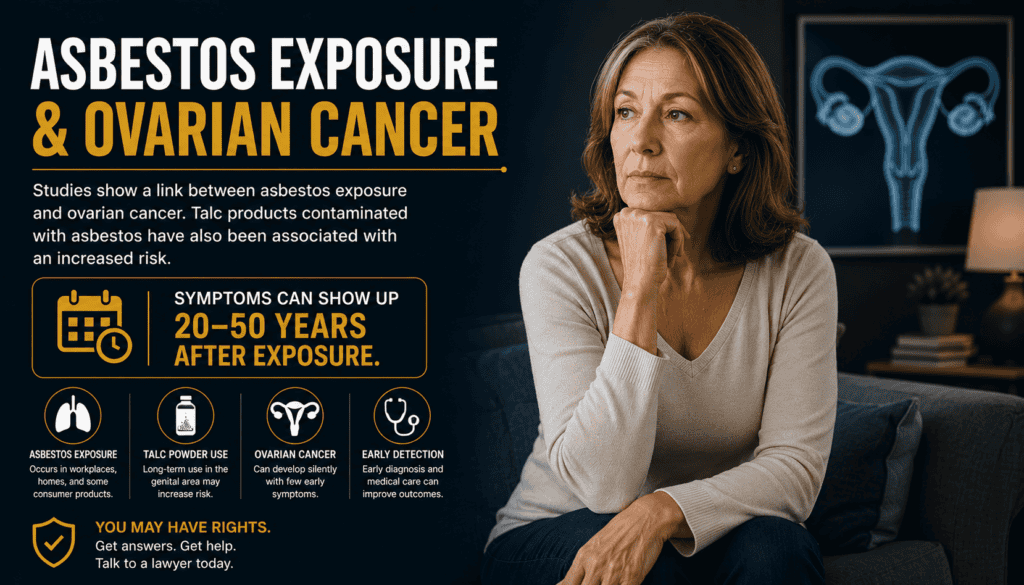
🎗️ Asbestos Exposure & Ovarian Cancer

What You’ll Learn From This Page:

  • Studies link asbestos exposure to ovarian cancer, possibly due to inhaled fibers reaching the ovaries.

  • Risk increases among women exposed directly or secondhand, particularly in certain occupations or household environments.

  • Diagnosis often occurs at later stages, as ovarian cancer symptoms are subtle and nonspecific.

  • Legal recourse includes trust fund and lawsuit claims, since ovarian cancer is recognized as asbestos-related by some trust administrators.

Understanding Ovarian Cancer and Asbestos Exposure

Ovarian cancer is a serious disease that affects the ovaries, which are part of the female reproductive system. While most ovarian cancer cases are not directly linked to asbestos exposure, research has shown that asbestos fibers can travel through the body, potentially reaching the ovaries and causing damage that may lead to cancer.

How Asbestos Exposure Can Cause Ovarian Cancer

Asbestos exposure is primarily known to cause lung cancer and mesothelioma, but there is growing evidence that it can also increase the risk of ovarian cancer. Asbestos fibers, when inhaled or ingested, can travel through the bloodstream and reach the ovaries. Over time, these fibers may cause inflammation and damage to the ovarian tissue, increasing the risk of cancer.

Though the connection between asbestos exposure and ovarian cancer is not as well-established as with mesothelioma, it remains a serious concern for those with a history of asbestos exposure. Those affected should consult healthcare professionals for early detection and treatment.

Symptoms of Ovarian Cancer Linked to Asbestos Exposure

Abdominal Pain: Persistent, dull or sharp pain in the abdomen is a common symptom. It may be caused by the growth of tumors pressing on surrounding organs or by inflammation due to asbestos fibers.

Bloating: Swelling or a feeling of fullness in the abdomen that doesn’t go away can be a sign of ovarian cancer. This discomfort may worsen over time as the cancer spreads or the ovaries are affected.

Fatigue: Extreme tiredness, even after rest, is common with ovarian cancer. It occurs as the body uses energy to fight cancer and may be compounded by other symptoms like pain or weight loss.

Unexplained Weight Loss: Rapid and unexplained weight loss can indicate ovarian cancer. It may result from the body’s inability to absorb nutrients properly due to tumor growth in the abdomen.

Frequent Urination: Feeling the need to urinate often, especially if it happens suddenly or unexpectedly, can be a sign of ovarian cancer. This symptom occurs when tumors put pressure on the bladder, affecting its function.

Changes in Bowel Habits: Constipation or diarrhea can result from ovarian cancer, especially when tumors press against the intestines. This can lead to discomfort and digestive issues.

Consulting Medical Professionals for Diagnosis and Legal Support

If you or a loved one has been exposed to asbestos and is experiencing these symptoms, it’s crucial to seek medical attention immediately. Early detection of ovarian cancer can significantly improve treatment outcomes. Additionally, individuals diagnosed with ovarian cancer due to asbestos exposure may be eligible for compensation. Legal experts specializing in asbestos-related cases can guide you through your options for seeking justice and support.


How Ovarian Cancer is Diagnosed

Exploring – Diagnosing Ovarian Cancer: Methods and Techniques

Ovarian cancer can be challenging to diagnose early, as its symptoms often mimic those of other conditions. However, a variety of diagnostic methods are used to detect ovarian cancer, especially in individuals with a history of asbestos exposure. Below are the common methods used to diagnose ovarian cancer:

Pelvic Examination
A pelvic examination is one of the first steps in diagnosing ovarian cancer. During this physical exam, a healthcare provider checks for abnormalities in the ovaries or uterus by palpating the pelvic area. This can help detect any masses or enlarged ovaries that may indicate cancer.

Ultrasound (Sonography)
An ultrasound uses sound waves to create an image of the inside of the abdomen. This non-invasive procedure helps doctors visualize the ovaries and detect abnormalities such as cysts, tumors, or any unusual growths. A transvaginal ultrasound, where the probe is inserted into the vagina, provides a closer view of the ovaries.

CT Scan (Computed Tomography)
A CT scan provides detailed cross-sectional images of the abdomen and pelvis. It helps doctors evaluate the size, shape, and location of any tumors in the ovaries or surrounding tissues. The CT scan also helps identify whether the cancer has spread to other areas of the body.

MRI Scan (Magnetic Resonance Imaging)
MRI uses powerful magnets and radio waves to create detailed images of the body’s organs and soft tissues. MRI scans are often used to assess the spread of ovarian cancer to nearby organs and tissues. It provides clearer images than a CT scan in certain cases, especially for detecting soft tissue changes.

Blood Tests (CA-125 Test)
A CA-125 blood test measures the level of a protein called cancer antigen 125, which is often elevated in women with ovarian cancer.
 While not definitive, it is used as a marker for ovarian cancer and can help monitor disease progression or recurrence. However, elevated levels can also be seen in non-cancerous conditions, so further testing is necessary.

Biopsy
A biopsy involves the removal of a small sample of tissue from the ovary or abdominal lining for analysis. This procedure is the most definitive method for diagnosing ovarian cancer. It is typically done during surgery or through a needle biopsy, depending on the location of the suspected tumor.

Laparoscopy
Laparoscopy is a minimally invasive procedure in which a small camera (laparoscope) is inserted into the abdomen through a small incision. It allows the surgeon to visually inspect the ovaries and collect tissue samples for biopsy. This method is often used to confirm the diagnosis of ovarian cancer when other imaging tests raise suspicions.

X-Ray
While not as commonly used for diagnosing ovarian cancer directly, X-rays can be used to detect complications or metastasis. For example, X-rays can reveal the spread of cancer to the lungs or bones. They are often used in combination with other imaging methods.

CT-guided Needle Biopsy
In some cases, if a tumor is difficult to reach, a CT scan can guide a needle biopsy. This allows doctors to collect a tissue sample from areas that might not be easily accessed through surgery. The tissue is then examined under a microscope to confirm the presence of cancer cells.

Diagnosing ovarian cancer involves a combination of physical exams, imaging tests, blood tests, and biopsies. If you or a loved one is experiencing symptoms associated with ovarian cancer and have a history of asbestos exposure, it’s essential to consult with a healthcare provider as early detection significantly improves treatment outcomes.


How Does Asbestos Exposure Cause Ovarian Cancer?

Asbestos exposure is a known risk factor for ovarian cancer. Though it’s less common than mesothelioma or lung cancer, studies have confirmed a strong link between asbestos fibers and the development of cancer in the ovaries. Here’s how it happens, explained in simple terms.

How Asbestos Reaches the Ovaries

  • Inhalation or swallowing: Asbestos fibers can be breathed in or swallowed from contaminated air, clothing, or products like talcum powder.

  • Travel through the body: After entering the body, fibers may migrate from the lungs or digestive system into the bloodstream or lymphatic system.

  • Direct contact: In some cases, asbestos fibers can travel through the reproductive tract and reach the ovaries directly, especially with prolonged exposure to contaminated products.

What Happens in the Ovaries

  • Fibers get lodged in the ovarian tissue.

  • The body tries to fight them off, but asbestos is durable and stays in the tissue.

  • Over time, the fibers cause chronic inflammation and cell damage.

  • This damage can lead to mutations that trigger cancer.

Why It’s a Concern

  • Ovarian cancer from asbestos may take decades to develop after exposure.

  • Women exposed through industrial work, contaminated talc products, or secondhand exposure (from family members who worked with asbestos) are most at risk.

  • It often goes undetected until it’s advanced, making awareness and early medical attention critical.

If you or someone you know has been exposed to asbestos and is experiencing symptoms like bloating, pelvic pain, or changes in menstruation, it’s important to seek medical advice and share any history of exposure.


28 Everyday Asbestos Products Linked to Ovarian Cancer in Women

1. Talcum Powder (Talc-Based Baby Powder)
Used for personal hygiene, talcum powder was often contaminated with asbestos. Daily use in the genital area allowed fibers to migrate into the ovaries, increasing cancer risk.

2. Cosmetic Powders
Face powders, body powders, and blushes sometimes contained asbestos-contaminated talc, posing long-term exposure risks to women through inhalation and dermal contact over many years.

3. Feminine Hygiene Products
Early sanitary pads and some tampons contained talc for absorption or comfort, which may have been contaminated with asbestos, putting users at risk through genital contact.

4. Diaphragm Dusting Powders
Talc-based powders used to dust diaphragms before insertion could contain asbestos, introducing fibers directly into the reproductive tract with repeated use over time.

5. Industrial Talc (Used in Manufacturing)
Women working in factories that used industrial-grade talc were exposed to airborne asbestos-contaminated dust, which could be inhaled or settle on skin and clothing.

6. Latex Gloves (Pre-1990s, Talc-Powdered)
Medical and industrial gloves were powdered with talc to prevent sticking. These gloves exposed wearers to asbestos if the talc used was contaminated.

7. Rubber and Plastic Molding Compounds
Talc used in rubber and plastic production could contain asbestos. Women working in factories faced exposure by handling or being near these heated, dust-generating materials.

8. Crayons (Older Imports)
Some children’s crayons were made with talc that tested positive for asbestos. Prolonged use, especially by children or educators, could lead to exposure.

9. Ceramic Glazes
Artists and ceramic workers may have been exposed through talc used in glazes and clays, especially during the mixing or firing process in unventilated spaces.

10. Chalk (Used in Classrooms)
Some chalks were made with talc containing asbestos. Teachers and students using these in poorly ventilated classrooms risked inhaling airborne fibers.

11. Hair Dryers (1970s)
Asbestos was used in the insulation of hand-held hair dryers. Repeated use exposed stylists and users to fibers blown directly into the breathing zone.

12. Dry Shampoo (Spray Form, Pre-1980s)
Some aerosol dry shampoos contained asbestos-contaminated talc. Women who used these sprays regularly could inhale the particles, increasing their ovarian cancer risk.

13. Foot Powders
Used inside shoes for moisture control, some foot powders contained talc tainted with asbestos. Regular use near the groin area posed risk of fiber migration.

14. Bath Powders
Often used after bathing for skin comfort, these powders were talc-based and sometimes contaminated with asbestos. Daily use increased long-term exposure to reproductive organs.

15. Body Powders for Infants
Many baby powders historically contained asbestos-laced talc. Mothers applying it during diapering were exposed directly and through airborne dust near the pelvic region.

16. Feminine Dusting Powders
These were marketed to women for personal freshness and often applied directly to the genital area. When contaminated with asbestos, they presented a direct cancer risk.

17. Deodorant Powders
Talc-based deodorant powders were common before the 1980s. Inhalation or skin contact with contaminated products contributed to long-term exposure in women.

18. Makeup Foundation Powders
Compressed or loose face powders with talc were often used daily. Asbestos-contaminated talc in these products put users at risk through facial and respiratory exposure.

19. Blush and Bronzer Powders
Applied to cheeks and face, these cosmetics often contained talc. Asbestos exposure occurred through inhalation of fine particles during daily application.

20. Eye Shadows (Powder Form)
Talc in powdered eye shadow could be contaminated with asbestos. Women applying it regularly near mucous membranes risked absorption or inhalation of fibers.

21. Body Glitter (Talc-Based)
Some body glitter products were made with talc, posing asbestos risks when applied to the chest or neck area, especially with frequent or celebratory use.

22. Talc-Used in Textile Production
Women in textile factories encountered talc as a lubricant or dye carrier. Asbestos in this talc created airborne dust that lingered in poorly ventilated areas.

23. Printing Inks and Press Powders
Women working in publishing or packaging handled talc-based press powders, which released asbestos-laden dust into the air during prolonged use on printing equipment.

24. Surgical Gloves (Pre-1980s)
Powdered surgical gloves used in hospitals may have used asbestos-contaminated talc. Nurses and medical workers were exposed during long surgical procedures and routine glove removal.

25. Pharmaceuticals (Talc-Based Tablets)
Talc was used as a binding agent in tablets. If contaminated with asbestos, regular ingestion could allow fibers to travel through the digestive tract.

26. Toothpaste (Early 1900s Formulas)
Some toothpastes used talc for abrasiveness. Inhaling the powder while brushing, or ingesting it, could expose users to asbestos if the talc was contaminated.

27. Chewing Gum (Talc-Coated)
Older chewing gum brands used talc to prevent stickiness. Women chewing these regularly may have ingested trace asbestos fibers along with the product.

28. Condoms (Talc-Coated)
Talc was once used to coat condoms for easier handling. If contaminated, women could be directly exposed during intercourse, with fibers reaching reproductive organs.

These everyday products, once trusted for personal and household use, unknowingly exposed millions of women to asbestos. Over time, this hidden danger has been linked to cases of ovarian cancer. If you or a loved one has been diagnosed, it’s important to understand your exposure history and explore potential legal and medical options.


💄 List of Makeup Products Containing Asbestos

Several makeup products—especially powder-based items—have tested positive for asbestos. The FDA and independent labs have found asbestos in cosmetics sold by popular brands and stores. These products were often marketed to teens, children, and women, increasing concerns about long-term health risks.

Below is a list of makeup products confirmed or reported to contain asbestos:


Avon Bird of Paradise Powder – A scented face powder sold as part of Avon’s classic beauty line.

Avon Skin So Soft Satin Talc Powder – A silky body powder used after bathing or shaving.

Avon Unforgettable Powder – A pressed powder compact used for facial makeup.

Beauty Plus Global Inc. City Color Bronzer (Sunset) – A shimmery bronzer; Lot No. 160634/PD-P712M.

Beauty Plus Global Inc. City Color Collection Matte Blush (Fuchsia) – A pink face blush; Lot No. 1605020/PD-840.

Beauty Plus Global Inc. Timeless Beauty Palette – A multi-shade face palette; Lot No. 1510068/PD-C864R.

Beauty Plus Global Inc. City Color Shimmer Bronzer (Caramel) – A bronzer with shimmer; Lot No. 1612112/PD-840.

Beauty Plus Global Inc. Contour Effects Palette 2 – A facial contouring set; Batch No. S1603002/PD-C1179.

Claire’s Compact Powder – A face powder sold to teens; Batch/Lot No. 07/15.

Claire’s Contour Palette – A facial contour kit; Batch/Lot No. 04/17.

Claire’s Eye Shadows – Powder eye shadow set; Batch/Lot No. 08/17.

Claire’s JoJo Siwa Makeup Set – Children’s makeup set featuring JoJo Siwa branding; Batch/Lot No. S180109.

Coty Airspun Face Powder – A loose setting powder used for decades and still available today.

IQ Toys Princess Girl’s All-in-One Deluxe Makeup Palette – A kids’ makeup set sold online.

Jmkcoz 120 Colors Eyeshadow Palette – A large makeup kit containing various powder eye shadows.

Jmkcoz Beauty Glazed Gorgeous Me Eye Shadow Tray – A large eye shadow palette sold online.

Justice Just Shine Shimmer Powder – A glittery powder marketed to preteens and sold at Justice stores.


⚠️ Additional Noteworthy Products Reported in Investigations:

Justice Just Shine Makeup Palette – Multiple components of Justice’s kids’ makeup line tested positive for asbestos.

Claire’s Glitter Eye Shadow – One of several products pulled from stores after asbestos was found.

Claire’s Pink Glitter Palette with Eyeshadow & Lip Gloss – Part of the batch pulled after FDA tests.

Claire’s Bedazzled Rainbow Heart Makeup Set – Included eye shadow and blush; also found contaminated.

Compensation for Women Diagnosed with Ovarian Cancer and Mesothelioma

Asbestos Trust Fund Claims
Companies that made asbestos products established trust funds after bankruptcy.

  • Allows women to file claims without going to court.

  • Over $30 billion available for qualifying asbestos-related cancer cases.


Personal Injury Lawsuits
Filed directly against companies responsible for asbestos exposure.

  • Seeks compensation for medical costs, pain, and lost income.

  • Most cases settle before trial, avoiding lengthy litigation.


Product Liability Claims
Targets unsafe consumer products like talc powders containing asbestos.

  • Focuses on failure to warn and defective product design.

  • Common in ovarian cancer cases tied to daily talc use.


Class Action or Mass Tort Lawsuits
Groups similar claims from many women harmed by the same product.

  • Efficient legal process for large-scale exposure cases.

  • Can result in global settlements from manufacturers.


Wrongful Death Lawsuits
Filed by surviving family members after a loved one passes away.

  • Covers funeral expenses, loss of support, and emotional suffering.

  • Must be filed within the statute of limitations.


Veterans Affairs (VA) Claims
For women exposed to asbestos during military service.

  • May qualify for monthly VA compensation and healthcare.

  • Survivor benefits available through Dependency and Indemnity Compensation (DIC).


Workers’ Compensation Claims
For women exposed to asbestos in the workplace.

  • Provides medical coverage and wage replacement.

  • Also includes survivor benefits for dependents in fatal cases.


Multidistrict Litigation (MDL) Participation
Some ovarian cancer lawsuits involving talc have been consolidated under MDLs.

  • Centralized court process allows faster handling of many similar claims.

  • Offers consistent rulings and may lead to global settlements.


Talk to a Live Person!

Contact a mesothelioma lawyer today for a free, no-obligation case evaluation. 

Call 800.291.0963 to find out if you have a valid claim.


Find Out If You Qualify Today!

25 Years Working With Diagnosed Mesothelioma Victims!

Our Mesothelioma lawyers work on a contingency fee basis.

This means NO MONEY OUT OF POCKET EXPENSES by the asbestos victims or their families. You will find the contingency fees to be among the lowest in the country.

Talk to a real live person!
Contact a mesothelioma lawyer today for a free, no-obligation case evaluation. 

Call (800) 291-0963 to find out if you have a valid claim.

Free Mesothelioma Case Evaluation

Get Answers From Expert Mesothelioma Attorneys