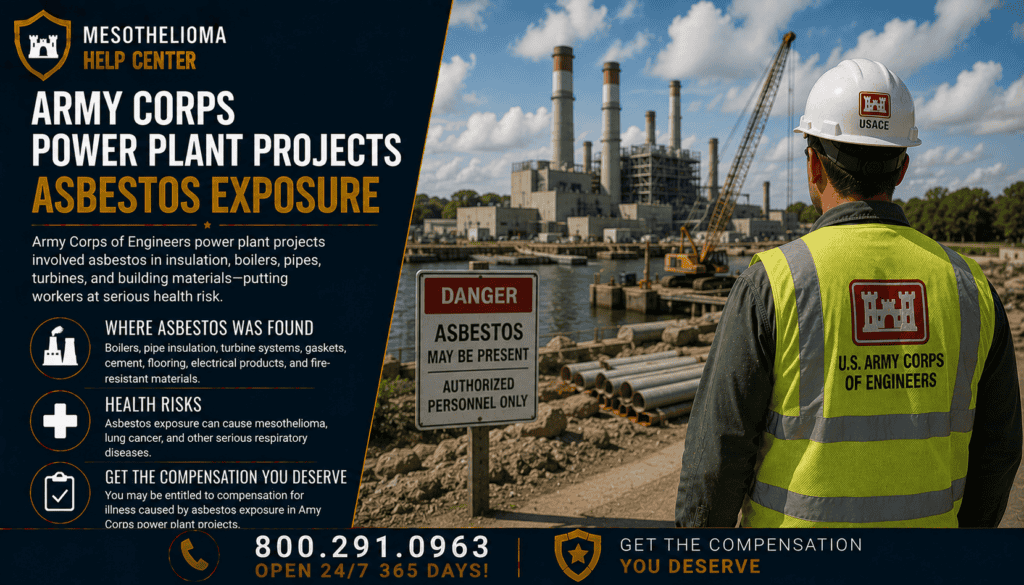
Army Corps Power Plant Projects Asbestos Exposure
U.S. Army Corps of Engineers power plant projects may have involved construction, engineering, inspection, operation support, modernization, and maintenance of facilities containing boilers, turbines, generators, electrical systems, pumps, valves, piping, and other high-temperature equipment. Depending on the facility, manufacturer, contractor, supplier, material, and era, some power plant systems may have incorporated asbestos-containing insulation, gaskets, packing, fireproofing, cement products, or other heat-resistant materials.
Working on or visiting an Army Corps power plant project does not automatically establish asbestos exposure. A meaningful investigation should identify the specific facility, project dates, work duties, equipment, contractors, renovation history, and whether suspect asbestos-containing materials were cut, removed, scraped, drilled, repaired, replaced, or otherwise disturbed.
For broader context, see the U.S. Army Corps of Engineers Asbestos Exposure guide and the Army Corps of Engineers Projects and Facilities Asbestos Exposure hub.
⚡ Army Corps Power Plant Projects and Asbestos
Power plants combine extensive mechanical, electrical, steam, and utility systems. Historically, heat-resistant materials were widely used around high-temperature equipment and piping, and some of those products contained asbestos.
Asbestos content varied by product, manufacturer, contractor, facility, application, and installation date. The presence of older power-generation equipment alone is not proof that asbestos was present or disturbed.
🏭 Power Plant Areas and Systems to Investigate
Relevant areas may include boiler rooms, turbine and generator spaces, mechanical rooms, control rooms, electrical rooms, pump areas, pipe galleries, maintenance shops, utility tunnels, and equipment-support buildings.
Project records can help determine whether Army Corps personnel were involved in construction, inspection, engineering, repair, modernization, or other work in these areas.
⚠️ How Asbestos Exposure May Have Occurred
Potential exposure could occur during construction, inspection, maintenance, overhaul, renovation, or demolition when asbestos-containing thermal insulation, gaskets, packing, fireproofing, refractory products, or other materials were disturbed.
Bystander exposure may also be relevant when engineers, inspectors, electricians, maintenance personnel, or other workers were near trades removing insulation, opening equipment, replacing gaskets, repairing piping, or performing demolition.
🧱 Materials and Equipment to Investigate
| Power Plant Area | Potential Materials or Components to Investigate |
|---|---|
| Boilers and steam systems | Thermal insulation, insulating cement, refractory products, gaskets, and pipe coverings |
| Turbines and generators | Historical insulation, gaskets, electrical barriers, and heat-resistant components |
| Pumps and valves | Gaskets, packing, seals, and connected insulated piping |
| Electrical systems | Heat-resistant boards, arc barriers, wiring insulation, and nearby fireproofing |
| Buildings and utility spaces | Fireproofing, cement products, flooring, ceiling materials, and pipe insulation |
These categories were not universally asbestos-containing. Manufacturer, model, product, supplier, contractor, facility, application, and date should be investigated before concluding asbestos was present.
Related equipment pages include Army Corps boiler equipment, generator equipment, and valve equipment.
🛠️ Maintenance, Repair, and Renovation Exposure
Power plant maintenance may involve removing thermal insulation, opening boilers, replacing flange gaskets, repacking valves, repairing generators, servicing electrical systems, and dismantling older equipment. Renovation and modernization projects can also disturb asbestos-containing materials installed decades earlier.
Relevant work histories may overlap with Army Corps maintenance workers and Army Corps electricians, depending on the individual’s duties and proximity to repair work.
📋 Evidence to Reconstruct Exposure
Useful evidence may include:
- DD-214 and military personnel records
- Duty stations, project assignments, and facility records
- Construction plans, specifications, and renovation files
- Mechanical, electrical, and piping drawings
- Equipment manufacturer, model, and serial-number records
- Technical manuals, parts catalogs, and maintenance instructions
- Work orders, outage records, repair logs, and contractor files
- Procurement, supplier, and product records
- Coworker, contractor, and supervisor statements
- Photographs and medical records
🫁 Asbestos-Related Health Risks
Inhaling asbestos fibers can cause mesothelioma, lung cancer, and asbestosis. These diseases may develop decades after exposure.
A diagnosis does not by itself identify an Army Corps power plant project as the exposure source. Military, civilian, household, and environmental exposure histories should be reviewed together.
Need help now? If you are investigating possible asbestos exposure involving an Army Corps power plant project, Call 800.291.0963, use our 24/7 live chat, or Submit Your Case.
⚖️ Legal and Benefits Options
A veteran or worker diagnosed with mesothelioma or asbestos-related lung cancer after work involving an Army Corps power plant project may be able to investigate legal claims, asbestos trust claims, or veterans benefits depending on the evidence and individual circumstances.
Eligibility depends on service and work history, diagnosis, exposure evidence, responsible parties, jurisdiction, and applicable filing deadlines. Work at a power plant alone does not establish asbestos exposure, liability, or compensation eligibility.
❓ Frequently Asked Questions
Did Army Corps power plant projects involve asbestos?
Some older power plant equipment and construction materials may have contained asbestos, but this varied by facility, manufacturer, contractor, product, and era.
Could boiler insulation contain asbestos?
Some historical boiler and steam-system insulation products contained asbestos. The specific product and installation period should be investigated.
Could turbines and generators contain asbestos materials?
Some historical power-generation equipment used asbestos-containing gaskets, insulation, electrical materials, or other heat-resistant components, depending on manufacturer and model.
Could power plant piping create an exposure pathway?
Potentially. Some older steam and high-temperature piping used asbestos-containing insulation and flange gaskets that could release fibers if disturbed.
Could inspectors or engineers have bystander exposure?
Potentially. Personnel near insulation removal, equipment overhaul, demolition, or other dusty maintenance could encounter airborne fibers if asbestos-containing materials were disturbed.
What records can identify asbestos products at a power plant?
Construction specifications, equipment manuals, procurement records, contractor files, maintenance logs, renovation documents, photographs, and witness statements can be useful.
Does working at an older power plant prove asbestos exposure?
No. Investigators need evidence identifying specific asbestos-containing materials and showing how the individual may have encountered disturbed material.
Can someone with mesothelioma investigate power plant exposure?
Yes. Project records, equipment histories, work assignments, product evidence, witnesses, and medical records can help reconstruct possible exposure.
☎️ Help Investigating Army Corps Power Plant Projects Asbestos Exposure
If you or a family member worked on an Army Corps power plant project and later developed mesothelioma or asbestos-related lung cancer, an investigation can examine the facility, boilers, turbines, generators, piping, pumps, valves, insulation, contractors, project records, coworkers, service records, and medical evidence to help reconstruct possible exposure.
Call 800.291.0963 to discuss an Army Corps power plant project and asbestos exposure history. Live chat is available 24/7, 365 days a year. You can also Submit Your Case online.
There is no guarantee that a diagnosis or work history will qualify for compensation or benefits. Eligibility, liability, and filing deadlines depend on the individual facts, evidence, responsible parties, jurisdiction, and applicable rules.
⚕️ Legal & Medical Information Disclaimer
This page provides general educational information and is not medical or legal advice. It does not establish diagnosis, asbestos exposure, causation, liability, eligibility, or compensation. Consult qualified medical and legal professionals for guidance specific to your situation.