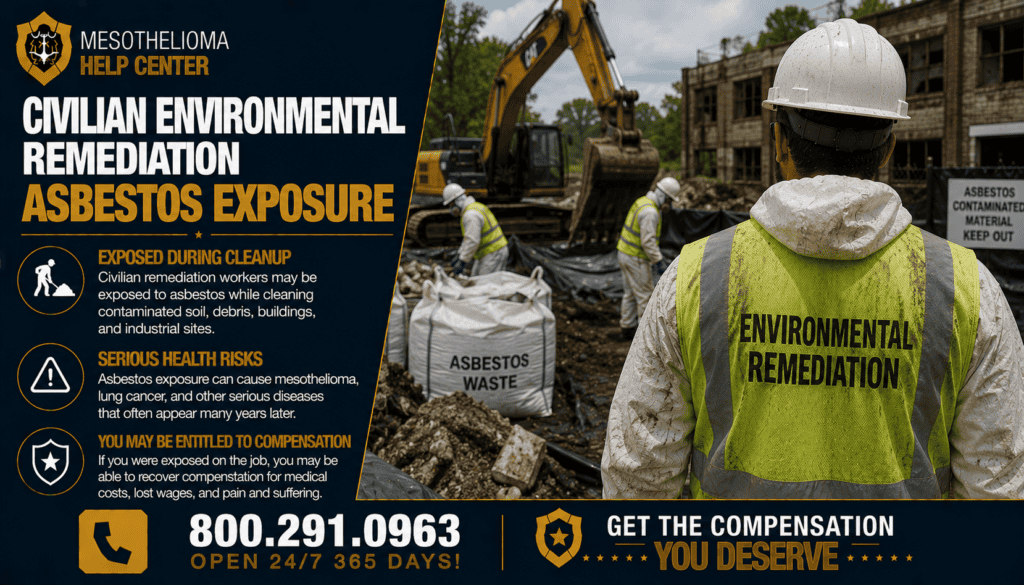
🌎 Civilian Environmental Remediation Asbestos Exposure
Civilian environmental remediation contractors may encounter asbestos while assessing contaminated properties, removing damaged building materials, excavating affected soil, cleaning disaster debris or restoring industrial and military sites. Exposure risk can increase when old asbestos-containing material is broken, weathered, crushed, cut or moved and fibers become airborne.
Remediation work does not automatically mean asbestos exposure occurred. A reliable history identifies the project, contaminants, work zone, tasks, materials, controls and records for the relevant dates.
🧭 On This Page
- Where remediation exposure may occur
- Remediation tasks that may disturb asbestos
- Materials and debris involved
- Worker roles with possible contact
- Safety controls and exposure limits
- Health and household risks
- How to document remediation work
- Lawsuits, trusts and compensation
- Frequently asked questions
🏭 Where Remediation Exposure May Occur
Projects may involve abandoned factories, power plants, refineries, shipyards, military facilities, schools, hospitals, warehouses, damaged residences and contaminated land. Superfund and other cleanup sites can include aging structures, buried debris or waste from earlier industrial operations.
EPA explains that asbestos contamination at Superfund sites may be addressed through removal or remediation programs using risk-based site evaluation. The presence and response vary by site; a cleanup designation alone does not establish a worker’s personal exposure.
The Civilian Contractor Jobs and Occupations hub provides the broader trade structure. The Civilian Contractors Asbestos Exposure main guide connects occupations with sites, products and claims.
🚧 Remediation Tasks That May Disturb Asbestos
Potentially relevant work can include site surveys, sampling support, selective demolition, insulation removal, debris sorting, soil excavation, waste packaging, truck loading, equipment decontamination and final cleaning. Workers may also have entered an area before asbestos was identified or while another contractor disturbed material nearby.
Questions to document include:
- Was the material dry, damaged, friable or visibly dusty?
- Was it cut, scraped, drilled, crushed, excavated or swept?
- Did heavy equipment break building debris or contaminated soil?
- Were wet methods, local exhaust or containment used?
- Were workers inside a negative-pressure enclosure or open outdoor area?
- Was air monitoring performed, and are results available?
- How were clothing, respirators, tools and vehicles decontaminated?
🧱 Materials and Debris Involved
Older sites may contain pipe and boiler insulation, sprayed fireproofing, ceiling and floor products, cement panels, roofing, gaskets, packing, friction materials and electrical insulation. Disaster debris can combine several products, making visual identification unreliable.
The Civilian Contractor Asbestos Products Exposure hub organizes material categories. The Contractor Equipment and Machinery hub covers pumps, boilers, valves, generators and heavy equipment.
Not every older product contained asbestos. Laboratory analysis, project surveys, specifications and disposal records are more reliable than appearance.
👷 Worker Roles With Possible Contact
Remediation teams can include abatement workers, equipment operators, laborers, industrial hygienists, environmental technicians, inspectors, engineers, truck drivers, waste handlers, mechanics and supervisors. A person who did not remove asbestos directly may still have worked in a contaminated zone or maintained dusty equipment.
Exposure must be evaluated by actual duties, location and controls—not by job title alone. The Civilian Disaster Cleanup Asbestos Exposure guide addresses emergency debris work, while the Civilian Demolition Contractors guide focuses on demolition.
📞 Need Help Reviewing an Environmental Cleanup Project?
If mesothelioma or asbestos-related lung cancer followed remediation work, a focused review can organize the sites, tasks, materials, contractors and safety records involved.
Call 800.291.0963, use our live chat 24/7/365 or tell us about the cleanup work through the contact form for a free, confidential review.
🦺 Safety Controls and Exposure Limits
OSHA’s asbestos construction standard addresses regulated areas, exposure assessment, engineering controls, respiratory protection, protective clothing, hygiene, training, medical surveillance and recordkeeping for covered work. The applicable requirements depend on the activity and exposure conditions.
EPA warns that improper removal can increase exposure and recommends trained and accredited professionals for asbestos removal. Current workers should follow project plans, applicable regulations and competent-person directions rather than relying on general website instructions.
Useful historical records can include air-monitoring results, negative-exposure assessments, respiratory-protection records, fit tests, training certificates, daily logs, waste manifests and incident reports. The absence of a remembered warning does not prove that monitoring was or was not performed.
🩺 Health and Household Risks
Inhaling asbestos fibers can increase the risk of mesothelioma, lung cancer, asbestosis and other pleural disease. Illness may appear decades after exposure. Exposure does not mean disease is certain, and symptoms require professional medical evaluation.
Former remediation workers should tell clinicians about cleanup sites, dust-producing duties and approximate dates. The Civilian Contractor Asbestos Exposure Health Risks guide explains the major conditions.
Fibers could also be carried home on clothing, boots, tools or vehicles when decontamination was inadequate. The Civilian Contractor Secondhand Asbestos Exposure guide helps document household routines.
📋 How to Document Remediation Work
Create one entry for each project and record:
- Site name, address, owner and prime contractor.
- Subcontractor, union, job title and dates.
- Contaminants listed in the project scope.
- Buildings, zones, grids or work areas entered.
- Materials disturbed and equipment operated.
- PPE, respirators, showers and decontamination procedures.
- Air monitoring, sampling and waste records.
- Coworkers, supervisors and safety personnel.
- Medical symptoms, testing and diagnosis dates.
Preserve pay records, contracts, site plans, photographs, training cards, certifications, daily logs and medical documents. The Civilian Contractor Asbestos Exposure Timeline provides a chronological framework.
Do not return to a contaminated site or collect suspected material as evidence.
⚖️ Lawsuits, Trusts and Compensation
An investigation may consider manufacturers, suppliers, contractors, premises owners and other entities. Liability depends on evidence and applicable law; participation in a cleanup does not automatically establish a claim.
The Civilian Contractor Mesothelioma Lawsuit guide explains civil claims. The Civilian Contractor Asbestos Trust Fund Claims guide explains trust eligibility.
Workers’ compensation and governmental notice rules may also require review. State deadlines can apply after diagnosis or death, so consult the Civilian Contractor Asbestos Statute of Limitations guide and obtain case-specific advice promptly.
❓ Frequently Asked Questions
Does environmental remediation always involve asbestos?
No. Projects address many contaminants. Project surveys, scopes, sampling and waste records help confirm whether asbestos was present.
Can equipment operators have exposure?
Potentially, when machinery disturbed contaminated structures, debris or soil. Cab condition, filtration, task duration and monitoring are relevant.
Do respirators prove there was no exposure?
No. Respirators are one part of a control program. Selection, fit, use, maintenance and surrounding controls matter.
What if the contractor entered before asbestos was identified?
Document the dates, tasks, work zones, later survey results and witnesses. A professional review can evaluate the evidence.
Can dust be carried home?
Yes, particularly when clothing, tools or vehicles were not properly decontaminated. Household contact must be evaluated individually.
Should a worker revisit the site for evidence?
No. Preserve existing records and photographs. Do not enter a restricted site or disturb suspected asbestos.
🚀 Reconstruct the Cleanup Site Before Records Disappear
Remediation projects change quickly, and contractors, work zones and waste records can become difficult to trace. A prompt review can connect the diagnosis with the site, duties, materials, safety records and responsible sources.
Call 800.291.0963 now, use our live chat any time—24/7/365—or submit the remediation work history through our contact form for a free, confidential case review.