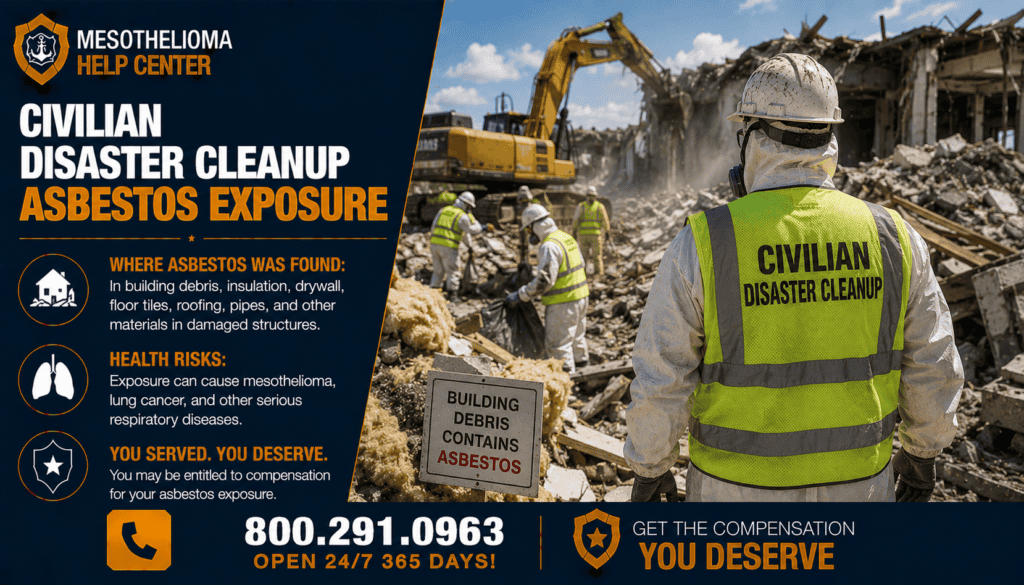
🌪️ Civilian Disaster Cleanup Asbestos Exposure
Civilian disaster cleanup workers may encounter asbestos after hurricanes, floods, tornadoes, wildfires, earthquakes, explosions or structural collapse damage older buildings. Broken materials can become mixed with ash, mud and debris, making asbestos difficult to recognize and increasing the chance that fibers become airborne during demolition, sorting, loading or cleanup.
Disaster deployment alone does not prove asbestos exposure. A reliable history identifies the event, location, buildings, dates, tasks, materials, protective measures and records.
🧭 On This Page
- Disasters and cleanup settings
- Cleanup tasks that may disturb asbestos
- Damaged materials, ash and debris
- Workers and equipment involved
- Safety controls and decontamination
- Health and household exposure risks
- How to document disaster work
- Lawsuits, trusts and compensation
- Frequently asked questions
🏚️ Disasters and Cleanup Settings
Cleanup can occur in damaged homes, schools, hospitals, warehouses, factories, military facilities and utility buildings. Emergency conditions may require rapid entry before normal surveys and records are readily available.
EPA advises that damaged buildings should be examined for asbestos before cleanup activities when possible. Its disaster guidance addresses debris management, demolition notifications and trained personnel. The exact requirements depend on the structure, event and federal, state and local rules.
The Civilian Contractor Jobs and Occupations hub provides the broader occupational structure. The Civilian Contractors Asbestos Exposure main guide connects jobs with sites, equipment, products and claims.
🚧 Cleanup Tasks That May Disturb Asbestos
Potentially relevant tasks include emergency demolition, debris removal, muck-out work, ash cleanup, cutting collapsed systems, clearing roads, loading trucks, repairing utilities, restoring mechanical rooms and cleaning vehicles or equipment.
Workers may disturb material directly or work beside another crew. Questions include whether debris was wet or dry, whether visible dust was present, which buildings were involved, how long the work continued and whether asbestos specialists evaluated the area.
The Civilian Demolition Contractors Asbestos Exposure guide focuses on structural demolition. The Civilian Environmental Remediation Asbestos Exposure guide addresses planned remediation.
🧱 Damaged Materials, Ash and Debris
Older structures may contain pipe and boiler insulation, fireproofing, ceiling and floor materials, cement products, roofing, gaskets, packing and electrical insulation. Fire, wind, water and collapse can break these products and mix them with other hazards such as silica, lead, mold, fuel and sharp debris.
Appearance cannot confirm asbestos. Surveys, samples, building records and waste documentation provide better evidence. The Civilian Contractor Asbestos Products Exposure hub organizes product categories.
📞 Need Help Reviewing Disaster Cleanup Exposure?
If mesothelioma or asbestos-related lung cancer followed disaster recovery work, a focused review can organize the event, sites, contractors, debris, equipment and safety records.
Call 800.291.0963, use our live chat 24/7/365 or tell us about the cleanup deployment through the contact form for a free, confidential review.
🚜 Workers and Equipment Involved
Teams may include laborers, demolition crews, equipment operators, truck drivers, utility workers, mechanics, inspectors, environmental technicians, emergency responders and supervisors. Volunteers and temporary workers may have less familiarity with site hazards.
Excavators, loaders, bulldozers, skid steers, sweepers and trucks can crush or transport contaminated debris. Cab condition, filtration, open windows, maintenance and cleaning practices may affect the exposure history.
The Contractor Equipment and Machinery Asbestos Exposure hub helps identify machinery-related pathways. Job title or equipment presence alone does not prove exposure.
🦺 Safety Controls and Decontamination
OSHA disaster resources identify asbestos among hazards that recovery workers may encounter. Workers required to remove asbestos-containing material need training appropriate to the class of work under applicable asbestos standards.
Controls may include hazard assessment, restricted areas, wet methods, dust suppression, properly selected respiratory protection, protective clothing, hygiene facilities, air monitoring and controlled waste handling. PPE must match the hazards and be correctly selected, fitted and maintained.
EPA warns against sweeping or ordinary vacuuming of suspected asbestos debris because these actions can make fibers airborne. Current workers should follow incident command, qualified safety personnel and applicable regulatory requirements rather than general website instructions.
🩺 Health and Household Exposure Risks
Breathing airborne asbestos fibers can increase the risk of mesothelioma, lung cancer, asbestosis and other pleural disease. Symptoms may not appear for decades. Exposure does not mean disease is certain.
Former cleanup workers should tell clinicians about the disaster, locations, tasks, dust conditions and approximate dates. The Civilian Contractor Asbestos Exposure Health Risks guide explains major conditions.
Contaminated clothing, boots, tools or vehicles may also carry dust home. The Civilian Contractor Secondhand Asbestos Exposure guide helps document family contact.
📋 How to Document Disaster Work
Record:
- Disaster name, date, city and assigned zone.
- Employer, agency, contractor, union and supervisor.
- Buildings, streets or facilities entered.
- Duties, shift lengths and deployment duration.
- Materials, ash, mud and debris handled.
- Machinery and vehicles operated or cleaned.
- Respirators, protective clothing and decontamination.
- Air sampling, incident logs and waste records.
- Coworkers who can confirm conditions.
- Medical symptoms, testing and diagnosis dates.
Preserve deployment orders, contracts, pay records, badges, photographs, daily logs, training records and medical documents. Use the Civilian Contractor Asbestos Exposure Timeline to organize events. Do not revisit dangerous areas or collect debris.
⚖️ Lawsuits, Trusts and Compensation
An investigation may consider product manufacturers, suppliers, contractors, premises owners and other entities. Liability depends on evidence and governing law; participation in disaster cleanup does not automatically create a claim.
The Civilian Contractor Mesothelioma Lawsuit guide explains civil claims. The Civilian Contractor Asbestos Trust Fund Claims guide covers trust eligibility.
Workers’ compensation and governmental notice rules may also apply. State deadlines can run after diagnosis or death, so review the Civilian Contractor Asbestos Statute of Limitations guide promptly.
❓ Frequently Asked Questions
Can disaster debris contain asbestos?
Yes, particularly when older structures are damaged. Testing and building records are needed to identify specific material.
Does wearing a dust mask prove adequate protection?
No. Respiratory protection must be selected, fitted and used for the hazard under an appropriate program.
Can heavy-equipment operators be exposed?
Potentially, when machinery crushes or moves contaminated debris. Cab condition, dust controls and duration matter.
What if the worker was a volunteer?
Document the sponsoring organization, assignment, site, dates, tasks and witnesses. Volunteer status does not establish or eliminate exposure.
Can cleanup dust be carried home?
Yes, when clothing, tools or vehicles are not properly decontaminated. Household exposure requires individual evaluation.
Should debris be saved as evidence?
No. Do not handle or collect suspected asbestos. Preserve records and photographs instead.
🚀 Preserve the Disaster Deployment Before Details Disappear
Emergency work moves quickly, and contractors, zones and debris records can become difficult to trace. A prompt review can connect the diagnosis with the event, duties, buildings, safety controls and responsible sources.
Call 800.291.0963 now, use our live chat any time—24/7/365—or submit the disaster cleanup history through our contact form for a free, confidential case review.