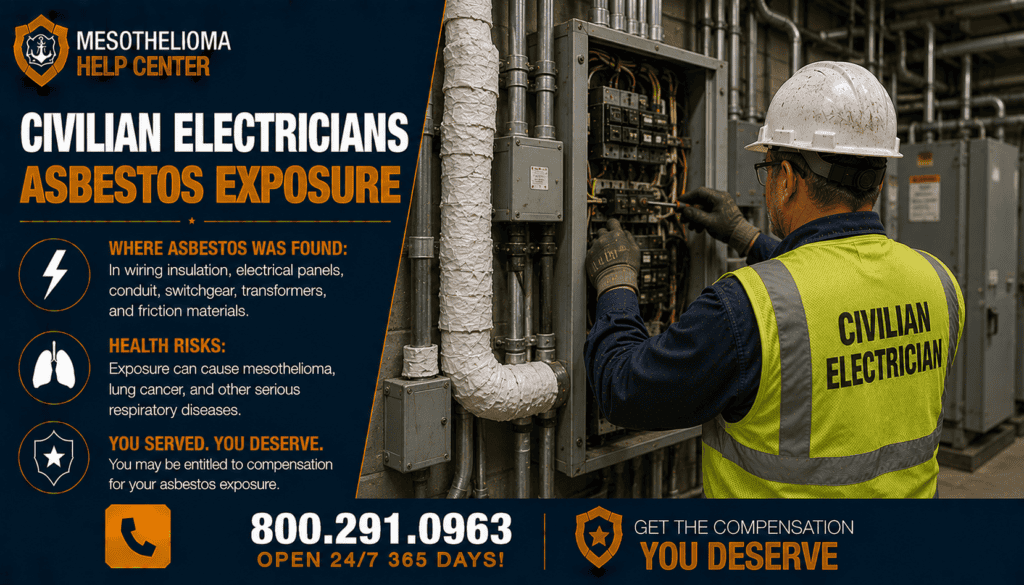
⚡ Civilian Electricians Asbestos Exposure
Civilian electricians may have encountered asbestos while installing, repairing or upgrading electrical systems in older buildings, industrial plants, shipyards and military facilities. Potential exposure could occur when workers opened walls and ceilings, drilled through fireproofed surfaces, entered dusty mechanical spaces or serviced older heat-resistant electrical equipment.
An electrician’s job title does not establish asbestos exposure. Construction electricians, maintenance electricians, linemen, motor-repair workers and instrumentation technicians perform different tasks. A reliable history identifies the employer, facility, dates, electrical systems, building materials, nearby trades and protective measures involved.
🧭 On This Page
- Electrical jobs and work settings
- Tasks that may disturb asbestos
- Electrical components and heat-resistant materials
- Walls, ceilings and nearby trades
- Planning, training and protective controls
- Health and household exposure risks
- How to document electrical work
- Lawsuits, trusts and compensation
- Frequently asked questions
🏭 Electrical Jobs and Work Settings
Civilian electricians work for electrical contractors, manufacturers, utilities, public agencies, shipyards, industrial plants and government contractors. Assignments may include new construction, facility maintenance, shutdowns, modernization, emergency repair and equipment overhaul.
Potentially relevant settings include power plants, refineries, factories, shipyards, aircraft hangars, military bases, hospitals, schools, office buildings, apartment complexes and utility tunnels. Some electricians move from project to project; others spend decades maintaining one facility.
Titles can include inside wireman, construction electrician, maintenance electrician, industrial electrician, electrical mechanic, motor-repair technician, instrumentation technician, cable installer and electrical foreman. The title is less important than the systems and materials actually handled.
The Civilian Contractor Jobs and Occupations hub organizes related occupations. The Civilian Contractors Asbestos Exposure main guide connects job duties with buildings, equipment, products, health risks and claims.
🛠️ Tasks That May Disturb Asbestos
Electricians often need to reach concealed spaces. Pulling cable or installing conduit may require cutting, drilling or enlarging openings in walls, ceilings and floors. If those assemblies contain asbestos, the task could release fibers.
Activities that may require investigation include:
- Drilling through fireproofing, cement board or wall systems.
- Removing ceiling tiles to access cable trays and junction boxes.
- Working in plenums containing damaged insulation or debris.
- Cutting chases for conduit in older walls or floors.
- Installing fixtures near sprayed surfacing material.
- Repairing panels, switchgear, motors or generators containing legacy components.
- Working beside demolition, insulation or maintenance crews.
- Cleaning dust after renovation or electrical replacement.
An electrician may disturb material directly or remain in the same enclosed area while another trade performs dusty work. The material’s condition, method of disturbance, distance, ventilation and duration help define the history. Electrical work in an old building does not by itself prove exposure.
🔌 Electrical Components and Heat-Resistant Materials
Because asbestos resisted heat and fire, it was historically used in some electrical and building products. Potential categories include certain wire or cable insulation, arc chutes, panel barriers, terminal boards, heat shields, insulating papers, tapes and electrical equipment gaskets.
Older switchgear, generators, motors, transformers and control equipment may have incorporated heat-resistant parts. Maintenance could involve opening housings, removing degraded barriers, cleaning dust or replacing gaskets. Component use varied by manufacturer, model, voltage, application and production period.
Not every older wire, panel or electrical device contained asbestos. Identification should rely on equipment manuals, parts catalogs, specifications, labels, safety data, procurement records, laboratory results or knowledgeable witnesses. Color, texture and age alone are not enough.
The Civilian Contractor Asbestos Products Exposure hub organizes product categories. The Contractor Equipment and Machinery Asbestos Exposure hub provides equipment context, while the Civilian Contractor Equipment Manufacturers Asbestos Use guide helps structure manufacturer research.
📞 Need Help Reviewing an Electrician’s Exposure History?
Project records, panel schedules, equipment manuals and coworker knowledge may connect a diagnosis with particular buildings, electrical systems and asbestos materials.
Call 800.291.0963, use our live chat 24/7/365 or tell us about the electrical work through the contact form for a free, confidential review.
🧱 Walls, Ceilings and Nearby Trades
For many electricians, the possible asbestos source was the building rather than the electrical component. Cable runs may pass above suspended ceilings, behind fire-rated walls, through boiler rooms or alongside insulated piping. New panels and conduits may be installed where older finishes must first be removed.
Potential building materials include sprayed fireproofing, plaster, joint compounds, ceiling products, floor tile and mastics, cement board and thermal-system insulation. Whether any particular material contained asbestos must be confirmed.
Nearby trades can be important. Insulators may strip pipe covering, demolition crews may remove walls, and maintenance workers may open equipment while electricians remain in the same work zone. Shutdowns and emergency repairs can bring many contractors into compact spaces at the same time.
The Civilian Contractor Buildings and Construction Asbestos Exposure hub explains building-related exposure pathways. The Civilian Maintenance Workers Asbestos Exposure guide covers overlapping facility assignments. The Civilian Demolition Contractors Asbestos Exposure guide may apply when electrical removal occurred during teardown.
🦺 Planning, Training and Protective Controls
Electrical lockout and shock protection address electrical hazards; they do not replace asbestos controls. Before cutting or drilling older building materials, current workers should review available asbestos surveys, labels, specifications and work permits.
EPA’s asbestos training guidance gives an example of special operations-and-maintenance training for work involving installation of electrical conduit in an air plenum containing asbestos material or debris. Training requirements depend on the work, exposure potential and applicable regulations.
EPA’s guidance on job-site controls for asbestos-containing material recommends a work-control or permit system for activities that could disturb asbestos. Pre-work review can identify whether a qualified asbestos professional must evaluate or control the area before electrical work begins.
Site-specific measures may include restricting access, isolating the work, using appropriate wet methods or HEPA-filtered equipment, modifying ventilation, conducting exposure assessment or air monitoring, and providing protective clothing and properly selected respiratory protection.
An ordinary dust mask or shop vacuum is not a substitute for required asbestos protection. Current electricians should follow the site asbestos plan and applicable federal, state and local requirements. They should not sample or drill a suspect material simply to determine what it contains.
🫁 Health and Household Exposure Risks
Breathing asbestos fibers can increase the risk of mesothelioma, lung cancer, asbestosis and other pleural disease. These illnesses may appear decades after exposure. Electrical shock, arc flash, metal dust and solvents are different hazards and should be documented separately.
A work history cannot diagnose disease. Former electricians should tell their clinician about industries, facilities, years worked, wall and ceiling penetrations, equipment repair, nearby insulation work and protective measures. The Civilian Contractor Asbestos Exposure Health Risks guide provides a fuller medical overview.
Dust can leave a jobsite on coveralls, boots, hard hats, tool bags, vehicles and personal items when decontamination is inadequate. Household members who handled dusty work clothing may have a separate history. The Civilian Contractor Secondhand Asbestos Exposure guide explains how to document potential family contact without assuming it occurred in every case.
🗂️ How to Document Electrical Work
Organize the history by employer, facility and project. Record:
- Employer, electrical contractor, union local and supervisor.
- Facility, base, shipyard, plant or construction-project name.
- Job title, apprenticeship, employment dates and assigned shifts.
- Panels, switchgear, motors, generators and cable systems serviced.
- Walls, ceilings, floors or fireproofing cut or drilled.
- Insulated piping, boilers or machinery near the electrical work.
- Nearby demolition, insulation and maintenance activities.
- Tools, dust conditions, room size and ventilation.
- Warnings, surveys, permits, respirators and protective clothing.
- Coworkers who can confirm equipment and routine work practices.
Preserve union dispatches, apprenticeship records, time sheets, project drawings, panel schedules, electrical specifications, change orders, equipment manuals, work orders, outage records, purchase files, safety reports, photographs and medical documents. Even records that do not mention asbestos can establish the worker’s presence and the systems involved.
Use the Civilian Contractor Asbestos Exposure Timeline to place projects, products and medical events in order. Do not enter an unsafe building or collect old wiring, panel material or debris as evidence.
⚖️ Lawsuits, Trusts and Compensation
A case investigation may consider product manufacturers, electrical-equipment companies, suppliers, contractors, premises owners, employers and other entities. Responsibility depends on the evidence and governing law. An electrician’s diagnosis or work history does not automatically establish a specific company’s liability.
The Civilian Contractor Mesothelioma Lawsuit guide explains civil claims and evidence. The Civilian Contractor Asbestos Trust Fund Claims guide covers possible claims involving eligible bankrupt asbestos companies.
Workers’ compensation, civil lawsuits and trust claims can follow different rules and deadlines. Requirements vary by jurisdiction and claim type. Review the Civilian Contractor Asbestos Statute of Limitations guide and seek case-specific legal advice promptly.
❓ Frequently Asked Questions
Did all old electrical wiring contain asbestos?
No. Wire and cable construction varied by manufacturer, application and period. Manuals, labels, specifications and laboratory analysis may help identify a particular product.
Can drilling a wall or ceiling create asbestos exposure?
Potentially, if the material contains asbestos and drilling releases airborne fibers. Building surveys and pre-work review are important.
Can an electrician be exposed by another trade?
Possibly. Electricians may work near insulators, maintenance workers or demolition crews disturbing asbestos-containing materials in the same area.
Did every electrical panel or arc chute contain asbestos?
No. Product composition differed among manufacturers and models. Equipment records and part identification are needed.
Are electrical drawings useful evidence?
Yes. Drawings, panel schedules and specifications can identify the project, rooms, equipment and pathways an electrician worked on.
Should a retired electrician save an old electrical component?
No. Do not disturb or collect a suspected asbestos component. Preserve records and photographs and use qualified professionals for current evaluation.
Can electrical work dust expose family members?
Possibly, if asbestos-containing dust was carried home on clothing, boots, tools or personal items. Each household history requires individual review.
🚀 Trace the Projects, Panels and Building Materials Now
Union files, electrical drawings and equipment records may reveal where an electrician worked and which legacy materials surrounded the job. A focused review can connect those details with responsible asbestos products and companies.
Call 800.291.0963 now, use our live chat any time—24/7/365—or submit the electrical work history through our contact form for a free, confidential case review.