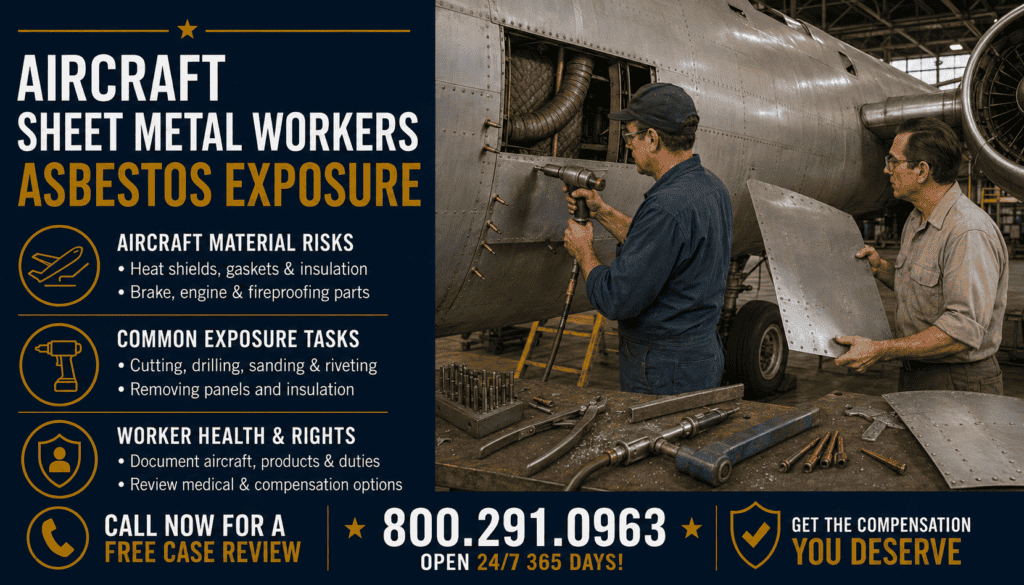
Aircraft Sheet Metal Workers Asbestos Exposure
Aircraft sheet metal workers fabricate, repair and replace metal skins, panels, structural components and other aircraft parts. Historical asbestos exposure was not inherent to sheet metal itself, but workers could encounter asbestos-containing materials during older aircraft maintenance or while working in hangars and industrial facilities where legacy insulation, gaskets, fire-resistant materials or building products were present.
Aluminum and other aircraft sheet metals are not asbestos. Government research confirms that aviation maintenance workers face multiple occupational exposures, while NIOSH investigations also show why asbestos claims must be material-specific: at one Beech Aircraft facility, sprayed insulation suspected of containing asbestos was tested and no asbestos was found. A reliable history should identify the aircraft, facility, era, material and task rather than infer exposure from the job title alone.
Aircraft Sheet Metal Workers and Asbestos Exposure
Aircraft sheet metal workers may drill, cut, rivet, form, remove and replace metal aircraft structures. They can work in manufacturing plants, military depots, airline maintenance bases, overhaul facilities and hangars. NIOSH confirms that aviation maintenance occurs in both military and commercial facilities and can involve significant workplace exposures.
For asbestos, the important distinction is between the metal being repaired and separate asbestos-containing material. Sheet aluminum, steel and titanium do not become asbestos merely because they are used on an older aircraft. Potential historical exposure requires evidence of an asbestos-containing component, insulation system, gasket, fire-resistant material or facility material that was disturbed during the work.
NIOSH’s investigation at Beech Aircraft Corporation is an important accuracy example. Investigators collected sprayed-on insulation samples because employees were concerned about asbestos, but laboratory analysis found no asbestos in the sampled insulation. This demonstrates why aircraft-industry exposure claims should rely on actual material evidence rather than assumptions.
Readers can also review industrial and manufacturing factory workers asbestos exposure, fabricators asbestos exposure and sheet metal workers asbestos exposure.
Asbestos Materials Aircraft Sheet Metal Workers May Have Encountered
Potential asbestos sources varied by aircraft, facility and era. Historical aircraft or aviation workplaces should be investigated using maintenance manuals, parts records, asbestos surveys, laboratory reports, military or airline records and facility-abatement documents.
- Older asbestos-containing gaskets, seals or packing where specifically documented
- Legacy thermal or fire-resistant insulation associated with aircraft or ground equipment where confirmed
- Asbestos-containing brake or friction materials encountered during overlapping maintenance work
- Older asbestos insulation on hangar or plant piping, boilers, ducts and mechanical systems
- Legacy asbestos-containing building materials disturbed during hangar renovation or maintenance
- Dust generated by nearby trades disturbing confirmed asbestos-containing material
OSHA’s general-industry asbestos standard recognizes asbestos-containing gaskets and friction products as potential occupational sources and establishes requirements for asbestos work. However, the presence of a gasket, insulation product or friction component does not prove that a particular aircraft part contained asbestos.
Material-specific evidence is especially important in aviation because aircraft designs, manufacturers, military specifications and replacement parts changed over time.
How Aircraft Sheet Metal Asbestos Exposure Could Occur
Potential exposure could occur when sheet metal work required access through, removal of, or work beside a confirmed asbestos-containing material.
- Panel removal: opening older aircraft structures near confirmed insulation, seals or other ACM
- Drilling and cutting: disturbing an asbestos-containing material attached to or adjacent to the metal being repaired
- Overhaul work: dismantling older aircraft assemblies containing documented asbestos components
- Ground-equipment repair: working around older heat-resistant gaskets, insulation or friction materials where confirmed
- Hangar maintenance: working near asbestos-containing pipe, boiler or duct insulation
- Renovation: encountering legacy asbestos-containing building materials in older aviation facilities
NIOSH research confirms that aircraft maintenance workers may perform demanding work in maintenance facilities and confined aircraft spaces. Those aviation exposures should not automatically be labeled asbestos. Asbestos requires a documented asbestos-containing source.
Sheet-metal cutting and drilling can also generate metal particles, noise and ergonomic stresses. These are distinct occupational hazards and should be evaluated separately.
Aircraft Workplaces, Repair Tasks and Facilities
Aircraft sheet metal workers can move between aircraft, hangars and maintenance shops, so exposure reconstruction should identify both the aircraft component and the facility environment.
Aircraft Manufacturing Plants
Workers may form, drill, rivet and assemble sheet-metal structures. Historical asbestos exposure should be tied to a specific asbestos-containing product or facility material rather than to aircraft manufacturing generally.
Maintenance, Repair and Overhaul Facilities
NIOSH has evaluated occupational exposures in U.S. Air Force, National Guard and commercial airline maintenance facilities. Maintenance workers can enter aircraft and perform repairs in confined areas, but the hazards documented by NIOSH vary by task and include many non-asbestos exposures.
Military Aircraft Depots
Older military aircraft and depot facilities can require extensive teardown and overhaul. When researching asbestos, useful records can include technical orders, maintenance manuals, component specifications, depot records and building asbestos surveys.
Hangars and Shops
Older hangars can contain boilers, piping, ducts and other building systems. Where asbestos-containing thermal insulation or building materials are confirmed, workers could encounter a facility-based exposure source separate from the aircraft itself.
Aircraft Structural Repair
Sheet metal workers may remove damaged skins, frames, ribs, panels and fasteners. Bare aircraft metal is not asbestos. Exposure depends on whether an adjacent seal, insulation product or other material actually contained asbestos and was disturbed.
Other Aviation Maintenance Hazards
NIOSH aviation research documents exposures such as jet fuel, noise, ergonomic stressors and other workplace hazards. These are not asbestos and should not be substituted for evidence of asbestos exposure.
Related resources include fabricators asbestos exposure, machine operators asbestos exposure, sheet metal workers asbestos exposure, maintenance workers asbestos exposure and maintenance mechanics asbestos exposure.
Secondary or Household Exposure
If an aircraft sheet metal worker directly disturbed confirmed asbestos-containing material, fibers could historically contaminate clothing or tools. A household exposure history requires evidence about the asbestos source, task, dust conditions, clothing practices and frequency of contact. Aircraft sheet metal employment alone does not establish take-home exposure.
Need help now? Call 800.291.0963
Live chat available 24/7, 365 days a year.
Submit Your Case
Mesothelioma and Other Occupational Health Risks
NIOSH’s occupational asbestos review identifies asbestos as a carcinogenic workplace hazard associated with serious respiratory disease. A worker’s asbestos history should establish the material and circumstances of exposure rather than rely solely on an aviation occupation.
Aircraft sheet metal work also involves hazards unrelated to asbestos, including noise, metal particles, awkward postures, repetitive motion and potentially chemical exposures in maintenance environments. NIOSH aviation guidance recognizes several of these workplace concerns.
A mesothelioma diagnosis does not by itself identify an aircraft, component, manufacturer, hangar or employer as the source of asbestos exposure. A useful occupational history should establish the aircraft or facility, dates, materials and work activities.
Medical questions about occupational exposure, symptoms, screening or diagnosis should be discussed with a qualified healthcare professional.
Documenting an Aircraft Sheet Metal Work History
A useful investigation identifies the employer, aircraft or facility, dates, component, material and repair activity associated with possible asbestos exposure.
- Employment evidence: employer, contractor, union, military, payroll, W-2, tax and Social Security earnings records.
- Aircraft evidence: manufacturer, model, series, tail number or fleet when known.
- Maintenance evidence: technical orders, maintenance manuals, work cards, overhaul records and component specifications.
- Material evidence: asbestos surveys, laboratory results, part specifications, safety records and abatement documents.
- Task evidence: drilling, riveting, panel removal, structural repair, teardown, overhaul and cleanup.
- Facility evidence: hangar, depot, manufacturing plant, maintenance base and shop locations.
- Coworker evidence: sheet metal workers, aircraft mechanics, inspectors, electricians, maintenance workers and supervisors may help reconstruct conditions.
When part names are forgotten, record the aircraft type, approximate years, repair area, whether panels or insulation were removed, nearby brake or mechanical work, hangar location, dust conditions and whether asbestos warnings or abatement procedures were used.
Questions That Can Strengthen an Aircraft Sheet Metal Work History
What aircraft models were repaired? Was the work manufacturing, line maintenance or depot overhaul? What panels or assemblies were opened? Did technical manuals identify heat-resistant or asbestos-containing components? Were hangar asbestos surveys performed? These details can help separate a documented exposure from speculation.
Asbestos Lawsuits, Trust Funds and Compensation
An aircraft sheet metal worker diagnosed with an asbestos-related disease may have potential legal or compensation options when evidence supports occupational asbestos exposure and applicable legal requirements are met. Possible avenues can include claims involving legally responsible companies and asbestos bankruptcy trusts.
Aircraft sheet metal employment alone does not establish asbestos trust eligibility. Each trust has separate medical and exposure requirements, and evidence may be needed connecting the worker to a covered asbestos-containing product, manufacturer, supplier or recognized jobsite during a qualifying period.
Useful evidence can include employment and Social Security records, military records, aircraft maintenance manuals, technical orders, parts specifications, facility asbestos surveys, industrial-hygiene reports, photographs, coworker testimony and medical documentation. Filing deadlines vary by jurisdiction and claim type.
Related Aircraft, Manufacturing and Maintenance Resources
Manufacturing work: Industrial & Manufacturing Factory Workers Asbestos Exposure · Fabricators Asbestos Exposure · Machine Operators Asbestos Exposure
Sheet metal and repair work: Sheet Metal Workers Asbestos Exposure · Maintenance Workers Asbestos Exposure · Maintenance Mechanics Asbestos Exposure
Broader occupational exposure: High-Risk Jobs Asbestos Exposure · Asbestos Exposure in Buildings
Authoritative Sources
This page was researched using NIOSH and OSHA government sources addressing aviation maintenance, aircraft-industry workplace investigations and occupational asbestos. The sources also support the page’s distinction between confirmed asbestos exposure and other aviation hazards.
Aircraft Sheet Metal Workers Asbestos Exposure FAQ
Were all aircraft sheet metal workers exposed to asbestos?
No. Exposure depended on the aircraft, facility, era, component and task. The job title alone does not establish asbestos exposure.
Is aircraft sheet metal made from asbestos?
No. Aluminum, steel, titanium and other aircraft metals are not asbestos. A separate asbestos-containing material must be identified.
Could older aircraft contain asbestos-containing components?
Some historical aircraft or aviation equipment may have used asbestos-containing heat-resistant, gasket, friction or insulation materials. The particular component should be confirmed through reliable records or testing.
Could aircraft overhaul work create asbestos exposure?
Potentially, if teardown or repair disturbed a confirmed asbestos-containing component or material. Overhaul work itself does not prove asbestos exposure.
Could hangar materials expose aircraft sheet metal workers?
Potentially. Older hangars may contain asbestos-containing pipe, boiler, duct or building materials. Facility surveys and abatement records can help document whether ACM was present.
Did NIOSH find asbestos in sprayed insulation at Beech Aircraft?
No. NIOSH sampled sprayed-on insulation at a Beech Aircraft facility in 1978 and found no asbestos in the samples. That finding illustrates why material testing matters.
Can aircraft sheet metal workers qualify for asbestos trust fund claims?
Some may qualify if they meet a trust’s medical and exposure requirements and can connect their work to a covered asbestos source. Job title alone does not establish eligibility.
How can a retired aircraft sheet metal worker document old exposure?
Employment, military and Social Security records, aircraft maintenance manuals, technical orders, parts specifications, facility asbestos surveys, photographs and coworker statements can help reconstruct exposure.
Get Help Reviewing an Aircraft Sheet Metal Work History
Call 800.291.0963
Live chat is available 24/7, 365 days a year.
Prior aircraft sheet metal work does not automatically prove asbestos exposure, disease causation, claim eligibility or compensation. Each situation depends on the aircraft or facility, dates, components, materials, tasks, work practices, medical evidence and applicable legal requirements. Compensation is not guaranteed.
⚕️ Legal & Medical Information Disclaimer
This page provides general educational information and is not medical or legal advice. The information does not establish asbestos exposure, diagnosis, causation, liability, claim eligibility or compensation. Medical concerns should be discussed with a qualified healthcare professional, and legal questions should be reviewed with a qualified attorney.