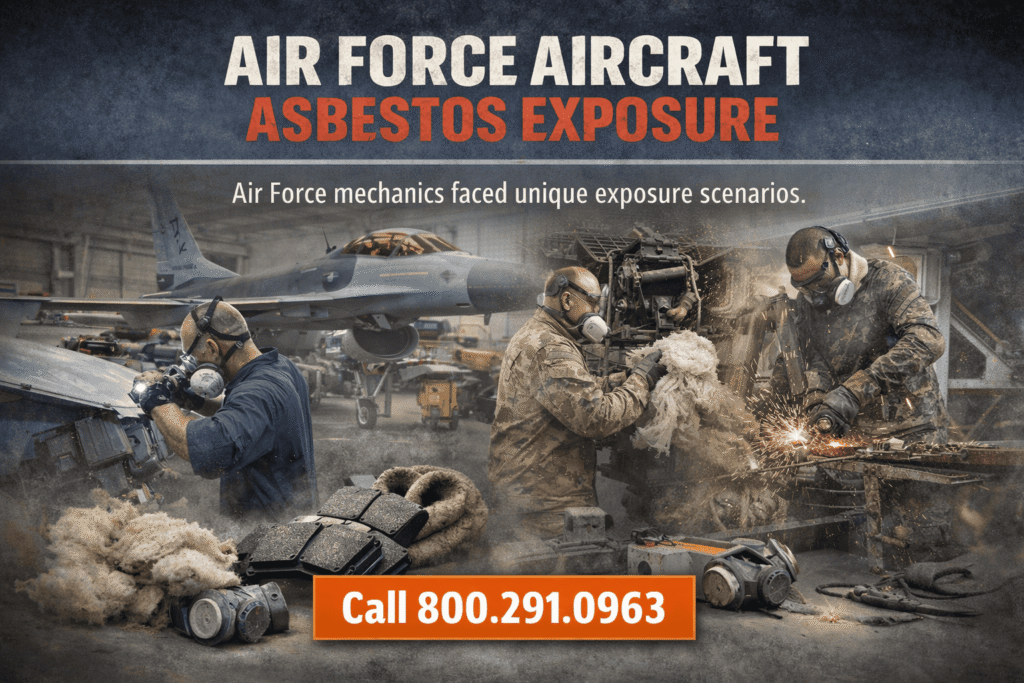
✈️ Air Force Aircraft Asbestos Exposure
U.S. Air Force aircraft incorporated asbestos insulation, brakes, heat shields, wiring, gaskets, and fireproofing—exposing pilots, mechanics, electricians, and ground crews during aircraft operation, maintenance, and overhaul.
For decades, asbestos was considered essential to military aviation safety and performance. The United States Air Force operated aircraft that flew at extreme speeds, temperatures, and altitudes—conditions that demanded materials capable of resisting heat, friction, vibration, and fire. Asbestos met those requirements and was widely used across nearly every aircraft platform.
As aircraft aged and required frequent maintenance, asbestos-containing components deteriorated. Brake wear, engine servicing, insulation removal, and electrical upgrades released airborne asbestos fibers into hangars, flight lines, and maintenance shops. Many Air Force veterans and civilian employees are now being diagnosed with mesothelioma, lung cancer, asbestosis, and pleural disease decades after exposure.
🧱 Why Air Force Aircraft Used Asbestos
Air Force aircraft faced extreme operational demands.
Asbestos was widely used because it:
-
🔥 Resisted intense engine and exhaust heat
-
🛑 Withstood friction in brakes and clutches
-
⚡ Insulated electrical wiring and avionics
-
🧯 Provided fireproofing in cockpits and cabins
-
🌡️ Protected against temperature extremes at altitude
-
💲 Reduced equipment failure and replacement costs
These benefits made asbestos standard across Air Force aircraft systems.
⚙️ Where Asbestos Was Found in Air Force Aircraft
Asbestos was integrated throughout aircraft structures and components.
Common asbestos-containing aircraft parts included:
-
🛑 Brake linings and landing gear components
-
🔥 Engine insulation and exhaust heat shielding
-
⚡ Electrical wiring insulation and panel backings
-
🧱 Cockpit insulation and fire barriers
-
🔩 Gaskets, seals, and packing materials
-
🌬️ HVAC and cabin air system insulation
Normal vibration, heat cycles, and maintenance released fibers into work environments.
👷 Who Was Exposed in Air Force Aircraft Operations
Exposure extended far beyond pilots.
High-risk groups included:
-
🧑🔧 Aircraft mechanics and technicians
-
🔌 Avionics and electrical specialists
-
🛠️ Sheet-metal and structural repair crews
-
🛫 Flight-line technicians and inspectors
-
🧯 Fire, safety, and emergency response teams
-
🧪 Quality assurance and test personnel
Many worked daily around aircraft undergoing constant maintenance.
🛠️ Maintenance Tasks That Released Asbestos
Routine Air Force aircraft servicing disturbed asbestos materials.
Common exposure activities included:
-
🛑 Brake inspections and replacements
-
🔥 Engine tear-downs and overhauls
-
⚡ Electrical rewiring and avionics upgrades
-
🧰 Removing insulation and heat shields
-
🧹 Cleaning debris from aircraft bays
-
🏗️ Aircraft modernization and retrofits
Even short maintenance tasks could generate airborne asbestos dust.
✈️ Flight Line & Hangar Exposure
Aircraft were serviced in multiple environments.
Exposure occurred in:
-
🛬 Open flight lines during quick-turn maintenance
-
🏢 Hangars with asbestos fireproofing
-
🧰 Maintenance shops and overhaul facilities
-
🌬️ Poorly ventilated aircraft bays
Jet blast and equipment movement re-aerosolized settled asbestos fibers.
🏗️ Aging Aircraft & Retrofit Programs
Modernization increased exposure risk.
As aircraft were upgraded:
-
🧱 Old insulation was removed or disturbed
-
🔌 Electrical systems were replaced
-
🧯 Fireproofing materials deteriorated
-
🧹 Cleanup released friable asbestos
Many retrofit projects occurred before asbestos hazards were fully understood.
⚠️ Why Air Force Aircraft Asbestos Exposure Was Especially Dangerous
Exposure severity was high because:
-
❌ Aircraft contained multiple asbestos systems
-
❌ Maintenance was frequent and repetitive
-
❌ Work occurred in confined aircraft spaces
-
❌ Protective respiratory gear was rarely used
-
❌ Exposure accumulated over long careers
Many Air Force personnel inhaled asbestos daily without warning.
✈️ U.S. Air Force Aircraft Asbestos Exposure
U.S. Air Force aircraft were designed and maintained during decades when asbestos was widely used throughout military aviation systems. From World War II through the late 1970s, asbestos was installed in brake assemblies, engine compartments, exhaust systems, insulation blankets, fireproof panels, wiring coatings, gaskets, and high-temperature seals. Air Force crew chiefs, avionics technicians, jet engine mechanics, and depot-level maintenance teams were most at risk when replacing brake pads, servicing landing gear, repairing engines, or working in aging hangars where asbestos insulation deteriorated and became airborne.
✈️ U.S. Air Force Aircraft With Asbestos Exposure
🛩️ B-52 Stratofortress
Engine heat shielding, brake servicing, and insulation removal released asbestos fibers during overhaul cycles.
🛩️ B-1 Lancer
High-temperature engine insulation and landing gear brake maintenance exposed ground crews to asbestos dust.
🛩️ B-2 Spirit
Exposure risks primarily stemmed from legacy maintenance facilities and older insulation materials on base.
🛩️ F-16 Fighting Falcon
Frequent brake replacement and engine-area insulation repairs disturbed asbestos materials.
🛩️ F-15 Eagle
Thermal insulation, brake dust, and high-temperature gasket servicing created exposure risks.
🛩️ F-22 Raptor
Most exposure risks related to older hangars and fireproofing materials encountered during maintenance.
🛩️ F-35 Lightning II
Exposure risks often tied to legacy base insulation and renovation projects rather than the aircraft itself.
🛩️ F-4 Phantom II
Legacy engine heat shields, brake systems, and cockpit fireproofing materials contained asbestos.
🛩️ F-111 Aardvark
Engine insulation and landing gear brake systems released asbestos fibers during servicing.
🛩️ A-10 Thunderbolt II
High brake wear and engine maintenance cycles disturbed asbestos-containing components.
🛩️ A-7 Corsair II
Brake linings and heat-resistant insulation exposed mechanics during repair operations.
🛩️ F-105 Thunderchief
Engine heat barriers and friction materials created exposure risks during heavy maintenance.
🛩️ F-100 Super Sabre
Brake servicing and exhaust insulation removal released airborne asbestos fibers.
✈️ C-130 Hercules
Landing gear brake maintenance and engine-area insulation replacement disturbed asbestos materials.
✈️ C-17 Globemaster III
Exposure risks commonly stemmed from hangar insulation and high-heat component servicing.
✈️ C-141 Starlifter
Transport aircraft brake servicing and insulation replacement exposed maintenance crews.
✈️ C-5 Galaxy
Heavy cargo brake systems and engine heat shielding released asbestos dust during overhaul.
✈️ KC-135 Stratotanker
Brake dust and high-temperature sealing materials created asbestos exposure risks.
⛽ KC-10 Extender
Landing gear servicing and engine gasket replacement disturbed asbestos-containing components.
✈️ C-9 Nightingale
Cabin insulation, brake systems, and heat-resistant materials exposed medical aircraft mechanics.
✈️ C-21 Learjet
Brake linings and avionics insulation work released asbestos fibers during inspections.
✈️ T-38 Talon
Training aircraft brake servicing and engine insulation removal created exposure risks.
🎓 T-37 Tweet
Frequent training maintenance cycles disturbed asbestos insulation and friction materials.
🎓 T-33 Shooting Star
Engine heat shields and brake servicing released asbestos during aging aircraft repairs.
✈️ U-2 Dragon Lady
High-temperature insulation and gasket materials posed risks during specialized maintenance.
✈️ RC-135 Reconnaissance Aircraft
Electrical insulation and engine-area heat protection exposed avionics technicians.
✈️ E-3 Sentry (AWACS)
Brake servicing and base infrastructure insulation created exposure risks.
✈️ E-8 JSTARS
Thermal insulation and landing gear maintenance disturbed asbestos components.
✈️ AC-130 Gunship
High-heat engine systems and brake components historically used asbestos insulation.
✈️ C-119 Flying Boxcar
Legacy transport brake systems and insulation materials released asbestos fibers.
✈️ C-124 Globemaster II
Heavy landing gear maintenance and engine insulation removal exposed crews.
✈️ B-47 Stratojet
Jet engine heat shields and brake systems contained asbestos materials.
✈️ B-29 Superfortress
World War II-era insulation, fireproof panels, and friction materials exposed maintenance personnel.
✈️ C-47 Skytrain (Air Force Service)
Brake systems, insulation blankets, and engine gaskets released asbestos during servicing.
✈️ F-86 Sabre
Engine insulation and brake linings disturbed asbestos during routine repairs.
🫁 Diseases Linked to Air Force Aircraft Asbestos Exposure
Medical research links Air Force aircraft exposure to:
-
Mesothelioma (pleural and peritoneal)
-
Asbestos-related lung cancer
-
Asbestosis
-
Pleural plaques and pleural thickening
Symptoms typically appear 20–50 years after exposure.
⏳ Long Latency Period in Air Force Cases
Typical disease progression includes:
-
⏱️ Exposure during Air Force service
-
⏱️ Decades without symptoms
-
⏱️ Progressive lung or tissue damage
-
⏱️ Diagnosis later in life
This latency often delays diagnosis and legal action.
⚖️ Legal Responsibility for Air Force Aircraft Asbestos Exposure
Claims do not sue the Air Force or federal government.
Instead, claims focus on:
-
🏭 Aircraft manufacturers
-
🏭 Brake, insulation, and gasket suppliers
-
🏭 Electrical component manufacturers
-
🏭 Companies that failed to warn users
Many responsible companies later established asbestos trust funds.
🧑⚖️ How a Lawyer Can Help Air Force Aircraft Victims
An experienced asbestos lawyer can:
-
🔍 Identify aircraft models and duty assignments
-
📂 Reconstruct maintenance and exposure history
-
🏭 Match exposure to specific manufacturers
-
🏦 File asbestos trust fund claims
-
⚖️ Pursue lawsuits against solvent companies
-
🏛️ Coordinate VA disability benefits
-
👨👩👧 Assist families with wrongful death claims
You don’t need aircraft records—military aviation asbestos databases already exist.
❓ Frequently Asked Questions (FAQs)
❓ I was Air Force, not Navy—was asbestos still used?
Yes. Asbestos was widely used across all Air Force aircraft platforms.
❓ Does flight time matter?
No. Maintenance and ground work caused most exposure.
❓ Can I file a claim decades later?
Yes. Claims typically begin at diagnosis.
❓ Can I receive VA benefits and lawsuit compensation?
Yes. These are separate recovery options.
❓ Can families file claims?
Yes. Wrongful death claims are available.
📞 Help for Air Force Aircraft Asbestos Exposure Victims
If you served around Air Force aircraft and were later diagnosed with mesothelioma, lung cancer, or another asbestos-related disease, you may still have strong legal options today.
📌 You May Be Eligible For:
-
Asbestos trust fund compensation
-
Product-liability lawsuits
-
VA disability benefits
-
Wrongful death claims for families
📞 Call 800-291-0963 for a free, confidential Air Force aircraft asbestos exposure review
⏱️ No upfront costs • Aviation-focused cases • Nationwide representation
Serving your country should never have cost your health.