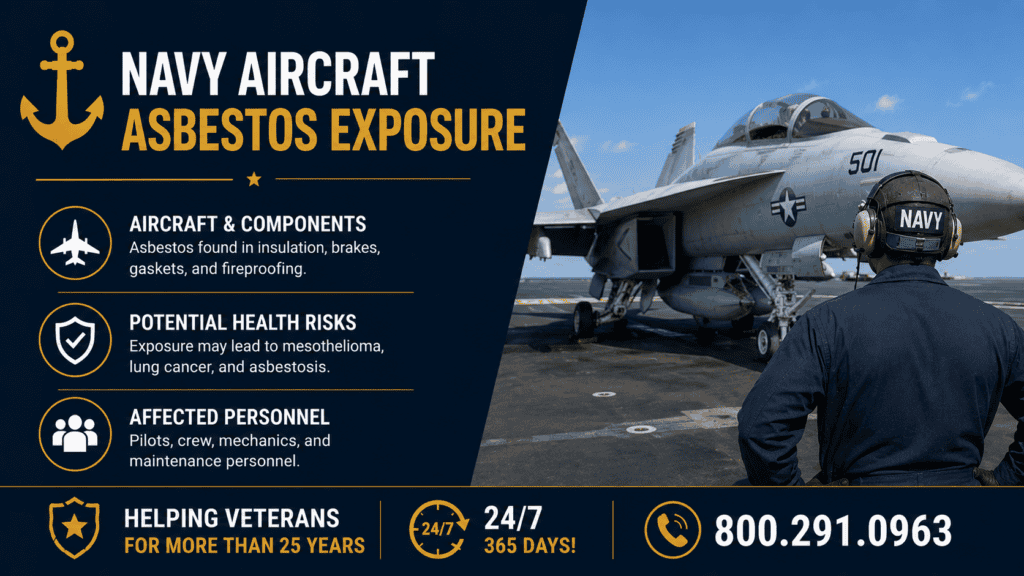
⚓✈️ Navy Aircraft Asbestos Exposure
The history of U.S. Navy aviation is inseparable from the history of modern naval warfare. From the first experimental seaplanes launched in the early twentieth century to today’s carrier-based fighter aircraft, naval aviation has allowed the United States to project military power across every ocean. Millions of sailors have served as pilots, flight crew members, aviation mechanics, engineers, inspectors, support personnel, and maintenance specialists aboard aircraft carriers and at Naval Air Stations throughout the world.
For much of that history, however, another material accompanied nearly every stage of naval aviation’s growth—asbestos.
While many veterans associate asbestos exposure with boiler rooms aboard Navy ships, naval aviation developed during the same era in which asbestos became one of America’s most widely used industrial materials. Aircraft manufacturing plants, Naval Air Stations, maintenance depots, carrier aviation facilities, hangars, utility systems, heating plants, and countless support buildings relied on asbestos because engineers believed it provided unmatched protection against heat, fire, friction, and electrical hazards.
As a result, asbestos exposure within naval aviation extended well beyond pilots and flight crews. Aviation mechanics rebuilding engines, electricians repairing aircraft systems, welders fabricating structural components, construction personnel renovating hangars, and maintenance crews servicing aviation facilities often worked around asbestos-containing products throughout their military careers.
Many veterans moved repeatedly between aircraft carriers, Naval Air Stations, overseas airfields, training commands, and aviation maintenance facilities. These assignments exposed them to multiple environments where asbestos-containing materials remained in service for decades. Although the dangers of asbestos eventually became widely recognized, millions of Navy aviation personnel had already completed their service.
Today, Navy aviation veterans continue to receive diagnoses of mesothelioma, asbestos-related lung cancer, asbestosis, and other asbestos diseases many years after leaving military service. Because these illnesses typically develop decades after exposure, understanding where asbestos was used throughout naval aviation remains an important step in documenting military service, pursuing VA disability benefits, researching historical exposure, and evaluating available legal options.
This authority hub serves as the primary resource for Navy Aircraft Asbestos Exposure and connects readers with detailed information covering naval aircraft, aircraft carriers, Naval Air Stations, aviation facilities, military aircraft operations, asbestos-containing equipment, military documentation, VA benefits, and compensation resources available to Navy veterans and their families.
━━━━━━━━━━━━━━━━━━━━━━━━━━━━━━━━━━━━
✈ What You’ll Learn
This page provides a comprehensive overview of asbestos exposure throughout U.S. Navy aviation and serves as the parent hub for naval aviation-related asbestos topics across MesotheliomaHelp.center.
Throughout this guide you’ll learn:
- How naval aviation evolved into one of the world’s largest military air forces.
- Why asbestos became a standard engineering material throughout Navy aviation.
- How aircraft carriers and Naval Air Stations supported aviation operations.
- Where asbestos was commonly incorporated into aviation infrastructure.
- How naval aviation differed from other military branches.
- Why aviation personnel often experienced repeated exposure throughout their military careers.
- How Navy aviation connects to broader military asbestos exposure across ships, shipyards, military equipment, occupations, and support facilities.
Readers can also explore related authority pages covering Military Asbestos Exposure, Military Aircraft Asbestos Exposure, Navy Ships Asbestos Exposure, Navy Aircraft Carriers Asbestos Exposure, Navy Bases Asbestos Exposure, Navy Shipyards Asbestos Exposure, Military Equipment Asbestos Exposure, Military Occupations Asbestos Exposure, Military History & Timeline of Asbestos Exposure, and Military Records & Documentation to better understand how asbestos affected every aspect of military service.
━━━━━━━━━━━━━━━━━━━━━━━━━━━━━━━━━━━━
✈ The Evolution of U.S. Navy Aviation
The Navy recognized the military value of aviation long before aircraft became common in combat.
During the early twentieth century, naval leaders began experimenting with aircraft for reconnaissance, artillery spotting, and fleet observation. As aviation technology advanced, aircraft rapidly evolved from simple observation platforms into essential components of naval strategy.
World War I demonstrated that aircraft could dramatically improve naval intelligence and surveillance. Although aviation played a relatively limited combat role during the conflict, it encouraged continued investment in aircraft development during the years that followed.
By the 1920s and 1930s, the Navy had begun integrating aircraft into virtually every aspect of fleet operations. Naval aviators trained aboard dedicated carriers while new Naval Air Stations supported aircraft testing, maintenance, logistics, and pilot instruction. Advances in aircraft performance also required increasingly sophisticated maintenance facilities capable of supporting more complex engines, electrical systems, hydraulic equipment, and specialized aviation technology.
The attack on Pearl Harbor and America’s entry into World War II accelerated this expansion at an unprecedented pace.
Aircraft carriers quickly replaced battleships as the centerpiece of naval power. Naval aviation expanded across the Pacific, requiring hundreds of new aircraft, thousands of additional pilots, and an enormous workforce of aviation mechanics, electricians, engineers, inspectors, and support personnel. Naval Air Stations multiplied throughout the United States and overseas, creating one of the largest aviation infrastructures in the world.
Following World War II, naval aviation continued growing during the Cold War. Propeller aircraft gradually gave way to jet-powered aircraft capable of greater speed, altitude, and range. Aircraft carriers became larger and more technologically advanced, while Naval Air Stations expanded their maintenance capabilities to support increasingly sophisticated aircraft.
Every stage of this evolution relied upon industrial construction methods and engineering standards that heavily incorporated asbestos into aviation facilities and supporting infrastructure.
━━━━━━━━━━━━━━━━━━━━━━━━━━━━━━━━━━━━
✈ Why Asbestos Became Standard Throughout Naval Aviation
During much of the twentieth century, asbestos was viewed as one of the most versatile industrial materials available.
Military engineers valued asbestos because it combined several characteristics rarely found in a single material.
It resisted fire exceptionally well.
It tolerated extreme temperatures generated by aircraft engines and industrial equipment.
It provided dependable electrical insulation.
It resisted corrosion and moisture in harsh marine environments.
It remained durable under constant vibration and heavy mechanical use.
It was also inexpensive and widely available, making it attractive for large-scale military construction.
These qualities made asbestos particularly valuable for naval aviation.
Unlike civilian airports, Navy aviation facilities operated continuously under demanding military conditions. Aircraft required constant maintenance. Carrier operations subjected equipment to saltwater, high humidity, extreme temperatures, and heavy mechanical stress. Maintenance facilities contained industrial machinery that generated significant heat, while utility systems required extensive insulation to improve efficiency and protect personnel.
Asbestos therefore became a routine component of military engineering specifications governing aviation facilities, support infrastructure, and many industrial products used throughout naval aviation.
At the time, few military planners fully understood the long-term health consequences associated with inhaling asbestos fibers.
━━━━━━━━━━━━━━━━━━━━━━━━━━━━━━━━━━━━
✈ Naval Aviation Extended Far Beyond the Flight Deck
Many people imagine naval aviation only in terms of fighter jets launching from aircraft carriers. In reality, naval aviation has always depended upon an enormous network of shore-based facilities that supported every phase of flight operations.
Aircraft required inspection before and after missions.
Engines required rebuilding.
Mechanical systems required continual servicing.
Electrical equipment demanded routine testing and repair.
Replacement components had to be manufactured, stored, transported, and installed.
Pilots required ongoing training.
Aircraft required periodic modernization throughout their service lives.
Supporting these activities required extensive aviation infrastructure, including Naval Air Stations, maintenance depots, logistics centers, training commands, engineering facilities, machine shops, warehouses, and administrative complexes.
Many aviation personnel spent far more time inside these facilities than inside aircraft themselves.
Because much of this infrastructure was constructed during the decades when asbestos remained a preferred building material, personnel frequently worked in environments where asbestos-containing products were present throughout the surrounding buildings, utility systems, and mechanical equipment.
This broader aviation support network helps explain why asbestos exposure affected such a wide range of Navy aviation occupations.
━━━━━━━━━━━━━━━━━━━━━━━━━━━━━━━━━━━━
✈ Major Categories of Navy Aircraft
Over the past century, the U.S. Navy has operated thousands of aircraft designed for specialized missions across the globe.
Carrier-based fighter aircraft have long served as the Navy’s primary offensive and defensive aviation platform, providing fleet air defense, strike capabilities, and air superiority during combat operations.
Attack aircraft supported close air support missions, maritime strike operations, and tactical bombing assignments while operating from carriers and shore installations.
Long-range patrol aircraft extended the Navy’s surveillance capabilities across vast ocean regions by conducting anti-submarine warfare, reconnaissance, intelligence gathering, and maritime patrol missions.
Helicopters became indispensable for search and rescue operations, anti-submarine warfare, logistics support, medical evacuation, and vertical replenishment between ships at sea.
Transport aircraft connected naval forces around the world by delivering personnel, supplies, equipment, and replacement parts to forward operating bases and aircraft carriers.
Training aircraft prepared generations of Navy and Marine Corps aviators through extensive flight instruction conducted at Naval Air Stations across the United States.
Although these aircraft differed greatly in appearance and mission, each depended upon a large maintenance and support network that made continuous flight operations possible.
That support system—not simply the aircraft themselves—became one of the primary locations where asbestos exposure occurred throughout naval aviation.
Continue with Part 1B, which transitions into the naval aviation infrastructure by covering aircraft carriers as floating air bases, Naval Air Stations, major aviation support facilities, aircraft manufacturers, and how this nationwide aviation network laid the foundation for the occupational exposure scenarios explored in Part 2.
✈ How Navy Aircraft Maintenance Created Asbestos Exposure
Maintaining military aircraft is one of the most demanding occupations in the armed forces. Every aircraft requires continual inspections, preventive maintenance, scheduled overhauls, repairs, modifications, and component replacement throughout its service life. For Navy aviation personnel serving during much of the twentieth century, many of these routine maintenance activities occurred around asbestos-containing products.
Unlike an office environment where asbestos might remain undisturbed inside walls or ceilings, aviation maintenance required technicians to disassemble equipment, remove worn components, replace insulation, rebuild mechanical systems, and install replacement parts. These activities frequently disturbed asbestos-containing materials and released microscopic fibers into the surrounding work area.
Maintenance work occurred both aboard aircraft carriers and inside Naval Air Station maintenance facilities, exposing personnel in multiple locations throughout their military careers.
While the amount of asbestos varied depending on the aircraft, production year, and manufacturer, maintenance personnel often worked around asbestos far more frequently than flight crews because they routinely handled the aircraft and support equipment every day.
━━━━━━━━━━━━━━━━━━━━━━━━━━━━━━━━━━━━
✈ Aircraft Maintenance Hangars
Aircraft hangars served as the primary maintenance centers for Navy aviation.
These facilities were designed to accommodate everything from routine inspections to complete aircraft overhauls. Large hangars housed multiple aircraft simultaneously while mechanics, electricians, structural repair technicians, inspectors, and engineers worked together to keep aircraft mission ready.
Many hangars constructed before the 1980s incorporated asbestos throughout the building itself.
Common examples included:
- Pipe insulation
- Steam heating systems
- Boiler insulation
- Fireproof wall panels
- Ceiling tiles
- Roofing materials
- Vinyl flooring
- Mechanical room insulation
- HVAC duct insulation
- Cement products
- Electrical insulation
As buildings aged, repairs and renovations frequently disturbed these materials, creating additional exposure opportunities for personnel working inside the hangars.
━━━━━━━━━━━━━━━━━━━━━━━━━━━━━━━━━━━━
✈ Aircraft Engine Maintenance
Aircraft engines represented one of the most complex components maintained by Navy aviation personnel.
Engine overhaul required technicians to disassemble, inspect, repair, and rebuild numerous internal and external systems. Depending on the aircraft and production period, engine assemblies could include asbestos-containing insulation, heat-resistant gaskets, sealing materials, and thermal protection products designed to withstand extremely high operating temperatures.
Engine maintenance often involved:
- Removing insulation
- Replacing worn gaskets
- Cleaning engine housings
- Repairing exhaust components
- Installing replacement parts
- Testing engine performance
These procedures could disturb aging asbestos materials and release fibers into the surrounding workspace.
Because engine overhaul shops processed large numbers of engines each year, mechanics assigned to these facilities often experienced repeated exposure over extended periods.
━━━━━━━━━━━━━━━━━━━━━━━━━━━━━━━━━━━━
✈ Aircraft Brake Systems
One of the best-documented sources of asbestos exposure in military aviation involved aircraft braking systems.
Carrier landings generated tremendous friction and heat as aircraft rapidly decelerated on relatively short flight decks. Brake components therefore required materials capable of withstanding repeated high-temperature operations without excessive wear.
For many years, asbestos provided exactly those characteristics.
Brake linings and friction materials commonly incorporated asbestos because it resisted heat while maintaining braking performance under demanding military conditions.
During maintenance, technicians routinely:
- Removed worn brake assemblies
- Cleaned accumulated brake dust
- Installed replacement linings
- Inspected braking components
- Adjusted braking systems
These tasks frequently generated airborne dust inside enclosed maintenance facilities.
━━━━━━━━━━━━━━━━━━━━━━━━━━━━━━━━━━━━
✈ Hydraulic Systems
Hydraulic systems made modern naval aviation possible.
They powered:
- Flight controls
- Landing gear
- Braking systems
- Wing folding mechanisms
- Carrier launch systems
- Utility equipment
Maintaining these systems required technicians to replace seals, valves, pumps, gaskets, and packing materials that historically could contain asbestos.
Hydraulic repair shops also housed industrial equipment used to test and rebuild hydraulic components, creating another specialized maintenance environment where asbestos-containing materials were historically present.
━━━━━━━━━━━━━━━━━━━━━━━━━━━━━━━━━━━━
✈ Aircraft Electrical Systems
Modern military aircraft contain extensive electrical systems supporting navigation, communications, radar, weapons, flight instrumentation, lighting, and power distribution.
Throughout much of the twentieth century, asbestos was widely used as an electrical insulating material because it resisted heat and electrical current.
Although aircraft designs varied, aviation electricians routinely worked around:
- Electrical panels
- Switchgear
- Wiring insulation
- Heat-resistant barriers
- Electrical connectors
- Control systems
Maintenance activities often required cutting, removing, replacing, or repairing aging components installed many years earlier.
Electricians assigned to Naval Air Stations also maintained electrical systems throughout maintenance buildings, machine shops, hangars, and utility plants, increasing the variety of environments where asbestos exposure could occur.
━━━━━━━━━━━━━━━━━━━━━━━━━━━━━━━━━━━━
✈ Aviation Support Equipment
Keeping aircraft operational required far more than the aircraft themselves.
Ground support equipment included hundreds of specialized machines used for maintenance, servicing, testing, and repair.
Examples included:
- Air compressors
- Power generation equipment
- Hydraulic test stands
- Aircraft tow tractors
- Ground power units
- Air conditioning units
- Fuel servicing equipment
- Mobile maintenance platforms
- Industrial pumps
- Ventilation equipment
Many of these machines contained heat-resistant gaskets, insulation, valve packing, electrical insulation, or other industrial products historically manufactured with asbestos.
Readers interested in these industrial systems can continue to the Navy Equipment Asbestos Exposure authority hub, along with dedicated pages covering Navy Boiler Equipment, Navy Pump Equipment, Navy Valve Equipment, Navy Electrical Equipment, Navy Generator Equipment, Navy HVAC Equipment, and Military Equipment Asbestos Exposure.
━━━━━━━━━━━━━━━━━━━━━━━━━━━━━━━━━━━━
✈ Aviation Maintenance Was a Team Effort
One important reason asbestos exposure affected so many Navy aviation veterans is that aircraft maintenance rarely involved a single individual.
Large maintenance projects often required teams consisting of:
- Aviation Machinist’s Mates
- Aviation Electrician’s Mates
- Aviation Structural Mechanics
- Aviation Metalsmiths
- Welders
- Sheet metal workers
- Hydraulic specialists
- Inspectors
- Engineers
- Supervisors
- Logistics personnel
Even individuals who were not directly removing asbestos-containing materials frequently worked only a few feet away from coworkers performing maintenance that generated airborne dust.
Because aircraft maintenance facilities were enclosed work environments, fibers released during one repair operation could circulate throughout the surrounding area, exposing additional personnel.
This team-based work environment contributed to the widespread occupational exposure documented among Navy aviation veterans.
Continue with Part 2B, covering the highest-risk Navy aviation occupations, documented exposure scenarios aboard aircraft carriers and Naval Air Stations, aviation support personnel, and why asbestos-related diseases continue to affect Navy aviation veterans decades after their military service.
✈ Navy Aviation Occupations with the Highest Risk of Asbestos Exposure
Although almost anyone assigned to naval aviation before the 1980s could have encountered asbestos, certain occupations experienced significantly greater exposure because of their daily responsibilities. These men and women routinely maintained aircraft, repaired aviation support equipment, serviced mechanical systems, and worked inside maintenance facilities where asbestos-containing materials were commonly used.
Unlike flight crews who spent much of their time operating aircraft, maintenance personnel often spent entire careers inside hangars, overhaul facilities, machine shops, carrier maintenance spaces, and Naval Air Stations where asbestos exposure could occur day after day.
━━━━━━━━━━━━━━━━━━━━━━━━━━━━━━━━━━━━
✈ Aviation Machinist’s Mates (AD)
Aviation Machinist’s Mates were responsible for maintaining and repairing aircraft engines, fuel systems, lubrication systems, propellers, and mechanical components.
Routine duties included:
- Engine removal and installation
- Engine overhauls
- Fuel system repairs
- Mechanical inspections
- Replacement of seals and gaskets
- Component rebuilding
- Troubleshooting mechanical failures
Because engines generated tremendous heat, numerous surrounding components historically required heat-resistant insulation and sealing materials. Maintenance often required technicians to remove aging parts before installing replacements, increasing the possibility of disturbing asbestos-containing materials.
Many Aviation Machinist’s Mates also worked inside engine overhaul facilities where multiple engines were serviced simultaneously.
━━━━━━━━━━━━━━━━━━━━━━━━━━━━━━━━━━━━
✈ Aviation Electrician’s Mates (AE)
Aircraft electrical systems became increasingly sophisticated throughout the Cold War.
Aviation Electrician’s Mates maintained:
- Aircraft wiring
- Electrical panels
- Flight instruments
- Navigation systems
- Lighting systems
- Power distribution equipment
- Battery systems
- Electrical controls
Beyond aircraft, many electricians also maintained electrical systems throughout maintenance buildings, hangars, workshops, and carrier aviation departments.
Historically, electrical insulation frequently incorporated asbestos because of its resistance to heat and electrical current.
━━━━━━━━━━━━━━━━━━━━━━━━━━━━━━━━━━━━
✈ Aviation Structural Mechanics (AM)
Structural Mechanics repaired aircraft damaged during routine operations, carrier landings, corrosion, or combat.
Responsibilities often included:
- Structural repairs
- Metal fabrication
- Control surface maintenance
- Landing gear maintenance
- Aircraft skin replacement
- Fastener installation
- Corrosion repair
Although aircraft structures themselves relied primarily upon aluminum alloys, surrounding maintenance operations frequently involved industrial materials and support equipment historically manufactured with asbestos-containing components.
━━━━━━━━━━━━━━━━━━━━━━━━━━━━━━━━━━━━
✈ Aviation Support Equipment Technicians (AS)
Aircraft cannot operate without extensive ground support equipment.
Aviation Support Equipment Technicians maintained machinery such as:
- Ground power units
- Air compressors
- Hydraulic test stands
- Cooling equipment
- Aircraft tow tractors
- Mobile generators
- Service carts
- Pneumatic equipment
Much of this industrial machinery incorporated insulated electrical systems, pumps, valves, gaskets, and mechanical components historically manufactured with asbestos-containing products.
Because support equipment operated continuously, technicians often performed maintenance throughout the year.
━━━━━━━━━━━━━━━━━━━━━━━━━━━━━━━━━━━━
✈ Welders, Pipefitters, and Metal Workers
Naval aviation maintenance facilities employed numerous skilled trades beyond traditional aviation ratings.
These included:
- Welders
- Pipefitters
- Sheet metal workers
- Metalsmiths
- Industrial mechanics
- Utility maintenance personnel
Many of these specialists repaired the buildings and mechanical systems supporting naval aviation rather than the aircraft themselves.
Typical projects involved:
- Steam piping
- Heating systems
- Boiler maintenance
- Mechanical rooms
- Utility tunnels
- Fire protection systems
- Industrial ventilation
Historically, these systems contained significant quantities of asbestos insulation and related materials.
━━━━━━━━━━━━━━━━━━━━━━━━━━━━━━━━━━━━
✈ Civilian Aviation Maintenance Personnel
Not every individual working around Navy aircraft wore a military uniform.
Civilian employees played an essential role at:
- Naval Air Stations
- Fleet Readiness Centers
- Aircraft overhaul depots
- Naval shipyards
- Aviation logistics centers
- Engineering support facilities
Many civilians spent decades performing maintenance inside the same facilities where military personnel served.
Because of their long careers, some civilian workers accumulated asbestos exposure over many years before retiring.
━━━━━━━━━━━━━━━━━━━━━━━━━━━━━━━━━━━━
✈ Exposure Aboard Aircraft Carriers
Serving aboard an aircraft carrier presented a unique combination of occupational environments.
Above the hangar deck and flight deck, aviation personnel prepared aircraft for launch, performed inspections, rearmed aircraft, and completed maintenance between missions.
Below those operational areas existed an entirely different world.
Carrier engineering spaces included:
- Steam systems
- Turbine rooms
- Mechanical workshops
- Auxiliary machinery spaces
- Pump rooms
- Pipe tunnels
- Electrical distribution areas
Although aviation personnel might never be assigned directly to engineering departments, they frequently traveled throughout the ship while moving equipment, obtaining parts, or supporting maintenance operations.
Asbestos insulation surrounding shipboard mechanical systems therefore affected far more personnel than only boiler technicians and engineers.
━━━━━━━━━━━━━━━━━━━━━━━━━━━━━━━━━━━━
✈ Exposure at Naval Air Stations
For many Navy veterans, the greatest cumulative asbestos exposure occurred not at sea but ashore.
Naval Air Stations operated continuously, supporting aircraft maintenance every day regardless of deployment schedules.
Personnel often spent years assigned to the same installation, working inside maintenance buildings originally constructed during periods when asbestos products were standard throughout military construction.
Common exposure locations included:
- Hangars
- Machine shops
- Engine overhaul facilities
- Boiler plants
- Steam tunnels
- HVAC equipment rooms
- Utility plants
- Administrative buildings undergoing renovation
- Aircraft parts warehouses
Maintenance of these aging facilities frequently disturbed asbestos-containing construction materials long after they were originally installed.
━━━━━━━━━━━━━━━━━━━━━━━━━━━━━━━━━━━━
✈ Why Exposure Often Continued for Years
Unlike a single accidental exposure, Navy aviation personnel frequently encountered asbestos repeatedly throughout their careers.
A sailor might begin service at a training command, transfer to a Naval Air Station, deploy aboard an aircraft carrier, return to a maintenance depot, attend advanced training, and later serve at another aviation installation.
Each assignment introduced additional opportunities for exposure.
Because asbestos-related diseases generally develop decades after inhalation, many veterans had no reason to suspect that ordinary maintenance duties performed years earlier could eventually contribute to serious illnesses such as mesothelioma or asbestos-related lung cancer.
This long latency period explains why former Navy aviation personnel continue receiving new diagnoses many years after retirement.
━━━━━━━━━━━━━━━━━━━━━━━━━━━━━━━━━━━━
✈ A Lifetime of Service—And a Lifetime of Questions
Thousands of Navy aviation veterans dedicated their careers to maintaining aircraft that protected American service members around the world. They ensured aircraft remained safe to fly, supported carrier operations under demanding conditions, and kept naval aviation ready for every mission.
Only decades later did many discover that the same maintenance environments that supported mission readiness also contained asbestos-containing materials that could have long-term health consequences.
Understanding where exposure occurred is often the first step toward documenting military service, locating historical records, obtaining appropriate medical evaluations, applying for VA disability benefits, and exploring available legal remedies.
In Part 3, we’ll examine the diseases associated with asbestos exposure, how Navy aviation veterans pursue VA benefits and compensation, available asbestos trust funds, legal options, frequently asked questions, and practical steps veterans and their families can take after a diagnosis.
✈ Asbestos-Related Diseases Among Navy Aviation Veterans
Most Navy aviation veterans who were exposed to asbestos did not become ill during their military service. One of the most dangerous characteristics of asbestos exposure is its extremely long latency period. Diseases often develop 20 to 50 years after exposure, meaning a mechanic, electrician, or aviation support specialist may not experience symptoms until decades after retirement.
The amount of asbestos inhaled, the frequency of exposure, and the duration of military service all influence individual risk. While not everyone exposed to asbestos develops disease, medical research has established that repeated occupational exposure significantly increases the likelihood of developing serious asbestos-related illnesses.
━━━━━━━━━━━━━━━━━━━━━━━━━━━━━━━━━━━━
✈ Mesothelioma
Mesothelioma is one of the rarest and most aggressive cancers associated with asbestos exposure.
It develops in the mesothelium, the thin membrane surrounding internal organs. Navy veterans are most commonly diagnosed with pleural mesothelioma, which affects the lining of the lungs, although some develop peritoneal mesothelioma, affecting the abdominal lining.
Because mesothelioma is strongly associated with occupational asbestos exposure, many Navy aviation veterans diagnosed with this disease qualify for both VA disability benefits and additional compensation through asbestos trust funds or legal claims, depending on their individual exposure history.
Veterans wanting to learn more should continue to the site’s resources covering What Is Mesothelioma, Pleural Mesothelioma, Peritoneal Mesothelioma, Mesothelioma Diagnosis, Mesothelioma Treatment, and Mesothelioma Specialists.
━━━━━━━━━━━━━━━━━━━━━━━━━━━━━━━━━━━━
✈ Asbestos-Related Lung Cancer
Asbestos exposure also increases the risk of lung cancer, particularly among individuals with repeated occupational exposure.
Unlike mesothelioma, lung cancer has multiple potential causes. However, physicians evaluating former Navy veterans carefully consider military asbestos exposure when reviewing occupational history.
Symptoms may include:
- Persistent cough
- Chest pain
- Shortness of breath
- Coughing up blood
- Unexplained weight loss
- Fatigue
Early diagnosis significantly improves treatment options, making regular medical evaluation especially important for veterans with known asbestos exposure.
━━━━━━━━━━━━━━━━━━━━━━━━━━━━━━━━━━━━
✈ Asbestosis
Asbestosis is a chronic scarring disease caused by inhaling asbestos fibers over time.
Unlike cancer, asbestosis is not a malignant disease. Instead, asbestos fibers gradually cause permanent scarring within lung tissue, making it increasingly difficult for the lungs to expand normally.
Common symptoms include:
- Progressive shortness of breath
- Chronic dry cough
- Reduced exercise tolerance
- Chest tightness
- Fatigue
Although no cure currently exists, early diagnosis and ongoing medical care can help manage symptoms and improve quality of life.
━━━━━━━━━━━━━━━━━━━━━━━━━━━━━━━━━━━━
✈ Other Asbestos-Related Conditions
Military asbestos exposure has also been associated with several additional diseases, including:
- Pleural plaques
- Pleural thickening
- Pleural effusions
- Diffuse pleural fibrosis
- Chronic respiratory impairment
Some veterans receive these diagnoses years before developing more serious asbestos-related diseases, making ongoing monitoring particularly important for individuals with documented occupational exposure.
━━━━━━━━━━━━━━━━━━━━━━━━━━━━━━━━━━━━
✈ When Should Navy Aviation Veterans See a Doctor?
Former Navy aviation personnel should discuss their military service with their healthcare provider if they:
- Worked in aviation maintenance
- Served aboard aircraft carriers
- Worked at Naval Air Stations
- Performed aircraft repairs
- Maintained aviation support equipment
- Worked in older maintenance hangars
- Participated in building renovations
- Repaired boilers, HVAC systems, pumps, valves, or steam systems
Even veterans without symptoms may benefit from discussing their occupational history with a physician, especially if their service involved repeated exposure to industrial environments where asbestos-containing materials were present.
━━━━━━━━━━━━━━━━━━━━━━━━━━━━━━━━━━━━
✈ VA Benefits for Navy Aviation Veterans
The U.S. Department of Veterans Affairs recognizes that many military occupations involved asbestos exposure.
Navy aviation veterans diagnosed with mesothelioma or other asbestos-related illnesses may qualify for:
- VA disability compensation
- VA health care
- Specialized cancer treatment
- Dependency and Indemnity Compensation (DIC) for eligible survivors
- Survivor benefits
- Travel assistance for qualifying medical care
Successful VA claims generally require documentation connecting military service to asbestos exposure and a medical diagnosis linking that exposure to the veteran’s illness.
Helpful resources include:
- Navy VA Benefits for Mesothelioma
- VA Benefits & Claims for Veterans with Mesothelioma
- Military Records & Documentation
- Navy Ship Exposure Evidence Guide
- Accessing Navy Ship Deck Logs to Prove Asbestos Exposure
- Documents Needed for Navy Asbestos Claims
━━━━━━━━━━━━━━━━━━━━━━━━━━━━━━━━━━━━
✈ Asbestos Trust Funds
Many companies that manufactured asbestos-containing products later established asbestos bankruptcy trust funds to compensate individuals diagnosed with asbestos-related diseases.
Depending on a veteran’s occupational history and the products encountered during military service, compensation may be available through one or more trust funds established by former asbestos manufacturers.
Trust fund eligibility generally depends upon:
- Medical diagnosis
- Military service history
- Occupational exposure evidence
- Product identification
- Supporting documentation
Veterans can learn more through the Navy Asbestos Trust Fund Claims resource.
━━━━━━━━━━━━━━━━━━━━━━━━━━━━━━━━━━━━
✈ Legal Options for Navy Aviation Veterans
Military veterans cannot sue the federal government for asbestos exposure that occurred during active-duty service. However, many legal claims involve the private manufacturers that designed, supplied, or manufactured asbestos-containing products used throughout military aircraft, aircraft carriers, Naval Air Stations, and aviation maintenance facilities.
Depending on the circumstances, veterans may be eligible to pursue:
- Product liability claims
- Asbestos trust fund claims
- Wrongful death claims for surviving family members
- Claims involving multiple asbestos manufacturers
Every veteran’s exposure history is unique. Service dates, duty stations, military occupation, aircraft assignments, maintenance responsibilities, and the specific products encountered all influence available legal options.
Additional information is available through:
- Legal Options for Navy Asbestos Victims
- Navy Veterans Mesothelioma Lawsuit
- Navy Wrongful Death Asbestos Lawsuits
- Navy Asbestos Statute of Limitations
- Veterans Asbestos Legal Options
━━━━━━━━━━━━━━━━━━━━━━━━━━━━━━━━━━━━
✈ Frequently Asked Questions
Were Navy aircraft made entirely with asbestos?
No. Aircraft were primarily constructed from aluminum and other specialized materials. However, certain components, replacement parts, insulation products, brake materials, electrical insulation, and support equipment historically incorporated asbestos because of its heat-resistant properties.
Was asbestos only found aboard aircraft carriers?
No. Navy aviation personnel also encountered asbestos at Naval Air Stations, maintenance depots, engineering facilities, aircraft hangars, training centers, warehouses, and support buildings.
Could mechanics be exposed even if they never worked in a boiler room?
Yes. Aviation mechanics often worked directly with aircraft systems and industrial equipment that historically incorporated asbestos-containing materials. They also worked inside buildings where asbestos insulation was present throughout utility systems and mechanical infrastructure.
Can family members also be affected?
In some cases, asbestos fibers brought home on contaminated work clothing may have exposed spouses or other household members. This is often referred to as secondary or take-home asbestos exposure.
━━━━━━━━━━━━━━━━━━━━━━━━━━━━━━━━━━━━
✈ What Navy Aviation Veterans Should Do Next
If you served in Navy aviation and have been diagnosed with mesothelioma, lung cancer, asbestosis, or another asbestos-related disease, gathering documentation early can make an important difference.
Helpful records include:
- DD Form 214
- Military occupational history
- Duty station assignments
- Aircraft carrier assignments
- Naval Air Station records
- Performance evaluations
- Maintenance records
- Medical records
- Pathology reports
- Imaging studies
Military records, technical manuals, deck logs, maintenance documentation, and service histories often help establish where asbestos exposure occurred during military service.
Whether you served as a pilot, Aviation Machinist’s Mate, Aviation Electrician’s Mate, Structural Mechanic, Aviation Support Equipment Technician, inspector, engineer, or maintenance specialist, understanding your service history is an important step toward protecting your health and exploring available benefits.
If you or a loved one has been diagnosed with an asbestos-related disease after Navy service, call 800.291.0963 to learn more about available resources, military exposure documentation, VA benefits, and potential legal options.