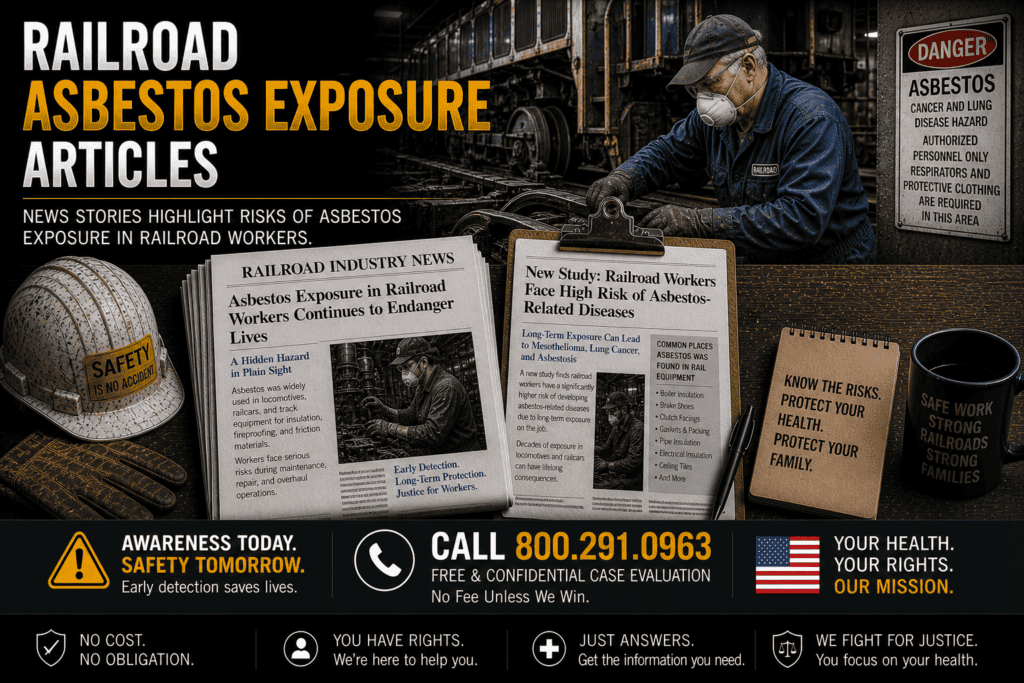
🚆 Railroad Asbestos Exposure Articles
For much of the 20th century, U.S. railroads relied heavily on asbestos to control heat, friction, and fire risks. Asbestos was used extensively in locomotives, railcars, brake systems, boilers, insulation, and maintenance facilities. Workers encountered asbestos daily in repair shops, yards, and terminals where disturbed materials released airborne fibers. Decades later, many railroad workers developed mesothelioma, asbestos-related lung cancer, and asbestosis, leading to extensive litigation, settlements, and trust fund claims.
Below is a comprehensive collection of articles covering railroad work areas, equipment, job roles, and legal options tied to railroad asbestos exposure.
🛤️ Railroad Yards & Shops Asbestos Exposure
Railroad yards and maintenance shops were among the most hazardous asbestos exposure locations. Locomotive repairs, brake servicing, and insulation replacement occurred in enclosed spaces where asbestos dust accumulated. Workers inhaled fibers repeatedly during daily maintenance, overhaul, and repair operations across rail facilities nationwide.
🏗️ Railroad Work Areas Asbestos Exposure
Railroad work areas were major sources of asbestos exposure due to constant locomotive servicing, brake repairs, and infrastructure maintenance. Enclosed shops and terminals allowed asbestos dust from insulation, boilers, and friction materials to accumulate, placing workers at high long-term risk.
🚂 Work Areas & Facilities
Locomotive Repair Shops Asbestos Exposure
Locomotive repair shops released asbestos fibers from boilers, pipe insulation, engine gaskets, and heat-resistant components during routine repairs and overhauls.
Railcar Maintenance Yards Asbestos Exposure
Railcar maintenance yards disturbed asbestos brake components, insulation, and mechanical parts during large-scale railcar servicing and inspections.
Brake Shops Asbestos Exposure
Brake shops generated airborne asbestos fibers when workers ground, sanded, and replaced brake linings and friction materials.
Roundhouses Maintenance Shop Asbestos Exposure
Roundhouses and engine terminals trapped asbestos dust during locomotive servicing, increasing inhalation risk in enclosed environments.
⚙️ Railroad Equipment & Components Asbestos Exposure
Railroad equipment relied heavily on asbestos to withstand extreme heat, friction, and vibration. Boilers, brakes, gaskets, wiring, and insulation released asbestos fibers during maintenance, repair, and replacement tasks.
🔧 Equipment & Components
Locomotive Boilers & Insulation Asbestos Exposure
Boiler lagging and thermal insulation released asbestos fibers during locomotive maintenance, retrofitting, and major overhauls.
Railroad Brakes & Friction Parts Asbestos Exposure
Brake linings and friction materials released asbestos dust during sanding, resurfacing, and replacement procedures.
Railroad Gaskets & Packing Asbestos Exposure
Cutting, scraping, and removing asbestos-containing gaskets and packing materials released fibers in confined locomotive spaces.
Railroad Electrical Equipment Asbestos Exposure
Electrical wiring, panels, and control systems used asbestos insulation that was disturbed during electrical repairs and upgrades.
Railroad Track Infrastructure Asbestos Exposure
Railroad track infrastructure exposed workers to asbestos from rail components, signals, tunnels, bridges, and maintenance repairs.
👷 Railroad Job Roles & Occupational Asbestos Exposure
Specific railroad occupations experienced intense asbestos exposure due to hands-on work with locomotives, brakes, boilers, and electrical systems. Many workers faced daily exposure for decades, contributing to high rates of asbestos-related illnesses documented in railroad claims.
👨🔧 Job Roles
Railroad Machinists Asbestos Exposure
Machinists routinely repaired asbestos-insulated locomotive machinery, engines, and mechanical systems.
Railroad Carman Asbestos Exposure
Carmen handled railcar brakes, couplers, and mechanical components containing asbestos materials.
Railroad Brake Workers Asbestos Exposure
Brake workers were exposed to asbestos dust while grinding, sanding, and replacing brake components.
Locomotive Engineers Asbestos Exposure
Engineers inhaled asbestos fibers from cab insulation, engine compartments, and ventilation systems during daily operations.
Railroad Electricians Asbestos Exposure
Electrical repairs disturbed asbestos insulation in wiring systems, switch panels, and control equipment.
Railroad Pipefitters & Boilermakers Asbestos Exposure
Pipefitters and boilermakers removed asbestos insulation from steam lines, boilers, and pressure systems.
Railroad Yard Workers Asbestos Exposure
Yard workers encountered asbestos from railcars, brakes, and aging infrastructure during switching and maintenance operations.
Railroad Track Maintenance Workers Asbestos Exposure
Track crews disturbed asbestos materials in rail components, signal systems, and surrounding infrastructure.
⚖️ Railroad Asbestos Lawsuits & Compensation
Railroad asbestos exposure has resulted in thousands of lawsuits, including claims under FELA and asbestos trust funds. This section focuses on legal rights, compensation options, settlement history, and filing deadlines for railroad workers and their families affected by asbestos-related diseases.
🧑⚖️ Legal & Claims Pages
-
Railroad Mesothelioma Lawsuit
Railroad workers may pursue lawsuits for asbestos exposure injuries. -
Railroad Asbestos Trust Fund Claims
Trust funds compensate railroad asbestos exposure victims. -
Railroad Wrongful Death Lawsuits
Families seek compensation after fatal asbestos-related illnesses. -
Railroad Statute of Limitations
Filing deadlines depend on diagnosis date and jurisdiction. -
Railroad Settlement & Verdict History
Major verdicts stem from railroad asbestos exposure cases.
📞 Legal Help for Railroad Asbestos Exposure
If you or a loved one worked in railroad yards, shops, or terminals and were later diagnosed with mesothelioma, asbestos-related lung cancer, or asbestosis, legal options may be available. Railroad workers often qualify for lawsuits, asbestos trust fund claims, and compensation covering medical care, lost wages, and long-term support.
📞 Call 800-291-0963 for a free case review.
✔ No upfront costs
✔ Nationwide representation
✔ Complete railroad exposure investigation
✔ Help with lawsuits and trust fund claims