Guide to Asbestos Trust Fund Claims - (800) 291-0963

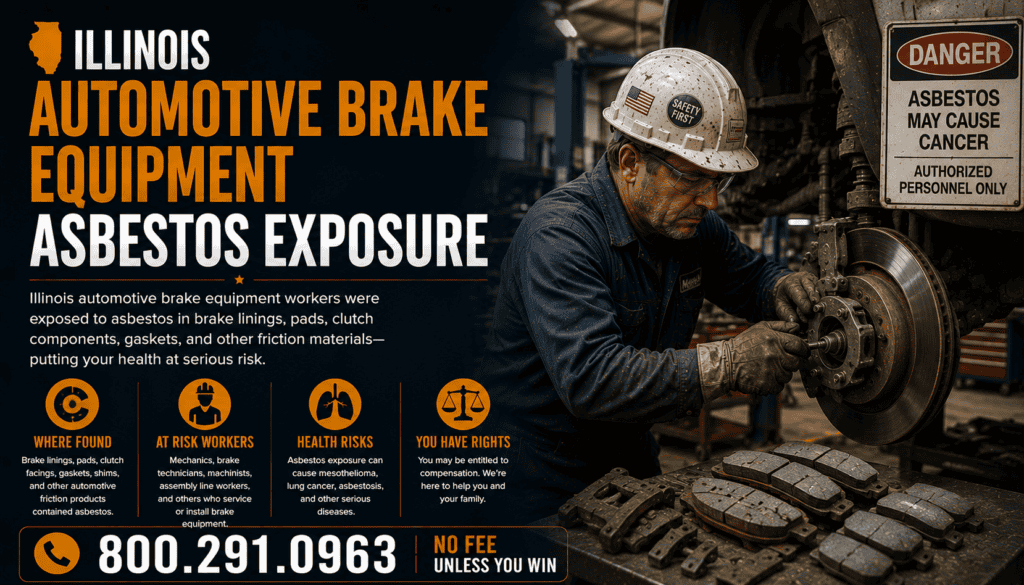
Illinois Automotive Brake Equipment Asbestos Exposure

Illinois Automotive Brake Equipment Asbestos Exposure Mesothelioma Lawsuit

🚗 Illinois Automotive Brake Equipment Asbestos Exposure

For much of the twentieth century, Illinois automotive mechanics, fleet maintenance workers, truck mechanics, bus mechanics, dealership technicians, and industrial maintenance personnel were routinely exposed to asbestos while servicing automotive brake equipment. Brake systems generated tremendous friction and heat, making asbestos an ideal material for brake linings, brake shoes, brake pads, clutch facings, and other friction products because of its exceptional heat resistance and durability.

Before asbestos regulations were strengthened, manufacturers incorporated asbestos into drum brakes, disc brakes, heavy-duty truck brakes, bus brakes, industrial vehicle brakes, construction equipment brakes, agricultural equipment brakes, railroad brake components, and many aftermarket replacement parts. During routine brake inspections, brake drum removal, grinding, sanding, machining, arcing, cleaning, and replacement, microscopic asbestos fibers were released into the air where mechanics and nearby workers could inhale them.

Many former Illinois automotive workers were later diagnosed with mesothelioma, asbestos lung cancer, and asbestosis decades after their occupational exposure.

If you worked around automotive brake equipment in Illinois, you may also find our Illinois Asbestos Exposure Sites page helpful for identifying additional facilities where asbestos exposure commonly occurred.


🚘 Automotive Brake Equipment Throughout Illinois

Illinois has long supported one of the nation’s largest transportation and automotive industries. Thousands of repair facilities, dealerships, trucking companies, municipal fleets, school bus garages, manufacturing plants, railroad maintenance facilities, and government agencies maintained vehicles equipped with asbestos-containing brake systems.

Automotive brake equipment was commonly serviced in:

  • Automobile repair shops
  • Car dealerships
  • Truck repair facilities
  • Fleet maintenance garages
  • Bus maintenance facilities
  • School district garages
  • Heavy equipment repair shops
  • Construction equipment facilities
  • Farm equipment dealerships
  • Railroad maintenance shops
  • Municipal vehicle garages
  • State highway departments
  • Manufacturing plants
  • Warehouses
  • Military vehicle maintenance facilities
  • Industrial maintenance shops
  • Delivery fleet garages
  • Taxi maintenance facilities
  • Emergency vehicle service centers
  • Heavy truck service centers

Many of these facilities continued servicing asbestos-containing brake equipment well into the late twentieth century.


🔥 Why Asbestos Was Used in Automotive Brake Equipment

Brake systems convert vehicle motion into heat through friction. Manufacturers relied on asbestos because it tolerated extremely high temperatures while providing dependable braking performance.

Asbestos was commonly used because it provided:

  • Excellent heat resistance
  • High friction performance
  • Fire resistance
  • Long service life
  • Durability
  • Wear resistance
  • Mechanical strength
  • Low manufacturing cost

Asbestos became a standard material throughout the automotive brake industry for decades.

Common asbestos-containing brake products included:

  • Brake linings
  • Brake shoes
  • Brake pads
  • Disc brake pads
  • Drum brake linings
  • Brake blocks
  • Clutch facings
  • Clutch discs
  • Brake gaskets
  • Heat shields
  • Wheel cylinder gaskets
  • Brake seals
  • Clutch insulation
  • Brake dust shields
  • Friction materials
  • Replacement brake kits
  • Industrial brake assemblies
  • Heavy equipment brake linings
  • Truck brake components
  • Bus brake linings

🛞 Drum Brake Systems

For decades, drum brakes were installed on millions of passenger vehicles, commercial trucks, buses, trailers, and industrial equipment.

Mechanics routinely serviced:

  • Brake drums
  • Brake shoes
  • Return springs
  • Wheel cylinders
  • Brake hardware
  • Backing plates
  • Brake adjusters
  • Brake linings
  • Hold-down springs
  • Parking brake assemblies

Removing brake drums often released accumulated brake dust that could contain asbestos fibers. Mechanics frequently cleaned the assemblies with compressed air, a practice now recognized as creating significant airborne asbestos exposure.


🚙 Disc Brake Systems

As disc brakes became more common, technicians continued encountering asbestos-containing friction materials.

Common brake components included:

  • Brake pads
  • Brake calipers
  • Rotors
  • Caliper hardware
  • Disc brake shims
  • Brake pistons
  • Anti-rattle clips
  • Brake backing plates
  • Heat shields
  • Friction materials

Grinding, sanding, beveling, drilling, or fitting replacement brake pads could generate additional asbestos-containing dust.


🚛 Heavy-Duty Truck and Bus Brake Equipment

Commercial trucks, buses, and heavy industrial vehicles frequently used large asbestos-containing brake assemblies because of their superior ability to withstand continuous heavy loads and high temperatures.

Common equipment included:

  • Air brake systems
  • Heavy-duty brake drums
  • Brake shoes
  • Brake blocks
  • Slack adjusters
  • Air brake chambers
  • Brake linings
  • Wheel assemblies
  • Trailer brake systems
  • Emergency brake systems

Heavy truck and bus mechanics often performed brake work every day throughout their careers.


🔧 Brake Service, Repair, and Replacement

Routine brake maintenance represented one of the most common sources of occupational asbestos exposure in the automotive industry.

Technicians regularly performed:

  • Brake inspections
  • Brake replacement
  • Brake shoe replacement
  • Brake pad replacement
  • Drum resurfacing
  • Rotor replacement
  • Brake adjustment
  • Brake drum cleaning
  • Brake hardware replacement
  • Brake system rebuilding

Before modern dust-control procedures became standard, compressed air, wire brushes, and dry cleaning methods often dispersed asbestos fibers throughout the work area. OSHA and the EPA now recommend enclosed cleaning methods or HEPA vacuum systems because disturbing brake dust can release asbestos fibers if asbestos-containing components are present.

Workers responsible for servicing automotive brake systems may also find our Illinois Automotive Mechanics Asbestos Exposure page helpful because many mechanics worked with the same asbestos-containing brake products.


👷 Occupations with High Automotive Brake Equipment Asbestos Exposure

Many different occupations routinely worked around asbestos-containing brake equipment.

Higher-risk occupations included:

  • Automotive mechanics
  • Brake specialists
  • Truck mechanics
  • Bus mechanics
  • Fleet maintenance technicians
  • Heavy equipment mechanics
  • Diesel mechanics
  • Railroad mechanics
  • Equipment maintenance workers
  • Service technicians
  • Automotive apprentices
  • Shop foremen
  • Municipal fleet mechanics
  • Highway department mechanics
  • Agricultural equipment mechanics
  • Construction equipment mechanics
  • Industrial mechanics
  • Military vehicle mechanics
  • Garage technicians
  • Maintenance supervisors

Many employees spent decades servicing brake equipment that generated asbestos-containing brake dust throughout every workday.


👨‍👩‍👧 Secondary (Take-Home) Asbestos Exposure

Workers who repaired automotive brake equipment frequently carried asbestos fibers home on:

  • Work clothing
  • Coveralls
  • Boots
  • Gloves
  • Tool bags
  • Hand tools
  • Shop rags
  • Personal vehicles

Family members could unknowingly inhale asbestos fibers while:

  • Washing contaminated clothing
  • Shaking dusty uniforms
  • Cleaning boots
  • Handling tools
  • Vacuuming vehicles
  • Greeting workers after shifts

Some spouses and children later developed mesothelioma despite never working in an automotive repair facility.

Families researching legal options should also review our Illinois Mesothelioma Lawsuits page.


⚙️ Asbestos-Containing Automotive Brake Equipment Used Throughout Illinois

For decades, Illinois automotive mechanics, truck mechanics, bus mechanics, fleet maintenance technicians, dealership service personnel, and heavy equipment mechanics routinely worked with automotive brake equipment that contained asbestos. Manufacturers incorporated asbestos into brake systems because it withstood extreme temperatures, reduced wear, and provided dependable braking performance under heavy use.

Every time brake components were inspected, removed, resurfaced, ground, sanded, drilled, or replaced, asbestos-containing brake dust could become airborne. Mechanics often performed these repairs multiple times each day, resulting in repeated occupational exposure throughout their careers.

Common asbestos-containing automotive brake equipment included:

  • Drum brakes
  • Disc brakes
  • Brake shoes
  • Brake pads
  • Brake linings
  • Brake drums
  • Brake rotors
  • Brake calipers
  • Wheel cylinders
  • Brake hardware
  • Air brake systems
  • Clutch assemblies
  • Clutch facings
  • Brake dust shields
  • Brake gaskets
  • Heat shields
  • Brake seals
  • Friction materials
  • Heavy-duty brake systems
  • Industrial brake assemblies

Many of these asbestos-containing products remained in service throughout Illinois automotive repair facilities, fleet maintenance shops, trucking companies, municipalities, and industrial plants well into the late twentieth century.

Workers responsible for installing or repairing automotive brake equipment should also review our Illinois Automotive Mechanics Asbestos Exposure page.


🛞 Drum Brake Assemblies

Drum brake systems were installed on millions of passenger vehicles, commercial trucks, buses, trailers, and industrial vehicles throughout Illinois.

Common asbestos-containing components included:

  • Brake shoes
  • Brake linings
  • Brake drums
  • Wheel cylinders
  • Return springs
  • Hold-down springs
  • Brake adjusters
  • Backing plates
  • Parking brake assemblies
  • Brake hardware

Brake dust accumulated inside the drum each time the brakes were applied. Removing the brake drum frequently released asbestos-containing dust into the mechanic’s breathing zone.

Routine drum brake repairs included:

  • Removing brake drums
  • Replacing brake shoes
  • Cleaning brake assemblies
  • Replacing wheel cylinders
  • Adjusting brake shoes
  • Installing new hardware
  • Inspecting return springs
  • Resurfacing brake drums
  • Lubricating moving parts
  • Testing brake operation

Many mechanics routinely cleaned brake assemblies using compressed air or dry brushes before safer cleaning procedures became common.


🚗 Disc Brake Systems

Disc brake systems gradually replaced drum brakes on many passenger vehicles but continued to utilize asbestos-containing friction materials for many years.

Workers commonly serviced:

  • Brake pads
  • Brake rotors
  • Brake calipers
  • Caliper pistons
  • Brake shims
  • Anti-rattle clips
  • Caliper brackets
  • Brake backing plates
  • Heat shields
  • Friction materials

Routine maintenance often included:

  • Replacing brake pads
  • Turning rotors
  • Grinding replacement pads
  • Sanding friction materials
  • Cleaning brake dust
  • Lubricating caliper slides
  • Replacing brake hardware
  • Installing new calipers
  • Bleeding brake systems
  • Testing brake performance

Grinding or sanding replacement brake pads frequently generated additional asbestos dust.


🚛 Heavy-Duty Truck Brake Equipment

Commercial trucks required larger braking systems capable of safely stopping heavy loads under demanding operating conditions.

Common asbestos-containing components included:

  • Heavy-duty brake shoes
  • Brake linings
  • Air brake drums
  • Slack adjusters
  • Brake chambers
  • Brake hardware
  • Air brake valves
  • Brake blocks
  • Trailer brake assemblies
  • Emergency brake components

Truck mechanics routinely serviced multiple brake systems each week, often working in enclosed repair bays where brake dust accumulated.


🚌 Bus and Municipal Fleet Brake Systems

School buses, transit buses, municipal vehicles, fire trucks, police vehicles, and utility fleets required frequent brake inspections because of their high annual mileage.

Mechanics routinely maintained:

  • Bus brake shoes
  • Brake drums
  • Air brake systems
  • Brake chambers
  • Parking brakes
  • Brake valves
  • Brake hardware
  • Wheel assemblies
  • Emergency brake systems
  • Hydraulic brake systems

Fleet maintenance departments often scheduled brake replacements throughout the year, exposing mechanics to asbestos repeatedly over decades.


🚜 Heavy Equipment and Industrial Vehicle Brakes

Construction equipment, agricultural machinery, forklifts, cranes, loaders, mining equipment, and industrial vehicles frequently utilized asbestos-containing brake systems.

Common equipment included:

  • Bulldozers
  • Excavators
  • Front-end loaders
  • Forklifts
  • Cranes
  • Backhoes
  • Agricultural tractors
  • Road graders
  • Dump trucks
  • Industrial hauling equipment

Mechanics servicing heavy equipment often encountered larger brake assemblies that generated substantial amounts of asbestos-containing dust during repairs.

Workers maintaining industrial equipment should also review our Illinois Equipment & Machinery Asbestos Exposure page.


🔧 Brake Service, Machining, and Replacement

Routine brake service represented one of the most common sources of occupational asbestos exposure in the automotive industry.

Technicians regularly performed:

  • Brake inspections
  • Brake replacement
  • Brake shoe replacement
  • Brake pad replacement
  • Drum resurfacing
  • Rotor machining
  • Brake adjustment
  • Brake cleaning
  • Brake hardware replacement
  • Complete brake overhauls

Before modern dust-control practices became standard, mechanics commonly:

  • Blew brake dust away with compressed air
  • Used dry brushes to clean assemblies
  • Sanded replacement brake shoes
  • Ground replacement brake pads
  • Machined worn brake drums
  • Turned brake rotors
  • Swept brake dust from shop floors
  • Cleaned workbenches with compressed air

These work practices could release microscopic asbestos fibers into the surrounding work area where they remained suspended in the air.


⚙️ Clutch Assemblies and Related Components

Many Illinois mechanics also repaired manual transmission clutch systems that contained asbestos friction materials similar to automotive brakes.

Common asbestos-containing clutch components included:

  • Clutch facings
  • Clutch discs
  • Pressure plates
  • Flywheel surfaces
  • Throwout bearings
  • Pilot bearings
  • Clutch housings
  • Clutch linkage
  • Friction discs
  • Heat-resistant insulation

Replacing worn clutch assemblies often required cleaning accumulated asbestos dust from inside the bell housing before installing replacement parts.


👷 Occupations with Increased Automotive Brake Equipment Asbestos Exposure

Many occupations routinely worked around asbestos-containing automotive brake equipment throughout Illinois.

Higher-risk occupations included:

  • Automotive mechanics
  • Brake specialists
  • Truck mechanics
  • Diesel mechanics
  • Bus mechanics
  • Fleet maintenance technicians
  • Heavy equipment mechanics
  • Agricultural equipment mechanics
  • Railroad mechanics
  • Equipment maintenance workers
  • Automotive apprentices
  • Service technicians
  • Municipal fleet mechanics
  • Highway department mechanics
  • Construction equipment mechanics
  • Industrial mechanics
  • Military vehicle mechanics
  • Shop foremen
  • Garage technicians
  • Maintenance supervisors

Many workers serviced hundreds or even thousands of brake systems during their careers, resulting in repeated asbestos exposure over many years.


👨‍👩‍👧 Secondary (Take-Home) Asbestos Exposure

Automotive brake mechanics frequently carried asbestos-containing brake dust home on:

  • Work uniforms
  • Coveralls
  • Boots
  • Gloves
  • Tool bags
  • Shop towels
  • Hand tools
  • Personal vehicles

Family members could unknowingly inhale asbestos fibers while:

  • Washing contaminated clothing
  • Shaking dusty uniforms
  • Cleaning work boots
  • Handling shop towels
  • Vacuuming personal vehicles
  • Greeting workers after shifts

Some spouses and children later developed mesothelioma despite never working in an automotive repair facility.


📋 Documenting Automotive Brake Equipment-Related Asbestos Exposure

Many former mechanics cannot remember every brake manufacturer or replacement part they installed decades ago. Fortunately, successful asbestos claims often rely on employment records, repair histories, shop records, union records, coworker testimony, fleet maintenance records, and historical evidence documenting the widespread use of asbestos-containing brake products.

Helpful documentation may include:

  • Employer records
  • Employment dates
  • Job titles
  • Repair shop or dealership names
  • Fleet maintenance records
  • Vehicle service records
  • Union membership records
  • ASE certifications
  • Coworker statements
  • Medical records
  • Social Security employment history

Workers should focus on identifying where they worked, the types of vehicles they serviced, and the brake repair work they performed rather than attempting to remember every brake manufacturer or product.


🩺 Asbestos-Related Diseases Linked to Illinois Automotive Brake Equipment Exposure

For decades, Illinois automotive mechanics, brake specialists, truck mechanics, bus mechanics, fleet maintenance technicians, heavy equipment mechanics, and dealership service technicians were routinely exposed to asbestos fibers while repairing and replacing automotive brake equipment. Brake shoes, brake pads, brake linings, clutch facings, and other friction materials frequently contained asbestos because it provided exceptional heat resistance and durability.

Every time brake drums were removed, brake dust was cleaned, brake shoes were sanded, brake pads were ground, or brake components were replaced, microscopic asbestos fibers could become airborne. Many mechanics performed these repairs every day for years without realizing the long-term health risks.

Because asbestos-related diseases usually develop 20 to 50 years after exposure, many former Illinois automotive workers were not diagnosed until decades after they left the industry.

The most common asbestos-related diseases include:

  • Mesothelioma
  • Asbestos lung cancer
  • Asbestosis
  • Pleural plaques
  • Pleural thickening
  • Other asbestos-related respiratory diseases

Even workers who did not personally replace brake linings could inhale airborne asbestos fibers while working near mechanics performing brake repairs.

Anyone who regularly worked around automotive brake equipment should inform their healthcare provider about their occupational asbestos exposure if they develop persistent respiratory symptoms.

For additional medical information, visit our Mesothelioma Symptoms and Mesothelioma Diagnosis pages.


🎗️ Mesothelioma

Mesothelioma is a rare and aggressive cancer caused almost exclusively by asbestos exposure. The disease develops after microscopic asbestos fibers become trapped within the lining surrounding the lungs, abdomen, heart, or testes. Over many years, these fibers can trigger chronic inflammation that eventually develops into cancer.

Former Illinois workers diagnosed with mesothelioma often worked around automotive brake equipment as:

  • Automotive mechanics
  • Brake specialists
  • Truck mechanics
  • Diesel mechanics
  • Bus mechanics
  • Fleet maintenance technicians
  • Heavy equipment mechanics
  • Agricultural equipment mechanics
  • Railroad mechanics
  • Equipment maintenance workers
  • Automotive apprentices
  • Service technicians
  • Municipal fleet mechanics
  • Highway department mechanics
  • Construction equipment mechanics
  • Industrial mechanics
  • Military vehicle mechanics
  • Shop foremen
  • Garage technicians
  • Maintenance supervisors

Common symptoms include:

  • Shortness of breath
  • Persistent cough
  • Chest pain
  • Fatigue
  • Unexplained weight loss
  • Fluid around the lungs

Because these symptoms often resemble more common respiratory illnesses, mesothelioma is frequently diagnosed only after the disease has progressed.


🫁 Asbestos Lung Cancer

Long-term occupational asbestos exposure significantly increases the risk of developing lung cancer. Mechanics who spent years replacing brake shoes, installing brake pads, resurfacing drums and rotors, repairing clutch assemblies, and cleaning brake dust may have inhaled asbestos fibers throughout their careers.

Common symptoms include:

  • Persistent cough
  • Chest pain
  • Wheezing
  • Coughing up blood
  • Shortness of breath
  • Hoarseness
  • Fatigue
  • Unexplained weight loss

Workers who both smoked cigarettes and experienced occupational asbestos exposure generally face a substantially greater risk of developing lung cancer than workers exposed to either risk factor alone.


🌬️ Asbestosis

Asbestosis is a chronic lung disease caused by inhaling asbestos fibers over many years. Once trapped inside the lungs, these fibers create permanent scar tissue that gradually reduces lung function.

Common symptoms include:

  • Progressive shortness of breath
  • Dry cough
  • Chest tightness
  • Fatigue
  • Reduced exercise tolerance

Although there is no cure for asbestosis, early diagnosis and ongoing medical treatment may help manage symptoms and improve quality of life.


🚗 Occupations with Increased Automotive Brake Equipment Asbestos Exposure

Although many automotive workers encountered asbestos, certain occupations experienced particularly heavy exposure because they routinely repaired, rebuilt, resurfaced, or replaced asbestos-containing brake systems.

Higher-risk occupations included:

  • Automotive mechanics
  • Brake specialists
  • Truck mechanics
  • Diesel mechanics
  • Bus mechanics
  • Fleet maintenance technicians
  • Heavy equipment mechanics
  • Agricultural equipment mechanics
  • Railroad mechanics
  • Equipment maintenance workers
  • Automotive apprentices
  • Service technicians
  • Municipal fleet mechanics
  • Highway department mechanics
  • Construction equipment mechanics
  • Industrial mechanics
  • Military vehicle mechanics
  • Shop foremen
  • Garage technicians
  • Maintenance supervisors

Employees working in automotive repair shops, dealership service departments, fleet maintenance garages, trucking companies, bus maintenance facilities, municipal garages, railroad maintenance shops, and industrial repair facilities often experienced repeated occupational asbestos exposure throughout their careers.


📋 Proving Automotive Brake Equipment-Related Asbestos Exposure

Many former mechanics cannot remember every brake manufacturer or friction product they worked with decades ago. Fortunately, successful asbestos claims often rely on employment records, repair histories, service invoices, fleet maintenance records, union records, coworker testimony, and historical evidence documenting the widespread use of asbestos-containing brake products.

Helpful documentation may include:

  • Employer records
  • Employment dates
  • Job titles
  • Repair shop or dealership names
  • Fleet maintenance records
  • Vehicle service records
  • ASE certifications
  • Union membership records
  • Coworker statements
  • Medical records
  • Social Security employment history

Workers should focus on identifying the facilities where they worked, the types of vehicles they serviced, and the brake repair work they routinely performed rather than attempting to remember every brake manufacturer or replacement part.

Workers who routinely repaired clutches and other friction components should also review our Illinois Automotive Mechanics Asbestos Exposure page because many mechanics experienced similar occupational asbestos exposure.


⚖️ Illinois Automotive Brake Equipment Mesothelioma Lawsuits

Former Illinois workers diagnosed with mesothelioma or another asbestos-related disease after working around automotive brake equipment may have legal options depending on where they worked, the vehicles they serviced, and their medical diagnosis.

Compensation may be available through:

  • Mesothelioma lawsuits
  • Asbestos bankruptcy trust fund claims
  • Wrongful death lawsuits
  • Other available legal remedies

Experienced asbestos attorneys can investigate employment histories, identify asbestos-containing brake products used throughout a worker’s career, and determine all available sources of compensation.

Learn more by visiting our Illinois Mesothelioma Lawsuits page.


💰 Asbestos Trust Fund Claims

Many manufacturers that supplied asbestos-containing brake shoes, brake pads, brake linings, clutch facings, heavy-duty brake systems, industrial friction materials, and related automotive products later established asbestos bankruptcy trust funds after filing for bankruptcy protection.

Depending on a worker’s employment history, compensation may be available through one or more asbestos trust funds.

Evidence commonly includes:

  • Employment records
  • Medical records
  • Pathology reports
  • Vehicle service records
  • Fleet maintenance records
  • Union records
  • Witness statements
  • Shop repair documentation

An experienced asbestos attorney can determine which asbestos trust funds may apply based on an individual’s documented occupational asbestos exposure.

Learn more by visiting our Asbestos Trust Fund Claims page.


👨‍👩‍👧 Wrongful Death Claims

Families who lose a loved one to mesothelioma or another asbestos-related disease may be eligible to pursue a wrongful death claim.

Compensation may help cover:

  • Medical expenses
  • Funeral and burial costs
  • Loss of financial support
  • Loss of companionship
  • Other damages permitted by law

Eligibility depends on the family’s circumstances, employment history, and applicable legal requirements.

Learn more by visiting our Wrongful Death Mesothelioma Lawsuit page.


❓ Frequently Asked Questions

Why did automotive brake equipment contain asbestos?

Manufacturers used asbestos because it provided excellent heat resistance, friction performance, fire protection, durability, and long service life. These qualities made it ideal for brake linings, brake shoes, brake pads, and clutch facings.

Which workers had the greatest asbestos exposure from automotive brake equipment?

Automotive mechanics, brake specialists, truck mechanics, diesel mechanics, bus mechanics, fleet maintenance technicians, heavy equipment mechanics, and railroad mechanics generally experienced the greatest occupational exposure.

Can workers develop mesothelioma without manufacturing brake parts?

Yes. Many workers developed mesothelioma after installing, repairing, resurfacing, cleaning, or replacing asbestos-containing brake equipment, even though they never manufactured the brake components.

Can family members be exposed to asbestos from automotive mechanics?

Yes. Spouses and children have developed mesothelioma after repeated exposure to asbestos fibers carried home on contaminated work clothing, coveralls, boots, gloves, shop towels, tools, and personal vehicles.

Can retired automotive mechanics still qualify for compensation?

Many workers diagnosed years after retirement may still have legal options. Eligibility depends on an individual’s diagnosis, work history, and applicable statutes of limitation.


📚 Additional Illinois Resources

You may also find these Illinois asbestos resources helpful:


📞 Free Case Evaluation

If you or a loved one worked around automotive brake equipment in Illinois and has been diagnosed with mesothelioma, asbestos lung cancer, or another asbestos-related disease, you may qualify for financial compensation.

Our experienced asbestos legal team can review your:

  • Employment history
  • Automotive repair work locations
  • Medical diagnosis
  • Potential asbestos exposure sources
  • Available asbestos trust fund claims
  • Legal options

📞 Call 800-291-0963

Why Families Contact Mesothelioma Help

  • Free case evaluation
  • Nationwide legal representation
  • No upfront costs or attorney fees
  • No fees unless compensation is recovered
  • Help identifying asbestos exposure sources
  • Assistance pursuing lawsuits and asbestos trust fund claims

Helping asbestos victims and their families seek justice since 1999.


Find Out If You Qualify Today!

25 Years Working With Diagnosed Mesothelioma Victims!

Our Mesothelioma lawyers work on a contingency fee basis.

This means NO MONEY OUT OF POCKET EXPENSES by the asbestos victims or their families. You will find the contingency fees to be among the lowest in the country.

Talk to a real live person!
Contact a mesothelioma lawyer today for a free, no-obligation case evaluation. 

Call (800) 291-0963 to find out if you have a valid claim.

Free Mesothelioma Case Evaluation

Get Answers From Expert Mesothelioma Attorneys