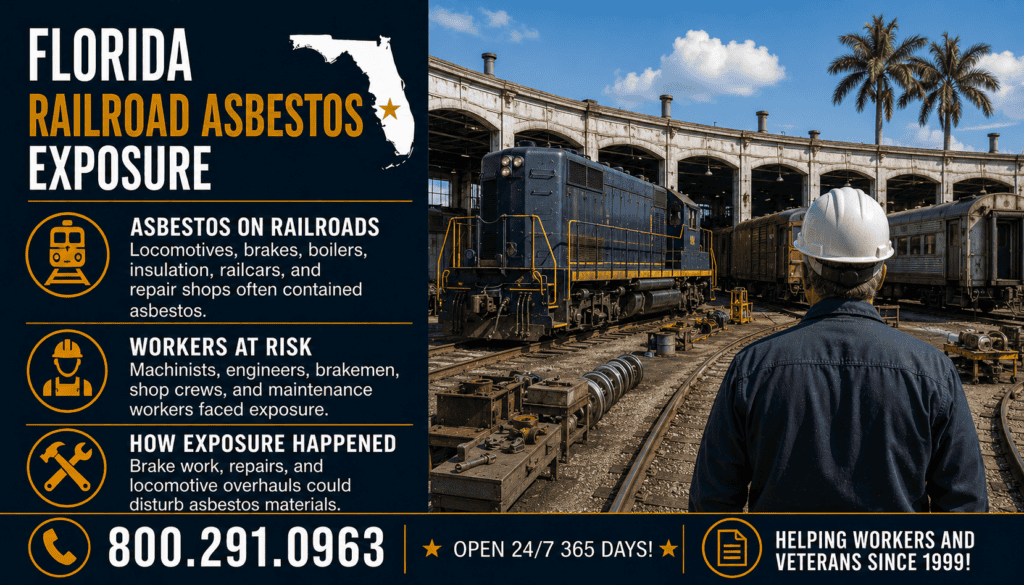
🚆 Florida Railroad Asbestos Exposure
Florida railroad asbestos exposure affected thousands of railroad workers employed in rail yards, maintenance shops, depots, terminals, and on active rail lines throughout the state. For much of the 20th century, asbestos was widely used in railroad operations because it resisted heat, friction, vibration, and fire—conditions common in locomotives, railcars, and mechanical systems. Asbestos-containing materials were built into engines, braking systems, insulation, electrical components, and rail infrastructure.
Railroad workers were exposed when asbestos materials were installed, repaired, removed, or allowed to deteriorate with age. Routine maintenance, equipment servicing, brake work, and locomotive overhauls released airborne asbestos fibers into enclosed workspaces. Many Florida railroad employees inhaled these fibers daily without protective equipment, later developing mesothelioma and other asbestos-related diseases decades after exposure.
Why Asbestos Was Widely Used in Florida Railroads
Railroad systems generate intense heat and mechanical stress, particularly in braking and engine components. Asbestos was considered ideal for railroad use because it could withstand constant friction and high temperatures.
Florida railroads relied on asbestos because it:
-
Resisted extreme heat from braking systems
-
Reduced friction and wear on moving parts
-
Provided fireproofing for engines and railcars
-
Insulated steam and diesel locomotive components
-
Met railroad safety standards of the era
Florida’s growing transportation network and freight demand led to decades of asbestos use across rail operations.
Common Asbestos-Containing Railroad Components in Florida
Asbestos was present in many critical railroad systems.
Locomotive Engines
Steam and diesel locomotives used asbestos insulation around boilers, engines, and exhaust systems.
Brake Systems
Brake shoes, pads, and linings contained asbestos friction materials that released dust during repairs and replacements.
Railcars and Passenger Cars
Railcars used asbestos insulation for heat, noise control, and fire resistance.
Electrical Systems
Electrical panels, wiring insulation, and control components contained asbestos materials.
Railroad Shops and Maintenance Facilities
Machine shops, repair depots, and roundhouses contained asbestos insulation, gaskets, and fireproofing.
Florida Railroad Jobs Most Affected by Asbestos Exposure
Railroad asbestos exposure affected both skilled trades and operational workers.
Locomotive Engineers and Firemen
Engine crews worked near asbestos-insulated engines and boilers.
Maintenance-of-Way Workers
Track and infrastructure workers encountered asbestos during facility repairs and upgrades.
Machinists and Mechanics
Mechanics repaired engines, brakes, and components containing asbestos materials.
Car Repairmen
Railcar servicing released asbestos fibers from insulation and braking systems.
Electricians and Signal Workers
Electrical work disturbed asbestos-insulated wiring and control systems.
How Florida Railroad Asbestos Exposure Occurred
Exposure occurred during routine railroad operations rather than rare accidents.
Common exposure scenarios included:
-
Grinding and replacing asbestos brake components
-
Removing insulation from engines and railcars
-
Scraping asbestos gaskets and packing materials
-
Performing locomotive overhauls
-
Renovating rail facilities and depots
-
Cleaning asbestos dust from shop floors
Because asbestos fibers are microscopic, workers often inhaled them without realizing the danger.
Secondary Asbestos Exposure From Florida Railroad Work
Railroad workers frequently carried asbestos fibers home on uniforms, boots, hair, and tools. Family members were exposed when fibers became airborne inside homes and vehicles.
Florida’s warm climate and outdoor rail facilities increased the likelihood of fibers spreading beyond work areas.
Health Risks Linked to Florida Railroad Asbestos Exposure
Long-term railroad asbestos exposure leads to serious health conditions.
Mesothelioma
Mesothelioma is an aggressive cancer affecting the lining of the lungs, abdomen, or heart and is almost always caused by asbestos exposure.
Lung Cancer
Railroad asbestos exposure significantly increases lung cancer risk.
Asbestosis
Asbestosis causes permanent lung scarring, leading to chronic breathing difficulties.
Symptoms often develop 20 to 50 years after exposure, delaying diagnosis and treatment.
Why Florida Railroad Asbestos Exposure Matters in Legal Claims
Railroad exposure plays a major role in Florida mesothelioma lawsuits and asbestos trust fund claims. Workers were exposed to asbestos from multiple manufacturers over long careers, increasing cumulative exposure.
Employment records, union documentation, repair logs, and railroad facility histories help establish exposure even decades later.
How a Florida Asbestos Lawyer Helps Railroad Workers
Asbestos lawyers experienced with railroad exposure understand how asbestos was used throughout rail systems and facilities.
A lawyer can help by:
-
Identifying railroad exposure sources
-
Linking job duties to asbestos-containing products
-
Determining responsible manufacturers and suppliers
-
Filing Florida mesothelioma lawsuits
-
Submitting asbestos trust fund claims
-
Managing all filing deadlines
Most asbestos cases are handled on a contingency-fee basis, meaning no upfront legal fees.
Frequently Asked Questions About Florida Railroad Asbestos Exposure
Can retired railroad workers file claims?
Yes. Retirement does not affect eligibility.
Are passenger rail workers eligible?
Yes. Passenger and freight rail workers may qualify.
What if the railroad facility closed?
Claims can still be filed based on historical exposure.
Do railroad laws affect asbestos claims?
Some cases may involve federal railroad statutes.
Is there a deadline to file?
Yes. Florida statutes of limitations apply.
📞 Free Case Evaluation – Florida Railroad Asbestos Exposure
If you were exposed to asbestos while working on Florida railroads and later diagnosed with mesothelioma or another asbestos-related disease, legal options may still be available.
✔️ Free, confidential case evaluation
✔️ No upfront legal fees
✔️ National asbestos law firm experience
✔️ Help identifying railroad exposure sources
✔️ Assistance with lawsuits and trust fund claims
📲 Call 800-291-0963 today to discuss your legal options
or complete the secure form below for a case review.