⚓ Florida Shipyard & Port Asbestos Exposure
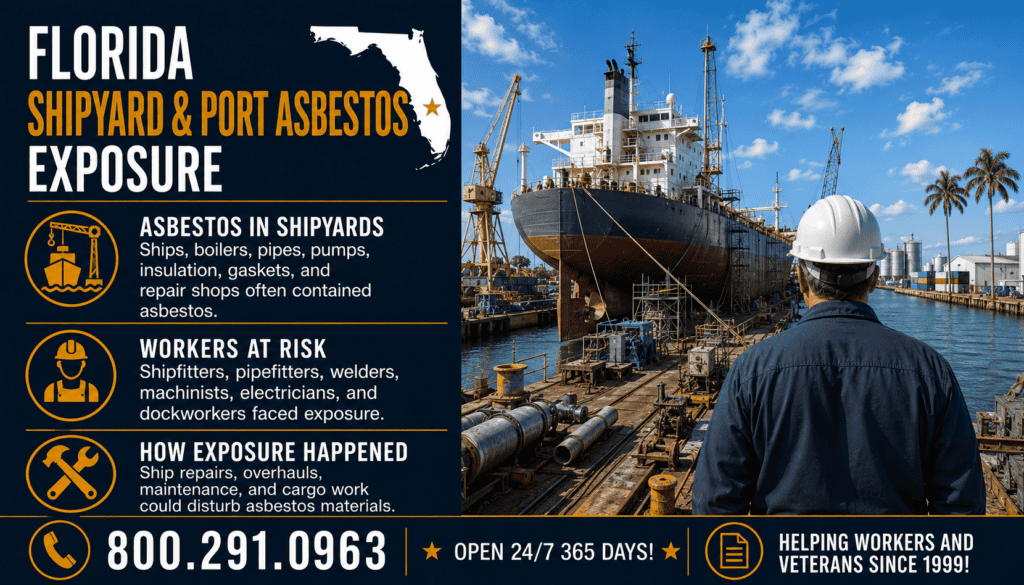
Florida shipyard and port asbestos exposure affected thousands of workers employed along the state’s extensive coastline, naval facilities, commercial ports, and maritime repair yards. For decades, asbestos was heavily used in shipbuilding and maritime operations because it resisted heat, fire, saltwater corrosion, and vibration. Asbestos-containing materials were installed throughout ships, docks, warehouses, cranes, and port infrastructure.
Shipyard and port workers were exposed when asbestos materials were installed, repaired, removed, or allowed to deteriorate over time. Routine ship repairs, retrofits, engine overhauls, and dock maintenance released airborne asbestos fibers into confined workspaces. Many Florida maritime workers inhaled these fibers daily without warnings or protective equipment, later developing mesothelioma and other asbestos-related diseases decades after exposure.
Why Asbestos Was Widely Used in Florida Shipyards and Ports
Maritime environments involve extreme heat, fire risk, and constant exposure to saltwater. Asbestos was considered an ideal material for protecting ships and port facilities.
Florida shipyards and ports relied on asbestos because it:
-
Provided fireproofing aboard ships and docks
-
Insulated engines, boilers, and piping systems
-
Resisted saltwater corrosion and moisture
-
Reduced noise and vibration in vessels
-
Met naval and maritime safety standards
Florida’s role as a major commercial shipping hub and military maritime center led to widespread asbestos use across ports and shipyards.
Common Asbestos-Containing Materials in Florida Shipyards
Asbestos was integrated into nearly every area of ship construction and repair.
Ship Engines and Boilers
Marine engines and boilers were wrapped in asbestos insulation and cement that released fibers during repairs.
Piping Systems and Valves
Steam and fuel lines were insulated with asbestos materials disturbed during maintenance.
Electrical Systems
Electrical panels, wiring insulation, and switchgear contained asbestos fireproofing materials.
Bulkheads, Decking, and Insulation
Ships used asbestos panels and insulation for fire resistance throughout compartments.
Dock Equipment and Port Infrastructure
Cranes, warehouses, and port buildings contained asbestos insulation and fireproofing.
Florida Shipyard and Port Jobs Most Affected by Asbestos Exposure
Maritime asbestos exposure affected many occupations.
Shipfitters and Pipefitters
Shipfitters installed and removed asbestos-insulated piping systems.
Boilermakers and Engine Mechanics
Engine rooms contained high concentrations of asbestos insulation.
Electricians
Electrical systems used asbestos insulation that released fibers during servicing.
Welders and Metal Workers
Welding near asbestos materials disturbed fibers through heat and vibration.
Longshoremen and Dock Workers
Dock workers encountered asbestos dust from cargo holds, warehouses, and vessels.
How Florida Shipyard & Port Asbestos Exposure Occurred
Exposure typically occurred during everyday maritime tasks.
Common exposure scenarios included:
-
Removing insulation from engines and pipes
-
Cutting asbestos panels and gaskets
-
Performing ship retrofits and overhauls
-
Repairing dock equipment and port buildings
-
Cleaning asbestos debris from confined spaces
Shipyard environments often had poor ventilation, increasing fiber concentration.
Secondary Asbestos Exposure From Florida Maritime Work
Shipyard and port workers frequently carried asbestos fibers home on clothing, hair, boots, and tools. Family members were exposed when fibers became airborne inside homes and vehicles.
Florida’s coastal climate and open dock areas increased fiber spread beyond work zones.
Health Risks Linked to Florida Shipyard & Port Asbestos Exposure
Long-term asbestos exposure in maritime environments causes serious diseases.
Mesothelioma
Mesothelioma is a rare, aggressive cancer caused almost exclusively by asbestos exposure.
Lung Cancer
Maritime asbestos exposure significantly increases lung cancer risk.
Asbestosis
Asbestosis causes permanent lung scarring and breathing difficulties.
Symptoms typically appear 20 to 50 years after exposure, delaying diagnosis.
Why Florida Shipyard & Port Asbestos Exposure Matters in Legal Claims
Shipyard and port exposure is a major factor in Florida mesothelioma lawsuits. Many workers encountered asbestos from multiple manufacturers over long careers.
Naval shipyard exposure may involve both civilian and military asbestos claims. Employment records, ship logs, and port facility histories are used to establish exposure.
How a Florida Asbestos Lawyer Helps Shipyard and Port Workers
Asbestos lawyers experienced with maritime exposure understand how asbestos was used aboard ships and port facilities.
A lawyer can help by:
-
Identifying shipyard and port exposure sources
-
Linking job duties to asbestos-containing products
-
Determining responsible manufacturers and contractors
-
Filing Florida mesothelioma lawsuits
-
Submitting asbestos trust fund claims
-
Managing all filing deadlines
Most asbestos cases are handled on a contingency-fee basis, meaning no upfront legal fees.
Frequently Asked Questions About Florida Shipyard & Port Asbestos Exposure
Can shipyard workers file claims decades later?
Yes. Florida recognizes long asbestos latency periods.
Are Navy shipyard workers eligible?
Yes. Civilian and military shipyard exposure may qualify.
What if the shipyard closed?
Claims can still be filed based on historical exposure.
Do port workers qualify even without ship work?
Yes. Port infrastructure exposure also qualifies.
Is there a deadline to file?
Yes. Florida statutes of limitations apply.
📞 Free Case Evaluation – Florida Shipyard & Port Asbestos Exposure
If you were exposed to asbestos while working in a Florida shipyard or port and later diagnosed with mesothelioma or another asbestos-related disease, legal options may still be available.
✔️ Free, confidential case evaluation
✔️ No upfront legal fees
✔️ National asbestos law firm experience
✔️ Help identifying maritime exposure sources
✔️ Assistance with lawsuits and trust fund claims
📲 Call 800-291-0963 today to discuss your legal options
or complete the secure form below for a case review.