🧱 Florida Asbestos Products Used in Construction
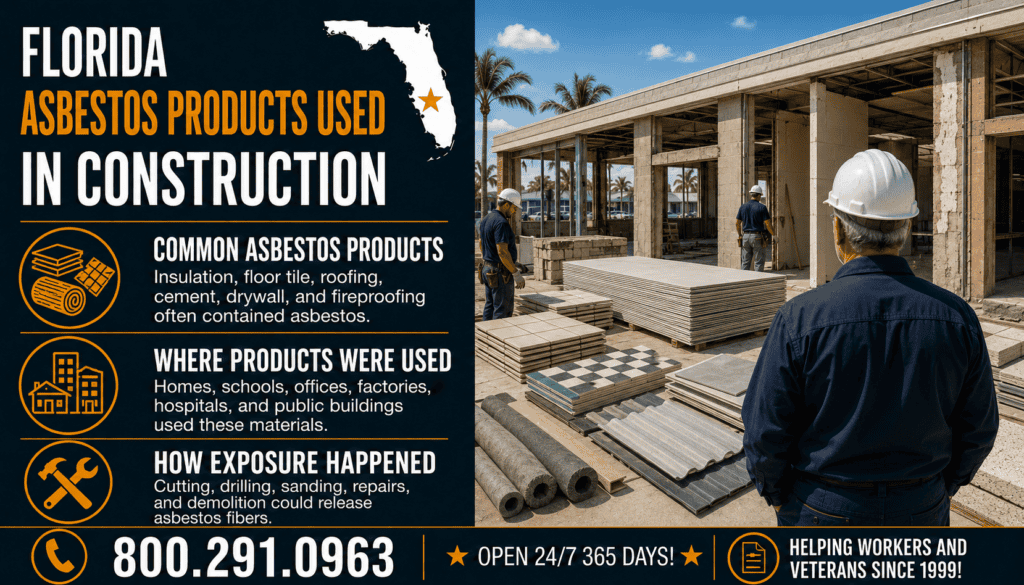
Florida asbestos products used in construction exposed thousands of workers, contractors, and residents across the state for decades. Throughout much of the 20th century, asbestos was heavily incorporated into construction materials because it was inexpensive, durable, fire-resistant, and effective at insulating against heat and sound. Homes, commercial buildings, schools, hospitals, military facilities, and public structures across Florida were built using asbestos-containing products.
Exposure occurred when these materials were installed, cut, drilled, sanded, repaired, removed, or allowed to deteriorate with age. Renovation and demolition projects were especially dangerous, releasing large amounts of airborne asbestos fibers into enclosed spaces. Many Florida construction workers and building occupants unknowingly inhaled these fibers and later developed mesothelioma and other asbestos-related diseases decades after exposure.
Why Asbestos Was Widely Used in Florida Construction Materials
Florida’s rapid population growth, coastal development, tourism industry, and military expansion drove continuous construction throughout the 1900s. Builders relied on asbestos because it met performance and safety standards of the time.
Asbestos was used in construction because it:
-
Resisted fire and high temperatures
-
Strengthened cement and structural materials
-
Insulated against heat, sound, and moisture
-
Reduced wear and corrosion
-
Met building code requirements for decades
As a result, asbestos products were installed in nearly every type of structure built before regulations limited their use.
Common Asbestos-Containing Construction Products in Florida
Asbestos exposure occurred across many building materials.
Drywall and Joint Compound
Joint compound used to finish drywall seams often contained asbestos that became airborne during sanding.
Cement Products and Siding
Asbestos cement boards, siding, panels, and pipes released fibers when cut or drilled.
Roofing Materials
Roof shingles, roofing felt, tar, flashing, and coatings contained asbestos fibers disturbed during repairs.
Flooring Materials
Vinyl tiles, linoleum backing, and adhesive mastics released asbestos dust during removal.
Insulation and Fireproofing
Spray-applied fireproofing, pipe insulation, block insulation, and thermal wraps were highly friable.
Florida Construction Workers Most Affected by Asbestos Products
Many construction trades faced daily asbestos exposure.
General Laborers
Handled demolition debris and removed asbestos-containing materials.
Carpenters
Cut drywall, wallboard, flooring, and siding containing asbestos.
Roofers
Removed asbestos shingles, felts, and coatings during reroofing projects.
Electricians and Plumbers
Disturbed asbestos behind walls, ceilings, and around pipes and wiring.
Demolition Crews
Faced extreme exposure tearing down older buildings.
How Florida Construction Exposure Occurred
Exposure occurred during routine construction tasks rather than rare incidents.
Common exposure scenarios included:
-
Sanding drywall and joint compound
-
Cutting asbestos cement products
-
Removing old flooring and roofing
-
Renovating kitchens and bathrooms
-
Demolishing older homes and buildings
-
Cleaning asbestos-contaminated debris
Asbestos fibers remained airborne for long periods, especially indoors.
Residential Construction and Home Renovation Exposure
Home renovations were a major source of asbestos exposure in Florida. Remodeling older homes disturbed asbestos hidden in walls, ceilings, attics, flooring, and roofing materials. Contractors, homeowners, and do-it-yourself renovators were often exposed.
Even small renovation projects could release dangerous fiber levels without proper abatement procedures.
Health Risks Linked to Florida Construction Asbestos Products
Long-term asbestos exposure leads to devastating illnesses.
Mesothelioma
Mesothelioma is an aggressive cancer affecting the lining of the lungs, abdomen, or heart and is almost exclusively caused by asbestos exposure.
Lung Cancer
Construction asbestos exposure significantly increases lung cancer risk.
Asbestosis
Asbestosis causes permanent lung scarring and progressive breathing difficulties.
Symptoms typically appear 20–50 years after exposure, delaying diagnosis and treatment.
Why Florida Construction Asbestos Exposure Matters in Legal Claims
Construction product exposure is a major foundation for Florida mesothelioma lawsuits and asbestos trust fund claims. Workers were exposed to products from multiple manufacturers over long careers.
Building records, job histories, union documentation, expert testimony, and historical product evidence help establish exposure decades later—even when companies are bankrupt.
How a Florida Asbestos Lawyer Helps Construction Exposure Victims
Asbestos lawyers experienced with construction exposure understand how asbestos was used in building materials.
A lawyer can help by:
-
Identifying asbestos-containing construction products
-
Linking job duties to exposure sources
-
Determining responsible manufacturers
-
Filing Florida mesothelioma lawsuits
-
Submitting asbestos trust fund claims
-
Managing all legal deadlines
Most asbestos cases are handled on a contingency-fee basis, meaning no upfront legal fees.
Frequently Asked Questions About Florida Construction Asbestos Products
Can homeowners file claims?
Yes. Residential exposure may support claims.
What if the building was renovated years ago?
Past exposure still qualifies for claims.
Are contractors and subcontractors eligible?
Yes. All construction workers may qualify.
Do I need product names?
No. Lawyers can identify products through records.
Is there a filing deadline?
Yes. Florida statutes of limitations apply.
📞 Free Case Evaluation – Florida Construction Asbestos Products
If you were exposed to asbestos construction products in Florida and later diagnosed with mesothelioma or another asbestos-related disease, legal options may still be available.
✔️ Free, confidential case evaluation
✔️ No upfront legal fees
✔️ National asbestos law firm experience
✔️ Help identifying construction exposure sources
✔️ Assistance with lawsuits and trust fund claims
📲 Call 800-291-0963 today to discuss your legal options
or complete the secure form below for a case review.