🧤 Florida Asbestos Insulation Products
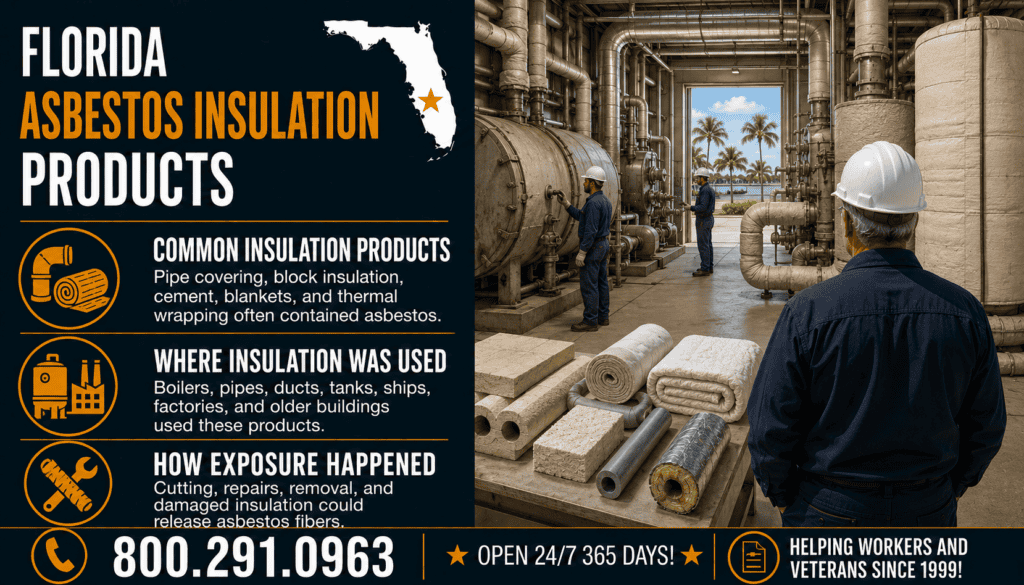
Florida asbestos insulation products exposure affected workers, residents, and families across the state for decades. Asbestos insulation was widely used in homes, commercial buildings, factories, power plants, shipyards, schools, and government facilities because it resisted heat, fire, and moisture. Pipe insulation, block insulation, spray-applied fireproofing, boiler insulation, and thermal blankets all commonly contained asbestos fibers.
Exposure occurred when insulation materials aged, deteriorated, were cut, removed, repaired, or disturbed during maintenance, renovations, and demolition. Asbestos insulation was often friable, meaning fibers easily became airborne and were inhaled without warning. Many Florida workers and building occupants later developed mesothelioma and other asbestos-related diseases decades after exposure.
Why Asbestos Was Used in Insulation Products
Insulation must withstand heat, humidity, and long-term use, especially in Florida’s climate. Asbestos was considered ideal for insulation applications throughout much of the 20th century.
Asbestos insulation was used because it:
-
Withstood extreme heat and fire
-
Provided thermal and acoustic insulation
-
Resisted moisture and corrosion
-
Strengthened insulation materials
-
Met building and safety codes for decades
As a result, asbestos insulation was installed in nearly every major building type constructed before regulations limited its use.
Common Asbestos-Containing Insulation Products in Florida
Asbestos exposure occurred across many insulation products.
Pipe Insulation
Asbestos pipe insulation came in block, wrap, and molded forms that released fibers when cut or removed.
Boiler and Furnace Insulation
Boilers, furnaces, and heaters were coated with asbestos cement and refractory insulation.
Spray-Applied Fireproofing
Sprayed insulation on ceilings, walls, and structural steel was highly friable and dangerous.
Thermal Blankets and Lagging
Thermal wraps and lagging around pipes and equipment released fibers during maintenance.
Attic and Building Insulation
Older attic insulation and wall insulation contained asbestos fibers.
Florida Workers Most Affected by Asbestos Insulation Exposure
Many occupations faced heavy exposure to asbestos insulation.
Pipefitters and Plumbers
Handled asbestos-insulated piping systems daily.
Insulation Installers and Abatement Workers
Installed and removed asbestos insulation products.
Maintenance and Facility Workers
Repaired and replaced deteriorating insulation materials.
Power Plant and Industrial Workers
Worked around heavily insulated boilers, turbines, and piping.
Shipyard and Port Workers
Encountered asbestos insulation in confined maritime environments.
How Florida Insulation Exposure Occurred
Exposure occurred during routine work activities rather than rare accidents.
Common exposure scenarios included:
-
Cutting and fitting asbestos pipe insulation
-
Removing deteriorated insulation during repairs
-
Scraping asbestos cement from boilers
-
Renovating older buildings and facilities
-
Demolishing insulated structures
-
Cleaning asbestos dust from work areas
Asbestos fibers remained airborne for long periods, especially in enclosed spaces.
Residential Insulation Exposure in Florida Homes
Homeowners, contractors, and renovators were exposed during attic work, HVAC upgrades, and home remodeling projects. Asbestos insulation hidden behind walls, ceilings, and pipes was often disturbed without proper safety measures.
Even limited residential projects could release dangerous fiber levels.
Health Risks Linked to Florida Asbestos Insulation Exposure
Long-term asbestos insulation exposure leads to serious illnesses.
Mesothelioma
Mesothelioma is an aggressive cancer almost exclusively caused by asbestos exposure.
Lung Cancer
Asbestos insulation exposure significantly increases lung cancer risk.
Asbestosis
Asbestosis causes permanent lung scarring and progressive breathing difficulties.
Symptoms often appear 20–50 years after exposure, delaying diagnosis and treatment.
Why Florida Insulation Exposure Matters in Legal Claims
Insulation exposure is one of the strongest foundations for Florida mesothelioma lawsuits and asbestos trust fund claims. Insulation products were among the most friable and dangerous asbestos materials ever used.
Product records, job histories, union documentation, expert testimony, and historical building data help establish exposure decades later—even if manufacturers declared bankruptcy.
How a Florida Asbestos Lawyer Helps Insulation Exposure Victims
Asbestos lawyers experienced with insulation exposure understand how asbestos was used across insulation products.
A lawyer can help by:
-
Identifying asbestos-containing insulation products
-
Linking exposure to specific manufacturers
-
Determining eligibility for trust fund claims
-
Filing Florida mesothelioma lawsuits
-
Managing deadlines and legal filings
Most cases are handled on a contingency-fee basis, meaning no upfront legal fees.
Frequently Asked Questions About Florida Asbestos Insulation Products
Can homeowners file claims?
Yes. Residential insulation exposure may qualify.
Are insulation installers eligible?
Yes. Installers and removers face high exposure risk.
What if insulation was removed years ago?
Past exposure still supports claims.
Do I need product names?
No. Lawyers can identify products through records.
Is there a filing deadline?
Yes. Florida statutes of limitations apply.
📞 Free Case Evaluation – Florida Asbestos Insulation Products
If you were exposed to asbestos insulation products in Florida and later diagnosed with mesothelioma or another asbestos-related disease, legal options may still be available.
✔️ Free, confidential case evaluation
✔️ No upfront legal fees
✔️ National asbestos law firm experience
✔️ Help identifying insulation exposure sources
✔️ Assistance with lawsuits and trust fund claims
📲 Call 800-291-0963 today to discuss your legal options
or complete the secure form below for a case review.