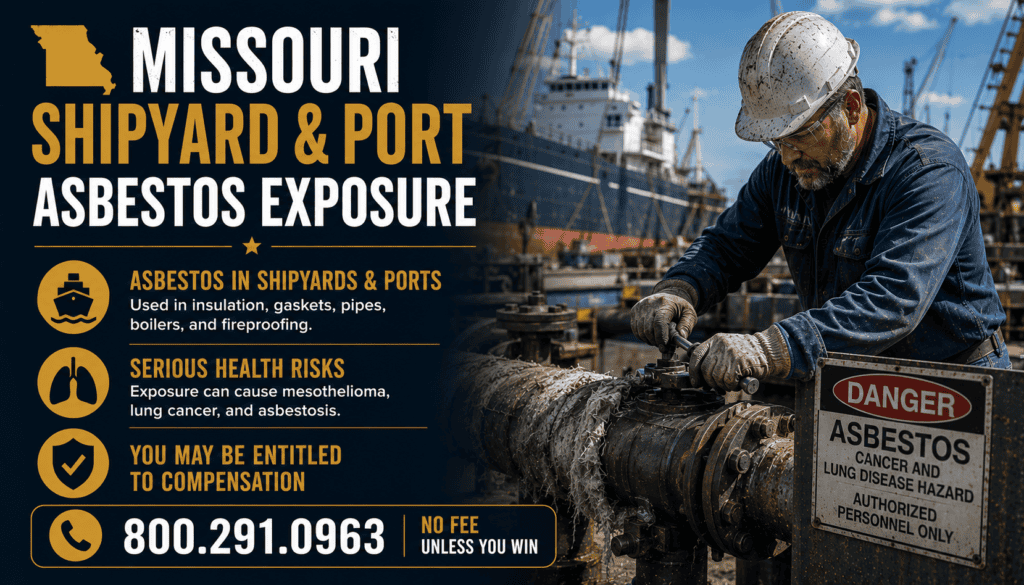
⚓ Missouri Shipyard & Port Asbestos Exposure
How Missouri Shipyard, River Port, Barge, and Dock Workers Were Exposed to Asbestos
Missouri’s location along the Mississippi River and Missouri River helped make the state an important center for commercial shipping, barge transportation, riverfront manufacturing, cargo handling, and marine equipment repair.
For decades, Missouri shipyards, river ports, industrial docks, barge terminals, warehouses, and marine repair facilities supported the transportation of agricultural products, coal, chemicals, manufactured goods, construction materials, petroleum products, machinery, and other cargo.
Behind these operations were thousands of shipyard workers, marine mechanics, dockworkers, longshoremen, engineers, boilermakers, pipefitters, electricians, welders, machinists, maintenance workers, warehouse employees, and contractors.
Many of these workers repaired or maintained:
- River barges
- Towboats
- Tugboats
- Workboats
- Marine engines
- Boilers
- Steam systems
- Pumps
- Valves
- Generators
- Cranes
- Winches
- Cargo-handling equipment
- Dockside buildings
- Port warehouses
Throughout much of the twentieth century, asbestos-containing materials were widely used in vessels and waterfront facilities because asbestos resisted heat, fire, moisture, friction, and chemical damage.
Unfortunately, repairing engines, removing insulation, replacing gaskets, servicing boilers, rebuilding pumps, renovating warehouses, and maintaining port equipment could release microscopic asbestos fibers into the surrounding air.
Former Missouri shipyard and port workers have later been diagnosed with mesothelioma, asbestos-related lung cancer, asbestosis, and other serious diseases decades after their occupational exposure occurred.
For a complete statewide overview, review Missouri Asbestos Exposure Lawsuits and Missouri Asbestos Exposure Sites & Industries. County-level research is available through Missouri Counties Asbestos Exposure & Lawsuits.
🚢 Why Missouri Shipyards and Ports Used Asbestos
Shipyards and commercial river ports required materials capable of surviving harsh industrial and marine environments.
Vessels and port equipment were constantly exposed to:
- High engine temperatures
- Boiler heat
- Steam pressure
- Electrical current
- Mechanical friction
- Moisture
- Humidity
- Vibration
- Petroleum products
- Industrial chemicals
- Fire hazards
Asbestos was considered useful because it could withstand many of these conditions while remaining relatively inexpensive.
Shipbuilders, vessel operators, equipment manufacturers, contractors, and port facility owners used asbestos because it:
- Insulated boilers and steam systems
- Protected workers from hot machinery
- Reduced fire hazards
- Resisted moisture and humidity
- Withstood mechanical vibration
- Reduced friction in braking systems
- Insulated electrical components
- Strengthened gaskets and packing materials
- Protected surrounding structures from heat
- Increased the service life of marine equipment
Asbestos-containing materials were installed aboard barges, towboats, tugboats, and work vessels, as well as inside riverfront warehouses, machine shops, maintenance buildings, boiler rooms, and cargo terminals.
When these materials deteriorated or were disturbed during repairs, asbestos fibers could become airborne and spread throughout vessels and port facilities.
Additional information about commonly used industrial products is available in Missouri Industrial Asbestos Products and Missouri Asbestos Products.
🛳️ Missouri’s River Ports and Marine Industry
Missouri’s major rivers provided transportation routes connecting farms, factories, power plants, mines, chemical facilities, grain operations, and manufacturing centers with national and international markets.
River transportation supported the movement of:
- Grain
- Coal
- Petroleum products
- Chemicals
- Fertilizer
- Steel
- Cement
- Lumber
- Industrial machinery
- Automobiles
- Construction materials
- Manufactured products
- Consumer goods
Supporting this traffic required extensive waterfront infrastructure, including:
- River ports
- Barge terminals
- Cargo docks
- Marine repair yards
- Fleeting areas
- Dry docks
- Loading terminals
- Grain elevators
- Fuel terminals
- Industrial warehouses
- Machine shops
- Equipment storage buildings
- Maintenance facilities
- Administrative buildings
Many of these facilities contained asbestos in mechanical systems, electrical equipment, pipe insulation, fireproofing, flooring, roofing, wall materials, and industrial machinery.
Workers employed near riverfront manufacturing and cargo operations should also review Missouri Industrial Asbestos Exposure.
⚙️ Common Asbestos Sources on Ships, Barges, and Towboats
Commercial vessels historically contained asbestos in areas where heat, fire, steam, or mechanical friction created demanding operating conditions.
Common asbestos-containing vessel components included:
- Boiler insulation
- Steam pipe insulation
- Engine insulation
- Exhaust insulation
- Gaskets
- Valve packing
- Pump packing
- Mechanical seals
- Clutch components
- Brake linings
- Generator insulation
- Electrical panels
- Cable insulation
- Heat shields
- Fireproof doors
- Bulkhead panels
- Deck materials
- Adhesives
- Soundproofing materials
- HVAC insulation
- Refractory materials
- Protective blankets
Shipyard and marine repair workers frequently removed aging insulation, scraped old gaskets, rebuilt pumps, repaired engines, replaced valve packing, and serviced electrical equipment.
Cutting, grinding, scraping, sanding, drilling, or tearing out these materials could create large amounts of contaminated dust.
Workers maintaining these systems should also review Missouri Industrial Machinery Asbestos Exposure and Missouri Equipment & Machinery Asbestos Exposure.
🔥 Marine Engine Rooms and Boiler Systems
Engine rooms were among the most hazardous areas aboard older commercial vessels because they contained numerous heat-producing mechanical systems in relatively confined spaces.
Equipment commonly found in marine engine rooms included:
- Diesel engines
- Steam engines
- Boilers
- Generators
- Pumps
- Compressors
- Valves
- Steam pipes
- Exhaust systems
- Heat exchangers
- Fuel systems
- Electrical controls
Asbestos insulation was frequently wrapped around boilers, pipes, exhaust components, and other hot surfaces.
Marine mechanics, engineers, oilers, firemen, boilermakers, pipefitters, electricians, and maintenance employees often worked directly beside these materials during inspections and repairs.
Because engine rooms had limited ventilation, asbestos fibers released during maintenance could remain suspended in the air and spread throughout the compartment.
Additional information about exposure involving boilers and steam equipment is available in Missouri Boiler Equipment Asbestos Exposure and Missouri Pipefitters Mesothelioma.
🏗️ Missouri Shipyards and Marine Repair Facilities
Missouri shipyards and marine repair facilities serviced commercial vessels operating along the state’s rivers.
Common projects included:
- Vessel construction
- Barge repair
- Towboat maintenance
- Tugboat repairs
- Engine rebuilding
- Boiler maintenance
- Pump rebuilding
- Valve replacement
- Electrical repairs
- Welding
- Pipe replacement
- Insulation removal
- Hull repair
- Deck replacement
- Equipment retrofitting
- Vessel demolition
Major repair projects often required several trades to work together in enclosed or poorly ventilated areas.
When one crew removed asbestos insulation or dismantled contaminated machinery, workers performing unrelated tasks nearby could also inhale the released fibers.
Asbestos dust could settle on decks, scaffolding, equipment, tools, clothing, and ventilation systems before spreading to other areas of the vessel or repair facility.
🏭 Port Buildings, Warehouses, and Cargo Terminals
Asbestos exposure was not limited to vessels.
Older waterfront buildings frequently contained asbestos in:
- Pipe insulation
- Boiler insulation
- HVAC duct insulation
- Fireproofing sprays
- Ceiling tiles
- Floor tiles
- Flooring adhesive
- Roofing materials
- Cement panels
- Wallboard
- Electrical panels
- Wiring insulation
- Equipment gaskets
- Mechanical packing
Dockworkers, warehouse employees, electricians, maintenance crews, construction workers, and contractors could disturb these materials during building repairs, renovations, equipment installation, and demolition.
Employees working inside older Missouri warehouses and industrial buildings should also review Missouri Manufacturing Asbestos Exposure, Missouri Construction Asbestos Exposure, and Missouri Construction Workers Mesothelioma.
🔩 Pipefitters and Marine Steam Systems
Pipefitters installed and repaired the piping systems that carried steam, fuel, water, compressed air, and other materials throughout commercial vessels and port facilities.
They frequently maintained:
- Steam pipes
- Fuel lines
- Water lines
- Boiler piping
- Valves
- Pumps
- Heat exchangers
- Expansion joints
- Flanges
- Pipe elbows
- Gaskets
- Valve packing
- Pipe insulation
Older marine piping was often wrapped with asbestos-containing insulation or covered with asbestos cloth and protective cement.
Pipefitters sometimes cut through these materials with knives, saws, or other hand tools before replacing damaged sections of pipe.
Grinding flange surfaces, removing gaskets, and replacing valve packing could also create contaminated dust.
Workers in this trade should review Missouri Pipefitters Mesothelioma.
⚡ Marine Electricians and Port Electrical Workers
Electricians maintained vessel electrical systems, dockside power equipment, cargo terminals, cranes, warehouses, and repair shops.
Their work commonly involved:
- Generators
- Switchgear
- Electrical panels
- Motor controls
- Circuit breakers
- Cable insulation
- Transformers
- Lighting systems
- Navigation equipment
- Communication equipment
- Crane controls
- Emergency power systems
Older electrical equipment sometimes used asbestos-containing insulation, arc shields, panel materials, and fire-resistant components.
Electricians also worked near insulated pipes, boilers, engines, and fireproofing products while running cables or repairing equipment.
Because their duties took them throughout vessels and port buildings, electricians could experience exposure in engine rooms, control rooms, warehouses, machine shops, and dockside utility areas.
Additional information is available in Missouri Electricians Asbestos Exposure.
🔥 Welders, Machinists, and Metalworkers
Welders and machinists performed essential repair work on hulls, engines, boilers, pipes, cranes, winches, and cargo equipment.
Before welding or machining could begin, workers often had to remove heat-resistant insulation, gaskets, blankets, or protective panels from the repair area.
Their duties frequently included:
- Hull repairs
- Pipe welding
- Boiler repairs
- Engine repairs
- Metal cutting
- Grinding
- Equipment fabrication
- Flange resurfacing
- Valve repairs
- Pump repairs
- Crane maintenance
- Structural modifications
Grinding and cutting could disturb nearby asbestos-containing materials or spread fibers that had already settled on surrounding surfaces.
Welders and machinists often worked alongside boilermakers, pipefitters, electricians, insulators, and maintenance employees during major vessel overhauls.
For occupation-specific research, review Missouri Workers & Occupational Asbestos Exposure.
⚓ Dockworkers and Longshoremen
Dockworkers and longshoremen loaded, unloaded, moved, and stored cargo at Missouri river ports and barge terminals.
Although they did not always repair vessels directly, they could still encounter asbestos through:
- Dust released from nearby vessel repairs
- Deteriorated insulation aboard barges
- Contaminated cargo
- Asbestos products transported through ports
- Aging warehouses
- Cargo-handling equipment
- Dockside boilers
- Heating systems
- Fireproofing materials
- Building renovations
Workers loading sacks, boxes, machinery, construction materials, or industrial products could be exposed when damaged cargo released asbestos-containing dust.
Dockworkers could also experience bystander exposure when marine repair crews worked nearby on engines, brakes, pipes, boilers, or insulated equipment.
🚛 Crane and Cargo-Equipment Operators
Missouri ports used cranes, hoists, conveyors, forklifts, winches, loaders, and other equipment to move cargo between vessels, docks, trucks, railcars, and warehouses.
These machines sometimes contained asbestos in:
- Brake linings
- Clutch components
- Gaskets
- Packing materials
- Heat shields
- Electrical components
- Engine insulation
Operators and mechanics could be exposed during brake replacements, clutch repairs, engine maintenance, and equipment overhauls.
Using compressed air to clean brake assemblies or machinery could spread asbestos dust into the surrounding maintenance area.
Employees servicing this equipment should also review Missouri Industrial Asbestos Products and Missouri Automotive Brake Equipment Asbestos Exposure.
🛠️ Dry Docks and Marine Maintenance Areas
Dry docks allowed repair crews to inspect and service vessel hulls, propulsion systems, engines, piping, and equipment outside the water.
Common dry-dock work included:
- Hull repairs
- Propeller repairs
- Engine maintenance
- Boiler servicing
- Pipe replacement
- Insulation removal
- Electrical upgrades
- Deck replacement
- Equipment retrofitting
- Vessel demolition
Major repair projects could disturb asbestos in several parts of a vessel at the same time.
Fibers released in engine rooms or interior compartments could be carried onto scaffolding, tools, decks, clothing, and nearby work platforms.
Vessel demolition presented an especially serious risk because workers cut apart older ships and barges without always knowing which materials contained asbestos.
🏭 Port Maintenance and Warehouse Workers
Port maintenance employees repaired dock buildings, warehouses, conveyor systems, cranes, boilers, heating equipment, electrical systems, and mechanical equipment.
Older port buildings often contained asbestos in:
- Boiler insulation
- Pipe coverings
- HVAC insulation
- Ceiling tiles
- Floor tiles
- Roofing materials
- Fireproofing
- Wall panels
- Electrical equipment
- Equipment gaskets
Routine repairs, renovations, and demolition could disturb these materials.
Warehouse workers could also experience exposure when asbestos dust settled on stored goods, floors, shelving, or cargo-handling equipment.
Workers employed in older industrial buildings should also review Missouri Factory Workers Asbestos Exposure.
💨 How Missouri Shipyard and Port Workers Were Exposed
Most occupational exposure occurred during everyday maintenance, repair, and cargo-handling activities rather than a single major accident.
Activities that commonly released asbestos fibers included:
- Removing boiler insulation
- Cutting pipe insulation
- Scraping old gaskets
- Replacing valve packing
- Rebuilding pumps
- Repairing engines
- Servicing generators
- Replacing brakes
- Repairing clutches
- Grinding metal surfaces
- Removing fireproof panels
- Renovating port buildings
- Demolishing older vessels
- Sweeping contaminated work areas
- Cleaning equipment with compressed air
Asbestos fibers are microscopic and have no distinctive smell. Workers could inhale or swallow them without realizing exposure had occurred.
Dust released during one repair could also travel through ventilation systems or settle in nearby areas, exposing employees who never handled the original product.
🏠 Secondary Household Asbestos Exposure
Missouri shipyard and port workers sometimes carried asbestos fibers home on their clothing, boots, gloves, hair, tools, lunch containers, and personal vehicles.
Family members could be exposed while:
- Washing dusty work clothes
- Shaking out uniforms
- Cleaning boots
- Handling work tools
- Cleaning vehicles
- Greeting workers after a shift
Spouses and other household members who regularly handled contaminated clothing could experience repeated exposure over many years.
In some cases, family members with no direct shipyard or port employment have later developed mesothelioma following secondary household exposure.
🫁 Diseases Linked to Missouri Shipyard & Port Asbestos Exposure
For decades, thousands of Missouri shipyard employees, dockworkers, marine mechanics, barge workers, and port maintenance personnel worked around vessels, boilers, steam systems, marine engines, pumps, valves, insulation, and industrial equipment that frequently contained asbestos.
Although many workers never realized they had been exposed, inhaling microscopic asbestos fibers could eventually lead to serious and sometimes life-threatening asbestos-related diseases.
One of the most challenging aspects of asbestos-related illnesses is their long latency period. Most diseases do not develop immediately after exposure. Instead, symptoms often appear 20 to 50 years after a worker’s first occupational asbestos exposure.
Former shipyard workers, marine mechanics, marine engineers, boilermakers, pipefitters, electricians, welders, machinists, dockworkers, longshoremen, crane operators, warehouse employees, maintenance workers, supervisors, and contractors employed throughout Missouri’s river ports and marine industry have later been diagnosed with asbestos-related diseases decades after leaving these occupations.
🩺 Mesothelioma
Mesothelioma is a rare and aggressive cancer that develops in the lining surrounding the lungs, abdomen, heart, or testes. Nearly every confirmed case has been linked to asbestos exposure.
Shipyard and port employees frequently encountered asbestos while repairing or maintaining:
- Barges
- Towboats
- Tugboats
- Commercial vessels
- Marine boilers
- Steam systems
- Marine engines
- Pumps
- Valves
- Compressors
- Generators
- Pipe insulation
- Boiler insulation
- Cargo-handling equipment
- Dockside machinery
Many Missouri workers spent years repairing marine equipment and port facilities without knowing the insulation, gaskets, packing materials, and fireproofing products they handled contained asbestos.
🫁 Asbestos-Related Lung Cancer
Long-term occupational exposure to asbestos may also increase the risk of developing asbestos-related lung cancer.
Shipyard and port workers often inhaled airborne asbestos fibers while replacing insulation, rebuilding engines, repairing boilers, maintaining pumps, servicing valves, replacing gaskets, overhauling marine equipment, and renovating older waterfront buildings.
Individuals seeking information about potential legal options should also review Missouri Asbestos Lung Cancer Lawsuits.
🌬️ Asbestosis
Asbestosis is a chronic lung disease caused by inhaling asbestos fibers over many years.
The disease produces permanent scarring of lung tissue that gradually reduces lung function and may cause increasing shortness of breath.
Marine mechanics, shipyard workers, boilermakers, pipefitters, welders, maintenance mechanics, and dockside repair crews who regularly worked around insulation dust and deteriorating asbestos-containing materials may have experienced significant occupational exposure.
🫀 Pleural Plaques and Pleural Thickening
Some former Missouri shipyard and port workers develop pleural plaques or pleural thickening following years of asbestos exposure.
Although these conditions are not cancer, they often indicate previous occupational asbestos exposure and may occur alongside mesothelioma, lung cancer, or other asbestos-related diseases.
⚖️ Compensation Options for Missouri Shipyard and Port Workers
Workers diagnosed with mesothelioma, asbestos-related lung cancer, asbestosis, or another asbestos-related disease may investigate several potential compensation paths depending on where they worked, the vessels or equipment they maintained, the products involved, and applicable law.
Potential compensation options may include:
- Personal injury lawsuits
- Product liability lawsuits
- Premises liability claims
- Asbestos bankruptcy trust fund claims
- Maritime claims where applicable
- Jones Act claims for qualifying maritime workers
- Longshore and Harbor Workers’ Compensation Act (LHWCA) benefits for eligible workers
- Veterans benefits for qualifying military service
- Wrongful death lawsuits filed by surviving family members
Many Missouri shipyard and port employees worked with marine products manufactured by companies that later became defendants in asbestos litigation or established asbestos bankruptcy trust funds.
Employment records, union records, shipyard documentation, maintenance records, vessel histories, product identification, and coworker testimony may help establish occupational asbestos exposure.
For a broader overview, review Missouri Asbestos Exposure Lawsuits and Missouri Mesothelioma Lawsuits & Claims.
⚓ Maritime Claims and Federal Benefits
Some shipyard and port employees may have legal rights under federal maritime laws depending on their occupation, employer, and where their asbestos exposure occurred.
Potential avenues for eligible workers may include:
- Jones Act claims for qualifying seamen
- Longshore and Harbor Workers’ Compensation Act (LHWCA) benefits
- Maritime negligence claims
- Vessel owner liability claims
- Product liability lawsuits involving asbestos-containing equipment
Whether these laws apply depends on the specific facts of each case, including job duties, employment history, vessel assignments, and the location where exposure occurred. Related Missouri resources include Missouri Mesothelioma Statute of Limitations and Missouri Wrongful Death Mesothelioma Lawsuits.
Because maritime asbestos cases can involve unique legal issues, documenting employment history and identifying asbestos-containing products may be important when researching potential compensation options.
💰 Missouri Asbestos Trust Fund Claims
Many manufacturers that supplied marine boilers, pumps, valves, engines, electrical equipment, insulation, gaskets, packing materials, refractory products, and other asbestos-containing marine equipment later established asbestos bankruptcy trust funds.
Former Missouri shipyard and port workers may qualify for one or more trust fund claims if the applicable medical and exposure requirements can be documented.
Marine mechanics, engineers, boilermakers, pipefitters, electricians, welders, dock maintenance workers, and shipyard employees frequently worked with products manufactured by companies that now participate in asbestos trust fund programs.
Learn more at Missouri Asbestos Trust Fund Claims.
⏳ Missouri Mesothelioma Statute of Limitations
Missouri law establishes deadlines for filing asbestos-related legal claims.
Because filing requirements vary according to claim type and individual circumstances, Missouri filing deadlines should be investigated promptly after a diagnosis.
Waiting too long can affect whether a claim may proceed.
Additional information is available in Missouri Mesothelioma Statute of Limitations.
🕊️ Missouri Wrongful Death Lawsuits
Sadly, many Missouri families have lost loved ones to mesothelioma and other asbestos-related diseases decades after occupational exposure occurred.
In certain situations, surviving spouses, children, or other eligible family members may have legal options involving a wrongful death claim, depending on the facts and applicable law.
These claims may seek compensation for:
- Medical expenses
- Funeral and burial costs
- Lost financial support
- Loss of companionship
- Other damages recognized under Missouri law
Learn more at Missouri Wrongful Death Mesothelioma Lawsuits.
❓ Frequently Asked Questions
Which Missouri shipyard and port workers had the highest risk of asbestos exposure?
Shipyard workers, marine mechanics, marine engineers, boilermakers, pipefitters, electricians, welders, machinists, dockworkers, longshoremen, crane operators, maintenance mechanics, warehouse employees, laborers, and contractors frequently worked around asbestos-containing equipment during repairs and maintenance.
What marine equipment commonly contained asbestos?
Commercial vessels, barges, towboats, tugboats, marine boilers, steam piping, engines, pumps, valves, generators, compressors, brake components, insulation, gaskets, packing materials, electrical equipment, and HVAC systems commonly contained asbestos.
When did most occupational asbestos exposure occur?
Many exposures occurred during vessel repairs, boiler maintenance, engine overhauls, insulation replacement, pipe repairs, equipment rebuilding, warehouse renovations, and demolition of older vessels and waterfront buildings.
Can shipyard and port workers develop mesothelioma decades later?
Yes. Mesothelioma often develops 20 to 50 years after occupational asbestos exposure, meaning many former shipyard and port workers are diagnosed long after retirement.
Could family members also be exposed?
Yes. Workers sometimes carried asbestos fibers home on dusty clothing, boots, gloves, tools, lunch containers, and personal vehicles, creating opportunities for secondary household exposure.
Do maritime workers have different legal options?
Some maritime employees may have rights under federal laws such as the Jones Act or the Longshore and Harbor Workers’ Compensation Act (LHWCA), while others may pursue product liability lawsuits or asbestos trust fund claims. The available legal options depend on the worker’s employment history and the circumstances of the exposure.
🔗 Related Missouri Resources
Continue your research with these Missouri asbestos resources:
- Missouri Asbestos Exposure Lawsuits
- Missouri Asbestos Exposure Sites & Industries
- Missouri Industrial Asbestos Exposure
- Missouri Equipment & Machinery Asbestos Exposure
- Missouri Industrial Machinery Asbestos Exposure
- Missouri Boiler Equipment Asbestos Exposure
- Missouri Workers & Occupational Asbestos Exposure
- Missouri Pipefitters Mesothelioma
- Missouri Electricians Asbestos Exposure
- Missouri Industrial Asbestos Products
- Missouri Asbestos Trust Fund Claims
- Missouri Mesothelioma Statute of Limitations
- Missouri Wrongful Death Mesothelioma Lawsuits
Call 800.291.0963 — Open 24/7, 365 Days
MesotheliomaHelp.Center provides legal and medical information to help Missouri shipyard, river port, barge, dock, and marine workers and their families understand historical asbestos exposure, compensation options, filing deadlines, and possible next steps.