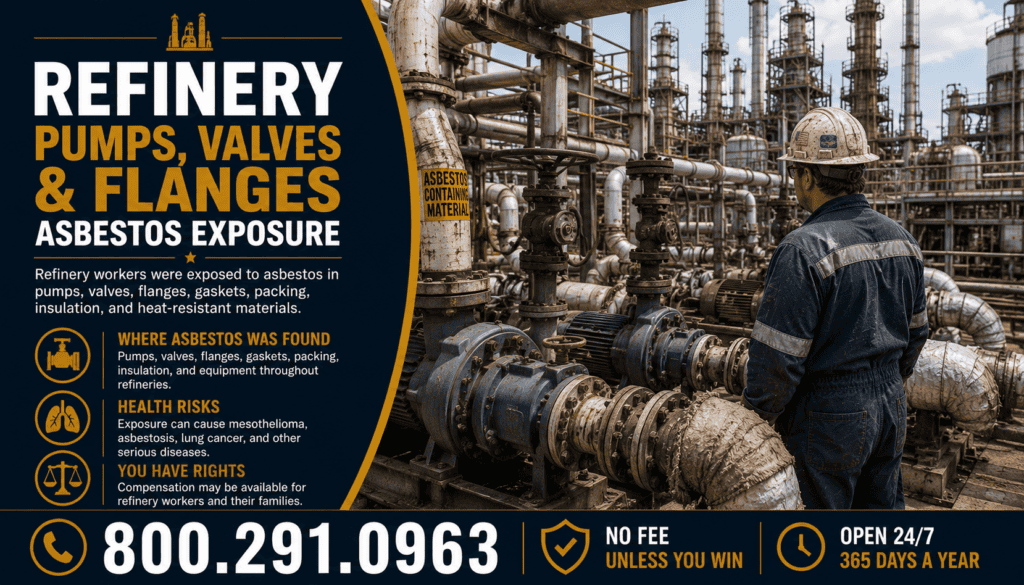
⚙️ Refinery Pumps, Valves & Flanges Asbestos Exposure
Asbestos gaskets, packing, and seals released fibers during pump and valve maintenance at oil refineries and chemical plants.
Pumps, valves, and flanges asbestos exposure was widespread at oil refineries and chemical plants, where these components controlled the movement of steam, crude oil, fuels, and hazardous chemicals through pressurized systems. For much of the 20th century, asbestos-containing materials were standard in gaskets, packing, seals, insulation, and flange assemblies because they could withstand high heat, pressure, and corrosive environments.
Maintenance and repair work on pumps and valves required frequent disassembly. Cutting, scraping, and replacing asbestos gaskets and packing released airborne asbestos fibers directly into workers’ breathing zones—often in confined areas with poor ventilation. Because these tasks were routine, exposure was repeated and cumulative, significantly increasing disease risk.
🔥 Why Asbestos Was Used in Pumps, Valves & Flanges
Refineries and chemical plants relied on asbestos components because they provided:
-
High heat resistance
-
Pressure tolerance
-
Chemical stability
-
Durability under vibration
-
Tight sealing to prevent leaks
-
Low cost and widespread availability
Asbestos gaskets sealed flanges and access points, while asbestos packing was wrapped around valve stems and pump shafts. These materials were present across entire facilities and often remained in service for decades.
🧪 How Asbestos Exposure Occurred During Pump & Valve Work
Exposure occurred during many routine and high-risk activities involving pumps, valves, and flanges.
🔧 Gasket Removal and Replacement
Old asbestos gaskets were scraped or cut from flanges during repairs. This process released fine asbestos dust into the air.
🛠️ Packing Removal and Repacking
Asbestos packing was pulled from valve stems and pump housings, often by hand, releasing fibers directly into breathing zones.
🔥 Hot Work Near Sealed Components
Welding, torch cutting, and grinding near gasketed joints disturbed asbestos materials and increased fiber release.
🏗️ Maintenance Turnarounds
During shutdowns, thousands of pumps and valves were serviced simultaneously, creating facility-wide asbestos exposure.
🌬️ Aging and Degradation
Heat cycling, vibration, and chemical exposure caused asbestos components to degrade and become friable, releasing fibers even during inspections.
👷 Workers Commonly Exposed to Pump & Valve Asbestos
Pumps, valves, and flanges asbestos exposure affected many refinery and chemical plant workers, including:
-
Maintenance mechanics
-
Pipefitters
-
Millwrights
-
Welders
-
Refinery and chemical plant operators
-
Insulators
-
Boilermakers
-
Instrumentation technicians
-
Laborers and helpers
-
Supervisors and engineers
Contractors performing shutdown work often experienced high short-term exposure across multiple units.
🫁 Diseases Linked to Pumps, Valves & Flanges Asbestos Exposure
Asbestos fibers released during pump and valve maintenance were inhaled by workers, leading to serious diseases decades later.
Common asbestos-related illnesses include:
-
Mesothelioma
-
Asbestos-related lung cancer
-
Asbestosis
-
Pleural thickening and plaques
Mesothelioma is particularly aggressive and can develop after repeated low-dose exposure or shorter periods of intense exposure.
⏳ Long Latency Period and Delayed Diagnosis
Most workers exposed during pump and valve work were diagnosed 20 to 50 years after exposure. Because pump and valve maintenance was routine, many workers underestimated how much asbestos they encountered over their careers.
⚖️ Legal Options for Pump & Valve Asbestos Exposure
Workers exposed to asbestos from pumps, valves, and flanges may qualify for compensation through:
-
Personal injury lawsuits
-
Asbestos trust fund claims
-
Wrongful death lawsuits (for surviving families)
Claims are typically filed against manufacturers of asbestos gaskets, packing, seals, and insulation products, not against refinery or chemical plant employers.
📄 Evidence Used in Pump & Valve Asbestos Claims
Successful claims often rely on:
-
Medical records confirming asbestos-related disease
-
Employment history at refinery or chemical plant sites
-
Job duties involving pump and valve maintenance
-
Maintenance logs and shutdown records
-
Identification of asbestos-containing gasket and packing products
Experienced asbestos attorneys use refinery-specific product databases to identify materials used decades earlier.
💰 Compensation Available for Pump & Valve Asbestos Exposure
Compensation may include:
-
Medical expenses and ongoing treatment
-
Lost wages and reduced earning capacity
-
Pain and suffering
-
Travel and caregiving costs
-
Loss of quality of life
Because exposure was frequent and unavoidable, pump and valve asbestos claims often result in substantial settlements.
🏦 Asbestos Trust Funds and Pump & Valve Exposure
Many companies that manufactured asbestos gaskets and packing later filed for bankruptcy and established asbestos trust funds. Workers may qualify for multiple trust fund claims, often in addition to lawsuits.
⏱️ Statute of Limitations for Pump & Valve Asbestos Claims
Deadlines vary by state and usually begin on:
-
The date of diagnosis, or
-
The date the disease was linked to asbestos exposure
Strict enforcement makes early legal review essential.
⚖️ Why Pump & Valve Asbestos Claims Are Strong
These claims are often successful because:
-
Asbestos use in pumps and valves is well documented
-
Exposure occurred repeatedly in confined spaces
-
Medical causation is clear
-
Manufacturers knew the dangers
-
Workers were not adequately warned
Courts consistently recognize pump and valve maintenance as high-risk asbestos work.
🧑⚖️ Role of Experienced Refinery Asbestos Attorneys
Pump and valve cases require attorneys who understand:
-
Refinery process systems
-
Gasket and packing materials
-
Turnaround exposure patterns
-
Multi-defendant asbestos litigation
-
Trust fund coordination
Effective representation often results in significantly higher compensation.
📞 Legal Help for Pumps, Valves & Flanges Asbestos Exposure
If you worked on pumps, valves, or flanges at an oil refinery or chemical plant and were later diagnosed with mesothelioma or another asbestos-related disease, legal help may be available.
📞 Call 800-291-0963 for a free case review
✔ No upfront costs
✔ Nationwide representation
✔ Complete refinery exposure investigation
✔ Help with lawsuits and asbestos trust fund claims