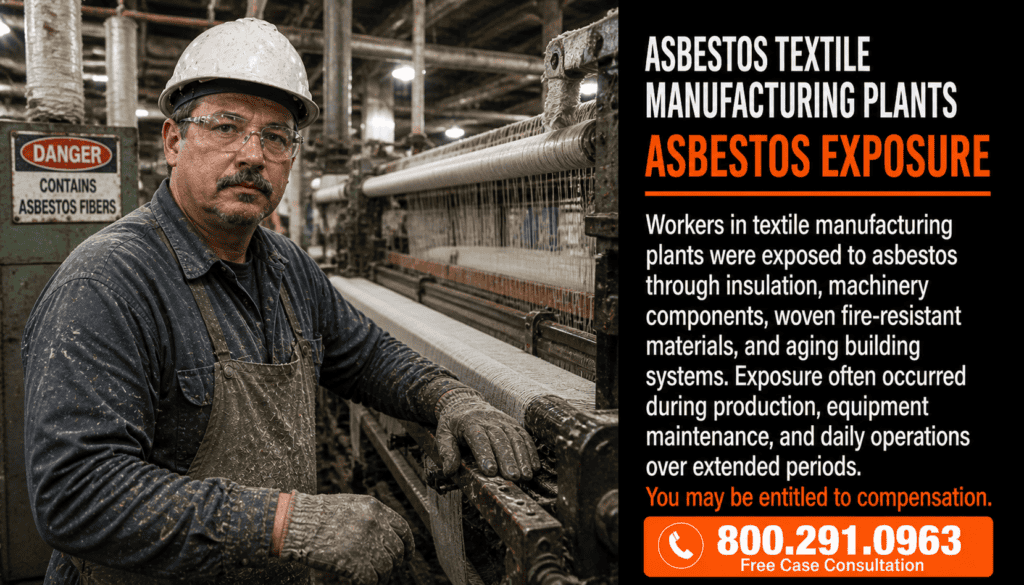
Asbestos Textile Manufacturing Plants Asbestos Exposure
If you worked in fiber receiving rooms, carding departments, weaving floors and finishing areas and later developed mesothelioma or asbestos-related lung cancer, you deserve clear answers about possible asbestos exposure. This page explains the work that mattered, the records worth keeping and the help available to you.
You do not need to remember every product name before asking for help. Start with your job, the years you worked, the equipment you handled and anyone who remembers the same work.
Historical Exposure Settings
People who worked in fiber receiving rooms, carding departments, weaving floors and finishing areas often spent years around machinery, raw materials and repairs that changed as a plant expanded. Some older products used asbestos because it resisted heat or friction. The important detail is what was actually used at your workplace, not simply how old the building was.
Your regular shift matters. Write down where you entered the building, which department you reported to and the machines closest to your station. If you moved between production and maintenance, include both areas. A floor plan, even one sketched from memory, can help someone understand your workday.
For more detail about related work, see Textile Mill Asbestos Exposure. The information there can help you recognize equipment or job duties from your own workplace.
Asbestos exposure was not limited to the person holding a tool. A worker nearby could breathe dust released during a repair, cleanup or material-handling job. Remember whether you shared enclosed rooms with contractors, whether ventilation was operating and whether dust remained on clothing after a shift.
For workers at asbestos textile manufacturing plants, one useful starting point is the plant handled asbestos fiber as a manufacturing ingredient. That detail can lead to the right purchase records, coworkers or machine documents. It is much more helpful than a general statement that the plant was dusty.
For more detail about related work, see Rubber Plant Boilers & Steam Systems. The information there can help you recognize equipment or job duties from your own workplace.
Workplaces changed over time. A machine installed in one decade might have been rebuilt later with different parts. Try to separate what you personally saw from what coworkers told you afterward. Both can be useful, but they should be identified accurately.
You can also read about Rubber Plant Asbestos Trust Funds if that subject matches a job or product you remember.
Materials and Equipment
The tasks most closely connected with this job include opening bags or containers of raw asbestos fiber, feeding and cleaning fiber-processing machines, and cutting or packing woven asbestos cloth and other finished products. These activities deserve attention because cutting, scraping, handling or disturbing certain asbestos-containing materials could release breathable fibers.
Not every gasket, piece of insulation, fabric or friction component contained asbestos. Product labels, maintenance manuals, supplier names and old invoices may show what a plant purchased. If you remember a trade name or the color of packaging, write it down without guessing at a manufacturer.
For more detail about related work, see Textile Mill Facilities, Equipment & Operations. The information there can help you recognize equipment or job duties from your own workplace.
Think about the condition of the material. Was it intact and left alone, or was someone removing, grinding, sweeping or replacing it? Was the work done in a closed room? Were there fans, local exhaust systems or respiratory protection? These details can help explain how dust reached workers.
If you handled fiber receiving rooms, carding departments, weaving floors and finishing areas, note which machines were in service during your employment. A photograph of the department, a union newsletter or an equipment manual may help identify a machine that you knew only by a shop nickname.
For more detail about related work, see Rubber Plant Piping, Valves & Gaskets. The information there can help you recognize equipment or job duties from your own workplace.
Do not disturb old materials now to collect a sample. Suspected asbestos should be assessed by qualified professionals. Your own memories and existing documents are safer places to begin.
Workers and Exposure Pathways
The people involved could include fiber handlers, carding operators, loom workers and packing crews. Some handled materials directly; others cleaned equipment, repaired nearby machinery or worked in the same room when maintenance was underway.
Write down the work you did in an ordinary week and the unusual jobs that happened during shutdowns. Those less frequent repairs sometimes involved more disturbance of insulation, seals or older machine parts than routine production.
For more detail about related work, see Textile Mill Workers & Occupations. The information there can help you recognize equipment or job duties from your own workplace.
If a supervisor assigned you to help another department, include that assignment. You might remember carrying replacement parts, sweeping debris or holding equipment while another worker completed a repair. Those are meaningful details even when your formal job title sounds unrelated.
Coworkers can sometimes recall machine models, suppliers, renovation dates or the names of outside contractors. A short conversation with someone who shared your shift may help fill gaps. Ask what they remember rather than suggesting an answer.
For more detail about related work, see Rubber Plant Machinists. The information there can help you recognize equipment or job duties from your own workplace.
Exposure can also be carried on contaminated work clothing, although a household member’s circumstances need separate evaluation. If dusty uniforms came home for washing, mention that history when discussing potential exposure.
Work History and Product Evidence
Start with a simple timeline: employer and plant name, city, department, job title, approximate start and end dates, and the tasks you remember. Add the production room where raw fiber was opened or processed if it helps pinpoint the area.
Useful records may include raw-material purchase records, production catalogs and shipping documents. Pay stubs, union cards, Social Security earnings histories, photographs and retirement paperwork can help confirm where and when you worked.
For more detail about related work, see Spinning & Carding Operations. The information there can help you recognize equipment or job duties from your own workplace.
Keep the names of coworkers or supervisors who remember the same machinery. Their accounts may help identify products or maintenance practices, especially when the employer closed or the plant was sold.
If you remember the plant handled asbestos fiber as a manufacturing ingredient, record that in your own words. Do not force exact dates or brand names you cannot recall. Approximate years and an honest description of what happened are a solid starting point.
For more detail about related work, see Rubber Plant Operators & Production Workers. The information there can help you recognize equipment or job duties from your own workplace.
Organize copies in one folder and keep originals safe. A family member can help gather old records if treatment makes the paperwork tiring. You can begin the process with an incomplete history and add details later.
Mesothelioma and Medical Documentation
Mesothelioma is a cancer linked strongly to asbestos exposure and can develop decades after contact with asbestos fibers. A diagnosis often comes long after the job or plant has disappeared. That delay does not make your work history unimportant.
If you have a mesothelioma diagnosis, ask your medical team for copies of the pathology report, imaging results and specialist notes. Those documents describe the diagnosis and treatment, while your employment records describe the workplace history.
For more detail about related work, see Cutting, Sewing & Finishing. The information there can help you recognize equipment or job duties from your own workplace.
You can tell your doctor about the jobs and materials you remember, including opening bags or containers of raw asbestos fiber. Medical decisions should be based on your own health and the clinical findings, not on an article about a particular industry.
If you are still waiting for a diagnosis, follow your medical team’s advice about testing and referrals. Shortness of breath, chest discomfort and other symptoms can have many causes. A web page cannot determine whether asbestos caused a symptom.
For more detail about related work, see Rubber Plant Maintenance & Engineering Staff. The information there can help you recognize equipment or job duties from your own workplace.
Treatment appointments can be overwhelming. Consider bringing someone you trust, keeping a written question list and asking for copies of reports as they become available. These steps also make it easier to share information with other specialists.
Asbestos-Related Lung Cancer
Asbestos exposure also increases the risk of lung cancer. Smoking adds to lung cancer risk, but a history of smoking does not erase the importance of occupational asbestos exposure.
If you have been diagnosed with lung cancer, tell your treating team about your work in fiber receiving rooms, carding departments, weaving floors and finishing areas. Mention years of employment and any specific asbestos-containing products you remember, without assuming that every dust source was asbestos.
For more detail about related work, see Textile Mill Maintenance & Repair Workers. The information there can help you recognize equipment or job duties from your own workplace.
Keep pathology, imaging and treatment records together with your job history. Doctors determine the diagnosis; questions about legal responsibility or compensation involve additional information about the workplace and products.
Families sometimes learn about asbestos exposure only after a diagnosis. If that happens, old employment records and conversations with former coworkers can still help. You do not need to solve every detail at once.
For more detail about related work, see Rubber Plant Renovation & Modernization. The information there can help you recognize equipment or job duties from your own workplace.
Anyone with new or worsening breathing symptoms should seek medical evaluation rather than relying on workplace exposure articles for a diagnosis.
Records and Practical Next Steps
Begin with what you already have: a list of employers, approximate dates, job duties and any product names. Add raw-material purchase records, production catalogs and shipping documents if those documents are available.
Next, make a short list of people who knew your work. Former coworkers, union representatives and family members may remember the equipment and department layout. Avoid contacting anyone in a way that puts you or them at risk.
For more detail about related work, see Rubber Plant Maintenance & Repair Workers. The information there can help you recognize equipment or job duties from your own workplace.
If you have a diagnosis, request copies of your medical records. Keep your treatment decisions separate from any legal inquiry; your health and medical appointments come first.
You can ask an attorney experienced in asbestos cases to review the history and explain what additional records might be useful. You should not have to identify every manufacturer before making that first call.
For more detail about related work, see Rubber Plant Demolition. The information there can help you recognize equipment or job duties from your own workplace.
Write down questions as they come to mind: Who made the equipment? Was insulation removed during shutdowns? Did contractors work in the production room where raw fiber was opened or processed? Which years are most certain? Clear notes help you avoid retelling the same story repeatedly.
Lawsuits, Trust Funds and Compensation
People diagnosed with mesothelioma or asbestos-related lung cancer after occupational exposure may have legal options. Depending on the facts, those options can include lawsuits against responsible companies and claims to asbestos bankruptcy trust funds.
Eligibility depends on the diagnosis, the exposure history, the products involved and applicable law. A job title alone does not establish a claim, and compensation is not guaranteed.
For more detail about related work, see Rubber Plant Mixing, Milling & Calendering. The information there can help you recognize equipment or job duties from your own workplace.
An asbestos attorney can explain filing deadlines in the relevant state and whether more than one company or trust might be involved. Deadlines vary, so it is sensible to ask early even if the exposure happened decades ago.
Families may also have questions about claims after a worker dies from an asbestos-related illness. Wrongful-death rules differ by state, including who can file and when. Keep death certificates and related medical records if you are helping a family member.
For more detail about related work, see Mesothelioma Lawsuit. The information there can help you recognize equipment or job duties from your own workplace.
You can ask about fees, required documents, expected timelines and whether a consultation is free. A clear explanation should help you decide what to do next without pressure.
Frequently Asked Questions
What if I cannot remember the manufacturer?
Start with your employer, job dates and the equipment in the production room where raw fiber was opened or processed. Coworkers and old records may help identify products later.
Does every worker at this plant have an asbestos claim?
No. The diagnosis, actual exposure circumstances, responsible products and filing rules all matter.
Can my family help with the records?
Yes. Family members can organize work and medical documents, write down your memories and help you contact former coworkers.
What should I do after a mesothelioma diagnosis?
Continue medical care, obtain copies of your records and consider speaking with an attorney who handles asbestos cases about possible compensation.
Summary
Asbestos Textile Manufacturing Plants Asbestos Exposure requires careful attention to the specific material, workplace task and dates. A job title or facility name alone cannot establish an asbestos exposure or a legal entitlement.
People facing a diagnosis can preserve medical documentation and production catalogs, raw-material orders, employee rosters, product specifications and industrial hygiene reports, then obtain individual medical and legal guidance.
Confirmed Sources
- OSHA — Construction Asbestos Standard
- EPA — Asbestos Information
- National Cancer Institute — Asbestos and Cancer Risk
Find Out if You May Qualify for Asbestos Compensation Today
Find out if you may qualify for asbestos compensation today. Call 800.291.0963. Help is available 24/7/365. 25+ years of experience.
This information is not be considered as legal or medical advice. Mesothelioma Help Center is not a law firm or medical provider and does not determine legal or VA eligibility.