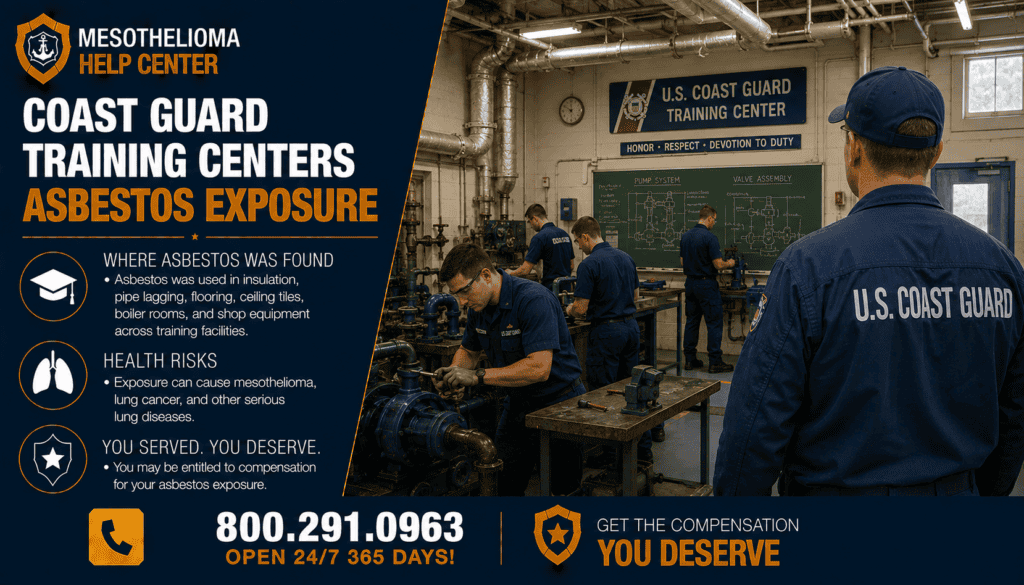
🛟 Coast Guard Training Centers Asbestos Exposure
Coast Guard training centers across the United States were major sources of asbestos exposure for decades. Many facilities were built or renovated before strict asbestos regulations, using asbestos in ceilings, floors, pipes, boilers, HVAC systems, wall materials, and fireproofing. Over time, these materials aged, cracked, and deteriorated. When disturbed by maintenance, renovations, or daily training activity, asbestos fibers were released into the air.
Service members, instructors, civilian staff, contractors, and visitors may have inhaled asbestos fibers while working or training in these buildings. Because asbestos diseases can take 20–50 years to appear, many former Coast Guard personnel are only now being diagnosed with mesothelioma, lung cancer, or asbestosis.
⚠️ Asbestos Risks at Coast Guard Training Centers
Asbestos was used heavily in military construction through the 1970s, including:
🧱 Ceiling tiles, wallboard, and plaster
🧲 Vinyl floor tiles and adhesives
🔥 Boiler rooms and steam pipe insulation
🌬️ HVAC ducts and mechanical tunnels
🧯 Fireproofing sprayed on steel beams
🔌 Electrical panels and insulation
When these materials broke down or were disturbed, asbestos fibers became airborne and easy to inhale.
👥 Who Was Exposed
🎖️ Active Duty Service Members
Recruits, trainees, instructors, and support staff often spent months or years inside older training facilities.
🛠️ Civilian Staff & Contractors
Maintenance workers, electricians, plumbers, and renovation crews were heavily exposed when cutting, drilling, or removing asbestos materials.
👨👩👧 Visitors & Civilian Trainees
Family members, visitors, and temporary trainees could also be exposed in deteriorating or renovated buildings.
📍 Where Exposure Commonly Occurred
🔥 Boiler Rooms & Mechanical Areas
Steam pipes and boilers were wrapped in asbestos insulation that released fibers when damaged.
🏫 Classrooms, Barracks & Dining Facilities
Ceiling tiles and vinyl floor tiles contained asbestos that deteriorated over time.
🛠️ Maintenance & Renovation Zones
Cutting walls, ceilings, and pipes released large amounts of asbestos dust.
🌬️ HVAC & Utility Tunnels
Asbestos fibers traveled through air ducts into classrooms and living areas.
☣️ Why Training Center Exposure Was So Dangerous
Coast Guard training centers often had:
🏗️ Buildings built between 1940–1980
🔁 Multiple renovation cycles
🚪 Poor ventilation in older structures
👥 Heavy daily occupancy
⏳ Long-term exposure over months or years
Asbestos fibers lodge deep in the lungs or abdomen and remain for decades, slowly causing inflammation, scarring, and cancer.
🩺 Asbestos-Related Diseases
Exposure at Coast Guard training centers has been linked to:
🧬 Mesothelioma (lung, abdomen, heart lining cancer)
🫁 Lung cancer
🌫️ Asbestosis (lung scarring)
🩻 Chronic respiratory disease
Symptoms often do not appear until decades after exposure.
⚖️ Legal Options After Coast Guard Asbestos Exposure
If you trained or worked at a Coast Guard training center and were later diagnosed with an asbestos-related disease, you may have legal options.
🏥 VA Benefits
Coast Guard veterans may qualify for disability compensation and VA medical care for service-connected asbestos exposure.
🧾 Lawsuits Against Product Manufacturers
While you usually cannot sue the Coast Guard itself, you can file claims against the manufacturers of asbestos products used in training facilities.
An asbestos attorney can identify exposure sources and pursue compensation for you.
📞 Free Case Evaluation – Coast Guard Training Centers
If you or a loved one trained or worked at a Coast Guard training center and later developed mesothelioma or another asbestos-related disease:
✅ Free and confidential consultation
✅ No upfront legal fees
✅ Help with VA benefits and legal claims
📱 Call 800-291-0963 today to learn your options.
❓ Frequently Asked Questions
❔ Did Coast Guard training centers use asbestos?
Yes. Most facilities built before the 1980s used asbestos in ceilings, floors, pipes, insulation, and fireproofing.
❔ Who was exposed?
Service members, instructors, civilian workers, contractors, and visitors.
❔ Can I still file a claim decades later?
Yes. Claims usually begin after diagnosis, not at the time of exposure.
❔ Can families file claims?
Yes. Families may qualify for wrongful death or secondary exposure claims.