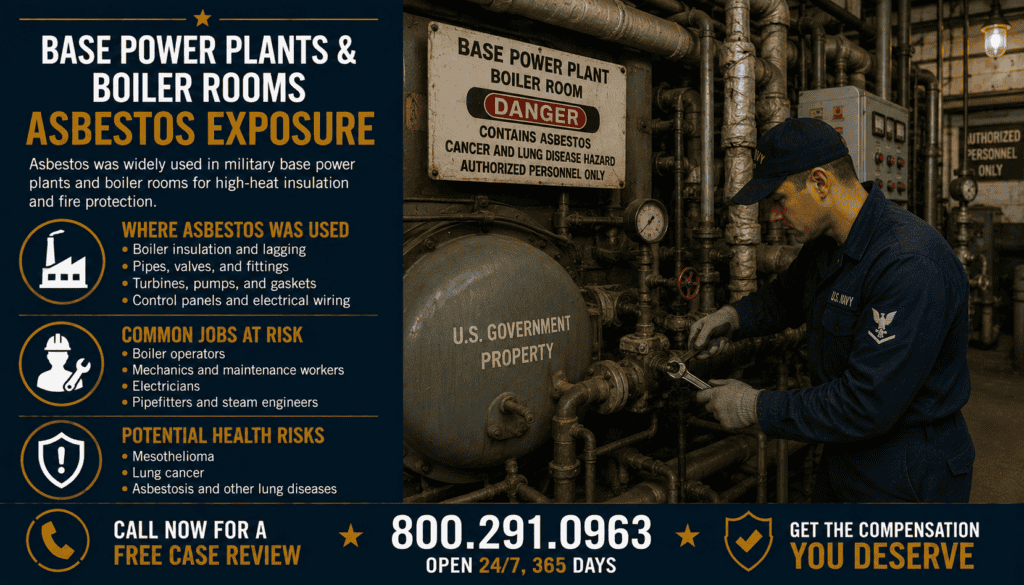
Base Power Plants Boiler Rooms Asbestos Exposure
Base power plants boiler rooms asbestos exposure research should focus on the veteran’s military installation, service dates, occupation, equipment, steam systems, pipes, valves, and maintenance duties. VA identifies boiler operators, pipefitters, insulation workers, and personnel who handled damaged asbestos-containing materials among groups that may have experienced military asbestos exposure.
Veterans can strengthen a power plant or boiler room exposure history with personnel files, facility plans, mechanical drawings, technical manuals, equipment specifications, work orders, inspection logs, procurement records, and specific coworker information. Working in a boiler room alone does not establish asbestos exposure, so equipment-, material-, task-, and date-specific evidence is important.
Base Power Plants Boiler Rooms Asbestos Exposure
Military base power plants and boiler rooms contained high-temperature equipment, steam systems, pipes, valves, and other components that required heat-resistant materials. VA identifies boiler operators, pipefitters, insulation workers, and veterans who handled damaged asbestos-containing materials among groups that may have experienced military asbestos exposure.
Working in a power plant or boiler room does not by itself prove asbestos exposure. A stronger history connects the veteran’s installation, building, service dates, occupation, equipment, system, maintenance task, material, and supporting military, facility, technical, or procurement records.
Base Power Plant and Boiler Room Systems
Exposure research should identify the exact mechanical system and work performed rather than assuming every power plant or boiler room used the same materials. Relevant systems can include boilers, steam lines, valves, pumps, generators, and associated mechanical equipment.
- Boilers and heat-producing equipment
- Steam and condensate piping
- Valves, pumps, and mechanical connections
- Power-generation and auxiliary equipment
- Mechanical rooms and utility tunnels
- Associated maintenance and repair areas
Asbestos-Containing Materials to Investigate
VA’s Veterans Health Library identifies historical military asbestos use in gaskets, valves, cements, adhesives, and pipe coverings or lagging. These categories are particularly relevant when researching older high-temperature and steam systems.
- Pipe coverings and lagging
- Boiler and mechanical insulation where documented
- Gaskets and valve materials
- Heat-resistant cements and adhesives
- Other thermal materials supported by specifications, procurement records, or manufacturer documentation
Boiler Room Maintenance and Repair Tasks
Potential exposure depends on whether asbestos-containing material was disturbed or damaged. Relevant tasks can include opening equipment, removing pipe coverings, replacing gaskets, servicing valves, repairing steam systems, and cleaning areas after maintenance.
Document the equipment, task, tools, material condition, dust, ventilation, cleanup method, frequency, duration, and nearby trades performing work in the same mechanical space.
Veterans and Trades to Investigate
VA specifically identifies boiler operators, pipefitters, welders, insulation workers, and personnel who handled damaged asbestos-containing materials among military groups potentially exposed to asbestos.
Other maintenance, utility, engineering, and power-production personnel may also warrant investigation when their documented duties placed them near disturbed asbestos-containing materials. Occupation alone is not proof of exposure.
How Fibers Could Become Airborne
VA explains that asbestos is most hazardous when asbestos-containing material becomes friable, disturbed, or damaged and fibers are released into the air. Older pipe coverings, insulation, gaskets, or other materials can therefore become an exposure concern during repair, removal, deterioration, or equipment overhaul.
Research should identify whether the material was intact or damaged, how it was removed or repaired, and whether dust-control, ventilation, respiratory protection, or cleanup procedures were used.
Documenting Power Plant and Boiler Room Exposure
- DD214 and Official Military Personnel File records
- MOS, rating, AFSC, specialty, unit, and duty-station records
- Facility plans and mechanical-system drawings
- Boiler and equipment specifications
- Technical manuals and maintenance procedures
- Work orders, inspection logs, and overhaul records
- Parts, procurement, manufacturer, and contractor records
- Specific firsthand coworker statements
National Archives states that OMPFs can contain duty stations, assignments, training, qualifications, military specialty, and separation information useful for reconstructing a veteran’s service history.
Mesothelioma and Medical Follow-Up
Veterans concerned about possible power plant or boiler room asbestos exposure should tell their health-care provider about the military installation, occupation, equipment, maintenance duties, materials, and approximate exposure dates. VA notes that asbestos-related symptoms can take 20 to 50 years to appear.
Persistent shortness of breath, coughing, chest pain, unexplained weight loss, or other concerning symptoms should be evaluated by a qualified medical professional. A boiler room work history alone cannot diagnose disease.
VA Benefits, Trust Funds and Legal Options
VA states that disability compensation based on asbestos exposure requires evidence of asbestos contact during military service and a disease or disability related to that exposure. Evidence may include military occupational specialty, duty location, medical records, and medical evidence connecting the condition to military asbestos exposure.
Separate asbestos trust fund or civil claims may involve different requirements concerning products, manufacturers, contractors, exposure evidence, jurisdiction, and filing deadlines.
Frequently Asked Questions
Does VA identify boiler operators as potentially exposed to asbestos?
Yes. VA’s Veterans Health Library specifically includes boiler operators among military personnel who may have been exposed to asbestos.
What asbestos-containing materials are relevant to boiler rooms?
VA identifies historical military asbestos use in pipe coverings or lagging, gaskets, valves, cements, and adhesives. Specific equipment and materials should still be verified through technical or facility records.
Does working in a military power plant prove asbestos exposure?
No. Exposure research should connect the veteran to specific equipment, materials, tasks, locations, and dates when asbestos-containing material was present and disturbed.
What records can help establish boiler room duties?
Personnel files, specialty records, facility drawings, technical manuals, work orders, inspection logs, equipment records, procurement files, and detailed coworker statements can help reconstruct the work history.
How long can asbestos-related symptoms take to appear?
VA states that symptoms associated with asbestos-related diseases often do not appear until 20 to 50 years after exposure.
Confirmed Sources
Review Your Power Plant or Boiler Room Exposure History
Write down the military base, building, unit, service dates, occupation, boilers, steam systems, pipes, valves, equipment, maintenance duties, materials, contractors, and coworkers you remember. Preserve available service, facility, technical, procurement, maintenance, and medical records and clearly distinguish documentation from recollection.
Call 800.291.0963 for a no-obligation case evaluation and to speak with a real person 24/7, 365 days a year. Mesothelioma Help Center is not a law firm or medical provider and does not determine VA eligibility.
Disclaimer: General information only—not legal or medical advice. This website is not a law firm. Exposure, VA eligibility, liability and deadlines vary by case and jurisdiction. Do not disturb suspected asbestos. Past results do not guarantee future outcomes.