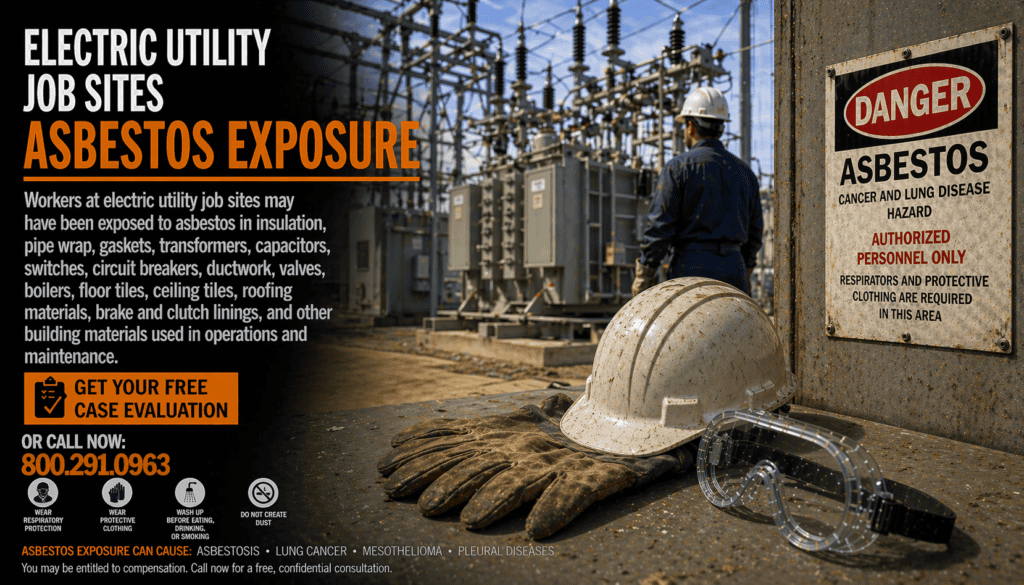
Electric Utility Job Sites Asbestos Exposure
If you worked in power stations, substations, generation buildings and utility maintenance shops and later developed mesothelioma or asbestos-related lung cancer, you may be trying to understand what you breathed on the job. You deserve clear information about possible asbestos exposure and the help available.
You can begin with the jobs you remember, even if you cannot name every product. The sections below explain what to record, which medical questions to ask, and how families can help.
Where Asbestos Exposure Could Occur
For electric utility work, asbestos exposure was not limited to the person holding a cutting tool. People who loaded trucks, moved debris, handled hoses, checked progress or cleaned the site could also have worked close to disturbed materials. Utility crews worked in generating stations, substations, maintenance shops, and service buildings. Older boilers, turbines, piping, and some electrical equipment used heat-resistant materials, some of which contained asbestos. A lineworker working outdoors may have a very different history from a mechanic inside a turbine hall.
Work schedules matter. A short assignment during stripping, torch cutting or mechanical removal can be more relevant than months spent at a site after hazardous materials had already been removed. Record the tasks you remember rather than guessing at a dose. The Construction Laborers article covers a related type of work. The Demolition Workers and Laborers article covers a related type of work. The Manufacturing Plant Piping Valves and Gaskets article covers a related type of work. At power stations, substations, generation buildings and utility maintenance shops, contractors often changed as one phase ended and another began. If you remember the general contractor, the foreman, a nearby business or the year of the job, those details can help locate old records.
Workers who later developed mesothelioma or lung cancer should write down their past electric utility work assignments while the details are still familiar. A family member can help assemble a timeline if the worker is ill. Utility generating stations may contain legacy insulation around steam turbines, boilers and piping even after some equipment has been upgraded. Substation work differs from powerhouse work; identify whether the assignment involved control buildings, switchgear or outdoor lines.
Materials and Equipment That Matter
Potential materials on these jobs included boiler insulation, steam piping, electrical arc barriers, gaskets and fireproofing. Whether any particular item contained asbestos depends on its age, manufacturer and composition. Insulation on boilers, pipes and other mechanical equipment was often hidden behind walls or inside service areas. Crews could discover it only after opening an enclosure or cutting through a damaged section.
Shutdown work often brought insulation contractors, electricians, mechanics, and pipefitters into one plant. A worker repairing a pump could be near a crew removing thermal insulation. Record the unit number, outage year, contractor, and equipment involved. The Construction Electricians article covers a related type of work. The Demolition Debris Handling and Cleanup article covers a related type of work. You can also read about Demolition Mesothelioma Lawsuit when reviewing possible claims. Flooring and adhesive present a different concern. Intact products may release little dust, but grinding, scraping or breaking older material can disturb it. The work method matters as much as the product name.
Sprayed fireproofing, old acoustical coatings and insulation can become dusty when struck by equipment or during debris handling. A worker may remember a fluffy coating on beams, rather than the trade name of the product. Never collect or break suspected asbestos materials yourself to prove a past exposure. Trained professionals should handle sampling and removal. Photographs and existing project records are safer starting points. EPA rules for covered demolition and renovation projects require inspections and asbestos-related work practices. Requirements depend on the facility and project, and the presence of an inspection does not establish what any individual breathed.
Workers and Job Duties
Jobs to review include those performed by utility electricians, line crews, powerhouse mechanics and maintenance contractors. The same person may have performed several duties over the course of a project. For a substation assignment, describe whether you worked on transformers, control buildings, cable trenches, or nearby structures. For a power station, note the boiler, turbine, valve, or piping system. Those distinctions help avoid treating every electric utility job as the same exposure.
Laborers may have carried broken material, cleaned equipment, removed temporary barriers and loaded dumpsters. Operators may have worked inside cabs near active work, or climbed out to help reposition equipment. The Construction Supervisors and Foremen article covers a related type of work. The Pipes Boilers and Mechanical Systems Demolition article covers a related type of work. Supervisors may have walked through active areas to check progress or resolve problems. Their job title alone does not establish exposure, but repeated visits to dusty work zones may matter.
Workers employed by different subcontractors sometimes shared the same work area. A person hired for electrical, plumbing or concrete work may have been nearby while another crew removed suspect materials. Think about whether the job involved dry sweeping, compressed-air cleaning, sawing or grinding. OSHA restricts certain dust-producing practices when asbestos-containing material is involved. Family members may also remember dusty clothing arriving home. If clothing was shaken out or washed with household laundry, that history is worth mentioning when seeking an assessment of possible secondary exposure.
Records That Can Help
Begin with utility facility names, work orders, outage schedules and equipment maintenance records. Exact dates are helpful, but even an approximate season or a contractor name can make a difference. Create a simple list of each job: location, employer, trade, tasks, coworkers and materials encountered. If several projects are involved, use a separate line for each one.
Utility maintenance orders, outage schedules, equipment manuals, and purchasing files can help identify materials installed over time. A plant may have replaced insulation in stages, so the same room could contain products from different decades. Do not assume one product was used throughout the site. The Construction Plumbers and Pipefitters article covers a related type of work. The Flooring Tile and Mastic Demolition article covers a related type of work. You can also read about Mesothelioma Lawsuit when reviewing possible claims. Old pay statements, W-2 forms, union dispatch slips, pension records, Social Security earnings information and employment files can help establish where someone worked.
Project plans, demolition permits, inspection reports, asbestos surveys, abatement contracts and disposal paperwork may help identify materials that were present. Availability varies by owner and record-retention policy. Photographs, hard-hat stickers, equipment numbers and old calendars can help recover a site name. Coworkers may remember who performed insulation removal or which building was torn down first. Keep original medical records and work records together, but do not alter them. Make copies for appointments and legal consultations, and keep a short note explaining how each record relates to the job.
Mesothelioma After Workplace Exposure
Mesothelioma is a cancer associated with asbestos exposure. It can appear many years after a worker last handled materials on a electric utility work job. Symptoms can include shortness of breath, chest discomfort, persistent cough, fatigue or abdominal symptoms, depending on the location of the disease. These symptoms also occur with other conditions.
A diagnosis usually involves imaging and a tissue or fluid evaluation interpreted by qualified specialists. If you have a pathology report, keep a copy with the dates of your scans and appointments. Ask the medical team what the diagnosis means, which treatments are available and whether a mesothelioma specialist should review the case. Treatment choices depend on the individual patient.
If someone is receiving treatment, relatives can help by tracking appointments, prescriptions, travel costs and time away from work. These records can also be useful when discussing financial assistance. If coworkers performed different tasks, note those differences. One person may have removed insulation while another handled only clean debris; their potential exposures are not necessarily the same.
Asbestos-Related Lung Cancer
Asbestos exposure can also contribute to lung cancer. A history of electric utility work work may be relevant even when the diagnosis is not mesothelioma. Smoking is an important cause of lung cancer, but it does not rule out asbestos as a contributing exposure. A clinician can review the complete medical and occupational history.
Keep pathology results, imaging reports, oncology notes and any records of prior respiratory disease. A treating clinician can explain the diagnosis and recommended treatment. People may not remember every dusty task from years earlier. Start with the work that stands out: removing insulation, cutting old building material, sweeping debris or working next to an abatement crew.
If the person who worked at the site has died, relatives can assemble the same work timeline from pay records, union files and conversations with former coworkers. Workers and families should not assume a claim is impossible simply because the exposure happened decades ago. Deadlines and eligibility vary, so a timely review is worthwhile.
What Workers and Families Can Do
If you are still working around suspect material, do not disturb it to find out what it is. Report the concern through the site safety process and request appropriate identification and controls. For a past job, write down what you remember now. Include the building or structure, the part of the job you worked on, what the dust looked like and whether protective equipment was provided.
If you have been diagnosed with an asbestos-related disease, request copies of your pathology report, scans and treatment records. Keep a separate folder for employment history. The Construction Painters article covers a related type of work. The Industrial Facility Demolition article covers a related type of work. Ask former coworkers what they recall without asking them to guess. Names of subcontractors, product packaging and the location of equipment can be particularly helpful.
If you are helping a sick relative, take on one manageable task at a time. Organizing a timeline and gathering documents can be more useful than searching for a product name that nobody remembers. If the exposure happened in another state, include that in your notes. Where the work occurred and where the person lived can affect which legal rules apply.
Lawsuits, Trust Funds and Compensation
Workers diagnosed with mesothelioma or asbestos-related lung cancer may have options involving lawsuits, asbestos bankruptcy trust funds or other benefits, depending on the facts. A lawsuit generally examines who made, supplied or controlled the asbestos-containing products involved. A trust fund claim has its own evidence requirements and payment rules.
Workers compensation, veterans benefits and other programs may be relevant for some people. These options are not interchangeable, and pursuing one may affect another. The Building Demolition article covers a related type of work. The Manufacturing Plant Boilers and Steam Systems article covers a related type of work. Compensation can sometimes address medical expenses, lost income and other losses. No amount is guaranteed, and the result depends on the evidence and applicable law.
Families may have a wrongful-death or survival claim after an asbestos-related death. Who may file and the available damages depend on state law. Filing deadlines can be short and may differ by state and claim type. An attorney experienced in asbestos cases can explain the deadlines without requiring you to have every employment document first.
Frequently Asked Questions
Did all electric utility sites contain asbestos?
No. Materials varied across facilities, equipment, and decades.
What if I worked at a substation rather than a power plant?
Describe the buildings and equipment you worked around. Substation and generating-station tasks can be very different.
Can outage records help?
Yes. Outage schedules and maintenance orders may identify contractors, dates, and equipment work.
Could nearby insulation removal affect other workers?
It could, depending on the material, controls, and distance from the work.
Do I need every record before asking about my options?
No. Gather what you can and ask promptly about medical and legal next steps.
Summary
If you worked on these jobs, begin with your employers, sites, tasks, and approximate years. Keep your medical reports and ask about legal deadlines early. You do not need to guess about products you cannot remember.
Confirmed Sources
For workplace safety rules, see OSHA’s construction asbestos standard. The EPA’s asbestos guidance explains how asbestos is managed during building work. For medical information, the National Cancer Institute explains mesothelioma. These resources can help you understand the risks and the questions to ask.
Find Out If You May Qualify
Find out if you may qualify for asbestos compensation today. Call 800.291.0963. Help is available 24/7/365. 25+ years of experience. Submit Your Case Here.
Disclaimer: This information is not legal or medical advice. Mesothelioma Help Center is not a law firm or medical provider and does not determine legal or VA eligibility.