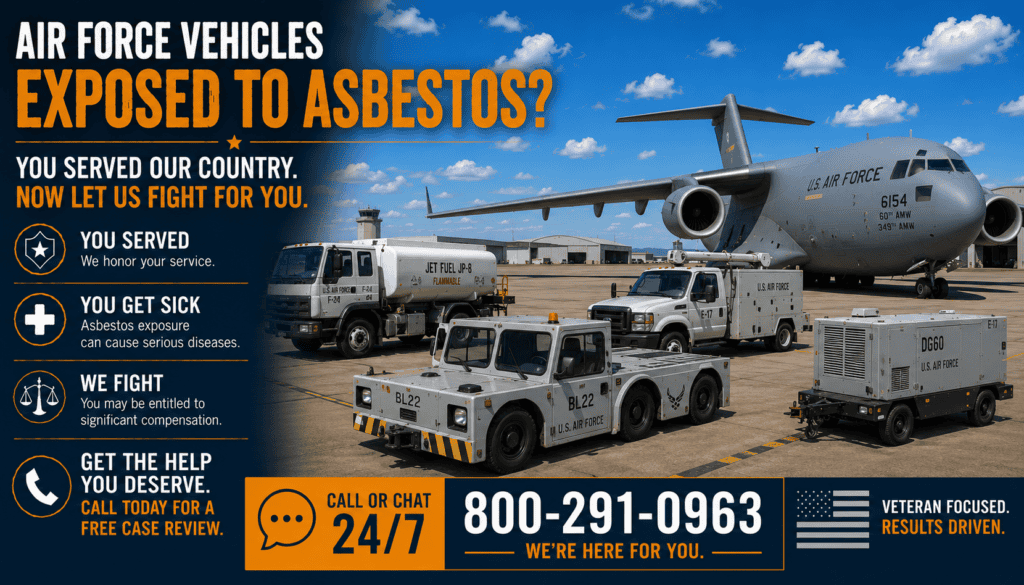
🚙 Air Force Vehicles Asbestos Exposure
U.S. Air Force bases used a wide range of vehicles, including cargo trucks, buses, staff cars, maintenance vehicles, fire apparatus, refueling vehicles, utility trucks, and other specialty equipment. Depending on the manufacturer, model, component, and era, some older Air Force vehicles used asbestos-containing brakes, clutches, gaskets, seals, or other heat-resistant materials.
Serving around or driving an Air Force vehicle does not automatically prove asbestos exposure. A stronger history connects the veteran’s AFSC, base, vehicle type, maintenance activity, service period, and specific component to a material that may have contained asbestos and was disturbed.
For repair-focused information, see Air Force Vehicle Maintenance Equipment Asbestos Exposure. For broader equipment exposure, see Air Force Equipment Asbestos Exposure.
🚙 Air Force Vehicles Asbestos Exposure
Historical vehicle components sometimes used asbestos because the mineral resisted heat and friction. The most relevant areas to investigate are generally brakes, clutches, gaskets, seals, and other high-temperature components.
Potential exposure could occur during maintenance, repair, cleaning, overhaul, or nearby work when asbestos-containing components were disturbed. Exposure history depends on the exact vehicle, component, work practice, and time period.
🚚 Trucks, Buses and Service Vehicles
Air Force bases relied on cargo trucks, personnel buses, utility vehicles, maintenance trucks, and other service vehicles for daily operations. Older models may have used asbestos-containing friction or gasket products.
Tasks that may warrant investigation include:
- Brake replacement or adjustment
- Clutch service
- Engine overhaul
- Transmission repair
- Exhaust-system maintenance
- Cleaning vehicle components after repair
Not every Air Force truck or bus contained asbestos. Make, model, manufacturer, technical manual, part number, and service era can help identify the products actually used.
🚒 Fire Trucks, Refueling Vehicles and Specialty Equipment
Fire trucks, crash-response vehicles, fuel trucks, tankers, ambulances, and other specialty vehicles were also part of Air Force operations. These vehicles often used heavy-duty braking systems, engines, exhaust components, and other heat-resistant parts.
Depending on the model and era, some of these components may have contained asbestos.
Potentially relevant work may include:
- Heavy-duty brake service
- Engine and exhaust repair
- Gasket replacement
- Clutch and drivetrain maintenance
- Overhaul of older specialty vehicles
- Cleaning dust or debris from repair areas
🛞 Brakes, Clutches and Friction Materials
Some historical brake linings and clutch facings contained asbestos. Maintenance personnel could potentially encounter fibers when these components were removed, cleaned, handled, or replaced.
Important exposure details can include:
- Whether brake drums or housings were opened
- Whether dry brushing or compressed air was used
- Whether worn linings were broken or damaged
- How frequently brake or clutch work occurred
- Whether the veteran worked nearby while other mechanics performed repairs
For more detailed maintenance information, see Air Force Vehicle Maintenance Equipment Asbestos Exposure.
⚙️ Gaskets, Engines and Exhaust Components
Some historical engine, manifold, exhaust, and high-temperature gaskets contained asbestos. Exposure could potentially occur when old gasket material was removed or scraped from metal surfaces.
Relevant tasks may include:
- Removing cylinder-head or manifold gaskets
- Replacing exhaust gaskets
- Scraping gasket residue
- Overhauling engines
- Repairing mufflers and exhaust systems
- Cleaning parts after disassembly
Specific product and manufacturer records are more reliable than assumptions based on age or appearance.
📂 How Veterans Can Document Vehicle Exposure
A useful exposure history connects the veteran to a specific vehicle, component, repair task, maintenance shop, or motor pool.
- DD-214 and complete personnel records
- AFSC history and performance reports
- Base, unit, motor-pool, and shop assignments
- Vehicle make, model, and military designation
- Technical orders and maintenance manuals
- Parts catalogs and part numbers
- Repair logs and work orders
- Supply and procurement records
- Historical photographs and fleet records
- Coworker, supervisor, or contractor statements
- Facility asbestos surveys when shop exposure is suspected
- Medical records documenting an asbestos-related disease
Veterans should record remembered details such as vehicle types, brake work, clutch replacement, gasket scraping, cleaning methods, maintenance locations, and coworkers who performed similar repairs.
🫁 Asbestos-Related Health Risks
Inhaling asbestos fibers is associated with serious diseases including malignant mesothelioma, asbestos-related lung cancer, and asbestosis. These conditions may develop long after exposure occurred.
A diagnosis does not by itself prove that a particular Air Force vehicle caused the disease. A complete history may include other military assignments, civilian mechanical work, construction exposure, household exposure, or other asbestos sources.
Veterans concerned about prior exposure or respiratory symptoms should discuss their complete military and occupational history with a qualified health-care professional.
⚖️ VA and Legal Claim Options
Air Force veterans diagnosed with an asbestos-related condition may be able to investigate VA disability compensation when evidence supports asbestos exposure during military service and a medical connection between that exposure and the diagnosed condition.
Separate asbestos bankruptcy trust or civil claims may also be possible when evidence identifies manufacturers, suppliers, contractors, or other companies responsible for asbestos-containing brakes, clutches, gaskets, or other vehicle components.
Eligibility, liability, filing deadlines, trust requirements, and compensation depend on the individual facts. No VA determination, lawsuit result, trust payment, or compensation amount is guaranteed.
❓ Frequently Asked Questions
Did all Air Force vehicles contain asbestos?
No. Asbestos use varied by vehicle, manufacturer, component, and era.
Could Air Force trucks contain asbestos brakes?
Potentially. Some historical brake linings and friction products contained asbestos.
Could Air Force vehicles have asbestos clutches?
Potentially. Some older clutch facings contained asbestos.
Could engine or exhaust gaskets contain asbestos?
Potentially. Some historical high-temperature gaskets used asbestos, depending on the product and manufacturer.
Could fire trucks or fuel trucks involve asbestos exposure?
Potentially. Older specialty vehicles may have used asbestos-containing brakes, clutches, gaskets, or other heat-resistant components.
What records can help prove vehicle exposure?
AFSC records, vehicle models, technical orders, parts catalogs, repair logs, procurement records, and coworker statements can help reconstruct the work.
Can veterans pursue VA and private asbestos claims?
Potentially. VA disability benefits, asbestos trust claims, and civil lawsuits are separate systems with different evidence requirements.
🎖️ Help for Air Force Veterans and Families
Reconstruct the vehicle, component, assignment and maintenance work connected to possible exposure
A focused review can examine:
- Your service dates, AFSC, unit, base, motor pool, and vehicle assignments
- The trucks, buses, fire vehicles, refueling vehicles, brakes, clutches, gaskets, and repair tasks involved
- Your diagnosis and records identifying asbestos-containing products or responsible companies
Call 800.291.0963 to discuss possible Air Force vehicle asbestos exposure. Live chat is available 24/7, 365 days a year. You can also Submit Your Case.
No result, VA eligibility determination, trust payment, lawsuit outcome, or compensation amount is guaranteed.
⚕️ Legal & Medical Information Disclaimer
This page provides general educational information and is not medical or legal advice. It does not establish asbestos exposure, diagnosis, causation, legal liability, VA eligibility, or compensation. Consult qualified medical and legal professionals about your circumstances.