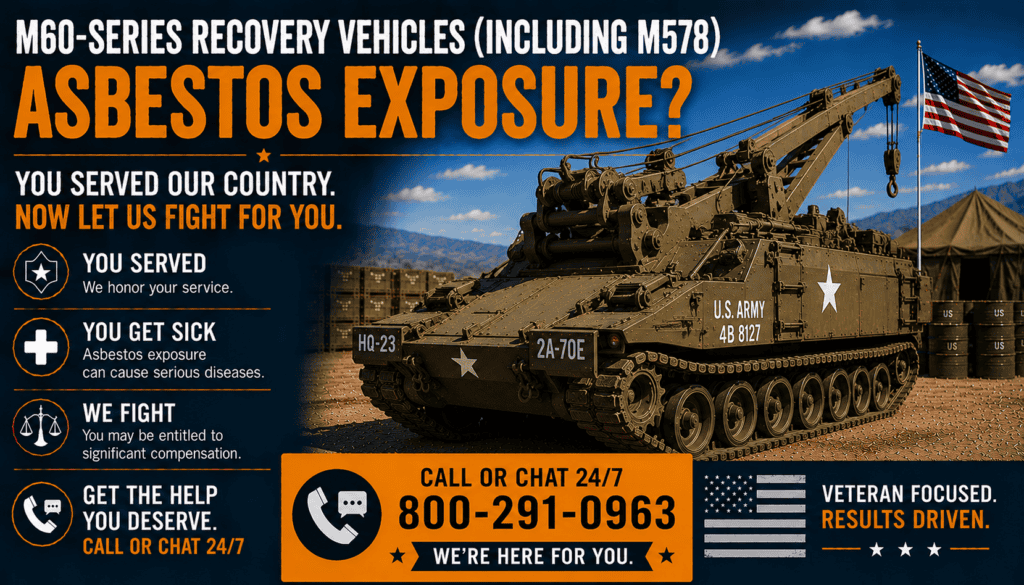
M60 Series Recovery & Support Vehicles Asbestos Exposure
M60-series recovery and support vehicle asbestos exposure may have occurred when military personnel maintained or repaired older vehicle components made with asbestos-containing friction, gasket, sealing, or heat-resistant materials. VA confirms that the military historically used asbestos in products including brakes and gaskets and recognizes servicing brake linings and clutch facings as a potential occupational exposure pathway.
Potential exposure depended on the vehicle configuration, component, supplier, rebuild history, service period, and maintenance task. Recovery crews, mechanics, motor-pool personnel, depot workers, and other service members may need to connect their actual duties with maintenance, technical, parts, and supply records rather than assuming that every M60-series recovery or support vehicle contained the same asbestos materials.
M60 Series Recovery & Support Vehicles Asbestos Exposure
M60-series recovery and support vehicle asbestos exposure is most appropriately investigated through the maintenance products and tasks associated with older military vehicles rather than by assuming that every vehicle contained the same materials. VA confirms that the military historically used asbestos-containing friction and heat-resistant products, including brakes, gaskets, valves, cements, and adhesives.
Veterans who operated, recovered, repaired, rebuilt, or supported M60-series vehicles may need to reconstruct the specific vehicle, component, duty, maintenance shop, and service period involved. This page belongs to the Military Vehicles Asbestos Exposure hub within the broader U.S. Military Veterans Asbestos Exposure silo.
Vehicle Components Relevant to Asbestos Research
For older recovery and support vehicles, the strongest historical research generally begins with components where friction, heat resistance, sealing, or insulation were important. VA specifically identifies brakes and gaskets among military asbestos-containing materials and also recognizes servicing brake linings and clutch facings as a potential exposure activity.
- Brake friction materials: maintenance on documented asbestos-containing brake linings could release dust.
- Clutch and friction components: some historical friction products used asbestos; the actual component and period should be verified.
- Gaskets and seals: high-temperature or mechanical-system gaskets may warrant part-specific research.
- Heat-resistant materials: thermal or fire-resistant products should be investigated when maintenance records identify them.
- Replacement parts: rebuilds and depot maintenance can change the material installed over a vehicle’s service life.
Veterans can compare suspected parts with High-Risk Asbestos Components Used by Veterans and the broader Military Products Asbestos Exposure hub.
Maintenance and Recovery Tasks That Could Disturb Materials
Potential exposure depends heavily on what work was performed. VA explains that asbestos-containing material becomes more hazardous when damaged or disturbed and fibers become airborne. Vehicle maintenance could therefore be relevant when personnel removed, replaced, cleaned, scraped, drilled, or otherwise disturbed a component that actually contained asbestos.
- Opening or servicing wheel and brake assemblies
- Replacing brake or clutch friction components
- Removing old gaskets or seals from mechanical assemblies
- Cleaning accumulated brake or maintenance dust
- Repairing vehicles in field, motor-pool, depot, or recovery settings
- Working nearby while dusty component replacement was performed
See Military Vehicle Personnel Asbestos Exposure for the broader vehicle-duty pathway.
Personnel Who May Have Worked Around M60-Series Support Vehicles
Potentially relevant personnel can include vehicle mechanics, recovery crews, maintenance technicians, motor-pool personnel, depot workers, drivers or operators assisting with repairs, and other service members assigned near component replacement or overhaul work. Job title alone does not establish asbestos exposure; the actual task and material matter.
The Military Occupations Asbestos Exposure hub and High-Risk Military Occupations for Asbestos Exposure can help veterans compare occupational duties with documented exposure pathways.
Motor Pools, Field Repairs and Depot Work
Recovery and support vehicles could be serviced in motor pools, maintenance bays, field locations, depots, and overhaul facilities. Work location can help identify the records, unit, coworkers, tools, and maintenance procedures relevant to an exposure history.
Older or later-surplus vehicles can also have complicated component histories because parts may have been rebuilt or replaced repeatedly. Veterans researching later-life vehicle configurations can review Military Surplus Vehicles Asbestos Exposure.
Evidence for Documenting Vehicle Exposure
Useful evidence may include personnel records, MOS or specialty records, unit assignments, duty stations, vehicle maintenance logs, technical manuals, parts catalogs, work orders, depot records, supply records, part numbers, manufacturer information, and credible statements from service members who performed or observed the work.
Use the Military Records & Documentation for Asbestos Exposure hub to organize service evidence. When the veteran remembers working around M60-series vehicles but cannot identify the exact material, Veterans Help With Identifying Asbestos Exposure provides a structured way to reconstruct the duty history.
M60-Series Vehicle Exposure and VA Claims
VA states that veterans may be eligible for disability compensation when they have a health condition caused by asbestos exposure and had contact with asbestos during military service. VA requires medical records stating the condition, service records listing the veteran’s job or specialty, and a doctor’s statement connecting military asbestos exposure with the health condition.
For a vehicle-based claim, evidence should connect the veteran’s service to the relevant maintenance environment and suspected component rather than relying only on the vehicle model. Veterans researching benefits can continue to the VA Benefits & Claims for Veterans With Mesothelioma hub or the Veterans Asbestos Legal Options hub for separate legal-resource information.
Frequently Asked Questions
Did every M60-series recovery or support vehicle contain asbestos?
No blanket conclusion should be made. Vehicle configuration, component, supplier, rebuild history, and service period can differ, so part-specific documentation is important.
Which vehicle components are most relevant?
Historical research commonly focuses on friction products such as brakes and clutches, plus gaskets, seals, and other heat-resistant materials when records support their presence.
How could vehicle maintenance create exposure?
Exposure could occur when an asbestos-containing component was damaged or disturbed and fibers became airborne during removal, replacement, cleaning, or repair.
What records can help document M60-series maintenance?
Personnel files, MOS records, unit assignments, maintenance logs, technical manuals, parts catalogs, work orders, depot and supply records, and firsthand statements may help.
Does working around an M60-series vehicle prove asbestos exposure?
No. The exposure history should connect the veteran to a documented asbestos-containing component or credible maintenance circumstance.
Where can veterans research other military vehicles?
Use the Military Vehicles Asbestos Exposure hub. Related pages include Military Jeeps U.S. Army and Military Personnel Buses Asbestos Exposure.
Confirmed Sources
Document the M60-Series Vehicle Work History
Record the vehicle type or variant, unit, duty station, service dates, MOS or specialty, maintenance location, tasks performed, components handled, and any known part or manufacturer information. Then compare those facts with maintenance, technical, supply, and depot records before concluding that a specific component contained asbestos. Return to the Military Vehicles Asbestos Exposure hub for additional vehicle research.
Call 800.291.0963 for a no-obligation case evaluation and to speak with a real person 24/7, 365 days a year. Mesothelioma Help Center is not a law firm or medical provider and does not determine VA eligibility.
Disclaimer: General information only—not legal or medical advice. This website is not a law firm. Exposure, VA eligibility, liability and deadlines vary by case and jurisdiction. Do not disturb suspected asbestos. Past results do not guarantee future outcomes.