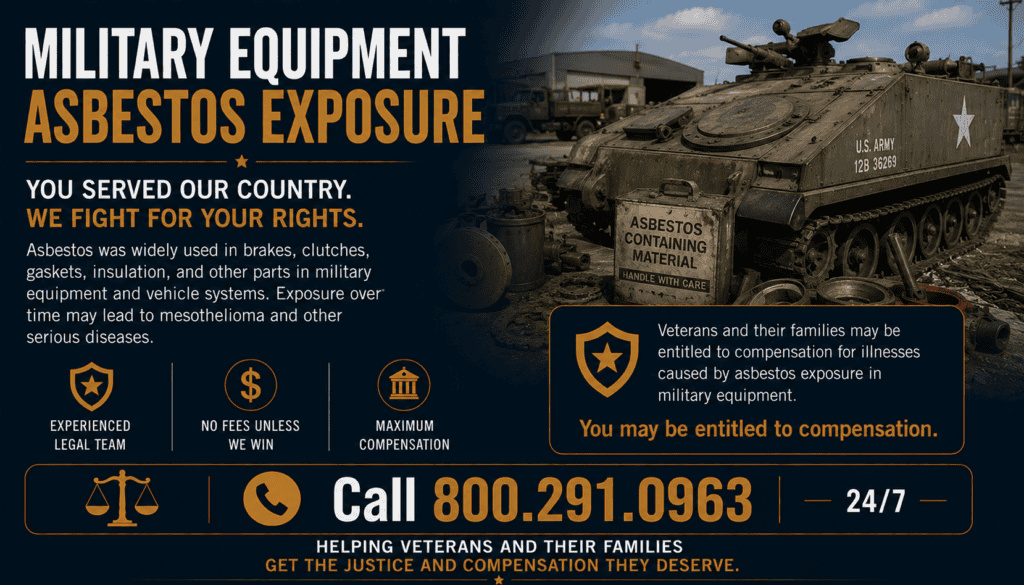
⚙️ Military Equipment Asbestos Exposure
How Military Equipment Exposed Veterans and Workers to Dangerous Asbestos Fibers
⚠️ Overview: Asbestos in Military Equipment
Military equipment used by the U.S. Armed Forces from the 1930s through the 1980s frequently contained asbestos. The material was valued for its ability to resist heat, fire, friction, and corrosion. As a result, asbestos was incorporated into thousands of military products used by the Army, Navy, Air Force, Marine Corps, and Coast Guard. Exposure often occurred while operating, maintaining, repairing, rebuilding, or dismantling equipment.
Veterans, civilian employees, contractors, mechanics, and maintenance personnel often worked directly with asbestos-containing components. Cutting, sanding, grinding, removing, or replacing these materials could release microscopic fibers into the air. Decades later, many of these individuals have developed mesothelioma, asbestos lung cancer, and asbestosis.
🛠️ Types of Military Equipment That Contained Asbestos
| Equipment Type | Common Asbestos Exposure Sources |
|---|---|
| Tanks & Armored Vehicles | Brake linings, clutches, gaskets, insulation |
| Military Trucks | Engine gaskets, brakes, heat shields |
| Naval Ships | Pipe insulation, boilers, pumps, valves |
| Aircraft | Brake systems, engine insulation, heat barriers |
| Generators | Electrical insulation, gaskets, fireproofing |
| Heavy Construction Equipment | Friction materials, seals, engine components |
🧱 Common Asbestos Components Found in Military Equipment
- Brake pads and brake linings
- Clutch facings and transmission components
- Engine gaskets and seals
- Pipe insulation and thermal coverings
- Electrical wiring insulation
- Heat shields and fire barriers
- Boiler and turbine insulation
- Pump packing and valve components
🧍 Who Was at Risk?
| Occupation | Exposure Risk |
|---|---|
| Vehicle mechanics | Replacing brakes, clutches, and gaskets |
| Equipment operators | Working around deteriorating components |
| Aircraft mechanics | Servicing engines and brake systems |
| Ship repair workers | Removing insulation and equipment parts |
| Welders & machinists | Disturbing asbestos during fabrication |
| Military maintenance crews | Routine repair and overhaul operations |
Even personnel who never directly handled asbestos materials could be exposed when fibers became airborne inside maintenance shops, hangars, ship compartments, depots, or motor pools.
🏗️ Military Equipment Commonly Associated With Asbestos Exposure
Tanks and Armored Personnel Carriers
Military tanks and armored personnel carriers contained asbestos in brake systems, clutch assemblies, engine gaskets, insulation blankets, and heat shields. Mechanics often encountered asbestos dust while replacing worn brakes, repairing engines, removing insulation, or rebuilding transmissions during routine maintenance and overhauls.
Military Cargo Trucks
Military cargo trucks relied on asbestos-containing brakes, clutches, engine gaskets, exhaust insulation, and fire-resistant components. Vehicle mechanics were exposed when sanding brake linings, replacing clutch facings, scraping gaskets, or performing engine repairs in motor pools and maintenance facilities.
Bulldozers and Engineering Equipment
Construction and engineering equipment used by military units frequently contained asbestos in hydraulic systems, brakes, clutches, engine compartments, and insulation materials. Exposure occurred during equipment servicing, rebuilding engines, replacing friction materials, and performing maintenance on heavily used machinery.
Naval Propulsion Systems
Naval propulsion systems aboard ships and submarines contained extensive asbestos insulation surrounding boilers, turbines, pumps, valves, pipes, and exhaust systems. Sailors, shipyard workers, machinists, and maintenance crews routinely disturbed these materials during repairs, modernization projects, and equipment replacements.
Aircraft Engines and Braking Systems
Military aircraft incorporated asbestos in engine insulation, heat shields, brake assemblies, electrical systems, and fire-resistant materials. Aircraft mechanics often inhaled asbestos fibers while servicing engines, replacing brake components, removing insulation, or conducting inspections inside confined maintenance areas.
Portable Generators
Portable generators used throughout military installations commonly contained asbestos gaskets, insulation, electrical components, and heat-resistant materials. Maintenance personnel encountered asbestos exposure while repairing engines, replacing worn components, and servicing generators operating under high-temperature conditions.
Forklifts and Warehouse Equipment
Military warehouses and supply depots used forklifts and material-handling equipment equipped with asbestos brakes, clutches, engine components, and insulation materials. Workers performing repairs, brake replacements, and routine maintenance could release asbestos fibers into the air during servicing activities.
Combat Support Vehicles
Combat support vehicles, including fuel trucks, recovery vehicles, mobile repair units, and specialized transport equipment, often contained asbestos-containing friction materials, gaskets, seals, insulation, and fireproofing products. Mechanics and operators were exposed during maintenance, repairs, component replacements, and vehicle overhauls.
Thousands of military equipment systems relied upon asbestos-containing parts because of their durability, fire resistance, and heat-resistant properties. Maintenance activities frequently disturbed these materials, releasing microscopic asbestos fibers into the surrounding environment where they could be inhaled by service members, civilian workers, contractors, and maintenance personnel. Exposure often occurred years before symptoms appeared, contributing to later diagnoses of mesothelioma, lung cancer, and asbestosis.
🏭 Companies That Supplied Asbestos Products for Military Equipment
Many manufacturers supplied asbestos-containing products used in military equipment:
- Johns-Manville — Insulation products and thermal materials
- Raybestos-Manhattan — Brake linings and friction products
- Owens Corning — Industrial insulation materials
- W.R. Grace & Co. — Fireproofing and insulation products
- Garlock — Gaskets, packing, and sealing materials
- Armstrong World Industries — Flooring and industrial materials
- National Gypsum — Construction and insulation products
🩺 Health Risks From Military Equipment Exposure
Exposure to asbestos from military equipment may result in:
- Mesothelioma — Cancer affecting the lining of the lungs, heart, or abdomen
- Asbestosis — Permanent scarring of lung tissue
- Lung Cancer — Often linked to long-term asbestos exposure
- Pleural Disease — Thickening and fluid buildup around the lungs
Symptoms may not appear for 20 to 50 years after exposure. Because of this long latency period, many veterans are only now discovering that military equipment exposure may have contributed to their illness.
📞 Support and Help
If you or a loved one worked on military equipment and later developed mesothelioma, lung cancer, or asbestosis, help may be available. Compensation may be available through asbestos trust funds and other legal claims.
👨⚖️ How a Mesothelioma Lawyer Can Help
An asbestos attorney can help by:
• Identifying military equipment and work locations linked to exposure
• Determining which asbestos-containing products were present
• Filing asbestos trust fund claims
• Pursuing compensation from responsible manufacturers
• Representing surviving family members
• Handling claims with no upfront legal fees
⚡ Free Legal Help for Veterans Diagnosed With Mesothelioma
If you or a loved one worked around military equipment and later developed mesothelioma, lung cancer, or asbestosis, you may qualify for financial compensation.
📞 Call Now: 800.291.0963
• No upfront costs
• No fees unless compensation is recovered
• Assistance identifying asbestos products and exposure sources
• Help for veterans, mechanics, maintenance workers, and civilian employees
📩 Or request help online 24/7