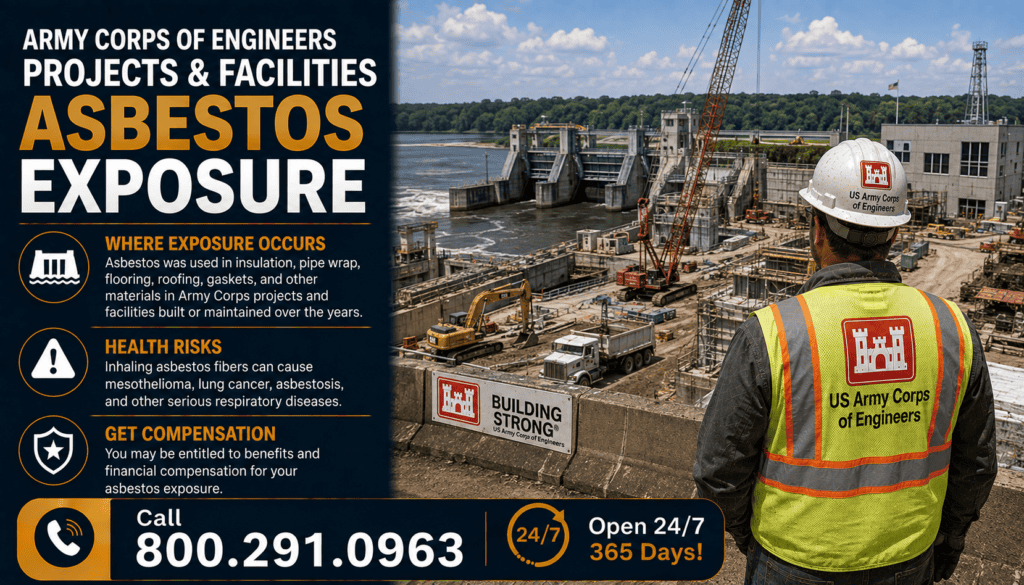
🏗️ Army Corps of Engineers Projects & Facilities Asbestos Exposure
For more than two centuries, the U.S. Army Corps of Engineers has designed, constructed, operated, repaired, and inspected major military and civilian infrastructure. Its work has included military bases, hospitals, dams, waterways, flood-control systems, ports, shipyards, power plants, roads, bridges, airfields, housing, utility systems, and emergency-response projects.
Many Army Corps facilities built or renovated during the twentieth century contained asbestos. The mineral was commonly used because it resisted heat, fire, electricity, moisture, friction, and chemical damage. These qualities made asbestos especially attractive for military construction, power generation, mechanical systems, industrial equipment, and transportation infrastructure.
Army Corps engineers, electricians, welders, mechanics, maintenance workers, inspectors, project managers, contractors, and civilian employees could be exposed while working around asbestos-containing insulation, boilers, pumps, valves, generators, electrical systems, fireproofing, cement products, flooring, roofing, gaskets, packing, and heavy equipment.
Exposure was not limited to workers who installed asbestos products. Personnel could inhale fibers while inspecting active construction, repairing older machinery, entering boiler rooms, supervising demolition, responding to disasters, or working near contractors who disturbed asbestos-containing materials.
Readers can begin with the broader U.S. Army Corps of Engineers asbestos exposure hub and the Army Corps asbestos exposure articles library for additional information about occupations, equipment, ranks, legal options, and health risks.
🔴━━━━━━━━━━━━━━━━━━━━━━━━━━━━━━━━━━━━
⚠️ Why Army Corps Projects Used Asbestos
Asbestos use expanded rapidly during World War II and continued through the Korean War, the Cold War, and the Vietnam era. Government agencies and private contractors used asbestos in thousands of military and civil engineering projects.
Army Corps construction specifications frequently included asbestos-containing products because asbestos offered:
- Fire resistance
- Thermal insulation
- Electrical insulation
- Moisture resistance
- Chemical resistance
- Friction resistance
- Durability
- Low cost
- Long service life
Asbestos was incorporated into:
- Steam pipes
- Boilers
- Turbines
- Generators
- Pumps
- Valves
- HVAC systems
- Electrical panels
- Switchgear
- Gaskets
- Packing materials
- Welding blankets
- Cement products
- Roofing
- Flooring
- Ceiling tile
- Wallboard
- Fireproofing
- Vehicle brakes and clutches
- Heavy machinery components
As these materials aged, they could become brittle, damaged, or friable. Cutting, sanding, scraping, drilling, removing, or demolishing them could release microscopic fibers into the air.
Personnel working around Army Corps boiler equipment, Army Corps pump equipment, Army Corps valve equipment, and Army Corps HVAC equipment may have faced particularly frequent exposure.
🔴━━━━━━━━━━━━━━━━━━━━━━━━━━━━━━━━━━━━
🏢 Major Types of Army Corps Projects and Facilities
The Army Corps has participated in nearly every type of military and civil infrastructure project.
Major project categories include:
- Military bases
- Military hospitals
- Dams
- Hydroelectric facilities
- Navigation locks
- Waterways
- Flood-control systems
- Shipyards
- Ports
- Power plants
- Pumping stations
- Industrial buildings
- Warehouses
- Government offices
- Bridges
- Roads
- Airfields
- Utility plants
- Water-treatment facilities
- Employee housing
- Overseas installations
- Emergency-response sites
Each environment presented different exposure risks. Boiler rooms and power plants contained extensive thermal insulation. Military bases used asbestos in barracks, hangars, hospitals, warehouses, and maintenance shops. Dams and waterways relied on pumps, valves, generators, and electrical systems containing asbestos components.
The Army Corps of Engineers construction projects asbestos exposure page provides additional information about how asbestos was used throughout Corps construction work.
🔴━━━━━━━━━━━━━━━━━━━━━━━━━━━━━━━━━━━━
🏥 Army Corps Hospital Construction Asbestos Exposure
Military and federal hospitals were among the most asbestos-intensive facilities built during the twentieth century. Hospitals required extensive heating, cooling, electrical, fireproofing, and mechanical systems that often contained asbestos.
Asbestos could be present in:
- Boiler rooms
- Steam pipes
- HVAC ducts
- Pipe insulation
- Floor tile
- Ceiling tile
- Fire doors
- Electrical panels
- Wallboard
- Roofing
- Laboratory equipment
- Utility tunnels
- Mechanical rooms
Army Corps engineers, electricians, project managers, inspectors, mechanics, maintenance workers, and contractors could be exposed during:
- Initial construction
- Boiler installation
- Electrical upgrades
- HVAC repairs
- Pipe maintenance
- Floor replacement
- Renovation of patient wings
- Removal of old insulation
- Demolition of outdated buildings
Hospital renovation projects could be especially hazardous because portions of the facility often remained occupied while workers removed or disturbed older materials.
Read the complete Army Corps hospital construction asbestos exposure guide.
🔴━━━━━━━━━━━━━━━━━━━━━━━━━━━━━━━━━━━━
🪖 Army Corps Military Base Projects Asbestos Exposure
The Army Corps designed, built, expanded, renovated, and maintained military installations throughout the United States and overseas.
Common facilities included:
- Barracks
- Hospitals
- Headquarters buildings
- Motor pools
- Vehicle maintenance shops
- Aircraft hangars
- Warehouses
- Ammunition facilities
- Training buildings
- Heating plants
- Utility buildings
- Dining facilities
- Administrative offices
- Family housing
- Communications buildings
Older bases commonly contained asbestos in pipe insulation, boilers, floor tile, ceiling systems, roofing, cement products, fireproofing, HVAC equipment, electrical systems, and mechanical components.
Army Corps personnel could be exposed while:
- Constructing new buildings
- Renovating barracks
- Repairing heating plants
- Replacing boilers
- Maintaining utility tunnels
- Upgrading electrical systems
- Repairing hangars
- Renovating hospitals
- Demolishing obsolete structures
- Inspecting contractor work
The dedicated Army Corps military base projects asbestos exposure page explains how exposure occurred across bases and military support facilities.
Personnel assigned outside the United States should also review the Army Corps overseas projects asbestos exposure page.
🔴━━━━━━━━━━━━━━━━━━━━━━━━━━━━━━━━━━━━
⚡ Army Corps Power Plant Projects Asbestos Exposure
Power plants and generating stations were among the most heavily insulated facilities associated with Army Corps projects.
Asbestos was commonly used around:
- Boilers
- Turbines
- Generators
- Steam pipes
- Pumps
- Valves
- Heat exchangers
- Electrical switchgear
- Control panels
- Refractory materials
- Fireproofing
- Gaskets
- Packing materials
Engineers, electricians, mechanics, welders, inspectors, project managers, and maintenance workers could be exposed during construction, operation, repair, or modernization.
Common exposure activities included:
- Removing boiler insulation
- Replacing turbine gaskets
- Servicing generators
- Repairing steam lines
- Repacking pumps
- Replacing valve packing
- Cutting insulation
- Cleaning mechanical rooms
- Inspecting maintenance work
- Demolishing outdated equipment
Learn more from the Army Corps power plant projects asbestos exposure page.
Workers responsible for generating systems can also review Army Corps generator equipment asbestos exposure and Army Corps electrical equipment asbestos exposure.
🔴━━━━━━━━━━━━━━━━━━━━━━━━━━━━━━━━━━━━
🌊 Army Corps Waterway Facilities Asbestos Exposure
Maintaining inland waterways has long been one of the Army Corps’ central missions. Corps personnel constructed and operated navigation locks, canals, pumping stations, spillways, river-control structures, maintenance shops, and hydroelectric systems.
Waterway facilities often contained asbestos in:
- Pumps
- Valves
- Boilers
- Generators
- Electrical controls
- Pipe insulation
- Mechanical seals
- Gaskets
- Packing
- Cement products
- Utility buildings
- Maintenance facilities
Exposure could occur while workers:
- Rebuilt pumps
- Replaced valve packing
- Repaired generators
- Removed pipe insulation
- Entered mechanical rooms
- Inspected utility systems
- Repaired flood-damaged structures
- Modernized navigation equipment
- Demolished older buildings
Many waterway facilities remained in service for decades. As equipment aged, maintenance workers could repeatedly disturb old asbestos-containing components.
Read the detailed Army Corps waterway facilities asbestos exposure page.
Related resources include the Army Corps dam projects asbestos exposure page and the Army Corps flood-control projects asbestos exposure page.
🔴━━━━━━━━━━━━━━━━━━━━━━━━━━━━━━━━━━━━
👷 Occupations Commonly Assigned to Army Corps Projects
Many Army Corps occupations could be exposed at project and facility sites.
Potentially exposed workers included:
- Engineers
- Civil engineers
- Electricians
- Welders
- Mechanics
- Maintenance workers
- Project managers
- Construction inspectors
- Heavy-equipment operators
- Contractors
- Subcontractors
- Civilian federal employees
The Army Corps of Engineers occupations asbestos exposure hub organizes detailed occupational pages.
Readers can also review:
- Army Corps engineers asbestos exposure
- Army Corps civil engineers asbestos exposure
- Army Corps electricians asbestos exposure
- Army Corps welders asbestos exposure
- Army Corps mechanics asbestos exposure
- Army Corps maintenance workers asbestos exposure
- Army Corps project managers asbestos exposure
- Army Corps construction inspectors asbestos exposure
🔴━━━━━━━━━━━━━━━━━━━━━━━━━━━━━━━━━━━━
🏞️ Army Corps Dam Projects Asbestos Exposure
The U.S. Army Corps of Engineers has designed, constructed, operated, and maintained dams throughout the United States. Many dams built during the twentieth century included powerhouses, pump stations, utility buildings, maintenance shops, tunnels, control rooms, and mechanical systems that used asbestos-containing materials.
Asbestos may have been present in:
- Turbine insulation
- Generator components
- Boiler systems
- Steam piping
- Pump gaskets
- Valve packing
- Electrical panels
- Switchgear
- Control boards
- Cement products
- Roofing
- Flooring
- Fireproofing
- Mechanical-room insulation
Army Corps engineers, electricians, mechanics, welders, maintenance workers, project managers, inspectors, and contractors could be exposed while working inside dam powerhouses and related facilities.
Exposure could occur during:
- Turbine maintenance
- Generator repairs
- Pump rebuilding
- Valve replacement
- Pipe-insulation removal
- Electrical upgrades
- Boiler maintenance
- Tunnel inspections
- Equipment modernization
- Demolition of older utility structures
Older dam facilities often remained in service for decades. Repeated repairs could disturb aging asbestos gaskets, packing, insulation, and electrical materials long after the original construction work was completed.
Read the full Army Corps dam projects asbestos exposure page.
🔴━━━━━━━━━━━━━━━━━━━━━━━━━━━━━━━━━━━━
🌧️ Army Corps Flood-Control Projects Asbestos Exposure
Flood-control work has been one of the Army Corps’ central civil-engineering responsibilities. Corps personnel constructed and maintained levees, pumping stations, drainage systems, floodwalls, spillways, reservoirs, gates, dams, and emergency-control facilities.
Many of these projects relied on mechanical and electrical systems containing asbestos.
Potential exposure sources included:
- Pump insulation
- Valve packing
- Pipe gaskets
- Generator insulation
- Electrical panels
- Boilers
- HVAC equipment
- Cement products
- Fireproofing
- Roofing
- Flooring
- Utility-building insulation
Army Corps workers could be exposed during:
- Pump-station repairs
- Floodgate maintenance
- Generator rebuilding
- Emergency flood response
- Debris removal
- Utility restoration
- Demolition of damaged buildings
- Modernization of older facilities
- Repair of flooded mechanical rooms
- Replacement of damaged insulation
Flood events could make asbestos exposure more likely by damaging materials that had previously remained enclosed. Water, structural movement, and debris removal could break insulation, floor tile, roofing, wallboard, cement materials, and mechanical components.
Personnel involved in these operations should review the complete Army Corps flood-control projects asbestos exposure page.
🔴━━━━━━━━━━━━━━━━━━━━━━━━━━━━━━━━━━━━
🚢 Army Corps Shipyard Projects Asbestos Exposure
Army Corps personnel supported shipyards, naval facilities, ports, docks, dry docks, warehouses, utilities, waterfront construction, and other maritime infrastructure.
Shipyard environments were among the most asbestos-intensive industrial workplaces of the twentieth century.
Asbestos was widely used in:
- Boiler insulation
- Steam-pipe insulation
- Turbines
- Pumps
- Valves
- Gaskets
- Packing
- Fireproof bulkheads
- Electrical panels
- Cable insulation
- Welding blankets
- Roofing
- Flooring
- Maintenance buildings
- Utility tunnels
Army Corps workers could be exposed while:
- Constructing shipyard facilities
- Inspecting dock and dry-dock work
- Repairing utility systems
- Maintaining waterfront power systems
- Entering boiler rooms
- Supervising contractors
- Repairing pumps and valves
- Inspecting warehouses
- Working near naval repair crews
- Renovating older shipyard buildings
Even workers who never entered a vessel could encounter asbestos in the buildings, utilities, machinery, and maintenance infrastructure supporting shipyard operations.
Read more on the Army Corps shipyard projects asbestos exposure page.
🔴━━━━━━━━━━━━━━━━━━━━━━━━━━━━━━━━━━━━
🏗️ Army Corps Construction Projects Asbestos Exposure
Army Corps construction projects included military buildings, federal facilities, roads, bridges, hospitals, warehouses, utilities, airfields, power plants, water systems, and industrial structures.
Before asbestos restrictions became widespread, construction specifications frequently called for asbestos-containing products because they resisted heat, fire, moisture, chemicals, and wear.
Common construction products included:
- Pipe insulation
- Boiler insulation
- Spray-applied fireproofing
- Asbestos cement
- Cement board
- Roofing felt
- Roof coatings
- Floor tile
- Ceiling tile
- Joint compound
- Wallboard
- Adhesives
- Fire doors
- Electrical insulation
- Gaskets
- Packing
- Refractory materials
Army Corps personnel could be exposed during every stage of a project:
- Design review
- Material inspection
- Construction supervision
- Equipment installation
- Utility commissioning
- Renovation
- Maintenance
- Demolition
- Emergency repair
Construction inspectors and project managers could inhale fibers even when they did not personally handle asbestos. Repeated visits to active work areas could create cumulative exposure over months or years.
Read the complete Army Corps of Engineers construction projects asbestos exposure page.
The related Army Corps construction material manufacturers asbestos use page explains how manufacturers supplied asbestos-containing products for military and federal projects.
🔴━━━━━━━━━━━━━━━━━━━━━━━━━━━━━━━━━━━━
🌍 Army Corps Overseas Projects Asbestos Exposure
Army Corps personnel worked on military and civil projects outside the United States, including bases, airfields, hospitals, ports, roads, utilities, barracks, warehouses, and emergency infrastructure.
Overseas projects could involve:
- Older military installations
- Foreign-manufactured asbestos products
- Temporary construction
- Emergency repairs
- War-damaged buildings
- Utility systems
- Airfields
- Hospitals
- Housing
- Warehouses
- Ports
- Power plants
- Water systems
Asbestos regulations and work practices varied by country and period. Personnel could encounter imported materials, older buildings, damaged insulation, and equipment manufactured under different safety standards.
Exposure may have occurred while:
- Renovating military facilities
- Repairing damaged utilities
- Constructing temporary housing
- Inspecting hospitals
- Maintaining generators
- Working in mechanical rooms
- Repairing water systems
- Demolishing obsolete buildings
- Clearing damaged structures
- Supervising local contractors
Workers assigned overseas should document locations, dates, units, projects, duties, contractors, and equipment whenever possible.
Learn more from the Army Corps overseas projects asbestos exposure page.
🔴━━━━━━━━━━━━━━━━━━━━━━━━━━━━━━━━━━━━
🚨 Army Corps Emergency-Response Projects
The Army Corps often responds after floods, hurricanes, earthquakes, storms, structural failures, and other disasters.
Emergency work may include:
- Debris removal
- Building inspections
- Utility restoration
- Temporary power generation
- Roof repairs
- Road and bridge work
- Pumping operations
- Demolition
- Hospital restoration
- Water-system repairs
- Stabilization of damaged structures
Disasters can disturb asbestos-containing materials that had previously remained sealed inside buildings and equipment.
Potential materials included:
- Pipe insulation
- Floor tile
- Ceiling tile
- Roofing
- Wallboard
- Fireproofing
- Cement products
- Boiler insulation
- HVAC components
- Electrical materials
Emergency conditions may increase exposure because work must be completed quickly, records may be incomplete, and damaged materials may be mixed with general debris.
Army Corps personnel could inhale fibers while entering damaged structures, clearing debris, operating heavy equipment, restoring utilities, or supervising demolition contractors.
Read the full Army Corps emergency-response asbestos exposure page.
🔴━━━━━━━━━━━━━━━━━━━━━━━━━━━━━━━━━━━━
❄️ Army Corps Cold-Weather Projects Asbestos Exposure
Cold-weather projects often required extensive thermal insulation to protect workers, pipes, boilers, generators, buildings, vehicles, and mechanical systems from freezing temperatures.
Asbestos was frequently selected because it resisted heat loss and fire while remaining durable under harsh conditions.
Cold-weather exposure sources could include:
- Boiler insulation
- Heating-plant insulation
- Steam-pipe insulation
- HVAC duct insulation
- Generator components
- Vehicle heat shields
- Electrical insulation
- Fireproof panels
- Gaskets
- Packing
- Temporary heating systems
- Insulated utility buildings
Workers may have encountered asbestos while:
- Repairing heating plants
- Replacing damaged pipe insulation
- Maintaining generators
- Servicing boilers
- Repairing temporary facilities
- Working in enclosed mechanical rooms
- Restoring frozen utilities
- Maintaining vehicles
- Inspecting insulated structures
Confined indoor work during severe weather could increase exposure by limiting ventilation.
Read more about Army Corps cold-weather projects asbestos exposure.
🔴━━━━━━━━━━━━━━━━━━━━━━━━━━━━━━━━━━━━
🏠 Army Corps Employee Housing Asbestos Exposure
Army Corps personnel and their families sometimes lived in military, federal, or government-associated housing constructed during the peak years of asbestos use.
Asbestos may have been present in:
- Floor tile
- Ceiling tile
- Pipe insulation
- Boiler systems
- Furnace insulation
- HVAC ducts
- Roofing
- Siding
- Wallboard
- Joint compound
- Adhesives
- Fire doors
- Utility rooms
Exposure could occur during:
- Routine maintenance
- Renovation
- Boiler repairs
- Flooring replacement
- Roofing work
- Plumbing repairs
- Demolition
- Damage from storms or flooding
Residents could also encounter asbestos dust released during maintenance performed in occupied housing.
Read the Army Corps employee housing asbestos exposure page.
Family members may also have experienced take-home exposure from dust carried home on work clothing. The Army Corps family secondhand asbestos exposure page explains this risk in more detail.
🔴━━━━━━━━━━━━━━━━━━━━━━━━━━━━━━━━━━━━
🧱 Common Asbestos Materials Across Army Corps Facilities
Although asbestos use varied by project, certain products appeared repeatedly across Army Corps buildings and infrastructure.
Thermal Insulation
Thermal insulation was used around:
- Steam pipes
- Boilers
- Turbines
- Generators
- Tanks
- HVAC systems
- Heat exchangers
Damaged or removed insulation could release large quantities of fibers.
Gaskets and Packing
Asbestos gaskets and packing were used in:
- Pumps
- Valves
- Boilers
- Engines
- Generators
- Piping systems
- Hydraulic equipment
Workers often scraped or cut these materials during maintenance.
Electrical Materials
Asbestos was used in:
- Electrical panels
- Arc chutes
- Switchgear
- Cable insulation
- Wire insulation
- Fireproof boards
- Control systems
Electricians and maintenance workers could disturb these materials during repairs.
Construction Materials
Asbestos-containing construction products included:
- Floor tile
- Ceiling tile
- Roofing
- Cement board
- Joint compound
- Wallboard
- Adhesives
- Fireproofing
- Fire doors
- Siding
Renovation and demolition could release fibers from these materials.
Vehicle and Machinery Components
Older equipment could contain asbestos in:
- Brakes
- Clutches
- Gaskets
- Heat shields
- Engine insulation
- Friction materials
The Army Corps of Engineers vehicles asbestos exposure hub provides information about individual vehicle and machinery types.
🔴━━━━━━━━━━━━━━━━━━━━━━━━━━━━━━━━━━━━
🔨 How Exposure Occurred During Renovation and Demolition
Renovation and demolition were among the most hazardous Army Corps activities because these tasks frequently disturbed old asbestos materials.
Exposure could occur while workers:
- Removed pipe insulation
- Cut asbestos cement
- Scraped floor tile
- Sanded joint compound
- Removed roofing
- Demolished walls
- Replaced boilers
- Removed HVAC systems
- Opened electrical panels
- Repaired pumps and valves
- Cleared debris
- Swept contaminated dust
Fibers could remain suspended in the air and settle on floors, tools, clothing, vehicles, and nearby surfaces.
Workers outside the immediate demolition crew could still be exposed if dust moved through hallways, ventilation systems, utility tunnels, or shared work areas.
Project managers, engineers, inspectors, and supervisors should not be considered unexposed simply because they performed less hands-on work.
🔴━━━━━━━━━━━━━━━━━━━━━━━━━━━━━━━━━━━━
🚜 Vehicles and Equipment Used at Army Corps Projects
Projects and facilities relied on vehicles, generators, cranes, trucks, bulldozers, pumps, and other machinery.
Related pages include:
- Army Corps service vehicles
- Army Corps military transport trucks
- Army Corps utility trucks
- Army Corps fuel tanker trucks
- Army Corps dump trucks
- Army Corps backhoes
- Army Corps bulldozers
- Army Corps road graders
- Army Corps asphalt pavers
- Army Corps cranes
- Army Corps forklifts
- Army Corps rail equipment
- Army Corps mobile generators
- Army Corps M1 Abrams tanks
Mechanics, operators, inspectors, maintenance workers, electricians, and welders could encounter asbestos while operating or servicing this equipment.
🔴━━━━━━━━━━━━━━━━━━━━━━━━━━━━━━━━━━━━
🫁 Asbestos-Related Diseases Linked to Army Corps Projects
Asbestos-related diseases often develop decades after exposure. Many former Army Corps personnel may not experience symptoms until long after their military service, federal employment, or contractor work has ended.
Diseases associated with occupational asbestos exposure include:
- Malignant mesothelioma
- Asbestos-related lung cancer
- Asbestosis
- Pleural plaques
- Pleural thickening
- Pleural effusion
- Other asbestos-related respiratory conditions
The risk of disease may depend on:
- The amount of asbestos inhaled
- How often exposure occurred
- How many years the person worked around asbestos
- Whether exposure occurred in enclosed areas
- The type of asbestos-containing materials disturbed
- Whether respiratory protection was used
- Whether the person also smoked
Workers assigned to boiler rooms, power plants, pump stations, dams, shipyards, military bases, mechanical rooms, and demolition projects may have experienced repeated exposure over many years.
The Army Corps asbestos exposure health risks page provides more information about possible diseases and long-term health concerns.
🔴━━━━━━━━━━━━━━━━━━━━━━━━━━━━━━━━━━━━
⚠️ Common Symptoms of Asbestos-Related Disease
Symptoms may differ depending on whether the disease affects the lungs, pleura, abdomen, or another part of the body.
Possible symptoms include:
- Shortness of breath
- Persistent cough
- Chest pain
- Fatigue
- Unexplained weight loss
- Loss of appetite
- Difficulty swallowing
- Abdominal pain
- Abdominal swelling
- Fluid around the lungs
- Reduced exercise tolerance
- Recurrent respiratory problems
These symptoms can also be caused by many other medical conditions. A person with a history of Army Corps construction, maintenance, engineering, vehicle, shipyard, dam, power plant, or waterway work should tell their physician about possible asbestos exposure.
A detailed occupational and project history may help doctors determine whether additional imaging, pulmonary testing, or specialist evaluation is appropriate.
🔴━━━━━━━━━━━━━━━━━━━━━━━━━━━━━━━━━━━━
🏠 Secondhand Asbestos Exposure Affecting Army Corps Families
Army Corps personnel could unknowingly carry asbestos fibers away from project sites on:
- Work clothing
- Jackets
- Boots
- Gloves
- Tools
- Equipment bags
- Vehicle interiors
- Personal belongings
Family members may have inhaled fibers while laundering dusty clothing, cleaning work areas, handling contaminated tools, or riding in vehicles used at construction and maintenance sites.
This is often called:
- Secondhand asbestos exposure
- Household asbestos exposure
- Take-home asbestos exposure
- Para-occupational exposure
Spouses and children could be exposed without ever entering an Army Corps project or facility.
The Army Corps family secondhand asbestos exposure page explains how fibers may have been carried home from military bases, hospitals, shipyards, power plants, dams, and construction sites.
Families who lived in military or federal housing should also review the Army Corps employee housing asbestos exposure page.
🔴━━━━━━━━━━━━━━━━━━━━━━━━━━━━━━━━━━━━
📂 Documenting Army Corps Projects and Facility Assignments
Because asbestos-related diseases may take 20 to 50 years or longer to develop, many former workers must reconstruct their exposure history using old records.
Helpful documentation may include:
- DD Form 214
- Military personnel records
- Unit assignments
- Duty-station records
- Army Corps civilian employment records
- Social Security earnings records
- Union records
- Pay stubs
- Leave records
- Construction contracts
- Project files
- Engineering plans
- Equipment manuals
- Maintenance records
- Contractor invoices
- Inspection reports
- Photographs
- Witness statements
- Medical records
- Pathology reports
A strong exposure history should identify:
- Where the person worked
- When the assignment occurred
- What project or facility was involved
- Which occupation or specialty the person held
- What equipment was present
- Which asbestos-containing materials may have been used
- Which contractors or manufacturers were involved
- Whether coworkers remember similar conditions
- Whether asbestos dust was visible
- Whether protective equipment was provided
Even when records are incomplete, historical engineering documents, equipment specifications, project files, product records, and coworker statements may help reconstruct exposure.
Readers can use the Army Corps asbestos exposure articles library to connect specific occupations, projects, equipment, and legal issues.
🔴━━━━━━━━━━━━━━━━━━━━━━━━━━━━━━━━━━━━
🎖️ VA Benefits for Army Corps Veterans
Some Army Corps veterans diagnosed with mesothelioma, asbestos lung cancer, asbestosis, or another asbestos-related disease may qualify for benefits through the U.S. Department of Veterans Affairs.
Potential benefits may include:
- VA disability compensation
- VA medical care
- Treatment through qualifying VA facilities
- Travel reimbursement
- Aid and Attendance in certain cases
- Dependency and Indemnity Compensation
- Survivor benefits
- Burial benefits
A veteran generally must provide evidence of:
- A qualifying medical diagnosis
- Military service
- An in-service exposure history
- A connection between the disease and military service
Evidence may include:
- Service records
- Occupational specialty
- Duty assignments
- Project locations
- Military-base records
- Medical reports
- Pathology findings
- Physician opinions
- Coworker statements
The Army Corps VA benefits for mesothelioma page explains how veterans may document Corps-related asbestos exposure.
VA benefits are separate from asbestos trust fund claims and civil lawsuits. Depending on the circumstances, a veteran may be able to pursue more than one form of compensation.
🔴━━━━━━━━━━━━━━━━━━━━━━━━━━━━━━━━━━━━
💰 Army Corps Asbestos Trust Fund Claims
Many companies that manufactured asbestos insulation, boilers, pumps, valves, gaskets, cement products, electrical components, friction materials, and construction products later entered bankruptcy.
Some of these companies established asbestos trust funds to compensate qualifying claimants.
Army Corps veterans, civilian employees, contractors, and family members may potentially qualify for trust fund claims when their exposure can be connected to specific products, equipment, manufacturers, or project sites.
Helpful evidence may include:
- Project assignments
- Construction specifications
- Equipment manufacturers
- Product identification
- Contractor records
- Employment files
- Witness statements
- Military records
- Medical documentation
- Pathology reports
Because large Army Corps projects often used materials from many manufacturers, one person may potentially qualify for claims involving multiple trusts.
The Army Corps asbestos trust fund claims page provides additional information about eligibility, evidence, and filing requirements.
🔴━━━━━━━━━━━━━━━━━━━━━━━━━━━━━━━━━━━━
⚖️ Army Corps Mesothelioma Lawsuits
A person diagnosed after working on Army Corps projects may have legal claims against companies that manufactured, supplied, distributed, installed, or sold asbestos-containing products.
Potential defendants may include:
- Insulation manufacturers
- Boiler manufacturers
- Pump manufacturers
- Valve manufacturers
- Gasket manufacturers
- Electrical-equipment companies
- Construction-product suppliers
- Vehicle-part manufacturers
- Contractors
- Third-party premises owners
Potential compensation may relate to:
- Medical expenses
- Lost income
- Reduced earning capacity
- Travel for treatment
- Pain and suffering
- Home-care needs
- Family losses
- Funeral expenses
- Other qualifying damages
The Army Corps of Engineers mesothelioma lawsuit page explains how project, facility, equipment, and occupational exposure may support a claim.
Eligibility depends on:
- Diagnosis
- Exposure history
- State law
- Responsible companies
- Available evidence
- Filing deadlines
- Jurisdiction
🔴━━━━━━━━━━━━━━━━━━━━━━━━━━━━━━━━━━━━
🕊️ Wrongful-Death Claims for Surviving Families
When a former Army Corps veteran, civilian employee, or contractor dies from mesothelioma or another asbestos-related disease, eligible family members or the estate may be able to pursue a wrongful-death claim.
Potential claimants may include:
- A surviving spouse
- Children
- A personal representative
- An estate representative
- Other relatives permitted by state law
Potential damages may include:
- Medical bills
- Funeral expenses
- Burial costs
- Lost financial support
- Loss of companionship
- Loss of household services
- Pain and suffering before death
- Other damages allowed under state law
The Army Corps wrongful-death asbestos lawsuits page provides additional information for surviving families.
Wrongful-death filing deadlines may differ from deadlines that apply to claims filed during a patient’s lifetime.
🔴━━━━━━━━━━━━━━━━━━━━━━━━━━━━━━━━━━━━
⏳ Statutes of Limitations for Army Corps Asbestos Claims
Every state applies deadlines to asbestos personal-injury and wrongful-death claims. These deadlines are called statutes of limitations.
The filing period may begin from:
- The date of diagnosis
- The date the disease reasonably should have been discovered
- The date of death
- Another event defined by state law
The asbestos exposure itself may have occurred decades earlier. In many cases, the filing period does not begin on the original exposure date. However, deadlines can become short after diagnosis or death.
The Army Corps asbestos statute of limitations page explains why early case review matters.
The state where a person currently lives may not be the only relevant jurisdiction. Other states may matter if they are connected to:
- The project location
- The military base
- The employer
- The contractor
- The manufacturer
- The exposure site
- The company’s business operations
🔴━━━━━━━━━━━━━━━━━━━━━━━━━━━━━━━━━━━━
❓ Frequently Asked Questions
Which Army Corps projects had the greatest asbestos exposure risk?
Power plants, hospitals, shipyards, military bases, dams, waterways, pumping stations, boiler facilities, and major construction projects often contained substantial amounts of asbestos insulation, gaskets, packing, electrical materials, cement products, and fireproofing.
Were engineers exposed even if they did not handle asbestos?
Yes. Engineers could inhale fibers while inspecting active construction, supervising contractors, entering boiler rooms, visiting mechanical spaces, or overseeing demolition and renovation.
Could civilian Army Corps employees be exposed?
Yes. Civilian engineers, project managers, inspectors, mechanics, electricians, maintenance workers, and contractors often worked in the same contaminated environments as military personnel.
Were workers at dams and waterways exposed?
Yes. Dams, locks, canals, pump stations, and waterway facilities used boilers, pumps, valves, generators, gaskets, packing, electrical equipment, and pipe insulation that may have contained asbestos.
Could emergency-response work cause exposure?
Yes. Floods, hurricanes, fires, storms, and structural damage could break asbestos-containing materials and mix fibers into debris. Personnel clearing damaged sites or restoring utilities could inhale contaminated dust.
Can family members develop disease from take-home asbestos?
Yes. Fibers could be carried home on clothing, boots, tools, bags, and vehicle interiors. Family members may have inhaled fibers while handling work clothes or cleaning contaminated items.
What records can help prove exposure?
Helpful records may include military files, employment records, project assignments, contractor documents, maintenance reports, engineering plans, equipment records, photographs, witness statements, medical records, and pathology reports.
Can a veteran receive VA benefits and also pursue a lawsuit?
Potentially. VA benefits, asbestos trust fund claims, and civil lawsuits are separate systems. Eligibility for one does not automatically establish eligibility for another.
🔴━━━━━━━━━━━━━━━━━━━━━━━━━━━━━━━━━━━━
🔗 Related Army Corps of Engineers Resources
Continue with these related pages:
- U.S. Army Corps of Engineers asbestos exposure
- Army Corps asbestos exposure articles
- Army Corps occupations asbestos exposure
- Army Corps vehicles asbestos exposure
- Army Corps hospital construction asbestos exposure
- Army Corps military-base projects asbestos exposure
- Army Corps power-plant projects asbestos exposure
- Army Corps waterway facilities asbestos exposure
- Army Corps dam projects asbestos exposure
- Army Corps flood-control projects asbestos exposure
- Army Corps shipyard projects asbestos exposure
- Army Corps construction projects asbestos exposure
- Army Corps overseas projects asbestos exposure
- Army Corps emergency-response asbestos exposure
- Army Corps cold-weather projects asbestos exposure
- Army Corps health risks
- Army Corps VA benefits for mesothelioma
- Army Corps asbestos trust fund claims
- Army Corps mesothelioma lawsuits
- Army Corps wrongful-death asbestos lawsuits
- Army Corps asbestos filing deadlines
🔴━━━━━━━━━━━━━━━━━━━━━━━━━━━━━━━━━━━━
🧠 What You Should Do Next
Former Army Corps veterans, civilian employees, contractors, and family members diagnosed with mesothelioma, asbestos lung cancer, asbestosis, or another asbestos-related disease may have several possible paths to assistance.
Important next steps may include:
- Collect military and employment records
- Write down every known project and facility
- Identify occupations, machinery, and equipment involved
- Gather medical and pathology records
- Record the names of coworkers and contractors
- Review possible VA benefits
- Investigate asbestos trust funds
- Determine whether legal filing deadlines apply
A case review may help identify exposure sources, responsible manufacturers, available trust funds, possible VA benefits, and legal options based on the individual’s work and medical history.
Call 800.291.0963