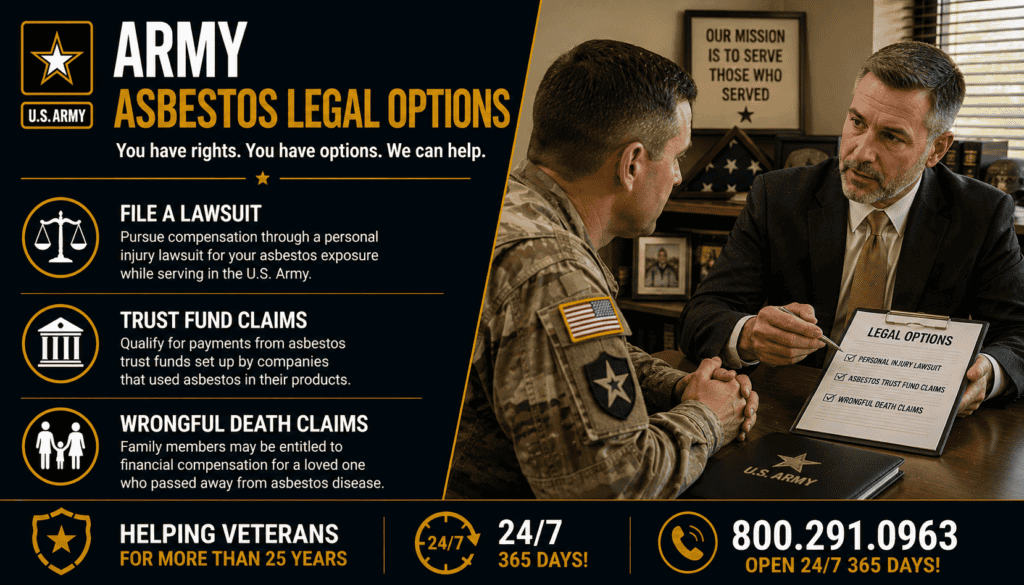
Marine Corps Asbestos Legal Options
Marine Corps veterans diagnosed with mesothelioma, asbestos-related lung cancer, asbestosis, or another asbestos-related disease may have several options for pursuing financial compensation and medical benefits. Depending on individual circumstances, these options may include Department of Veterans Affairs (VA) disability benefits, asbestos trust fund claims, lawsuits against asbestos manufacturers, and wrongful death claims for surviving family members.
Many Marines mistakenly believe they cannot pursue legal action because their asbestos exposure occurred during military service. In reality, most asbestos lawsuits are filed against the private companies that manufactured, supplied, or sold asbestos-containing products used by the United States Marine Corps—not against the Marine Corps or the federal government.
Whether exposure occurred while maintaining aircraft, repairing military vehicles, operating heavy equipment, serving aboard amphibious ships, working in aviation maintenance, engineering units, utility systems, communications facilities, barracks, hospitals, warehouses, or base housing, documenting military service and occupational history is often one of the first steps in evaluating available legal options.
If you or a loved one has been diagnosed with an asbestos-related disease following Marine Corps service, understanding your legal rights can help you make informed decisions regarding compensation and available benefits.
📞 Call 800.291.0963 to discuss Marine Corps asbestos exposure, military records, VA benefits, and potential legal options.
⚖️ What You’ll Learn
This guide explains:
- Marine Corps asbestos legal options
- The difference between VA benefits and lawsuits
- Asbestos trust fund claims
- Mesothelioma lawsuits
- Wrongful death claims
- Military records that may support a claim
- Statutes of limitations
- Compensation that may be available
- Frequently asked questions
- Resources for Marine veterans and their families
⚖️ Understanding Your Legal Options
Marine veterans diagnosed with asbestos-related diseases often have more than one potential source of compensation.
Depending upon individual circumstances, options may include:
- VA Disability Compensation
- VA Health Care
- Mesothelioma lawsuits
- Asbestos trust fund claims
- Wrongful death lawsuits
- Survivor benefits
- Dependency and Indemnity Compensation (DIC)
These are separate legal and administrative processes.
Receiving VA disability benefits generally does not prevent an eligible veteran from pursuing legal claims against manufacturers that supplied asbestos-containing products to the military.
🪖 Why Marine Veterans May Have Legal Rights
For decades, the Marine Corps purchased equipment, aircraft components, vehicles, generators, pumps, valves, boilers, HVAC equipment, electrical systems, construction materials, insulation products, and countless other items from private manufacturers.
Many of these products contained asbestos.
Manufacturers often knew—or later learned—about the health hazards associated with asbestos exposure.
Legal claims generally involve those manufacturers rather than the United States Marine Corps.
Potential exposure locations include:
- Marine Corps bases
- Aircraft maintenance hangars
- Motor pools
- Maintenance facilities
- Engineering shops
- Utility buildings
- Power plants
- Barracks
- Hospitals
- Warehouses
- Communications centers
- Base housing
- Amphibious ships supporting Marine operations
Veterans who worked in these environments may have encountered asbestos-containing products supplied by numerous commercial manufacturers.
🇺🇸 VA Benefits vs. Legal Claims
One of the most common misconceptions is that veterans must choose between VA benefits and legal claims.
In many situations, this is not the case.
VA benefits are administered by the Department of Veterans Affairs and are based on military service and service-connected disability.
Legal claims generally involve private manufacturers that supplied asbestos-containing products to the Marine Corps.
Because these are separate systems, eligible veterans may be able to pursue both.
📋 Types of Marine Corps Asbestos Claims
Several legal options may be available depending upon a veteran’s diagnosis, exposure history, and family circumstances.
These include:
Mesothelioma Lawsuits
Individuals diagnosed with mesothelioma may pursue claims against manufacturers responsible for asbestos-containing products used during Marine Corps service.
Lung Cancer Lawsuits
Some Marine veterans diagnosed with asbestos-related lung cancer may also qualify for compensation.
Asbestos Trust Fund Claims
Many former asbestos manufacturers established bankruptcy trust funds to compensate individuals diagnosed with asbestos-related diseases.
Wrongful Death Claims
Surviving family members may have legal rights following the death of a Marine veteran from mesothelioma or another asbestos-related disease.
Product Liability Claims
Certain claims involve defective or dangerous asbestos-containing products supplied to Marine Corps installations and operations.
💰 Asbestos Trust Funds
Dozens of asbestos bankruptcy trusts have been established by former manufacturers.
Depending on a Marine’s exposure history, trust fund claims may involve products such as:
- Boilers
- Pumps
- Valves
- Pipe insulation
- HVAC equipment
- Electrical equipment
- Aircraft components
- Vehicle brake systems
- Clutches
- Construction materials
- Fireproofing products
- Gaskets
- Packing materials
Each trust establishes its own eligibility requirements and documentation standards.
👥 Who May Qualify?
Every case is different, but potential claimants may include:
- Active-duty Marine veterans
- Marine Corps Reserve veterans
- Women Marines
- Aviation personnel
- Engineers
- Mechanics
- Aircraft mechanics
- Electricians
- Heavy equipment operators
- Maintenance personnel
- Civilian employees supporting Marine Corps installations
- Military spouses with documented secondhand exposure
- Surviving spouses
- Dependent family members in certain circumstances
Eligibility depends on medical diagnosis, exposure history, available documentation, and applicable law.
⚙️ Marine Corps Occupations Frequently Associated With Claims
Occupational history often plays an important role when documenting asbestos exposure.
Common occupations include:
- Mechanics
- Aircraft mechanics
- Engineers
- Electricians
- Welders
- Construction personnel
- Heavy equipment operators
- Maintenance crews
- HVAC technicians
- Utility workers
- Boiler operators
- Firefighters
- Supply personnel
Each occupation involved different equipment, buildings, and maintenance activities that may have included asbestos-containing products.
🏭 Marine Corps Equipment Commonly Investigated
Exposure investigations frequently examine equipment such as:
- Boilers
- Generators
- Pumps
- Valves
- Compressors
- Turbines
- HVAC systems
- Electrical equipment
- Heavy machinery
- Aircraft components
- Vehicle brake systems
- Clutches
- Pipe insulation
- Fireproofing materials
- Gaskets
- Packing materials
Historical procurement records and technical manuals often help identify manufacturers associated with these products.
🏢 Marine Corps Facilities Frequently Investigated
Many claims also involve military installations where asbestos-containing construction materials and industrial equipment were widely used.
Examples include:
- Aircraft maintenance hangars
- Motor pools
- Maintenance buildings
- Engineering facilities
- Utility buildings
- Power plants
- Hospitals
- Warehouses
- Barracks
- Communications centers
- Training facilities
- Base housing
Service at multiple Marine Corps installations may increase the number of potential exposure sources evaluated during an investigation.
📁 Building a Marine Corps Asbestos Claim
A successful asbestos claim is typically built by connecting three essential elements:
- A confirmed medical diagnosis.
- Evidence of asbestos exposure during or related to Marine Corps service.
- Documentation connecting the disease to asbestos-containing products.
Unlike many personal injury claims, Marine Corps asbestos cases often involve exposures that occurred 20 to 50 years before diagnosis. Because of this long latency period, military records, occupational history, and historical product documentation frequently become critical evidence.
🩺 Medical Documentation
Every asbestos claim begins with a documented medical diagnosis.
Important medical records may include:
- Pathology reports
- Biopsy results
- CT scans
- PET scans
- Chest X-rays
- MRI studies
- Pulmonary function tests
- Oncology records
- Surgical reports
- Hospital records
- Physician notes
- Cancer treatment records
Common asbestos-related diagnoses include:
- Pleural mesothelioma
- Peritoneal mesothelioma
- Pericardial mesothelioma
- Asbestos-related lung cancer
- Asbestosis
- Pleural plaques
- Pleural thickening
- Pleural effusions
A confirmed diagnosis is generally required before compensation claims can proceed.
📁 Military Records That Support Marine Corps Claims
Military documentation often helps establish where a Marine served and what duties were performed throughout a military career.
Helpful records include:
- DD Form 214
- Official Military Personnel File (OMPF)
- Military Occupational Specialty (MOS) records
- Unit assignment history
- Permanent Change of Station (PCS) orders
- Deployment records
- Performance evaluations
- Aviation maintenance records
- Engineering assignments
- Equipment maintenance records
- Military medical records
- Personnel files
Veterans should also prepare a written timeline identifying:
- Every Marine Corps installation
- Aircraft maintenance hangars
- Motor pools
- Maintenance facilities
- Engineering buildings
- Utility plants
- Warehouses
- Hospitals
- Barracks
- Communications facilities
- Base housing assignments
- Amphibious ship deployments
These details frequently help investigators reconstruct likely asbestos exposure.
🔍 Identifying Exposure Sources
Many Marines cannot remember the names of the manufacturers whose products they worked with decades earlier.
Exposure investigations commonly examine:
- Marine Corps bases
- Aircraft maintenance records
- Equipment inventories
- Procurement records
- Engineering documents
- Technical manuals
- Historical maintenance procedures
- Construction records
- Military specifications
Potential asbestos-containing products include:
- Boilers
- Generators
- Pumps
- Valves
- Compressors
- Turbines
- HVAC systems
- Pipe insulation
- Electrical equipment
- Aircraft brakes
- Vehicle brakes
- Clutches
- Gaskets
- Packing materials
- Fireproofing products
The goal is to identify likely exposure sources based upon military duties rather than relying solely on memory.
🪖 Military Occupational Specialty (MOS)
Military Occupational Specialty (MOS) frequently plays a significant role when evaluating Marine Corps asbestos claims.
Occupations commonly associated with asbestos exposure include:
- Mechanics
- Aircraft mechanics
- Engineers
- Electricians
- Welders
- Construction personnel
- Heavy equipment operators
- Maintenance crews
- HVAC technicians
- Boiler operators
- Utility workers
- Firefighters
- Supply personnel
Each occupation involved different equipment, facilities, and maintenance activities that may have included asbestos-containing materials.
👥 Witness Statements
Former Marines, supervisors, coworkers, and family members sometimes provide valuable supporting evidence.
Witnesses may help verify:
- Daily job duties
- Equipment repairs
- Aircraft maintenance
- Building assignments
- Engineering projects
- Vehicle maintenance
- Working conditions
- Presence of asbestos-containing products
Although not required in every case, witness statements can strengthen documentation when official military records are incomplete.
👨👩👧 Military Family Claims
Some Marine Corps spouses and family members developed asbestos-related diseases after years of secondhand household exposure.
Potential exposure sources included:
- Contaminated uniforms
- Boots
- Utility clothing
- Jackets
- Tool bags
- Military laundry
- Base housing
- Household dust
Family members may also have legal rights depending upon:
- Medical diagnosis
- Exposure history
- Applicable state law
- Available documentation
💔 Wrongful Death Claims
When a Marine veteran dies from mesothelioma or another asbestos-related disease, surviving family members may have legal rights.
Potential claimants may include:
- Spouses
- Children
- Estates
- Other eligible survivors under applicable state law
Supporting records often include:
- Death certificate
- Medical records
- Pathology reports
- DD Form 214
- Military personnel records
- Marriage certificate
- Exposure documentation
Wrongful death claims are separate from VA survivor benefits.
⏳ Statutes of Limitations
Every state establishes deadlines for filing asbestos-related legal claims.
These filing periods generally begin after:
- A mesothelioma diagnosis
- Diagnosis of another asbestos-related disease
- Discovery that asbestos contributed to the illness
- Death resulting from an asbestos-related disease
Because asbestos diseases frequently develop decades after military service, filing deadlines usually begin at diagnosis rather than at the time of exposure.
Prompt action helps preserve:
- Medical records
- Military documentation
- Witness testimony
- Employment history
- Historical evidence
💰 Compensation That May Be Available
Depending upon the facts of a particular case, compensation may include:
- Medical expenses
- Future medical treatment
- Lost wages
- Loss of earning capacity
- Pain and suffering
- Travel expenses
- Home healthcare
- Funeral expenses
- Family losses
Available compensation depends on numerous factors, including diagnosis, exposure history, product identification, and applicable law.
❓ Common Questions During an Investigation
Attorneys and investigators often ask Marines questions designed to reconstruct asbestos exposure that occurred decades earlier.
Examples include:
- Which Marine Corps bases did you serve at?
- What was your Military Occupational Specialty (MOS)?
- Did you work in aviation maintenance?
- Did you repair military vehicles?
- Did you maintain aircraft?
- Did you work around boilers or generators?
- Did you perform construction or engineering work?
- Did you live in Marine Corps barracks or base housing?
- Do you remember specific equipment manufacturers?
- Do you have photographs or military records documenting your work?
Many veterans do not immediately know every answer. Historical military records, procurement documents, technical manuals, and product documentation often help reconstruct likely exposure histories.
🗂️ Why Early Documentation Matters
Important evidence can become more difficult to locate as time passes.
Gathering records soon after diagnosis may help preserve:
- Medical documentation
- Military records
- Witness information
- Photographs
- Occupational history
- Equipment maintenance records
- Personal notes
- Family recollections
Creating a detailed written timeline while memories remain fresh can be extremely valuable during both VA disability claims and legal investigations.
❓ Frequently Asked Questions
Can Marine veterans file a lawsuit if their asbestos exposure occurred during military service?
Yes. In many cases, Marine veterans pursue claims against the private manufacturers and suppliers that produced asbestos-containing products used by the military. These claims are generally not filed against the United States Marine Corps or the federal government.
Can I receive VA benefits and also pursue a legal claim?
In many situations, yes.
VA Disability Compensation and asbestos-related legal claims are separate processes. Eligible veterans may be able to pursue both because they involve different legal standards and different responsible parties.
What if I don’t know which asbestos products I worked with?
Many Marines do not remember product names from decades earlier.
Military records, Military Occupational Specialty (MOS) history, equipment maintenance records, procurement records, engineering documents, technical manuals, and historical manufacturer information often help identify likely asbestos-containing products associated with a veteran’s duties.
What illnesses may qualify for compensation?
Potential qualifying conditions include:
- Pleural mesothelioma
- Peritoneal mesothelioma
- Pericardial mesothelioma
- Asbestos-related lung cancer
- Asbestosis
- Pleural plaques
- Pleural thickening
- Pleural effusions
Eligibility depends upon the medical diagnosis, exposure history, and applicable legal requirements.
Does every Marine veteran with asbestos exposure have a legal claim?
Not necessarily.
Each case depends upon several factors, including:
- Medical diagnosis
- Military service history
- Occupational duties
- Documented exposure
- Product identification
- Applicable state law
- Filing deadlines
A diagnosis alone does not determine eligibility, and every claim must be evaluated individually.
Can surviving family members file claims?
Yes.
Depending upon state law and the circumstances involved, surviving spouses, children, and other eligible family members may have legal rights through wrongful death claims, asbestos trust fund claims, or certain VA survivor benefits.
What if exposure occurred at several Marine Corps bases?
Many Marines served at multiple duty stations during their military careers.
Exposure investigations often evaluate every known assignment, aviation unit, maintenance facility, engineering project, deployment, and housing location to determine where asbestos exposure most likely occurred.
What if exposure continued after leaving the Marine Corps?
Some Marines later worked in civilian occupations involving construction, shipbuilding, aviation, utilities, industrial maintenance, or heavy equipment repair.
Exposure investigations may evaluate both military and civilian work history when identifying all potential asbestos exposure sources.
✅ What You Should Do Next
If you believe you were exposed to asbestos during Marine Corps service, taking organized steps now may help preserve valuable evidence for both medical and legal purposes.
Recommended actions include:
- Obtain your DD Form 214 and Official Military Personnel File (OMPF).
- Create a list of every Marine Corps installation, deployment, or ship where you served.
- Record every Military Occupational Specialty (MOS) and major duty assignment.
- Identify the aircraft, vehicles, equipment, buildings, and facilities where you worked.
- Gather medical records, pathology reports, imaging studies, and physician records.
- Write down the names of fellow Marines, supervisors, or family members who may remember your work assignments.
- Inform your healthcare provider about your history of possible asbestos exposure.
- Review available VA disability benefits.
- Determine whether asbestos trust fund claims or other legal options may apply.
- Preserve military, employment, medical, and housing records in a secure location.
Even if exposure occurred decades ago, historical Marine Corps records, technical manuals, procurement documents, and occupational history often help establish where and how asbestos exposure likely occurred.
🔗 Related Marine Corps Resources
Veterans researching Marine Corps asbestos exposure may also find these guides helpful:
- Marine Corps Bases Asbestos Exposure
- Marine Corps Equipment Asbestos Exposure
- Marine Corps Jobs & Occupations Asbestos Exposure
- Marine Corps Aircraft Asbestos Exposure
- Marine Corps Ships Asbestos Exposure
- Marine Corps Vehicles Asbestos Exposure
- Marine Corps Women, Families & Secondhand Exposure
- U.S. Marine Corps Ranks Asbestos Exposure
- Marine Corps Mesothelioma Lawsuits
- Marine Corps VA Benefits
- Marine Corps Asbestos Trust Fund Claims
Together, these resources provide detailed information about where asbestos was used throughout Marine Corps service, which occupations faced the greatest risks, and the benefits and legal options that may be available.
⚖️ Marine Corps Asbestos Legal Options Help
For much of the twentieth century, asbestos-containing products were widely used throughout Marine Corps bases, aviation facilities, maintenance shops, engineering operations, utility systems, hospitals, warehouses, barracks, base housing, and military equipment. As a result, many Marines were exposed to asbestos without knowing the long-term health risks.
If you or someone you love has been diagnosed with mesothelioma, asbestos-related lung cancer, asbestosis, or another asbestos disease following Marine Corps service, understanding your legal options is an important first step.
We can help review:
- 🪖 Marine Corps service history
- 📋 Military Occupational Specialty (MOS)
- 🏢 Marine Corps base assignments
- ✈️ Aircraft maintenance history
- 🚚 Vehicle and equipment maintenance history
- 📁 Military records
- 🩺 Medical documentation
- 🇺🇸 Potential VA benefits
- 💰 Asbestos trust fund eligibility
- ⚖️ Mesothelioma legal options
- 💔 Wrongful death claims
- 👨👩👧 Family and survivor resources
📞 Call 800.291.0963 to discuss Marine Corps asbestos exposure, available records, and potential legal options.