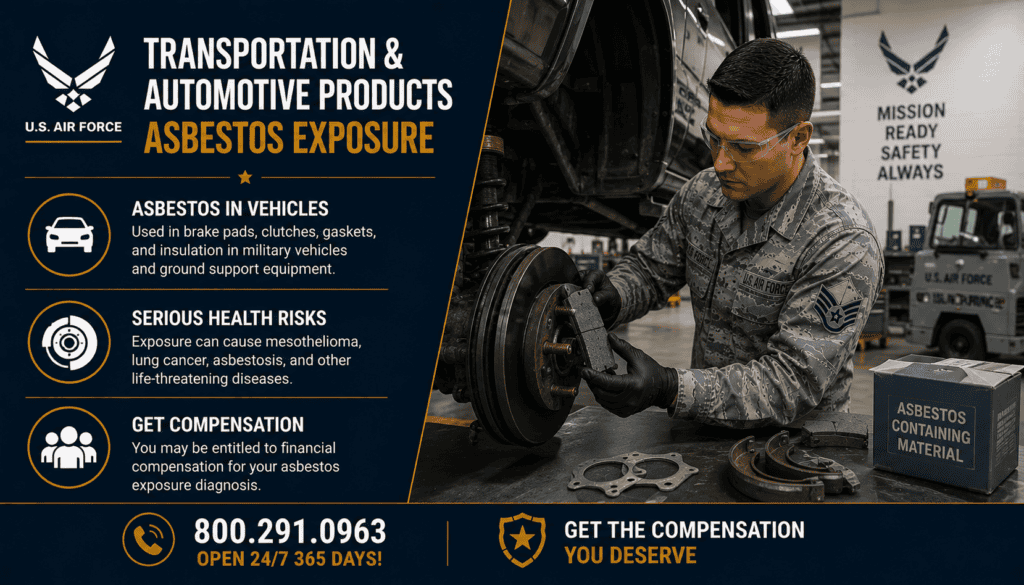
Transportation & Automotive Products and Asbestos Exposure
Some historical transportation and automotive products used asbestos-containing materials because asbestos resists heat, friction and fire. Depending on manufacturer, model, component and year, asbestos could have been present in brake linings, clutch facings, gaskets, heat shields, insulation, friction materials and certain engine or exhaust-related products.
Not every older car, truck, bus, rail vehicle or transportation component contained asbestos. The vehicle itself should not automatically be treated as asbestos-containing. Exposure questions usually depend on the specific replaceable part or applied material, its asbestos content and the work performed.
Historical exposure is most plausible when asbestos-containing friction or sealing materials were sanded, ground, blown out, scraped, cut, removed, replaced, broken or otherwise disturbed during repair, maintenance, overhaul or dismantling.
Transportation and Automotive Products and Asbestos Use
Transportation equipment includes passenger vehicles, trucks, buses, industrial vehicles, rail equipment and other machines that rely on friction, heat-resistant and sealing components. Historically, some manufacturers used asbestos-containing materials where heat, braking friction or sealing performance was important.
Potentially relevant materials could be located in brake systems, clutches, engine and exhaust gaskets, heat shields, transmission components, insulation and related repair products. In many cases, the asbestos-containing source was a replaceable component rather than the vehicle frame, body or major metal assembly.
The presence of an older vehicle does not prove asbestos exposure. The exact make, model, part, manufacturer, replacement history, workplace and repair activity should be evaluated whenever possible.
Vehicle and Transportation Products That May Have Involved Asbestos
Depending on manufacturer, application and year, historical asbestos-containing transportation and automotive products may have included:
- drum brake linings and brake shoes;
- some brake pads and friction materials;
- clutch facings and clutch discs;
- engine and exhaust gaskets;
- manifold and flange gaskets;
- heat shields and thermal barriers;
- insulating paper, board or textile materials;
- transmission and drivetrain friction components;
- packing and sealing materials;
- certain electrical or heat-resistant components;
- replacement gasket sheet used in repair shops; and
- other specialty parts selected for heat or friction resistance.
Each product should be evaluated separately because a single vehicle can contain many components with different asbestos histories.
How Asbestos Exposure Could Occur
A potential exposure pathway requires asbestos-containing material and work that disturbs it. Intact components may present a different exposure potential than worn brake dust, sanded friction material or scraped gaskets.
Potential disturbance could occur during tasks such as:
- removing brake drums or brake shoes;
- cleaning accumulated brake dust;
- sanding, grinding or arcing brake linings;
- replacing clutch discs or facings;
- sanding or fitting clutch friction material;
- removing engine or exhaust gaskets;
- scraping gasket residue from metal surfaces;
- cutting replacement gaskets from sheet stock;
- removing heat shields or insulation; and
- dismantling or rebuilding older transportation equipment.
Actual exposure depends on asbestos content, material condition, disturbance method, frequency, duration, proximity, ventilation and controls.
Worked on older brakes, clutches, gaskets or vehicle insulation? If you are trying to identify historical transportation products and reconstruct a possible asbestos exposure, Call 800.291.0963. Live chat available 24/7, 365 days a year. Submit Your Case.
Workers and Job Sites That May Have Encountered These Products
Workers who repaired, maintained, rebuilt or dismantled historical transportation equipment may have encountered asbestos-containing products if those materials were present and disturbed. A job title alone does not establish exposure.
Potentially relevant occupations may include automotive mechanics, brake technicians, heavy-equipment mechanics, fleet mechanics, truck and bus mechanics, rail maintenance workers, military vehicle mechanics, machinists and parts-rebuild workers.
Possible settings include automotive repair shops, brake and clutch shops, fleet garages, dealerships, trucking facilities, transit garages, rail yards, military motor pools, industrial maintenance shops and salvage or dismantling facilities.
Nearby workers may also be relevant when brake dust cleaning, clutch work, gasket scraping or component rebuilding generated dust in shared work areas.
Repair and Maintenance Exposure Risks
Brake service
Older drum-brake systems could accumulate dust from friction materials. If the brake lining contained asbestos, dry cleaning, compressed-air blowout, sanding or grinding could disturb fibers.
Clutch replacement
Some historical clutch facings used asbestos-containing friction material. Removal, sanding or fitting could create dust when such material was present.
Gasket replacement
Engines, exhaust systems and other assemblies may use heat-resistant gaskets. Some historical gaskets contained asbestos, and scraping adhered residue could disturb fibers.
Heat shields and insulation
Some older transportation systems used heat-resistant barriers or insulation near engines, exhausts or other hot components. Product-specific evidence is needed to determine asbestos content.
Rebuilding and dismantling
Major rebuilds can disturb several products at once, including brakes, clutches, gaskets, insulation and electrical components. Each possible source should be identified separately.
Evidence That May Identify Asbestos-Containing Vehicle Products
Exposure reconstruction is strongest when evidence identifies the exact vehicle, component, manufacturer, brand, part number, service period and work performed.
Useful evidence may include:
- vehicle make, model and model year;
- vehicle identification or fleet numbers;
- brake, clutch or gasket manufacturer information;
- part numbers and packaging;
- parts catalogs and repair manuals;
- purchase orders, invoices and supplier records;
- shop work orders and maintenance logs;
- fleet maintenance histories;
- historic photographs of parts or work areas;
- manufacturer bulletins or product specifications;
- laboratory reports for surviving friction, gasket or insulation materials;
- employer, union or military records documenting assignments; and
- coworker or supervisor statements identifying products and tasks.
Testing and documentation should distinguish brake materials, clutch materials, gaskets, insulation and other possible sources whenever those products can be separately identified.
Medical and pathology records may document an asbestos-related diagnosis but do not establish which historical transportation product was an exposure source.
Secondhand Exposure and Health Risks
If work with asbestos-containing brakes, clutches, gaskets or insulation generated fibers that accumulated on clothing, shoes, tools or belongings, asbestos could potentially have been carried away from the job site. This is a possible secondhand exposure pathway, but family relationship alone does not establish exposure.
Asbestos exposure is associated with mesothelioma, asbestos-related lung cancer, asbestosis and other asbestos-related disease. Working around older vehicles does not diagnose disease and does not establish individual medical causation.
Anyone concerned about historical occupational asbestos exposure should discuss their work history and health with a qualified healthcare professional.
Legal and Compensation Considerations
Depending on the evidence and circumstances, legal options may be available to a person diagnosed with an asbestos-related disease after documented exposure to a specific asbestos-containing transportation or automotive product.
A legal review may consider the vehicle and component manufacturers, replacement-part manufacturers, suppliers, workplace, service period, tasks performed, frequency and duration of exposure, diagnosis, jurisdiction and filing deadlines.
Identifying a vehicle manufacturer does not automatically establish that it supplied every brake, clutch, gasket or insulation component used throughout the vehicle’s service life or that it is legally responsible. Liability is case-specific and depends on product evidence, exposure evidence and governing law.
Some matters may involve asbestos trust funds, but each trust has its own product, exposure and medical documentation requirements. Eligibility is not automatic, and compensation is not guaranteed.
Exposure that occurred decades ago does not by itself determine whether a claim is timely. Statutes of limitation and other deadlines vary by jurisdiction and circumstances and should be reviewed individually.
Transportation and Automotive Asbestos Exposure FAQs
Did old cars and trucks contain asbestos?
Some historical vehicles used asbestos-containing brakes, clutches, gaskets, insulation or other heat-resistant parts, while many vehicle components did not contain asbestos.
Could old brake linings contain asbestos?
Yes. Some historical brake linings and friction materials contained asbestos.
Could old clutch facings contain asbestos?
Some historical clutch facings used asbestos-containing friction material.
Could automotive gaskets contain asbestos?
Some historical engine, exhaust and flange gaskets contained asbestos.
Can brake repair release asbestos fibers?
Potentially, if an asbestos-containing brake material is sanded, ground, blown out or otherwise disturbed.
Can mechanics have asbestos exposure from vehicle work?
Potentially, when their work involved asbestos-containing brakes, clutches, gaskets or insulation. Job title alone does not prove exposure.
What evidence can identify asbestos-containing automotive parts?
Useful evidence can include part numbers, packaging, catalogs, repair records, invoices, manufacturer information, laboratory reports and witness testimony.
Does working on old vehicles automatically qualify someone for compensation?
No. Legal eligibility depends on product identification, asbestos-content evidence, exposure history, diagnosis, jurisdiction and other case-specific facts. Compensation is not guaranteed.
For related information, see Engine Products Asbestos Exposure, Propulsion Products Asbestos Exposure, Pumps, Valves & Gaskets Asbestos Exposure, Insulation Products Asbestos Exposure, Electrical Products Asbestos Exposure, and the main Asbestos Exposure in Products guide.
Get Help Reviewing Transportation and Automotive Product Exposure
If you or a family member has been diagnosed with mesothelioma, asbestos-related lung cancer or another asbestos-related disease and you are trying to identify older brakes, clutches, gaskets, heat shields, insulation or other transportation products from a repair shop, fleet garage, military motor pool, transit facility or industrial workplace, we can help organize the product and exposure history that may be relevant.
Call 800.291.0963 to discuss what you remember about the vehicle, component brand, workplace and work performed. Live chat is available 24/7, 365 days a year. Submit Your Case using the form below.
Prior exposure does not automatically establish a legal claim. Eligibility depends on the evidence, diagnosis, jurisdiction and other circumstances, and compensation is not guaranteed.
⚕️ Legal & Medical Information Disclaimer
This page provides general educational information and is not medical or legal advice. The information does not establish asbestos exposure, diagnosis, causation, liability, claim eligibility or compensation. Medical concerns should be discussed with a qualified healthcare professional, and legal questions should be reviewed with a qualified attorney.