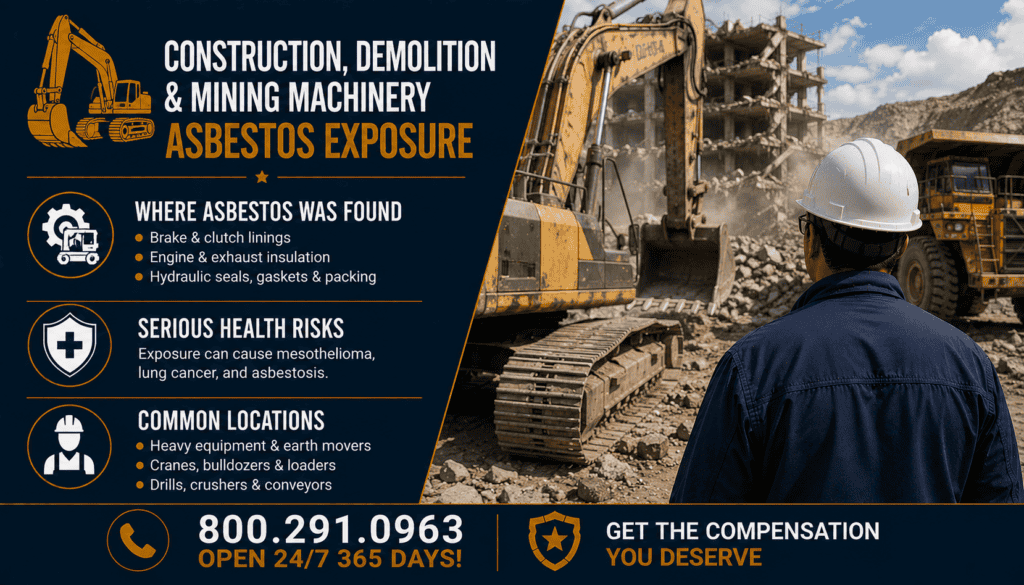
Construction, Demolition & Mining Machinery Asbestos Exposure
Construction, demolition, excavation, quarrying, tunneling, and mining machinery have shaped modern infrastructure for more than a century. From excavators, bulldozers, cranes, loaders, draglines, drilling rigs, haul trucks, crushers, and conveyors to tunnel boring machines and surface mining equipment, these powerful machines have built cities, extracted natural resources, demolished aging structures, and supported industrial development around the world. Operating in demanding environments involving dust, vibration, heavy mechanical loads, heat, and continuous production, construction and mining machinery relied upon durable engineering materials capable of withstanding extreme conditions.
Throughout much of the twentieth century, asbestos became one of the preferred materials used within many types of heavy machinery. Manufacturers incorporated asbestos into braking systems, clutch assemblies, engine insulation, exhaust systems, electrical components, gaskets, packing materials, heat shields, friction products, and numerous supporting systems. Unlike asbestos found in buildings, these materials were typically integrated into the machinery itself, where they helped manage heat, reduce fire hazards, improve braking performance, and protect nearby mechanical components.
Heavy equipment was rarely discarded after only a few years of service. Bulldozers, draglines, mining shovels, loaders, crushers, haul trucks, drilling rigs, and cranes often remained in operation for decades through repeated rebuilding, modernization, and overhaul programs. Engines were rebuilt, transmissions replaced, hydraulic systems upgraded, brakes serviced, electrical systems modernized, and insulation repaired. During these maintenance activities, workers frequently disturbed original asbestos-containing components that had remained in service since the equipment was first manufactured.
This authority hub explains why asbestos became integrated throughout construction, demolition, and mining machinery, how these systems were engineered, the industries that relied upon them, the workers most frequently exposed during maintenance and rebuilding projects, and the individual machinery categories explored in greater detail throughout the related child pages.
📚 What You’ll Learn in This Guide
━━━━━━━━━━━━━━━━━━━━━━━━━━━━━━━━━━━━
This authority hub provides a comprehensive introduction to asbestos exposure associated with construction, demolition, and mining machinery.
Throughout this guide you’ll learn:
- Why asbestos became an important engineering material throughout heavy equipment
- How construction and mining machinery was designed for continuous industrial operation
- The importance of heat management, braking systems, and friction materials
- How engines, hydraulics, and powertrains incorporated asbestos-containing components
- Why maintenance and rebuilding created exposure opportunities
- The major categories of construction and mining machinery
- Which industries relied upon these machines
- Where asbestos-containing materials were commonly installed
- Which workers most frequently encountered asbestos during maintenance, rebuilding, and modernization projects
- How each machinery category is examined in greater detail throughout the related child pages
Rather than focusing on one machine, this guide introduces the engineering principles behind heavy construction and mining equipment before exploring individual machinery categories.
🚜 Why Construction & Mining Machinery Relied on Asbestos
━━━━━━━━━━━━━━━━━━━━━━━━━━━━━━━━━━━━
Heavy machinery operates under some of the harshest conditions found in industry.
Construction equipment routinely experiences:
- Heavy mechanical loads
- Constant vibration
- High engine temperatures
- Continuous braking
- Dust
- Mud
- Moisture
- Rough terrain
- Long operating hours
Mining equipment often operates around the clock while transporting enormous loads or excavating hard rock under demanding environmental conditions.
Manufacturers required materials capable of resisting heat, slowing the spread of fire, reducing wear, and maintaining dependable performance throughout prolonged industrial service.
Throughout much of the twentieth century, asbestos appeared to provide these characteristics.
Manufacturers valued asbestos because it offered:
- Excellent heat resistance
- Fire resistance
- Friction resistance
- Mechanical durability
- Electrical insulation
- Long service life
- Resistance to vibration
- Compatibility with numerous industrial products
- Reliable braking performance
Rather than being confined to one location, asbestos appeared throughout complete machinery systems.
Common asbestos-containing products included:
- Brake linings
- Clutch facings
- Engine gaskets
- Exhaust insulation
- Heat shields
- Electrical insulation
- Fire-resistant panels
- High-temperature packing
- Protective barriers
- Thermal blankets
- Expansion joint materials
- Insulating cement
These materials improved machinery durability while protecting nearby mechanical systems from excessive heat.
🏗️ Engineering and Design of Heavy Equipment
━━━━━━━━━━━━━━━━━━━━━━━━━━━━━━━━━━━━
Construction and mining machinery integrates mechanical engineering, structural engineering, hydraulic engineering, diesel power systems, electrical engineering, and materials engineering into machines capable of operating continuously under extreme working conditions.
Major engineering objectives include:
- High pulling force
- Lifting capacity
- Digging performance
- Material handling efficiency
- Structural durability
- Operator safety
- Reliable braking
- Hydraulic performance
- Engine cooling
- Ease of maintenance
Typical heavy machinery includes:
- Diesel engines
- Hydraulic systems
- Transmissions
- Final drives
- Braking systems
- Clutches
- Cooling systems
- Electrical controls
- Structural frames
- Operator compartments
- Steering systems
- Suspension components
Historically, asbestos-containing materials were incorporated into numerous supporting systems throughout these machines.
🌡️ Heat Management Throughout Heavy Machinery
━━━━━━━━━━━━━━━━━━━━━━━━━━━━━━━━━━━━
Heavy equipment generates significant heat throughout normal operation.
Diesel engines produce high exhaust temperatures.
Braking systems generate friction.
Hydraulic systems create heat under pressure.
Transmissions operate continuously under heavy loads.
Exhaust systems require thermal protection.
To improve reliability, manufacturers incorporated numerous heat-management systems throughout heavy machinery.
Common applications included:
- Engine insulation
- Exhaust insulation
- Heat shields
- Fire barriers
- Thermal blankets
- High-temperature gaskets
- Protective panels
- Expansion joints
- Electrical insulation
- Equipment shielding
Historically, asbestos-containing materials frequently formed part of these systems because they maintained dependable performance under prolonged industrial operation.
⚙️ Powertrains, Brakes & Clutches
━━━━━━━━━━━━━━━━━━━━━━━━━━━━━━━━━━━━
Construction and mining equipment depends upon reliable power transmission systems.
Major components include:
- Diesel engines
- Torque converters
- Transmissions
- Final drives
- Brakes
- Clutches
- Gearboxes
- Drive shafts
- Differentials
- Axles
Industrial braking systems frequently generated substantial heat while controlling extremely heavy equipment.
Throughout much of the twentieth century, asbestos became one of the most widely used friction materials because it provided dependable braking performance under severe operating conditions.
Maintenance personnel routinely replaced these components throughout the operating life of heavy machinery.
⛏️ Mining and Excavation Systems
━━━━━━━━━━━━━━━━━━━━━━━━━━━━━━━━━━━━
Mining equipment performs continuous excavation, drilling, crushing, hauling, loading, and material transport throughout surface and underground operations.
Typical mining systems include:
- Excavators
- Draglines
- Haul trucks
- Crushers
- Conveyors
- Drilling rigs
- Shovels
- Loaders
- Continuous miners
- Tunnel boring equipment
Historically, many of these systems incorporated asbestos-containing insulation, friction materials, and high-temperature sealing products throughout supporting mechanical equipment.
🚜 Bulldozer Machinery
━━━━━━━━━━━━━━━━━━━━━━━━━━━━━━━━━━━━
Bulldozers are among the most recognizable and widely used machines in construction, mining, forestry, military engineering, and land development. Designed to push large volumes of soil, rock, debris, and construction materials, bulldozers combine powerful diesel engines, heavy-duty powertrains, hydraulic systems, and rugged undercarriages capable of operating under extremely demanding conditions.
They have long been used in:
- Highway construction
- Building site preparation
- Surface mining
- Quarry operations
- Land clearing
- Logging
- Pipeline construction
- Military engineering
- Dam construction
- Landfill operations
Many bulldozers remained in service for decades through repeated rebuilding and component replacement.
Bulldozer Construction
Typical bulldozers included:
- Diesel engine
- Transmission
- Torque converter
- Final drives
- Hydraulic system
- Cooling system
- Exhaust system
- Track assemblies
- Blade controls
- Operator cab
- Electrical system
- Braking assemblies
Historical Asbestos Applications
Historically, asbestos-containing materials could be incorporated into:
- Brake linings
- Clutch facings
- Engine gaskets
- Exhaust insulation
- Muffler insulation
- Heat shields
- Electrical insulation
- Fire-resistant barriers
- Protective panels
- High-temperature packing
Engine compartments frequently required thermal protection because of prolonged exposure to elevated operating temperatures.
Maintenance Procedures
Routine servicing commonly included:
- Brake replacement
- Clutch rebuilding
- Engine overhauls
- Exhaust repairs
- Cooling system maintenance
- Hydraulic repairs
- Electrical upgrades
- Transmission rebuilding
- Gasket replacement
- Structural inspections
Representative Manufacturers
Major bulldozer manufacturers included:
- Caterpillar
- International Harvester
- Allis-Chalmers
- Komatsu
- Case
- John Deere
- Fiat-Allis
- Liebherr
- Terex
- Dressta
🏗️ Excavator & Backhoe Machinery
━━━━━━━━━━━━━━━━━━━━━━━━━━━━━━━━━━━━
Excavators and backhoes perform digging, trenching, lifting, demolition, material handling, and site preparation throughout construction and mining operations.
These versatile machines are commonly used for:
- Utility installation
- Foundation excavation
- Demolition
- Pipeline construction
- Quarry work
- Surface mining
- Road construction
- Bridge construction
- Land development
- Environmental remediation
Excavator Construction
Typical excavators included:
- Diesel engine
- Hydraulic pumps
- Boom
- Stick
- Bucket
- Swing drive
- Final drives
- Cooling system
- Electrical controls
- Operator cab
- Counterweight
- Undercarriage
Hydraulic systems generate considerable heat during prolonged operation.
Historical Asbestos Applications
Historically, asbestos-containing materials could appear within:
- Brake systems
- Clutch assemblies
- Engine gaskets
- Exhaust insulation
- Heat shields
- Fire-resistant barriers
- Electrical insulation
- Thermal blankets
- Protective panels
- High-temperature packing
Maintenance Procedures
Routine maintenance frequently involved:
- Engine rebuilding
- Brake replacement
- Hydraulic repairs
- Pump rebuilding
- Cooling system servicing
- Exhaust replacement
- Electrical repairs
- Structural inspections
- Transmission maintenance
- Gasket replacement
Representative Manufacturers
Manufacturers included:
- Caterpillar
- John Deere
- Komatsu
- Hitachi
- Case
- Kobelco
- Liebherr
- Volvo Construction Equipment
- Hyundai
- Terex
🚛 Haul Truck Machinery
━━━━━━━━━━━━━━━━━━━━━━━━━━━━━━━━━━━━
Haul trucks transport enormous quantities of rock, ore, overburden, aggregate, and construction materials throughout mining and heavy construction projects.
Large mining haul trucks may carry hundreds of tons during continuous operation.
Industries relying upon haul trucks include:
- Surface mining
- Quarry operations
- Open-pit mining
- Highway construction
- Dam construction
- Large earthmoving projects
Haul Truck Construction
Major systems typically included:
- Diesel engine
- Transmission
- Final drives
- Hydraulic system
- Suspension
- Braking system
- Cooling system
- Electrical controls
- Steering system
- Dump body
- Structural frame
These machines generated substantial heat throughout engines, transmissions, and braking systems.
Historical Asbestos Applications
Historically, asbestos-containing materials could be incorporated into:
- Brake linings
- Clutch assemblies
- Engine gaskets
- Exhaust insulation
- Heat shields
- Fire-resistant barriers
- Electrical insulation
- High-temperature packing
- Protective panels
Maintenance Procedures
Routine servicing commonly included:
- Brake replacement
- Engine rebuilding
- Transmission repairs
- Hydraulic maintenance
- Cooling system repairs
- Exhaust replacement
- Electrical upgrades
- Suspension maintenance
- Structural inspections
- Gasket replacement
Representative Manufacturers
Major manufacturers included:
- Caterpillar
- Euclid
- Terex
- Komatsu
- Liebherr
- Unit Rig
- Wabco
- Hitachi
- Volvo
- Bucyrus-Erie
⛏️ Drilling Rig Machinery
━━━━━━━━━━━━━━━━━━━━━━━━━━━━━━━━━━━━
Drilling rigs create boreholes used for mining, geotechnical investigations, oil and gas exploration, blasting operations, water wells, and foundation construction.
Industrial drilling equipment operates under heavy mechanical loads while generating significant heat through engines, hydraulic systems, compressors, and drilling components.
Drilling Rig Construction
Typical drilling rigs included:
- Diesel engine
- Rotary drive
- Hydraulic system
- Air compressor
- Hoisting system
- Mast
- Cooling system
- Electrical controls
- Structural frame
- Pipe handling equipment
Historical Asbestos Applications
Historically, asbestos-containing materials could appear within:
- Engine gaskets
- Compressor insulation
- Brake linings
- Clutch facings
- Exhaust insulation
- Heat shields
- Fire-resistant barriers
- Electrical insulation
- High-temperature packing
Supporting compressor systems frequently incorporated additional thermal insulation.
Maintenance Procedures
Routine maintenance commonly involved:
- Engine rebuilding
- Compressor servicing
- Brake replacement
- Clutch rebuilding
- Hydraulic repairs
- Cooling system maintenance
- Electrical upgrades
- Exhaust repairs
- Structural inspections
- Gasket replacement
Representative Manufacturers
Manufacturers included:
- Bucyrus-Erie
- Ingersoll-Rand
- Atlas Copco
- Gardner Denver
- Joy Manufacturing
- Caterpillar
- Reedrill
- Sandvik
- Epiroc
- Chicago Pneumatic
🪨 Crushing & Screening Machinery
━━━━━━━━━━━━━━━━━━━━━━━━━━━━━━━━━━━━
Crushers and screening systems reduce and separate rock, ore, aggregate, concrete, and demolition debris into usable sizes for construction, mining, and industrial processing.
They are widely used throughout:
- Surface mining
- Quarries
- Recycling facilities
- Aggregate plants
- Cement production
- Road construction
- Demolition operations
Crusher Construction
Typical systems included:
- Feed hopper
- Crusher housing
- Drive motor
- Bearings
- Conveyor connections
- Structural frame
- Hydraulic equipment
- Electrical controls
- Lubrication systems
- Safety equipment
Historical Asbestos Applications
Historically, asbestos-containing materials could appear within:
- Motor insulation
- Brake systems
- Clutch assemblies
- Heat shields
- Electrical insulation
- Fire-resistant barriers
- Gaskets
- Protective panels
Maintenance personnel often encountered these materials while rebuilding major drive systems.
Maintenance Procedures
Routine servicing frequently included:
- Motor rebuilding
- Brake replacement
- Clutch servicing
- Bearing replacement
- Gearbox rebuilding
- Conveyor repairs
- Electrical maintenance
- Structural inspections
- Lubrication system servicing
- Complete machine overhauls
Representative Manufacturers
Manufacturers included:
- Allis-Chalmers
- Cedarapids
- Telsmith
- Nordberg
- Metso
- Eagle Crusher
- Symons
- Pioneer
- Terex
- Sandvik
👷 Worker Exposure Scenarios
━━━━━━━━━━━━━━━━━━━━━━━━━━━━━━━━━━━━
Workers employed around construction, demolition, and mining machinery were generally not exposed to asbestos simply because heavy equipment was operating. Instead, the greatest opportunity for occupational exposure usually occurred during preventive maintenance, engine rebuilds, equipment overhauls, production shutdowns, fleet modernization, salvage operations, and demolition of older machinery.
Unlike automobiles or light commercial equipment, heavy construction and mining machines were designed to remain in service for decades. Bulldozers, excavators, draglines, haul trucks, drilling rigs, loaders, and crushers were commonly rebuilt numerous times throughout their operating lives. During these projects, maintenance personnel routinely removed worn friction materials, replaced engine components, repaired exhaust systems, rebuilt transmissions, and upgraded electrical equipment.
Common work activities that historically disturbed asbestos-containing materials included:
- Replacing brake linings
- Rebuilding clutch assemblies
- Removing engine gaskets
- Servicing exhaust systems
- Replacing heat shields
- Removing insulation from engine compartments
- Rebuilding diesel engines
- Repairing cooling systems
- Replacing high-temperature packing
- Servicing hydraulic drive systems
- Rebuilding drilling equipment
- Modernizing electrical systems
- Dismantling obsolete machinery
- Salvaging heavy equipment
- Installing replacement components
In mining operations, equipment maintenance was frequently performed inside dedicated repair shops where multiple mechanics worked on several machines simultaneously.
🏭 Fleet Maintenance Shutdowns
━━━━━━━━━━━━━━━━━━━━━━━━━━━━━━━━━━━━
Large construction companies, mining operations, quarries, and heavy equipment contractors routinely scheduled maintenance shutdowns to keep machinery operating safely and efficiently.
Rather than allowing catastrophic failures, equipment owners periodically removed machines from service for comprehensive inspections and rebuilding.
Typical maintenance activities included:
- Engine overhauls
- Transmission rebuilding
- Brake replacement
- Clutch rebuilding
- Hydraulic pump repairs
- Cooling system maintenance
- Electrical upgrades
- Exhaust replacement
- Structural inspections
- Track rebuilding
- Tire replacement
- Control system modernization
Mining companies often coordinated maintenance around production schedules so multiple machines could be serviced during planned outages.
Maintenance crews commonly included:
- Heavy equipment mechanics
- Diesel mechanics
- Welders
- Electricians
- Hydraulic technicians
- Millwrights
- Maintenance supervisors
- Engineers
- Equipment manufacturer service representatives
- Outside contractors
Large equipment rebuild programs often extended the operating life of machinery by many years.
🏗️ Equipment Modernization and Rebuilding Programs
━━━━━━━━━━━━━━━━━━━━━━━━━━━━━━━━━━━━
Heavy construction and mining equipment represented major capital investments.
Rather than replacing complete machines every few years, owners frequently modernized existing equipment through comprehensive rebuilding programs.
Examples included:
- Installing rebuilt diesel engines
- Upgrading transmissions
- Replacing hydraulic systems
- Installing modern electrical controls
- Improving operator safety systems
- Rebuilding final drives
- Modernizing braking systems
- Replacing cooling equipment
- Installing electronic monitoring systems
- Upgrading emission controls
Many rebuild projects required removal of original gaskets, insulation, brake materials, clutch assemblies, and thermal protection products before new components could be installed.
Although replacement parts generally no longer incorporated asbestos, original machinery often remained in service for decades before complete replacement.
📁 Machinery Documentation and Historical Records
━━━━━━━━━━━━━━━━━━━━━━━━━━━━━━━━━━━━
Historical equipment records often provide valuable information long after heavy machinery has been retired or scrapped.
Construction companies, mining operators, government agencies, and equipment dealers frequently maintained extensive maintenance and asset records throughout the operating life of major machinery.
Useful documentation may include:
- Fleet inventories
- Equipment purchase records
- Equipment specifications
- Service manuals
- Maintenance logs
- Repair histories
- Engine rebuild records
- Parts catalogs
- Equipment inspection reports
- Asset management databases
- Rental records
- Equipment photographs
- Manufacturer documentation
- Serial number records
These documents often identify equipment manufacturers, model numbers, service history, maintenance intervals, and major rebuilding projects.
🏷️ Identifying Machinery Manufacturers
━━━━━━━━━━━━━━━━━━━━━━━━━━━━━━━━━━━━
Identifying the manufacturer of construction or mining machinery can help reconstruct a worker’s equipment history and the types of machinery serviced throughout a career.
Most heavy equipment originally carried permanent identification plates listing:
- Manufacturer
- Model number
- Serial number
- Engine specifications
- Horsepower
- Operating weight
- Manufacturing date
Additional information may be available through:
- Equipment manuals
- Maintenance records
- Fleet inventories
- Purchasing records
- Dealer documentation
- Parts catalogs
- Historical photographs
- Equipment registration records
Large contractors and mining companies typically operated equipment from multiple manufacturers.
A single mining operation, for example, might include:
- Caterpillar bulldozers
- Komatsu excavators
- Euclid haul trucks
- Bucyrus-Erie draglines
- Atlas Copco drilling rigs
- Metso crushing equipment
- Terex loaders
- Sandvik underground mining equipment
Documenting these machines helps establish the equipment maintained during a worker’s employment.
🩺 Diseases Associated with Asbestos Exposure
━━━━━━━━━━━━━━━━━━━━━━━━━━━━━━━━━━━━
Workers who repeatedly disturbed asbestos-containing brakes, clutches, gaskets, insulation, heat shields, exhaust components, and other machinery materials over many years may have inhaled microscopic asbestos fibers released during maintenance and rebuilding activities.
These fibers can remain within the lungs and surrounding tissues for decades before disease develops.
Medical conditions associated with occupational asbestos exposure include:
- Mesothelioma
- Asbestos-related lung cancer
- Asbestosis
- Pleural plaques
- Pleural thickening
- Benign pleural effusions
Many asbestos-related diseases have long latency periods, often developing twenty to fifty years after occupational exposure first occurred.
Workers who spent years maintaining older heavy equipment should discuss their occupational history with healthcare providers if respiratory symptoms develop.
⚖️ Legal Options
━━━━━━━━━━━━━━━━━━━━━━━━━━━━━━━━━━━━
Individuals diagnosed with asbestos-related diseases after occupational exposure involving construction, demolition, or mining machinery may have several potential legal and financial options depending upon their work history.
Potential sources of compensation may include:
- Asbestos trust fund claims
- Personal injury lawsuits
- Wrongful death claims
- Veterans benefits for eligible military personnel
- Workers’ compensation where applicable
Available options depend upon employment history, machinery maintained, manufacturers involved, work locations, and applicable state law.
Reviewing maintenance records, equipment documentation, and manufacturer information often helps establish a detailed occupational exposure history.
❓ Frequently Asked Questions
━━━━━━━━━━━━━━━━━━━━━━━━━━━━━━━━━━━━
Did construction equipment contain asbestos?
Yes. Many older construction machines incorporated asbestos-containing brake linings, clutch facings, engine gaskets, exhaust insulation, electrical insulation, heat shields, and fire-resistant materials.
Why was asbestos used in heavy equipment?
Manufacturers selected asbestos because it resisted heat, provided dependable friction performance, reduced fire hazards, insulated high-temperature components, and remained durable under demanding operating conditions.
Which heavy equipment components most commonly contained asbestos?
Brake systems, clutch assemblies, engine gaskets, exhaust insulation, heat shields, electrical insulation, and certain fire-resistant panels were among the components most likely to contain asbestos.
Which workers experienced the greatest exposure?
Heavy equipment mechanics, diesel mechanics, welders, electricians, hydraulic technicians, millwrights, equipment rebuild specialists, mining maintenance crews, demolition contractors, and fleet maintenance personnel were among those most likely to encounter asbestos during repairs and rebuilding.
Are these machines still used today?
Yes. Bulldozers, excavators, haul trucks, drilling rigs, crushers, loaders, and other heavy machinery remain essential throughout construction and mining, although newly manufactured equipment generally uses non-asbestos friction materials and insulation products.
🔗 Related Machinery Authority Hubs
━━━━━━━━━━━━━━━━━━━━━━━━━━━━━━━━━━━━
Continue exploring additional machinery covered throughout our Machinery Asbestos Exposure Resource Center, including:
- Metalworking, Fabrication & Machine Tools Asbestos Exposure
- Manufacturing & Production Machinery Asbestos Exposure
- Process, Pump, Valve & Refinery Machinery Asbestos Exposure
- HVAC, Refrigeration & Air-Handling Machinery Asbestos Exposure
- Boilers, Furnaces & Heat-Process Machinery Asbestos Exposure
- Ovens, Kilns & Curing Machinery Asbestos Exposure
- Power Generation & Electrical Machinery Asbestos Exposure
- Industrial Pump & Fluid Handling Machinery Asbestos Exposure
Together, these authority hubs provide comprehensive information about asbestos exposure associated with industrial machinery used throughout construction, mining, manufacturing, petroleum refining, utilities, and heavy industry.
📞 Learn More About Your Occupational Exposure History
━━━━━━━━━━━━━━━━━━━━━━━━━━━━━━━━━━━━
If you or a loved one worked around construction equipment, demolition machinery, mining equipment, excavators, bulldozers, haul trucks, drilling rigs, crushers, or other heavy industrial machinery and later developed an asbestos-related disease, documenting your occupational history may help identify potential sources of asbestos exposure.
Employment records, fleet assignments, maintenance responsibilities, equipment manufacturers, service records, and machinery documentation can all help reconstruct historical workplace exposure.
For more information or to discuss your work history, call:
📞 800.291.0963
Our experienced asbestos case specialists can help review your occupational history, identify potential asbestos-containing machinery, and explain available resources.