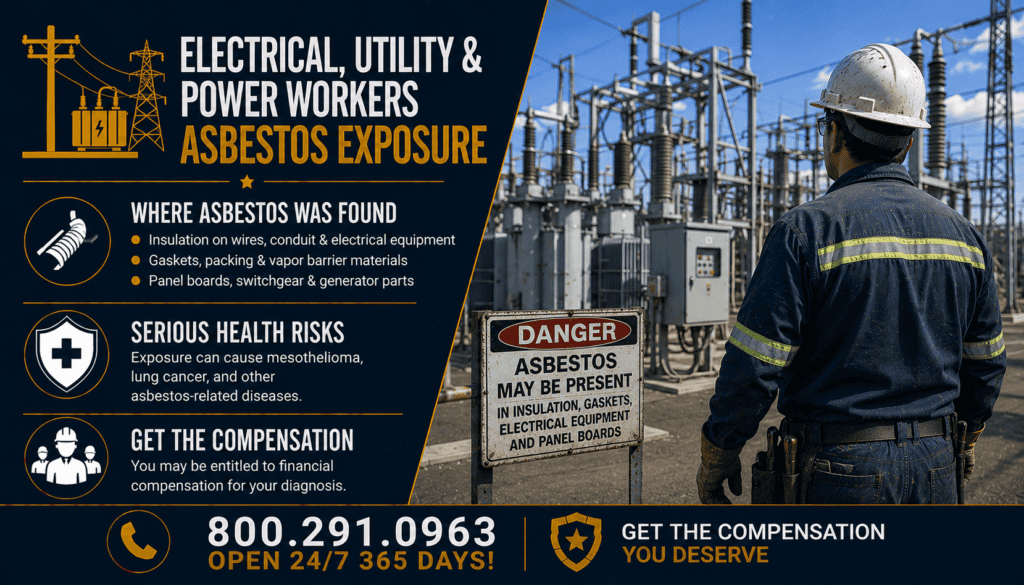
Electrical & Utility Power Workers Asbestos Exposure
Electrical and utility power workers can work in generating stations, substations, industrial power systems and electrical distribution environments. In older power plants, potential asbestos exposure could occur around steam-line insulation, boiler lagging, insulated equipment and asbestos-containing materials disturbed during maintenance, renovation or electrical work.
Electrical or utility employment alone does not prove asbestos exposure. NIOSH documented airborne-asbestos concerns at power stations during removal of steam-line insulation and boiler lagging and specifically evaluated electrical workers performing rewiring around an asbestos-abatement project at a coal-fired generating station. Exposure depended on the facility, era, equipment, material and task.
Electrical, Utility and Power Workers Asbestos Exposure
Power generation facilities combine electrical systems with boilers, turbines, steam piping, pumps, ducts and other equipment. Older generating stations can therefore place electricians, utility employees, maintenance personnel and contractors near thermal insulation and other legacy asbestos-containing materials.
A NIOSH health hazard evaluation at Hatfield’s Ferry Power Station was requested because employees were reportedly exposed to airborne asbestos during removal of existing insulation from steam lines and boiler lagging. NIOSH also noted that contractors periodically dismantled old installations containing asbestos and that inadequate contractor practices could expose nearby employees.
NIOSH separately evaluated electrical workers performing rewiring tasks on a boiler at the Albright Power Station while an asbestos-abatement project was underway. The electricians did not work inside the containment area during the survey, but they worked outside and around it. This is strong occupation-specific evidence for evaluating both direct and adjacent-trade exposure in power-generation settings.
Related resources include high-risk jobs asbestos exposure, boiler room operators asbestos exposure and maintenance workers asbestos exposure.
Asbestos Materials in Power and Utility Facilities
OSHA’s General Industry asbestos standard defines thermal-system insulation as asbestos-containing material applied to pipes, fittings, boilers, breeching, tanks, ducts and other structural components to prevent heat loss or gain. Those systems are common features of traditional steam-generating power plants.
- Older asbestos-containing steam-line and pipe insulation
- Boiler lagging and thermal insulation where asbestos was present
- Insulation on fittings, breeching, tanks and ducts where confirmed
- Asbestos-containing gaskets and packing in older mechanical equipment where documented
- Sprayed or troweled asbestos-containing surfacing and fireproofing materials
- Legacy asbestos-containing building materials in generating-station structures
NIOSH’s Hatfield’s Ferry evaluation provides direct evidence that existing steam-line insulation and boiler lagging at a coal-fired power station were asbestos concerns during removal. The same report noted periodic dismantling of old installations containing asbestos.
Not every power plant, boiler, cable, electrical panel, gasket or insulation product contained asbestos. Facility asbestos surveys, laboratory reports, equipment records, specifications and product documentation are important for identifying the actual material.
How Occupational Asbestos Exposure Could Occur
Potential exposure could occur when asbestos-containing materials were disturbed during electrical installation, generating-station maintenance, boiler overhaul, equipment access, demolition or renovation.
- Electrical rewiring: working around asbestos abatement or disturbed insulation during boiler and plant upgrades
- Boiler maintenance: working near removal of asbestos-containing boiler lagging or connected insulation
- Steam-line work: accessing electrical or control systems near disturbed pipe insulation
- Equipment replacement: dismantling older installations containing asbestos
- Plant renovation: disturbing confirmed asbestos-containing surfacing or building materials
- Adjacent-trade work: working near contractors removing asbestos-containing insulation
- Cleanup: handling asbestos-containing debris or contaminated dust after covered work
OSHA regulates occupational asbestos exposure under its General Industry standard, including exposure limits, regulated areas, respiratory protection, protective clothing, hygiene, communication and medical-surveillance provisions when applicable.
Electrical shock, arc flash, electrocution, coal dust, fly ash, metals and other power-industry hazards are distinct from asbestos. NIOSH identifies electrical hazards as serious risks in utility work, but electrical energy itself does not create asbestos exposure.
Power Plants, Electrical Rooms and Utility Work
Electrical and utility workers can perform very different jobs. The strongest asbestos history identifies the particular facility, equipment and work activity rather than relying on a broad occupational title.
Coal-Fired Power Stations
NIOSH’s Hatfield’s Ferry evaluation documented a coal-fired electricity-generating facility with three boilers and reported asbestos concerns associated with removal of steam-line insulation and boiler lagging. Periodic dismantling of older asbestos-containing installations was also described.
Boilers and Steam Systems
Traditional generating stations can contain extensive boiler and steam systems. OSHA expressly includes pipes, fittings and boilers in its definition of thermal-system insulation, making maintenance and overhaul records important evidence.
Electrical Rewiring and Plant Upgrades
NIOSH’s Albright Power Station evaluation specifically involved electrical workers performing boiler rewiring while asbestos abatement was underway. This illustrates how electricians can potentially work adjacent to asbestos activity even when their own task is electrical.
Electrical Rooms and Control Areas
Electrical equipment itself should not automatically be labeled asbestos-containing. Potential exposure in electrical rooms requires identification of a separate ACM source, such as building fireproofing, insulation or a documented asbestos-containing equipment component.
Substations and Power Distribution
Utility workers who primarily install or maintain transmission and distribution systems face major electrical hazards. NIOSH emphasizes electrocution, shock, arc and power-line risks. Asbestos exposure should be alleged only when a specific asbestos-containing material or facility source is documented.
Maintenance and Contractor Work
Power plants often use contractors during outages, overhauls and major upgrades. NIOSH’s Hatfield’s Ferry report noted that contractor employees periodically dismantled old asbestos-containing installations and that nearby employees could potentially be affected when asbestos procedures were not followed.
Related resources include boilermakers asbestos exposure, pipefitters asbestos exposure, insulators and laggers asbestos exposure, maintenance mechanics asbestos exposure and industrial, manufacturing and utility buildings asbestos exposure.
Secondary or Household Exposure
If a worker’s clothing or belongings became contaminated during actual asbestos work, fibers could historically be carried away from the workplace. A household exposure history still requires evidence about the asbestos source, contamination and frequency of contact.
Need help now? Call 800.291.0963
Live chat available 24/7, 365 days a year.
Submit Your Case
Mesothelioma and Other Occupational Health Risks
NIOSH’s review of workplace asbestos exposure addresses the carcinogenic hazards of occupational asbestos. OSHA regulates workplace exposure because inhaled asbestos fibers can create serious health risks.
Electrical and utility workers can also face hazards unrelated to asbestos. NIOSH reports that utility and construction industries have had high rates of injuries from exposure to electricity, while electrical work can involve shock, burns, arc blast and electrocution. Power-station work may also involve coal dust, fly ash, metals, heat, noise and other contaminants.
These hazards should be evaluated separately. A worker’s electrical or utility occupation does not establish asbestos exposure, and a diagnosis does not identify a particular power plant, material, employer or product as the source.
Medical questions about asbestos exposure, symptoms, screening or diagnosis should be discussed with a qualified healthcare professional.
Documenting an Electrical or Utility Exposure History
A useful occupational investigation identifies the employer, generating station or utility facility, dates, electrical assignment, work area and asbestos-containing material associated with possible exposure.
- Employment evidence: employer, contractor, union, payroll, W-2 and Social Security earnings records
- Facility evidence: generating station, substation, utility building, unit number and construction dates
- Trade evidence: electrician, electrical maintenance, utility mechanic, operator or contractor assignments
- System evidence: boiler, steam line, turbine area, control system, electrical room or plant renovation project
- Material evidence: asbestos surveys, laboratory reports, specifications, equipment records and abatement documents
- Exposure evidence: industrial-hygiene monitoring, regulated-area records, contractor asbestos records and incident reports
- Witness evidence: electricians, boilermakers, pipefitters, insulators, operators, maintenance workers and supervisors
Historical NIOSH health hazard evaluations can be valuable when they concern the same facility or type of work. They can document asbestos-containing systems, abatement activity and evaluated work practices, although they do not automatically prove the exposure of every employee who worked there.
Questions That Can Strengthen an Exposure History
Which power plants or utility facilities? What years? Was the worker assigned to boiler, turbine or steam-system areas? Did electrical upgrades occur during asbestos abatement? Was pipe insulation removed nearby? Were old installations dismantled? Were asbestos surveys or monitoring records created? These details can help identify a specific occupational pathway.
Asbestos Lawsuits, Trust Funds and Compensation
An electrical or utility power worker diagnosed with mesothelioma or another asbestos-related disease may have potential legal or compensation options when evidence supports occupational asbestos exposure and applicable requirements are met. Possible avenues can include claims involving legally responsible companies and asbestos bankruptcy trusts.
Electrical or utility employment alone does not establish liability or asbestos trust eligibility. Each trust has separate medical and exposure requirements, and evidence may be needed connecting the worker to a covered asbestos product, company, facility or qualifying exposure period.
Potential evidence includes employment and Social Security records, union files, plant maintenance and outage records, asbestos surveys, abatement records, specifications, product and supplier documents, industrial-hygiene monitoring, photographs, coworker statements and medical documentation. Applicable law and filing deadlines should be reviewed individually.
Related Electrical, Utility and Mechanical Resources
Power and maintenance work: Boiler Room Operators Asbestos Exposure · Maintenance Workers Asbestos Exposure
Boilers and piping: Boilermakers Asbestos Exposure · Pipefitters Asbestos Exposure · Insulators & Laggers Asbestos Exposure
Facilities: Asbestos Exposure in Buildings · Industrial, Manufacturing & Utility Buildings Asbestos Exposure
Authoritative Sources
This page was researched using OSHA and NIOSH government sources addressing asbestos in power stations, electrical-worker exposure, thermal-system insulation and electrical utility hazards.
Electrical and Utility Power Workers Asbestos Exposure FAQ
Were all electrical and utility workers exposed to asbestos?
No. Exposure depended on the facility, era, equipment, materials and tasks. Electrical or utility employment alone does not prove asbestos exposure.
Did NIOSH document asbestos concerns at power stations?
Yes. NIOSH evaluated asbestos concerns involving removal of steam-line insulation and boiler lagging at Hatfield’s Ferry Power Station and evaluated electrical workers working around asbestos abatement at Albright Power Station.
Where could asbestos have been found in older power plants?
Potential sources included confirmed asbestos-containing insulation on steam lines, pipes, fittings and boilers, along with certain surfacing, fireproofing, gaskets, packing and building materials.
Does electrical work itself create asbestos?
No. Electricity, wiring and electrical work do not create asbestos. Exposure requires a separate asbestos-containing material or contaminated work environment.
Could electricians be exposed while other trades removed asbestos?
Potentially. NIOSH evaluated electrical workers performing rewiring around an asbestos-abatement project at a coal-fired power station, demonstrating why adjacent work can be relevant.
What records can help document power-plant asbestos exposure?
Employment and union records, plant outage and maintenance files, asbestos surveys, abatement records, industrial-hygiene monitoring, specifications and coworker statements can help reconstruct exposure.
Can utility power workers qualify for asbestos trust fund claims?
Some may qualify if they satisfy a trust’s medical and exposure criteria and can connect their work to a covered asbestos source, company or qualifying facility. Employment alone does not establish eligibility.
Are electrical hazards the same as asbestos hazards?
No. Shock, electrocution and arc hazards are distinct from asbestos exposure. Each workplace hazard should be evaluated separately.
Get Help Reviewing an Electrical or Utility Exposure History
Call 800.291.0963
Live chat is available 24/7, 365 days a year.
Prior electrical, utility or power-generation work does not automatically prove asbestos exposure, disease causation, liability, claim eligibility or compensation. Each situation depends on the facility, dates, materials, equipment, tasks, work practices, medical evidence and applicable legal requirements. Compensation is not guaranteed.
⚕️ Legal & Medical Information Disclaimer
This page provides general educational information and is not medical or legal advice. The information does not establish asbestos exposure, diagnosis, causation, liability, claim eligibility or compensation. Medical concerns should be discussed with a qualified healthcare professional, and legal questions should be reviewed with a qualified attorney.