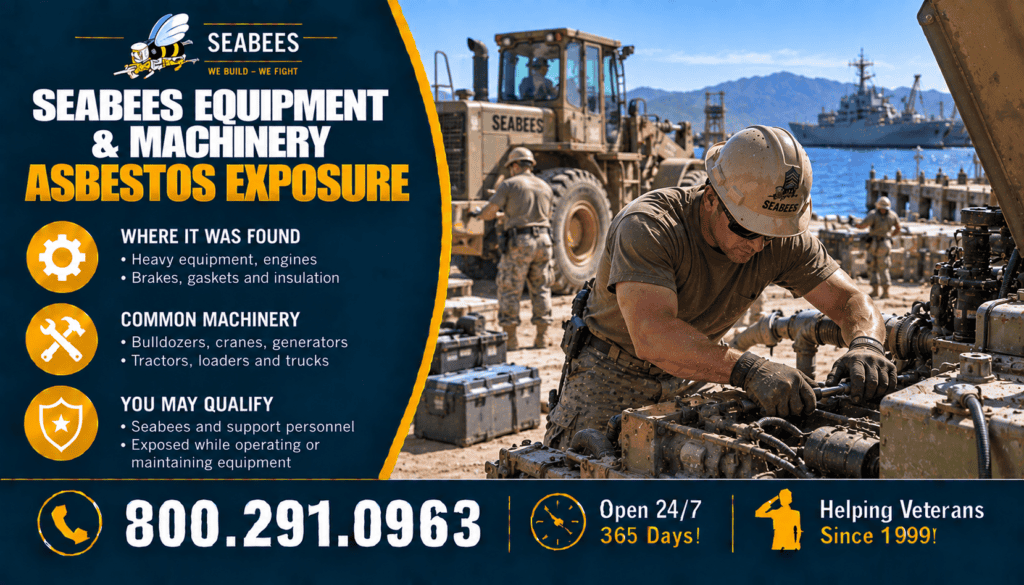
⚙️ Seabees Equipment & Machinery Asbestos Exposure
U.S. Navy Seabees operated, repaired and maintained construction machinery, vehicles, boilers, generators, pumps, electrical systems, welding equipment and HVAC systems in military construction environments around the world. Depending on the era, manufacturer and component, some equipment may have incorporated asbestos-containing brakes, clutches, gaskets, packing, insulation or other heat-resistant materials.
Equipment use alone does not prove asbestos exposure. A useful investigation should identify the specific battalion or detachment, equipment type, manufacturer and model when known, repair or maintenance task, worksite and service dates.
This hub organizes the main Seabee equipment and machinery exposure pathways and links to the detailed child pages in the corrected silo structure.
This page is part of the broader U.S. Navy Seabees Asbestos Exposure guide.
⚙️ How Seabee Equipment and Machinery Created Asbestos Exposure Opportunities
- Operating and inspecting heavy construction machinery.
- Repairing military vehicles and support trucks.
- Maintaining boilers and heating systems.
- Servicing pumps, valves and piping.
- Repairing generators and electrical systems.
- Working with welding and heat-resistant materials.
- Maintaining HVAC and mechanical systems.
- Cleaning dusty shops after equipment repairs.
These activities identify exposure pathways to investigate. They do not establish that asbestos was present in every Seabee machine or component.
🧰 Seabee Equipment and Machinery Exposure Pages
⚙️ Construction Equipment Asbestos Exposure
Review Seabee exposure pathways involving construction equipment, including historical friction, insulation, gasket, packing, electrical or heat-resistant components where applicable.
⚙️ Vehicle Equipment Asbestos Exposure
Review Seabee exposure pathways involving vehicle equipment, including historical friction, insulation, gasket, packing, electrical or heat-resistant components where applicable.
⚙️ Seabee Vehicles Asbestos Exposure
Review Seabee exposure pathways involving seabee vehicles, including historical friction, insulation, gasket, packing, electrical or heat-resistant components where applicable.
⚙️ Boiler Equipment Asbestos Exposure
Review Seabee exposure pathways involving boiler equipment, including historical friction, insulation, gasket, packing, electrical or heat-resistant components where applicable.
⚙️ Generator Equipment Asbestos Exposure
Review Seabee exposure pathways involving generator equipment, including historical friction, insulation, gasket, packing, electrical or heat-resistant components where applicable.
⚙️ Electrical Equipment Asbestos Exposure
Review Seabee exposure pathways involving electrical equipment, including historical friction, insulation, gasket, packing, electrical or heat-resistant components where applicable.
⚙️ Welding Equipment Asbestos Exposure
Review Seabee exposure pathways involving welding equipment, including historical friction, insulation, gasket, packing, electrical or heat-resistant components where applicable.
⚙️ Pump Equipment Asbestos Exposure
Review Seabee exposure pathways involving pump equipment, including historical friction, insulation, gasket, packing, electrical or heat-resistant components where applicable.
⚙️ HVAC Equipment Asbestos Exposure
Review Seabee exposure pathways involving hvac equipment, including historical friction, insulation, gasket, packing, electrical or heat-resistant components where applicable.
🧱 Common Asbestos-Containing Components to Investigate
| Component | Possible Equipment Use | Evidence to Look For |
|---|---|---|
| Brake linings and shoes | Vehicles and heavy machinery | Parts catalogs, service manuals, maintenance logs |
| Clutch facings | Vehicles and construction equipment | Manufacturer manuals, parts records |
| Gaskets | Boilers, pumps, engines, generators and piping | Parts lists, maintenance records, equipment manuals |
| Packing | Pumps and valves | Service manuals, parts catalogs, work orders |
| Thermal insulation | Boilers, piping and HVAC systems | Mechanical drawings, asbestos surveys, specifications |
| Heat-resistant electrical materials | Panels, switchgear and generators | Electrical manuals, specifications, product files |
| Heat shields and blankets | Welding and high-temperature repairs | Product files, procurement records, photographs |
🛠️ How Asbestos Exposure May Have Occurred
- Removing worn brake or clutch components.
- Scraping gaskets from metal surfaces.
- Replacing packing in pumps and valves.
- Removing or repairing thermal insulation.
- Opening older electrical or generator equipment.
- Working near welding or hot-work barriers.
- Working beside mechanics or pipefitters disturbing older components.
- Sweeping or cleaning dusty maintenance debris.
A strong exposure history should distinguish direct hands-on repair work from nearby exposure created by other trades in the same equipment or shop area.
👷 Jobs and Worksites Connected to Equipment Exposure
👷 Seabee Jobs & Occupations
Mechanics, electricians, pipefitters, welders, heavy equipment operators, construction workers and maintenance crews could all work around machinery and equipment. See the Seabees Jobs & Occupations Asbestos Exposure hub.
📍 Seabee Construction Sites
Equipment could be used or maintained at military bases, airfields, ports, barracks, warehouses, power facilities, hospitals and base housing. See the U.S. Seabees Construction Sites Asbestos Exposure hub.
📂 Records and Evidence to Investigate
- Identify the battalion, unit or detachment.
- Record the worksite and service dates.
- Identify the veteran’s job or rating.
- List equipment types, manufacturers and models.
- Identify specific maintenance or repair tasks.
- Locate equipment manuals and parts catalogs.
- Locate maintenance and repair records.
- Look for procurement and replacement-part records.
- Identify coworkers and supervisors.
- Build a chronological exposure timeline.
🫁 Health Risks and Asbestos Latency
Asbestos exposure is associated with mesothelioma, lung cancer, asbestosis and other asbestos-related conditions. Because these diseases can develop many years after exposure, equipment-maintenance assignments from decades ago may still be relevant today.
See Seabees Asbestos Exposure Health Risks and Seabees Asbestos Lung Cancer.
⚖️ VA Benefits and Legal Claim Options
🎖️ VA Benefits
See Seabees VA Benefits for Mesothelioma.
⚖️ Mesothelioma Lawsuits
See U.S. Seabees Mesothelioma Lawsuit.
🏦 Asbestos Trust Fund Claims
💬 Need Help Reconstructing Seabee Equipment Exposure?
The strongest history connects the veteran’s battalion, equipment, manufacturer, repair tasks, worksite and service dates.
Call 800.291.0963, use live chat 24/7, 365 days a year, or Submit Your Case for a free, confidential review.
❓ Seabees Equipment & Machinery Asbestos Exposure Questions
Did every Seabee machine contain asbestos?
No. Asbestos use varied by manufacturer, model, component and year.
Which equipment components are most important to investigate?
Historical brakes, clutches, gaskets, packing, insulation and heat-resistant electrical components are useful starting points when tied to specific equipment records.
Could nearby workers be exposed during equipment repair?
Potentially. Dust or fibers released during repair work could affect personnel in shared shops or maintenance areas.
What records can identify equipment exposure?
Service manuals, parts catalogs, maintenance logs, procurement records, photographs and witness statements may help.
Does an equipment job title alone prove asbestos exposure?
No. Actual equipment, components, repair tasks, worksite and dates must be investigated.
Can equipment-related asbestos disease appear decades later?
Yes. Asbestos-related diseases can have long latency periods.
Can equipment evidence help with VA or legal claims?
Potentially. Equipment and product records can strengthen exposure documentation used in VA, lawsuit and trust-fund reviews.
🚀 Turn a Seabee Equipment History Into Clear Next Steps
📞 Review the Equipment, Components, Worksite and Evidence
If you or a loved one served with the U.S. Navy Seabees operating, repairing or maintaining equipment and machinery and later developed mesothelioma or asbestos-related lung cancer, a focused review can help identify possible exposure sources.
Call 800.291.0963 now, use live chat 24/7/365, or Submit Your Case.
⚕️ Legal & Medical Information Disclaimer
This page provides general educational information and is not legal or medical advice. Seabee equipment service does not by itself prove asbestos exposure.