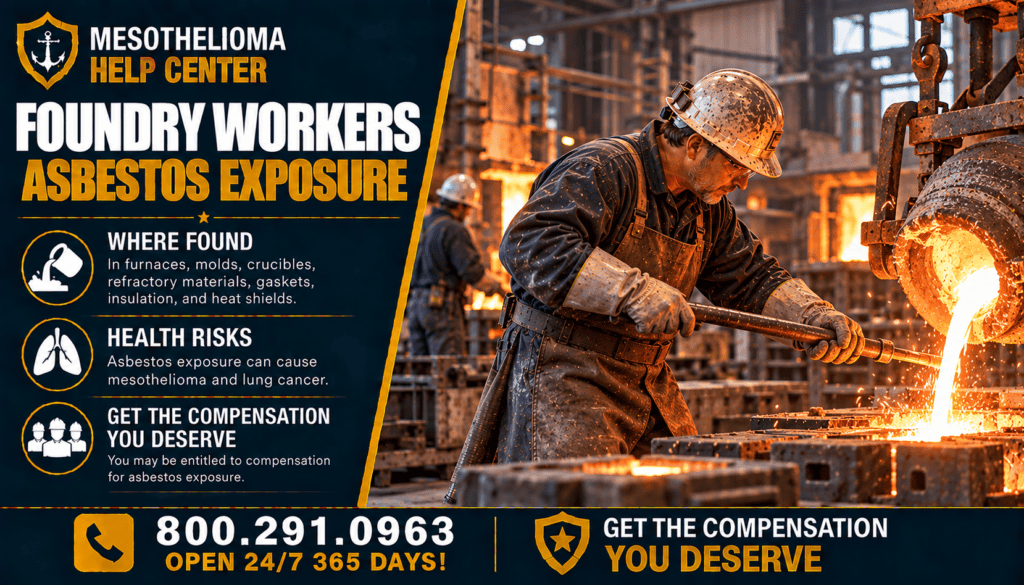
Foundry Workers Asbestos Exposure
Foundry workers may have encountered asbestos in some older facilities through asbestos-containing furnace seals, insulation, piping, gaskets and other heat-resistant materials. NIOSH workplace investigations provide direct evidence of asbestos in foundry areas, including an old furnace inspection-door sealing material containing approximately 90% chrysotile asbestos and reports reviewing asbestos exposure in foundry operations.
Foundry employment alone does not prove asbestos exposure. Foundries also have a well-documented respirable crystalline silica hazard from sand molds and casting-cleaning work. Silica dust, metal fumes and asbestos are separate hazards, so a reliable exposure history should identify the actual material, furnace or equipment, task and time period involved.
Foundry Workers and Occupational Asbestos Exposure
Foundries melt metal and pour it into molds to produce castings. Work areas can include furnaces, mold and core departments, pouring lines, shakeout, cleaning and grinding departments, machine shops and maintenance areas. Historically, asbestos could be present in some high-temperature seals, insulation and mechanical systems.
A NIOSH Health Hazard Evaluation found that an old sealing material collected while a furnace inspection door was being removed contained approximately 90% chrysotile asbestos. A newer sealing material used to reseal the same furnace door contained no asbestos. This finding illustrates why product age and material identification matter.
Another NIOSH evaluation of a manufacturing facility with foundry operations reported workers with histories involving both silica and asbestos exposure and reviewed asbestos as one of the workplace hazards. These findings support foundry-specific investigation but do not establish asbestos exposure for every foundry employee.
Readers can also review industrial and manufacturing factory workers asbestos exposure, steel workers asbestos exposure and high-risk jobs associated with asbestos exposure.
Asbestos Materials Foundry Workers May Have Encountered
Possible historical asbestos sources depended on the foundry, furnace design, plant systems and era. Reliable identification can come from asbestos surveys, laboratory analysis, furnace specifications, maintenance files, purchasing records and abatement documents.
- Older asbestos-containing furnace-door seals or sealing material where documented
- Asbestos-containing furnace gaskets, joints or refractory components where confirmed
- Older asbestos-containing pipe and thermal-system insulation
- Asbestos-containing boiler insulation in plant utility systems
- Older asbestos-containing electrical insulation or components where documented
- Legacy asbestos-containing building materials disturbed during maintenance or renovation
NIOSH’s furnace-door investigation is particularly useful because it demonstrates that superficially similar materials can differ: the old seal contained approximately 90% chrysotile asbestos, while the newer replacement material contained no detectable asbestos.
NIOSH also documented industrial maintenance operations involving removal of asbestos-containing furnace components such as gaskets, joints or refractory materials and asbestos pipe insulation. These findings support investigation of maintenance and furnace work when the specific material is confirmed.
How Foundry Asbestos Exposure Could Occur
Potential exposure could occur when confirmed asbestos-containing material was damaged or disturbed during furnace repair, insulation work, mechanical maintenance, renovation or cleanup.
- Furnace repair: removing or replacing confirmed asbestos-containing seals, gaskets or joints
- Pipe-insulation work: cutting or stripping asbestos-containing thermal insulation
- Boiler maintenance: disturbing older asbestos insulation around boilers or connected piping
- Equipment repair: opening machinery containing confirmed asbestos gaskets or packing
- Plant renovation: disturbing legacy asbestos-containing building or mechanical materials
- Cleanup: handling dust and debris from confirmed asbestos-containing materials
NIOSH found an old furnace-door seal with high chrysotile content during removal. A separate industrial-furnace investigation reviewed maintenance activities involving asbestos pipe insulation and furnace components, illustrating how maintenance tasks can create a more direct exposure pathway than simply working in the same building.
Foundry dust must be identified accurately. NIOSH specifically identifies foundry work as a setting where respirable crystalline silica exposure can occur, particularly when workers clean castings made from sand molds using chipping and grinding tools. Silica is not asbestos.
Foundry Jobs, Furnaces and Work Areas
Foundry workers perform many different jobs, and their exposure circumstances can differ substantially. A useful occupational history identifies the department, process, furnace, material and maintenance activity rather than assigning one exposure profile to everyone at the plant.
Furnace and Melt Departments
Workers may charge furnaces, monitor melting, tap molten metal or maintain furnace equipment. NIOSH has documented asbestos-containing furnace sealing material in an evaluated workplace. Asbestos exposure depends on whether a particular furnace component actually contained asbestos and whether it was disturbed.
Mold and Core Making
Foundry molds and cores commonly involve sand. NIOSH has documented serious crystalline-silica hazards in foundries. Sand and silica should not be described as asbestos unless a separate asbestos-containing product is identified.
Shakeout, Cleaning and Grinding
Removing castings from sand molds and cleaning them with chipping and grinding tools can produce substantial respirable silica. NIOSH developed local exhaust ventilation controls specifically for foundry casting-cleaning operations. This is a distinct hazard from asbestos.
Maintenance and Mechanical Work
Maintenance workers may service furnaces, boilers, piping, valves, pumps and other plant systems. Historical asbestos exposure could occur when confirmed asbestos-containing insulation, seals, gaskets or other materials were cut, removed or replaced.
Machine Shops and Finishing Areas
Foundries may include machining and finishing operations after casting. Workers can encounter metalworking fluids, noise, metals and other hazards. Asbestos exposure requires an identifiable asbestos-containing material rather than inference from machining alone.
Multiple Foundry Hazards
NIOSH’s foundry recommendations address a broad range of chemical, physical and safety hazards. Foundry workers may encounter silica, metal fumes, carbon monoxide, heat, noise and other agents. These should be documented independently from asbestos.
Related resources include steel workers asbestos exposure, machine operators asbestos exposure, fabricators asbestos exposure and maintenance workers asbestos exposure.
Secondary or Household Exposure
If a foundry worker directly disturbed dusty asbestos-containing furnace or pipe materials, fibers could historically contaminate work clothing or equipment. A household exposure history requires evidence about the asbestos source, task, dust conditions, clothing practices and frequency of contact. Foundry employment alone does not establish take-home asbestos exposure.
Need help now? Call 800.291.0963
Live chat available 24/7, 365 days a year.
Submit Your Case
Mesothelioma and Other Occupational Health Risks
NIOSH considers asbestos an occupational carcinogenic hazard. Occupational asbestos exposure is associated with mesothelioma, lung cancer and asbestosis. The actual asbestos source and work activity should be documented rather than inferred from a foundry job title.
Silica is a major separate foundry hazard. NIOSH states that respirable silica exposure can cause silicosis and specifically identifies foundry work among activities where exposure occurs. A historical NIOSH foundry investigation documented hazardous crystalline-silica levels and multiple cases of pneumoconiosis consistent with silicosis.
NIOSH also evaluated a facility where some workers had chest X-ray findings consistent with pneumoconiosis and pleural thickening consistent with asbestos exposure, while other workers had histories involving silica exposure. This reinforces the need to distinguish asbestos-related evidence from silica and other foundry exposures.
A mesothelioma diagnosis does not by itself identify which foundry, furnace, seal, insulation product or employer caused asbestos exposure. Medical questions should be discussed with a qualified healthcare professional.
Documenting a Foundry Worker Exposure History
A useful foundry-worker investigation identifies the facility, department, furnace or equipment, asbestos-containing material and tasks associated with possible exposure.
- Employment evidence: employer names, payroll records, W-2s, tax documents and Social Security earnings records.
- Foundry evidence: facility names, addresses, owners, departments, furnace types and dates worked.
- Material evidence: asbestos surveys, laboratory reports, furnace specifications, product records and abatement files.
- Maintenance evidence: furnace-door repair, gasket replacement, pipe-insulation removal, boiler work and shutdown records.
- Task evidence: melting, pouring, mold/core work, cleaning, grinding, maintenance and cleanup.
- Industrial-hygiene evidence: air sampling, NIOSH or OSHA investigations and company exposure records.
- Coworker evidence: furnace operators, molders, core makers, maintenance workers, mechanics, engineers and supervisors may help reconstruct conditions.
When product names are forgotten, record the approximate years, department, furnace type, sealing or insulation material, whether it was cracked or removed, maintenance shutdowns, dust conditions and whether asbestos abatement later occurred.
Questions That Can Strengthen a Foundry Worker History
Did furnace seals or gaskets contain asbestos? Were pipes or boilers insulated? Did maintenance crews remove insulation or furnace components? Were workers nearby during repairs? Do plant asbestos surveys or industrial-hygiene records exist? Was the dust asbestos, silica or another material? These details can help identify a specific exposure source.
Asbestos Lawsuits, Trust Funds and Compensation
A foundry worker diagnosed with an asbestos-related disease may have potential legal or compensation options when evidence supports occupational asbestos exposure and applicable legal requirements are met. Possible avenues can include claims involving legally responsible companies and asbestos bankruptcy trusts.
Foundry employment alone does not establish asbestos trust eligibility. Each trust has separate medical and exposure requirements, and evidence may be needed connecting the worker to a covered asbestos-containing product, manufacturer, supplier, operation or recognized jobsite during a qualifying period.
Useful evidence can include employment and Social Security records, furnace specifications, maintenance records, asbestos surveys, industrial-hygiene reports, purchasing documents, photographs, coworker testimony and medical documentation. Filing deadlines vary by jurisdiction and claim type.
Related Foundry, Manufacturing and Mechanical Resources
Manufacturing work: Industrial & Manufacturing Factory Workers Asbestos Exposure · Steel Workers Asbestos Exposure · Fabricators Asbestos Exposure
Maintenance and machinery: Machine Operators Asbestos Exposure · Maintenance Workers Asbestos Exposure · Maintenance Mechanics Asbestos Exposure
Heating and insulation: Boiler Room Operators Asbestos Exposure · Insulators & Laggers Asbestos Exposure
Authoritative Sources
This page was researched using NIOSH primary government sources with direct relevance to foundry operations, furnaces, asbestos-containing materials and the separate silica hazard in foundries.
- NIOSH — HHE 84-060-1645, Furnace Sealing Material Containing Chrysotile Asbestos
- NIOSH — HHE 83-325-1564, Industrial Furnace Maintenance and Asbestos Activities
- NIOSH — HHE 88-192-1998, Foundry-Area Silica and Asbestos Exposure History
- NIOSH — Recommendations for Control of Occupational Safety and Health Hazards: Foundries
- NIOSH — Controlling Silica Dust from Foundry Casting-Cleaning Operations
- NIOSH — Workplace Exposure to Asbestos
Foundry Workers Asbestos Exposure FAQ
Were all foundry workers exposed to asbestos?
No. Exposure depended on the facility, era, department, furnace, materials and tasks. Foundry employment alone does not prove asbestos exposure.
Could old foundry furnace seals contain asbestos?
Yes, some did. NIOSH found an old furnace inspection-door sealing material containing approximately 90% chrysotile asbestos in one evaluated workplace, while the newer replacement seal contained no asbestos.
Could foundry pipe insulation contain asbestos?
Some older industrial piping used asbestos-containing thermal insulation. Exposure would depend on whether the material was present and disturbed during maintenance or repair.
Was all refractory material in foundries asbestos-containing?
No. Refractory materials vary. Asbestos content should be confirmed through reliable product records or laboratory analysis rather than assumed.
Is foundry silica dust the same as asbestos?
No. Respirable crystalline silica is a separate mineral hazard. NIOSH specifically identifies foundry work as a setting where silica exposure can occur.
Could nearby furnace maintenance expose foundry workers?
Potentially, if maintenance disturbed confirmed asbestos-containing seals, gaskets, insulation or other ACM near the worker.
Can foundry workers qualify for asbestos trust fund claims?
Some may qualify if they satisfy a trust’s medical and exposure requirements and can connect their work to a covered asbestos source. Job title alone does not establish eligibility.
How can a retired foundry worker document old asbestos exposure?
Employment and Social Security records, furnace specifications, asbestos surveys, maintenance and purchasing records, industrial-hygiene reports, photographs and coworker statements can help reconstruct exposure.
Get Help Reviewing a Foundry Worker Exposure History
Call 800.291.0963
Live chat is available 24/7, 365 days a year.
Prior foundry work does not automatically prove asbestos exposure, disease causation, claim eligibility or compensation. Each situation depends on the facility, dates, department, furnaces, equipment, materials, tasks, work practices, medical evidence and applicable legal requirements. Compensation is not guaranteed.
⚕️ Legal & Medical Information Disclaimer
This page provides general educational information and is not medical or legal advice. The information does not establish asbestos exposure, diagnosis, causation, liability, claim eligibility or compensation. Medical concerns should be discussed with a qualified healthcare professional, and legal questions should be reviewed with a qualified attorney.