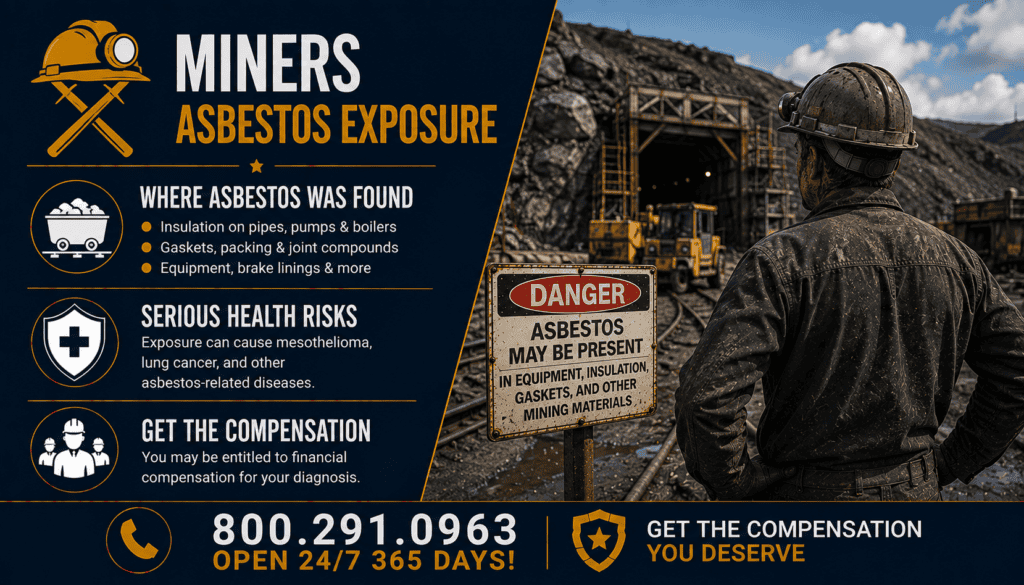
Miners Asbestos Exposure
Miners can encounter many airborne hazards, including coal mine dust, respirable crystalline silica, diesel particulate matter and mineral particles. Asbestos is a separate hazard and should not be assumed from mining employment alone. Exposure can occur when the mineral deposit itself contains asbestos or asbestos-like fibers, or when confirmed asbestos-containing materials are disturbed in mine and mill facilities.
Some mining populations have exceptionally strong asbestos evidence. NIOSH found that vermiculite mined near Libby, Montana, was contaminated with asbestos and asbestos-like fibers and documented serious health effects among miners and millers. NIOSH also studied miners and millers exposed to talc containing asbestiform minerals in upper New York State.
Miners and Occupational Asbestos Exposure
Mining includes extraction, drilling, blasting, loading, hauling, crushing, milling and processing of many different minerals. Because geology differs from mine to mine, the material being mined is critical when evaluating potential asbestos exposure.
NIOSH’s research at Libby provides direct mining-specific evidence. Vermiculite ore mined near Libby, which represented more than half of worldwide vermiculite production from 1925 to 1990, was contaminated with asbestos and asbestos-like fibers. NIOSH reported that workplace exposure caused serious health problems among miners and millers.
NIOSH also reported that X-rays of Libby miners showed adverse health effects associated with asbestos exposure and that mortality research identified excess deaths from lung cancer and other lung diseases consistent with asbestos exposure. Later NIOSH research confirmed increased lung-cancer mortality and increased risk for cancer of the pleura, or mesothelioma, among these workers.
These findings should not be generalized to every mine. NIOSH’s current mining program emphasizes coal dust, crystalline silica, diesel exhaust and other mineral particles as major respiratory hazards across mining. An asbestos claim needs separate evidence that asbestos fibers were actually present.
Related resources include mining, oil, gas and refinery workers asbestos exposure, industrial and manufacturing factory workers asbestos exposure and machine operators asbestos exposure.
Asbestos, Vermiculite, Talc and Mine Materials
The strongest mining-related asbestos histories identify a mineral deposit or material through geological, industrial-hygiene or laboratory evidence.
- Asbestos-contaminated vermiculite: NIOSH documented asbestos and asbestos-like fiber contamination in vermiculite mined near Libby, Montana.
- Talc containing asbestiform minerals: NIOSH studied upper New York State talc miners and millers and reported tremolite, anthophyllite and chrysotile among minerals found in mine samples.
- Asbestos ore or asbestos-bearing rock: exposure can occur where geological evidence establishes asbestos fibers in the material being extracted or processed.
- Mine and mill equipment: older insulation, gaskets, packing or building materials may provide a separate asbestos source when asbestos content is documented.
- Facility insulation: older boilers, pipes and heating systems may contain asbestos-containing thermal insulation where confirmed.
NIOSH’s 1980 study of talc containing asbestos included 398 miners in its mortality analysis and 156 current miners in its morbidity study. Mine samples contained several fibrous minerals, and NIOSH reported that time-weighted-average exposures to asbestiform amphiboles exceeded then-current OSHA standards in many mine and mill operations.
Ordinary coal, stone, ore and silica dust are not automatically asbestos. Mineral identification matters because silica and coal mine dust cause distinct occupational diseases.
How Miners Asbestos Exposure Could Occur
Where asbestos or asbestos-like fibers were present, potential exposure could occur during extraction and processing activities that generated airborne dust.
- Drilling and blasting: disturbing asbestos-bearing or contaminated rock where geological evidence confirms fibers
- Loading and hauling: handling contaminated ore and dusty mine material
- Crushing and milling: mechanically processing asbestos-contaminated ore or mineral products
- Screening and sorting: working around dusty processing operations involving contaminated material
- Equipment maintenance: disturbing confirmed asbestos-containing insulation, gaskets or packing
- Facility maintenance: disturbing asbestos-containing pipe, boiler or building materials in older mine and mill structures
- Cleanup: sweeping or handling dust and debris containing asbestos fibers
NIOSH’s Libby findings demonstrate that contamination of the mined mineral itself can create occupational exposure. By contrast, current NIOSH mining guidance identifies respirable coal dust and crystalline silica as widespread mining hazards; those dusts should not be mislabeled as asbestos.
NIOSH recommends minimizing dust generation and inhalation when handling vermiculite known or presumed to be contaminated with asbestos. The agency emphasizes that uncontaminated vermiculite itself is not the source of the asbestos-related health effects observed in the Libby workforce; contaminant fibers were responsible.
Mines, Mills, Equipment and Work Areas
A miner’s exposure history should identify the mineral commodity, mine, mill, dates, department and work performed.
Vermiculite Mines and Mills
Libby is a well-documented example of a vermiculite operation contaminated with asbestos and asbestos-like fibers. NIOSH conducted occupational research involving miners and millers and later issued recommendations for limiting worker exposure to Libby vermiculite.
Talc Mines and Mills
NIOSH studied miners and millers exposed to talc containing asbestiform minerals in upper New York State. The agency reported increased respiratory disease and bronchogenic-cancer mortality in the studied workforce and mineralogical evidence of asbestiform amphiboles.
Coal Mines
NIOSH identifies respirable coal mine dust as the cause of coal workers’ pneumoconiosis, or black lung. Coal miners can also encounter respirable crystalline silica. Neither coal dust nor silica should be described as asbestos without separate evidence of asbestos fibers.
Metal and Nonmetal Mines
NIOSH recognizes airborne mineral particles, silica, diesel particulate matter and toxic gases as mining respiratory hazards. Whether asbestos is present depends on local geology, the commodity being mined and analytical evidence.
Mine Maintenance Shops
Older mine and mill facilities can contain boilers, piping, machinery and buildings. A separate asbestos pathway may exist where historical specifications, surveys or laboratory testing confirm asbestos-containing insulation, gaskets, packing or building materials.
Crushing, Milling and Processing Areas
Processing can generate large amounts of airborne dust. If the ore is contaminated with asbestos fibers, crushing and milling can increase opportunities for inhalation. If the ore does not contain asbestos, ordinary mineral dust should not be treated as asbestos.
Related resources include mining, oil, gas and refinery workers asbestos exposure, machine operators asbestos exposure, production workers asbestos exposure, maintenance mechanics asbestos exposure and industrial, manufacturing and utility buildings asbestos exposure.
Secondary or Household Exposure
If a miner’s clothing or belongings became contaminated with asbestos fibers, dust could historically be carried away from the workplace. A household exposure history still requires evidence that the mine or work activity actually involved asbestos contamination.
Need help now? Call 800.291.0963
Live chat available 24/7, 365 days a year.
Submit Your Case
Mesothelioma and Other Mining Health Risks
NIOSH’s Libby research documented a dose-response relationship for lung-cancer mortality associated with exposure to asbestos fibers in vermiculite and later confirmed increased lung-cancer mortality and increased risk for mesothelioma in the worker population. NIOSH also documented increased mortality from nonmalignant respiratory disease and asbestosis.
The talc-miner research provides another mineral-specific example. NIOSH concluded that exposure to the studied talcs containing asbestiform minerals was associated with increased risks of pleural thickening, pleural calcification, bronchogenic cancer and nonmalignant respiratory disease.
Other mining diseases have different causes. Coal mine dust can cause black lung, while respirable crystalline silica can cause silicosis. NIOSH also identifies diesel particulate matter, hazardous noise and other airborne substances as mining concerns. These should be evaluated separately from asbestos.
Medical questions about asbestos exposure, symptoms, screening or diagnosis should be discussed with a qualified healthcare professional.
Documenting a Miner’s Exposure History
A useful investigation identifies the mine, employer, dates, mineral commodity, job, work area and asbestos-containing or asbestos-contaminated source associated with possible exposure.
- Employment evidence: mine or mill employer, contractor, union, payroll, W-2 and Social Security earnings records
- Mine evidence: mine name, location, ownership, operating dates and mineral commodity
- Geological evidence: mineralogical studies, ore analysis, government reports and laboratory testing
- Task evidence: drilling, blasting, hauling, crushing, milling, processing, maintenance or cleanup
- Exposure evidence: industrial-hygiene sampling, dust measurements, historical NIOSH studies and company monitoring
- Facility evidence: asbestos surveys, boiler and pipe records, maintenance files and abatement documentation
- Witness evidence: miners, mill workers, mechanics, supervisors, industrial hygienists and coworkers
For miners, geological and mineralogical evidence can be especially important. The Libby and upper New York talc studies show why the identity of the mineral deposit matters when distinguishing asbestos exposure from ordinary mine dust.
Questions That Can Strengthen an Exposure History
Which mine and years? What mineral was extracted? Was asbestos or an asbestiform mineral documented in the ore? Did the worker crush or mill the material? Were dust measurements performed? Did the worker maintain older insulated equipment? Are NIOSH, MSHA, geological or company records available? These details can help identify a specific pathway.
Asbestos Lawsuits, Trust Funds and Compensation
A miner diagnosed with mesothelioma or another asbestos-related disease may have potential legal or compensation options when evidence supports occupational asbestos exposure and applicable requirements are met. Possible avenues can include claims involving legally responsible companies and asbestos bankruptcy trusts.
Mining employment alone does not establish liability or asbestos trust eligibility. Each trust has separate medical and exposure requirements, and evidence may be needed connecting the worker to a covered asbestos source, company, facility or qualifying exposure period.
Potential evidence includes employment and Social Security records, union files, mine records, geological studies, mineral analyses, industrial-hygiene sampling, equipment records, asbestos surveys, photographs, coworker statements and medical documentation. Applicable law and filing deadlines should be reviewed individually.
Related Mining and Industrial Resources
Mining and extraction: Mining, Oil, Gas & Refinery Workers Asbestos Exposure
Industrial processing: Industrial & Manufacturing Factory Workers Asbestos Exposure · Machine Operators Asbestos Exposure
Maintenance and facilities: Maintenance Mechanics Asbestos Exposure · Industrial, Manufacturing & Utility Buildings Asbestos Exposure
Authoritative Sources
This page was researched using NIOSH government sources. The strongest mining-specific evidence comes from NIOSH research involving Libby vermiculite miners and upper New York State talc miners and millers, while current mining guidance is used to distinguish asbestos from coal dust, silica and other common mine hazards.
- NIOSH — Job-Related Asbestos Exposures and Health Effects in Libby Mining and Milling
- NIOSH — Limiting Potential Exposures to Asbestos Associated with Libby Vermiculite
- NIOSH — Occupational Exposure to Talc Containing Asbestos: Miners and Millers
- NIOSH — Mining and Other Respiratory Hazards
- NIOSH — Mining and Silicosis
- NIOSH — Workplace Exposure to Asbestos
Miners Asbestos Exposure FAQ
Were all miners exposed to asbestos?
No. Mining employment alone does not prove asbestos exposure. The mineral deposit, geology, facility materials and work performed must be evaluated.
Did NIOSH document asbestos exposure among miners?
Yes. NIOSH documented asbestos contamination in vermiculite mined and milled near Libby, Montana, and adverse asbestos-related health effects among workers.
Did Libby vermiculite itself cause the asbestos-related disease?
NIOSH states that the observed asbestos-related health effects were attributable to contaminant fibers rather than uncontaminated vermiculite itself.
Did NIOSH study talc miners exposed to asbestiform minerals?
Yes. NIOSH studied upper New York State talc miners and millers and reported asbestiform amphiboles in mine samples and increased respiratory disease risks in the studied workforce.
Is coal mine dust asbestos?
No. Coal mine dust causes coal workers’ pneumoconiosis, or black lung. Asbestos is a separate mineral-fiber hazard requiring its own exposure evidence.
Is silica dust the same as asbestos?
No. Respirable crystalline silica can cause silicosis. It is a separate mineral hazard and should not be used as evidence of asbestos exposure.
What records can document a miner’s asbestos exposure?
Mine employment records, geological studies, mineral analyses, industrial-hygiene sampling, NIOSH or government reports, facility asbestos surveys and coworker statements can help reconstruct exposure.
Can miners qualify for asbestos trust fund claims?
Some may qualify if they satisfy a trust’s medical and exposure criteria and can connect their work to a covered asbestos source, company or qualifying facility. Mining employment alone does not establish eligibility.
Get Help Reviewing a Miner’s Exposure History
Call 800.291.0963
Live chat is available 24/7, 365 days a year.
Prior mining or milling employment does not automatically prove asbestos exposure, disease causation, liability, claim eligibility or compensation. Each situation depends on the mine, mineral deposit, geology, employer, dates, materials, tasks, work practices, medical evidence and applicable legal requirements. Compensation is not guaranteed.
⚕️ Legal & Medical Information Disclaimer
This page provides general educational information and is not medical or legal advice. The information does not establish asbestos exposure, diagnosis, causation, liability, claim eligibility or compensation. Medical concerns should be discussed with a qualified healthcare professional, and legal questions should be reviewed with a qualified attorney.