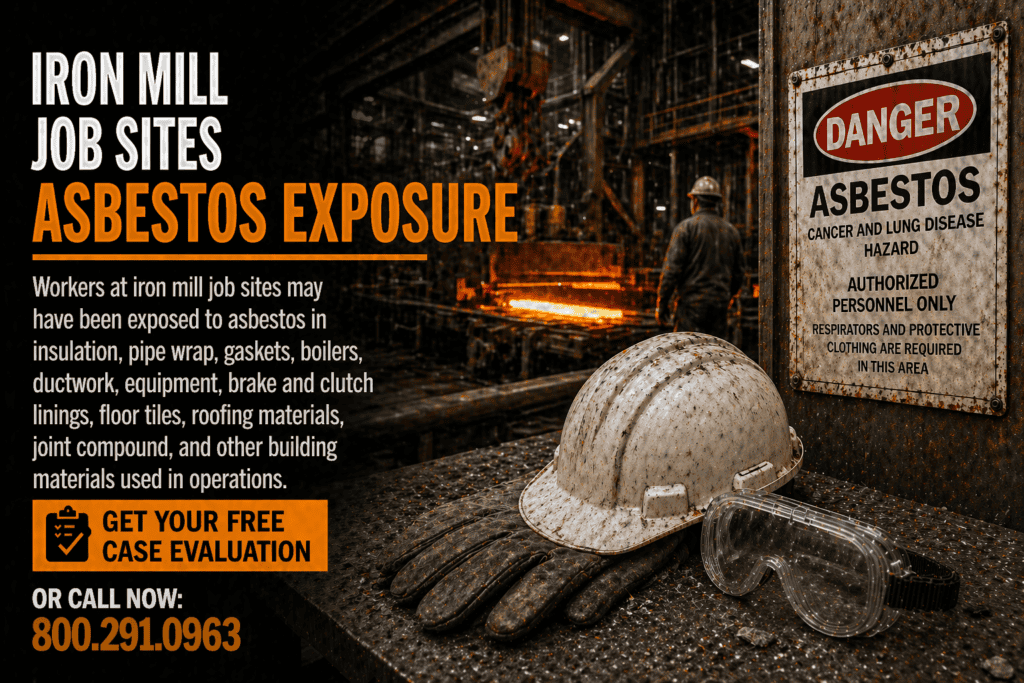
🏭 Iron Mills Asbestos Exposure
If you worked in furnaces, rolling equipment, steam lines and mill maintenance shops and later received a mesothelioma or asbestos-related lung cancer diagnosis, your years on the job deserve attention. Asbestos was used in specific older industrial products, and workers who handled or worked beside those materials inhaled dust during repairs and replacement.
This page explains where asbestos was found, which tasks released fibers, and what you and your family can do now. You do not need to remember every product name before asking about medical care, workplace records or compensation options.
🏭 Where Asbestos Was Used
For more detail about particular facilities and work areas, see blast furnaces and refractory materials, and foundry casting plants. These pages can help you identify the tasks, equipment and dates that match your own work history.
In iron mills, asbestos was incorporated into selected insulation, sealing and heat-resistant products because it tolerated the temperatures and demanding conditions of industrial work. These products were installed in many older facilities and were disturbed during servicing, overhauls and replacement. Not every plant or every product used asbestos; the important details are the specific material and the years you worked near it.
Blast furnace service areas
Blast furnace service areas involved equipment or work practices that brought employees close to heated machinery, insulation or mechanical seals. When crews opened, cut, scraped or stripped asbestos-containing components in this area, fibers entered the work space. People performing the repair and coworkers in the same area both had reason to describe what happened.
If you remember a major repair, shutdown, installation or equipment replacement in blast furnace service areas, write down the approximate year, shift, contractor and nearby equipment. A clear description of the work is more useful than a guess about an unfamiliar product brand.
Hot-metal handling
Hot-metal handling involved equipment or work practices that brought employees close to heated machinery, insulation or mechanical seals. When crews opened, cut, scraped or stripped asbestos-containing components in this area, fibers entered the work space. People performing the repair and coworkers in the same area both had reason to describe what happened.
If you remember a major repair, shutdown, installation or equipment replacement in hot-metal handling, write down the approximate year, shift, contractor and nearby equipment. A clear description of the work is more useful than a guess about an unfamiliar product brand.
Rolling mills
Rolling mills involved equipment or work practices that brought employees close to heated machinery, insulation or mechanical seals. When crews opened, cut, scraped or stripped asbestos-containing components in this area, fibers entered the work space. People performing the repair and coworkers in the same area both had reason to describe what happened.
If you remember a major repair, shutdown, installation or equipment replacement in rolling mills, write down the approximate year, shift, contractor and nearby equipment. A clear description of the work is more useful than a guess about an unfamiliar product brand.
Annealing and reheating furnaces
Annealing and reheating furnaces involved equipment or work practices that brought employees close to heated machinery, insulation or mechanical seals. When crews opened, cut, scraped or stripped asbestos-containing components in this area, fibers entered the work space. People performing the repair and coworkers in the same area both had reason to describe what happened.
If you remember a major repair, shutdown, installation or equipment replacement in annealing and reheating furnaces, write down the approximate year, shift, contractor and nearby equipment. A clear description of the work is more useful than a guess about an unfamiliar product brand.
Mill powerhouse and steam lines
Mill powerhouse and steam lines involved equipment or work practices that brought employees close to heated machinery, insulation or mechanical seals. When crews opened, cut, scraped or stripped asbestos-containing components in this area, fibers entered the work space. People performing the repair and coworkers in the same area both had reason to describe what happened.
If you remember a major repair, shutdown, installation or equipment replacement in mill powerhouse and steam lines, write down the approximate year, shift, contractor and nearby equipment. A clear description of the work is more useful than a guess about an unfamiliar product brand.
👷 Workers and Daily Jobs
Work histories differ by trade. Additional details about related occupations appear in foundrymen and metal casters, foundry maintenance and repair workers, and foundry mechanics and electricians. These pages can help you identify the tasks, equipment and dates that match your own work history.
The workers most often asking about exposure in these facilities include iron mill workers, furnace crews, rollers, millwrights and maintenance trades. Their duties were different, but asbestos dust did not stay neatly within a job classification. Mechanics opened equipment, insulation crews removed coverings, operators remained on shift, and cleanup crews handled the resulting debris.
| Type of work | What workers remember |
|---|---|
| Equipment repair | Opening machinery and replacing worn seals |
| Insulation removal | Removing coverings from hot lines and equipment |
| Production operations | Working near repairs while production continued |
| Shutdown work | Multiple trades working together in a confined area |
| Cleanup and housekeeping | Sweeping debris and carrying contaminated materials |
You do not have to have been the person who installed the asbestos product. A worker who operated machinery beside a maintenance crew or cleaned up afterward can have an important exposure history. The questions are what material was disturbed, how close you were, how often it happened and whether dust controls were used.
⚙️ Asbestos Products and Equipment
Specific materials and systems are discussed in foundry insulation, gaskets and packing. These pages can help you identify the tasks, equipment and dates that match your own work history.
Furnace insulation
Older asbestos-containing versions of furnace insulation were used in some industrial equipment. Repair crews disturbed these materials when they broke connections, removed old insulation, scraped sealing surfaces or replaced worn parts. The resulting dust was a concern for the workers doing the job and others sharing the space.
If furnace insulation sounds familiar, record the machine, department, approximate date and who supplied or installed the material. Manufacturer labels, purchase records and coworkers can help distinguish asbestos-containing products from later substitutes.
High-temperature gaskets
Older asbestos-containing versions of high-temperature gaskets were used in some industrial equipment. Repair crews disturbed these materials when they broke connections, removed old insulation, scraped sealing surfaces or replaced worn parts. The resulting dust was a concern for the workers doing the job and others sharing the space.
If high-temperature gaskets sounds familiar, record the machine, department, approximate date and who supplied or installed the material. Manufacturer labels, purchase records and coworkers can help distinguish asbestos-containing products from later substitutes.
Pipe coverings
Older asbestos-containing versions of pipe coverings were used in some industrial equipment. Repair crews disturbed these materials when they broke connections, removed old insulation, scraped sealing surfaces or replaced worn parts. The resulting dust was a concern for the workers doing the job and others sharing the space.
If pipe coverings sounds familiar, record the machine, department, approximate date and who supplied or installed the material. Manufacturer labels, purchase records and coworkers can help distinguish asbestos-containing products from later substitutes.
Protective heat barriers
Older asbestos-containing versions of protective heat barriers were used in some industrial equipment. Repair crews disturbed these materials when they broke connections, removed old insulation, scraped sealing surfaces or replaced worn parts. The resulting dust was a concern for the workers doing the job and others sharing the space.
If protective heat barriers sounds familiar, record the machine, department, approximate date and who supplied or installed the material. Manufacturer labels, purchase records and coworkers can help distinguish asbestos-containing products from later substitutes.
Valve packing
Older asbestos-containing versions of valve packing were used in some industrial equipment. Repair crews disturbed these materials when they broke connections, removed old insulation, scraped sealing surfaces or replaced worn parts. The resulting dust was a concern for the workers doing the job and others sharing the space.
If valve packing sounds familiar, record the machine, department, approximate date and who supplied or installed the material. Manufacturer labels, purchase records and coworkers can help distinguish asbestos-containing products from later substitutes.
Asbestos was selected for heat resistance and durability, not because it was harmless. Products with the same everyday name sometimes contained different ingredients. A careful account identifies the actual product rather than assuming every gasket, brake or insulating blanket contained asbestos.
🌬️ How Asbestos Dust Reached Workers
In furnaces, rolling equipment, steam lines and mill maintenance shops, asbestos fibers became airborne when workers cut insulation, scraped old gaskets, removed packing, stripped thermal coverings or dismantled equipment containing asbestos. These were real maintenance practices in industries that used asbestos materials. Dry sweeping and compressed-air cleaning also spread settled dust.
The workday matters. A short, intensive shutdown could put several trades in one area while damaged insulation and seals were removed. A routine shift could place an operator beside repeated repairs. Dust settled on floors, clothing and tools; it was not always visible, and the absence of a large dust cloud does not establish that the air was safe.
Some workers carried dust on their work clothes into vehicles and homes. If family members handled heavily dusty clothing, note who did the laundry and whether work clothes were changed at the plant. This is a different exposure history from working directly on the machinery and should be described separately.
Your account should use direct language about what you saw: “The crew stripped pipe insulation beside my station” is more helpful than a general statement that the building was old. Where a product has not been identified, say that plainly rather than treating every industrial dust as asbestos.
🩺 Mesothelioma After Workplace Exposure
Mesothelioma is a serious cancer strongly associated with asbestos exposure. It frequently develops decades after exposure, which means a job from many years ago can still be important after retirement. People often remember coworkers and machinery more readily than the names of the products used on them. That is a useful starting point.
If you have been diagnosed, request copies of your pathology report, imaging, treatment summary and specialist notes. Keep them together with a dated employment timeline. Your medical team can explain your diagnosis and treatment choices; a workplace history helps document exposure but does not replace medical testing.
Include earlier jobs and military service as well as your years in furnaces, rolling equipment, steam lines and mill maintenance shops. Many workers changed departments or employers, and exposure can involve more than one workplace. Do not overlook a temporary shutdown assignment, contractor position or period when the plant was renovated.
Ask your clinicians about specialist care and available treatment options. If you also want to explore compensation, you can gather employment information without postponing appointments or making medical decisions based on a claim.
🫁 Asbestos-Related Lung Cancer
Asbestos exposure is an established cause of lung cancer. Smoking also causes lung cancer, and the combination of smoking and asbestos exposure substantially increases risk. Having smoked does not erase the importance of a genuine workplace asbestos history. At the same time, a lung cancer diagnosis alone does not establish which workplace exposure contributed.
Keep the exact pathology diagnosis, imaging reports, dates of treatment and a detailed list of jobs. Tell your treating physician about work around old insulation, gaskets, brake materials or other confirmed asbestos products. Occupational medicine specialists can assess exposure history alongside other medical factors.
If you are experiencing new respiratory symptoms, contact a healthcare professional. Screening and treatment decisions should be individualized; an article cannot determine whether a particular symptom or tumor was caused by a specific product.
📋 Documents That Help Explain Your Exposure
Plant changes and major maintenance projects are covered in foundry renovation and modernization. These pages can help you identify the tasks, equipment and dates that match your own work history.
Start with a simple timeline: plant name, location, employer, dates, job title, department, shift and supervisors. Add the tasks you performed, the equipment nearby and the people who worked alongside you. You can write “about 1978” if you do not know an exact date; do not invent precision.
| Record | Why it helps |
|---|---|
| Pay stubs and pension records | Confirm employer and years of service |
| Union and apprenticeship records | Identify trades, assignments and contractors |
| Maintenance logs and purchase orders | Connect a product or supplier to specific equipment |
| Photographs and equipment manuals | Show layouts, machinery and component names |
| Coworker accounts | Describe repairs, dust and proximity |
| Medical records | Document diagnosis and key treatment dates |
A plant closure does not necessarily end the paper trail. Social Security earnings histories, pension administrators, union locals, contractors and former coworkers can preserve useful details. Keep original records and save copies. Avoid sharing private medical or identification numbers in public forums.
⚖️ Lawsuits, Trust Funds and Financial Help
For more information about possible claims, see foundry mesothelioma lawsuits, and foundry asbestos trust funds. These pages can help you identify the tasks, equipment and dates that match your own work history.
People diagnosed with mesothelioma or asbestos-related lung cancer after workplace exposure sometimes qualify for legal claims or asbestos bankruptcy trust payments. Eligibility depends on the diagnosis, identified asbestos products, responsible companies, exposure facts and applicable filing deadlines. No payment is automatic, and no website can promise a result.
Different options include personal-injury lawsuits, asbestos trust claims and, for surviving relatives where permitted, wrongful-death claims. Workers’ compensation may also be relevant. These options have separate rules and can affect one another, so prompt jurisdiction-specific advice matters.
If you served in the military as well as working at an industrial plant, record the military and civilian exposure periods separately. VA benefits are determined under VA rules and do not arise solely from civilian employment.
It is reasonable to ask for help even if you cannot remember every brand name. Start with what you know: the work you did, who worked beside you, what was being repaired and when you received your diagnosis.
📚 Confirmed Sources
❓ Frequently Asked Questions and Next Steps
Did all facilities use asbestos?
No. Specific products, suppliers and installation dates differed. Older asbestos-containing insulation and mechanical components were used in many industrial settings, but a particular plant and product still need to be identified.
What if I never handled insulation myself?
Working beside crews removing asbestos-containing material or cleaning their debris can matter. Describe the task, distance and frequency as accurately as possible.
Can a job from decades ago matter now?
Yes. Mesothelioma often appears many years after exposure. Older employment and maintenance records can remain relevant.
What if the plant is closed?
Former coworkers, union records, pension files, Social Security earnings histories and contractor records can help document your work.
Does smoking prevent an asbestos-related lung cancer claim?
Not automatically. Smoking and asbestos are separate risk factors that can interact. Medical and legal assessments depend on the facts.
Do I need the product brand before asking for help?
No. Start with job tasks, equipment, dates and people who remember the work. Product identification can be developed from available evidence.
Are asbestos trust fund payments guaranteed?
No. Each trust has medical and exposure requirements, and claims are evaluated individually.
Can my family ask about compensation after a death?
In some circumstances, surviving family members can pursue claims. The rules and deadlines vary by jurisdiction.
What should I do first?
Continue medical care, obtain your diagnosis records, write a work history and ask promptly about filing deadlines.
GET THE COMPENSATION YOU DESERVE
If you have been diagnosed with mesothelioma or asbestos-related lung cancer after working around asbestos, you deserve clear answers about your options. Tell us where you worked and when you were diagnosed. You can ask about possible asbestos claims and trust fund compensation—even if you do not remember the product names.
Helping people for more than 25 years · Open 24/7, 365 days!
Call us to discuss your work history:
Or send your information online:
Mesothelioma Help Center is not a law firm or medical provider and does not determine legal or VA eligibility. This information is not individualized medical or legal advice.