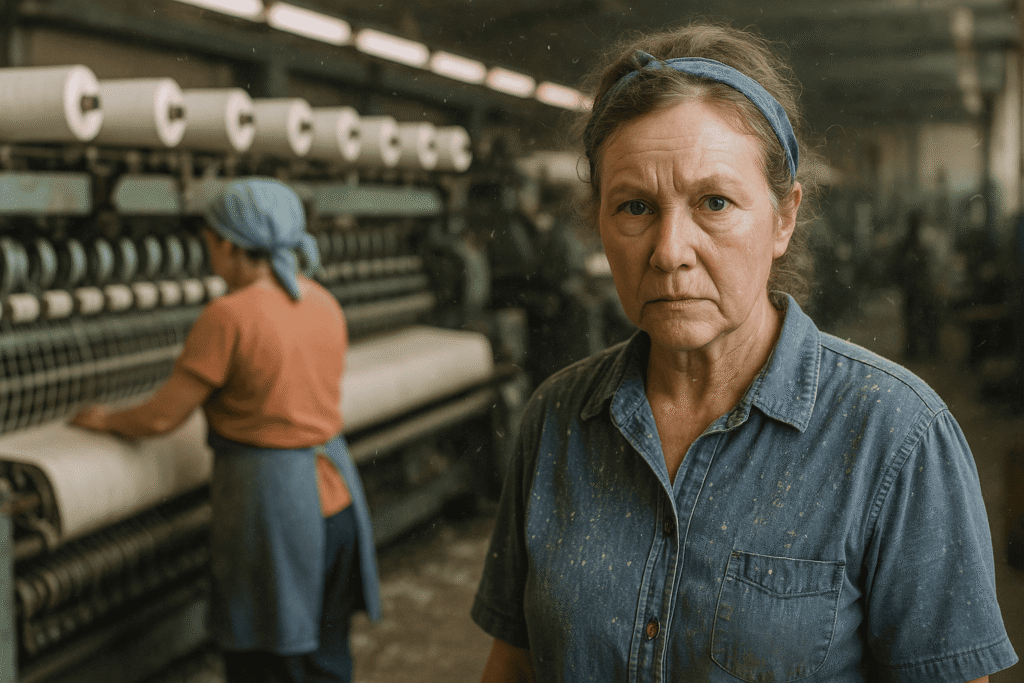
🧵 Textile Mills Asbestos Exposure
Textile mills across the U.S. used asbestos in manufacturing processes and machinery throughout much of the 20th century. Asbestos fibers were woven into fireproof fabrics and used to insulate spinning machines, looms, dryers, and piping—exposing countless workers to invisible airborne fibers.
Employees who handled raw asbestos thread, operated machinery, or cleaned production areas often disturbed friable asbestos. Dust settled on surfaces, clothing, and in the air—especially near carding machines, boilers, or weaving lines.
🧵 Textile Mill Job Sites – What You’ll Learn From This Page:
🧤 Textile mills used asbestos in fireproof fabric, machinery insulation, and heat-resistant gloves.
🪡 Cutting, weaving, and spinning asbestos threads released fibers, especially in poorly ventilated workspaces.
🧹 Cleaning looms and processing equipment stirred up asbestos dust, often daily.
🏭 Raw asbestos was sometimes handled directly in production, adding to the exposure risk.
💰 Textile workers diagnosed with asbestos disease may be eligible for compensation through trust funds or lawsuits.
📊 Facts About Textile Mill Workers
• Over 1 million Americans worked in textile mills during peak production years.
• Asbestos Exposure: Common from 1930s through the late 1980s, especially in fireproofing operations and insulation maintenance.
• Asbestos-Related Disease Risk: High, especially in areas with poor ventilation and dusty operations.
• Government studies have linked textile work to significantly higher rates of mesothelioma.
• Similar Occupations: Loom operators, carding machine workers, boiler techs, weavers, maintenance staff
🏭 History of Asbestos Use on Job Sites
Asbestos was used in textile mills both as a product and a protective material. It was spun into yarn, woven into cloth, and used to insulate hot machinery, dryers, and pipes.
Repair and maintenance work disturbed this insulation and released fibers into the air. Many workers wore no masks or protection, and dust from asbestos threads lingered in air systems and fabrics throughout the facility.
Number of People Exposed to Asbestos in Textile Mills in the U.S.
Asbestos textiles were produced for industrial and consumer use until the late 20th century.
| Exposure Category | Estimated Number of People Exposed |
|---|---|
| Occupational Exposure (Loom operators, cutters, handlers) | Approximately 510,000 workers exposed |
| Secondary Exposure (Family via fabric dust) | Estimated 75,000 exposed |
| Environmental Exposure (Mill floors, production rooms) | Around 115,000 people exposed |
👉 Total Estimated Exposure:
Over 700,000 people in the U.S. were exposed at textile mill job sites.
⚠️ Mesothelioma Risk for Textile Workers
Decades of research confirm the elevated disease risk for textile mill employees:
• A NIOSH study found former textile workers faced 7x higher rates of mesothelioma.
• Workers exposed to raw asbestos fibers or dusty spinning rooms faced the highest risk.
• Symptoms often appear 20–50 years after initial exposure, delaying diagnosis until advanced stages.
Many workers retired without knowing they had inhaled toxic fibers for years.
🧪 Asbestos Products Used in Textile Mills
Mills used asbestos in fabric production, machine insulation, and infrastructure. These materials became brittle over time, releasing dust into the environment.
🔹 Raw Asbestos Fiber
Spun into yarn and woven into fireproof cloth; workers exposed during carding and spinning.
🔹 Fireproof Fabric
Used for gloves, aprons, and insulation; cutting and stitching released dust.
🔹 Machine Insulation
Wrapped around looms, heaters, and presses; degraded and released fibers during repairs.
🔹 Boiler and Dryer Insulation
Lined steam dryers and heating units; exposure occurred during maintenance or cleanouts.
🔹 Lagging and Pipe Wraps
Wrapped around high-temp lines; cut and replaced during mechanical work.
🔹 Brake Pads on Mill Equipment
Used in textile presses and carts; asbestos dust released during repairs.
🔹 Ceiling and Wall Panels
Contained asbestos for fire resistance; fibers dislodged from vibration or drilling.
🔹 Valve Packing and Gaskets
Used in steam and water lines; disturbed during overhauls or valve changes.
🔹 Thermal Seals and Tapes
Sealed heating units and dryers; fibers released when tape deteriorated.
🔹 Dust-Collecting Filters
Often made with asbestos linings; exposure occurred during filter changes.
🔹 Fire Blankets and Covers
Stored and used throughout mills; fibers shed with age or use.
🔹 Protective Clothing
Workers wore asbestos-coated gloves and smocks; fibers inhaled during daily use.
👷 How Textile Workers Were Exposed
Exposure occurred during spinning, weaving, repairs, and cleanup—especially in older mills lacking ventilation. Many workers carried fibers home on clothing, unknowingly exposing family members.
🔧 Spinning Room Workers
Handled asbestos thread directly; inhaled fibers released during twisting and carding.
🧵 Loom Operators and Weavers
Worked near insulated equipment; friction and vibration disturbed surrounding asbestos.
🛠 Maintenance Technicians
Repaired pipes, boilers, and ducts; fibers released during insulation disturbance.
🌀 Carding Machine Operators
Opened raw fiber bales; heavy exposure during cleaning and processing.
🔥 Dryer Room Workers
Worked near asbestos-lined dryers and heaters; exposure common during routine operations.
🧰 Pipefitters and Steamfitters
Repaired steam lines wrapped in asbestos; cutting and sealing released dust.
🔥 Boiler Operators
Serviced heating systems lined with asbestos; fibers dislodged during scraping and relining.
🧹 Janitors and Cleaners
Swept and vacuumed areas with settled asbestos; exposure occurred during cleanup.
⚡ Electricians
Drilled and rewired asbestos-backed control boxes and lighting panels.
✂️ Fabric Cutters and Finishers
Handled asbestos fabric directly; cutting and hemming released tiny fibers.
📦 Shipping and Packing Workers
Handled finished asbestos goods; exposure during folding, boxing, and loading.
🧍 Supervisors and Quality Inspectors
Walked factory floors daily; secondhand exposure from high-dust work zones.
🏭 Types of Textile Mills With Asbestos Exposure
🏭 Fireproof Textile Mills
Wove asbestos cloth for gloves, aprons, and suits; exposure occurred in every stage from spinning to sewing.
🏗 Industrial Fabric Mills
Produced insulation fabrics, gaskets, and padding; dust released during cutting and weaving.
👕 Clothing Manufacturing Plants
Used asbestos for heat-resistant garments; exposure occurred while assembling and sewing.
🔥 Boiler and Dryer-Dependent Mills
Relied on asbestos-insulated steam systems; workers exposed during inspections and repairs.
🧵 Cotton and Blended Mills
Processed mixed materials, including asbestos thread; exposure common in spinning and carding rooms.
🎖 Military Textile Suppliers
Produced uniforms and gear with asbestos linings; exposure occurred during sewing and finishing.
🎛 Insulation Material Mills
Created asbestos pads, tapes, and wraps; fiber clouds formed during production.
🧪 Filter Cloth Producers
Wove asbestos into industrial filtration fabrics; fibers released during loom maintenance.
🎨 Textile Dye and Finish Plants
Used heat-drying units with asbestos linings; exposure during servicing or color setting.
♻️ Repair and Refurbishment Mills
Handled recycled or scrap asbestos textiles; exposure during sorting, blending, and cleaning.
❓ Common Questions About Textile Mill Asbestos Claims
Can I file if the mill shut down decades ago?
Yes — claims are made against manufacturers of asbestos, not the facility.
What if I worked in a non-production role?
Many support workers were still exposed and may qualify for compensation.
Do I need to remember specific products?
No — legal teams rely on mill records and product logs to prove exposure.
What if I wore asbestos gloves or clothing?
Direct handling of these materials is a high-risk exposure scenario.
Can surviving family members file?
Yes — spouses and adult children may qualify for wrongful death claims.
How much compensation is typical?
Many cases resolve in the six-figure range through lawsuits or asbestos trust funds.
⚖️ How a Mesothelioma Attorney Can Help Textile Workers
An experienced mesothelioma lawyer can help you by:
• Identifying exposure sources through mill records
• Reviewing your job duties and locations
• Filing claims with asbestos trusts or lawsuits
• Meeting strict deadlines in your state
• Helping families file wrongful death claims
• Pursuing full compensation with no upfront cost
Most firms only get paid if you receive a settlement or award.
📞 Free Legal Help for Textile Mill Workers & Families
If you or a loved one worked in a textile mill and were diagnosed with mesothelioma, asbestos lung cancer, or asbestosis—you may be entitled to significant compensation.
Whether you spun asbestos thread or repaired insulated machinery, legal help is available.
Call Now: 800.291.0963
• No upfront fees
• Free case review
• Exposure source investigation
• Lawsuit & trust claim help
• Help available for spouses and retirees
Or request help online 24/7