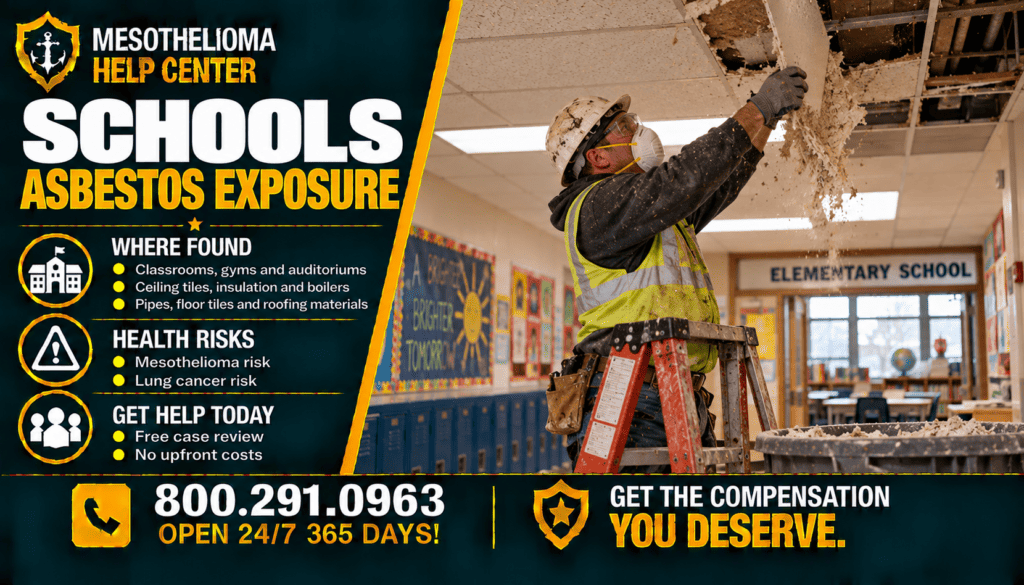
Schools Asbestos Exposure: Buildings, Workers & Claims
Many schools built or renovated during the decades when asbestos was widely used contained insulation, floor tiles, ceiling materials or mechanical equipment that may have included asbestos. Teachers, custodians, maintenance crews and contractors could have worked in these buildings for years without knowing which materials were present.
If you or someone in your family has been diagnosed with mesothelioma or asbestos-related lung cancer, the school building, job duties and dates of any repairs may be important. This guide explains where exposure may have occurred, what records can help and which related articles offer more detail. Working in an older school alone does not establish asbestos exposure.
🧭 On This Page
- Asbestos in Older School Buildings
- School Building Materials and Mechanical Systems
- Teachers, Custodians and Maintenance Workers
- School Renovation, Modernization and Demolition
- School and University Asbestos Exposure Articles
- Mesothelioma, Lung Cancer and Health Concerns
- Finding School and Employment Records
- Lawsuits, Trust Funds and Legal Options
- Frequently Asked Questions
🏫 Asbestos in Older School Buildings
Asbestos was used historically because it resisted heat and fire and could be incorporated into many construction products. Some older schools contained asbestos-containing pipe insulation, boiler insulation, floor tiles, adhesives, sprayed fireproofing or other building components. The presence and condition of these materials varied by school and renovation history.
Intact asbestos-containing materials are not the same as airborne asbestos fibers. Risk can increase when materials are cut, drilled, scraped, sanded or removed improperly. A school inspection, asbestos management plan or professional testing may help identify which materials were actually present.
Public schools have specific federal asbestos-management responsibilities under the Asbestos Hazard Emergency Response Act (AHERA). These requirements can provide a starting point for locating inspection and management records, although they do not prove that a particular person was exposed.
- Public School Buildings Asbestos Exposure
- Elementary & Secondary Schools Asbestos Exposure
- School Types & Facilities Asbestos Exposure
🔧 School Building Materials and Mechanical Systems
School boiler rooms, steam piping and heating systems are important areas to investigate. Older insulation around hot pipes and boilers sometimes contained asbestos. Repair crews may have disturbed these materials when fixing leaks, replacing valves or removing equipment.
Other areas can include classrooms, hallways, gyms and utility spaces. Historically, some flooring, ceiling tiles, adhesives and fireproofing materials contained asbestos. The age or appearance of a material is not enough to confirm its composition.
Ventilation and electrical upgrades can also disturb concealed building materials. A contractor opening walls or ceilings may have encountered materials that everyday school staff rarely handled. Records showing when equipment was installed or replaced can help clarify the history.
- School Boiler Rooms & Mechanical Systems Asbestos Exposure
- School HVAC & Ventilation Systems Asbestos Exposure
- School Flooring, Ceiling Tiles & Adhesives Asbestos Exposure
- School Electrical Systems & Fireproofing Asbestos Exposure
- School Building Materials & Systems Asbestos Exposure
👷 Teachers, Custodians and Maintenance Workers
Custodians and maintenance employees may have repaired flooring, worked near pipe insulation, cleaned debris after repairs or entered boiler and mechanical rooms. Electricians, plumbers, HVAC technicians and outside contractors may have handled older building materials during service calls.
Teachers, office staff, cafeteria workers and students generally had different tasks. Possible exposure for these groups depends on whether asbestos-containing material was disturbed, the location and duration of the work, and the controls used. Being present in the same building is not proof of harmful exposure.
If you worked at several schools, list each campus, your job title and the years you were there. Note any construction projects, visible dust, closed hallways or maintenance work you remember. Former coworkers may recall details that are difficult to find in written records.
- School Maintenance & Custodial Staff Asbestos Exposure
- School Workers & Occupations Asbestos Exposure
🏗️ School Renovation, Modernization and Demolition
Schools often undergo major projects during summer breaks or while buildings remain partly occupied. Replacing boilers, removing old flooring, upgrading ventilation or opening walls can disturb materials installed decades earlier. Whether asbestos fibers were released depends on the materials and how the work was performed.
Renovation records can be particularly valuable because they may name the contractor, describe the materials removed and identify dates and affected buildings. Some districts maintain asbestos surveys and abatement records alongside construction files.
The School Renovation & Modernization Asbestos Exposure article explains this specific concern. The School Demolition & Campus Expansion Asbestos Exposure guide covers building removal and expansion work.
📚 School and University Asbestos Exposure Articles
These articles provide more detail about school facilities, workers, renovations and legal claims. Begin with the topic that matches the building or job you remember. A maintenance employee who worked in both boiler rooms and classrooms may find several guides relevant.
The related pages are organized below so you can move from general school exposure questions to specific materials, work tasks and potential legal remedies. These links are informational; no article alone establishes exposure or eligibility for compensation.
- Mesothelioma Lawsuits for Teachers and School Workers
- School and University Asbestos Exposure Articles
- Public School Buildings Asbestos Exposure
- Elementary & Secondary Schools Asbestos Exposure
- School Boiler Rooms & Mechanical Systems Asbestos Exposure
- School HVAC & Ventilation Systems Asbestos Exposure
- School Flooring, Ceiling Tiles & Adhesives Asbestos Exposure
- School Electrical Systems & Fireproofing Asbestos Exposure
- Science Labs, Workshops & Utility Areas Asbestos Exposure
- Teachers & Professors Asbestos Exposure
- School Maintenance & Custodial Staff Asbestos Exposure
- University Contractors & Renovation Crews Asbestos Exposure
- School Renovation & Modernization Asbestos Exposure
- School Demolition & Campus Expansion Asbestos Exposure
- School & University Mesothelioma Lawsuit
- School & University Asbestos Trust Funds
- School & University Wrongful Death Lawsuit
- School Building Materials & Systems Asbestos Exposure
- School Mesothelioma Lawsuits & Compensation
- School Types & Facilities Asbestos Exposure
- School Workers & Occupations Asbestos Exposure
🩺 Mesothelioma, Lung Cancer and Health Concerns
Asbestos exposure can increase the risk of mesothelioma, lung cancer and certain other diseases. Mesothelioma most commonly affects the lining of the lungs and may appear decades after exposure. Lung cancer can have several contributing causes, including tobacco use and workplace exposures.
A medical professional must evaluate symptoms and determine the diagnosis. If you have received a diagnosis, tell your healthcare team about work in older buildings and any renovation or maintenance activities you remember. The National Cancer Institute provides an overview of asbestos-related cancer risks.
People concerned about an existing school building should not disturb suspected asbestos materials to collect evidence. A qualified inspector and the school district can provide information about proper inspection and management. For public schools, parents and staff may request information about the asbestos management plan.
📋 Finding School and Employment Records
Useful evidence may include district employment records, union membership, payroll records, job descriptions, campus assignments and dates of renovations. Building plans, asbestos management plans, inspection reports and contractor invoices can help identify products and work areas.
Try writing down the school name, city, years of employment, rooms or buildings where you worked and coworkers who remember repairs. For retired staff, Social Security earnings records or pension documents may help reconstruct dates. Family members may be able to help organize these records after a diagnosis.
If the school was renamed, merged or demolished, the district or local education authority may still have archived records. Public records procedures vary, and not every historical document remains available. Preserve copies of records you already possess without entering unsafe areas or disturbing materials.
⚖️ Lawsuits, Trust Funds and Legal Options
Some people diagnosed with asbestos-related diseases may be eligible to investigate claims involving manufacturers of asbestos-containing products, contractors or other legally responsible parties. Eligibility depends on the specific exposure evidence, medical diagnosis, applicable laws and filing deadlines.
Asbestos bankruptcy trusts may be relevant if the evidence connects an individual to qualifying products or companies. A trust claim and a lawsuit are different processes; compensation is never guaranteed. State laws also determine whether family members may bring a wrongful-death claim.
An attorney experienced in asbestos litigation can help review available documents, identify potential defendants and explain deadlines. You do not need to know every product name before asking questions, but details about the school, work area and renovation years can make the investigation more useful.
- Mesothelioma Lawsuits for Teachers and School Workers
- School & University Mesothelioma Lawsuit
- School & University Asbestos Trust Funds
- School & University Wrongful Death Lawsuit
- School Mesothelioma Lawsuits & Compensation
❓ Frequently Asked Questions
Did all older schools contain asbestos?
No. Asbestos use varied by building, product and renovation history. Inspection records or professional testing are needed to identify specific materials.
Could school boiler rooms contain asbestos?
Some older boiler and steam systems used asbestos-containing insulation, gaskets or packing. Records about the particular equipment and repairs matter.
Which school employees may have been exposed?
Maintenance workers, custodians and contractors may have disturbed older materials. Other staff could have been nearby during certain projects, depending on conditions.
Is asbestos in an intact floor tile the same as airborne exposure?
No. Risk depends on whether asbestos-containing material releases fibers, for example during improper cutting, sanding or removal.
Why are school renovation records important?
They may identify contractors, materials, buildings and dates when older components were removed or disturbed.
Can I request information about asbestos at a public school?
Public schools are generally required under AHERA to maintain asbestos management plans and make them available for inspection.
Can mesothelioma develop decades after school employment?
Yes. Mesothelioma often has a long latency period, although a medical diagnosis and exposure investigation are separate questions.
Can families ask about compensation after a loved one dies?
Depending on the diagnosis, evidence and state law, surviving family members may have legal options. Deadlines and eligibility vary.
📖 Sources and Further Reading
- EPA — Asbestos and School Buildings
- EPA — Asbestos Hazard Emergency Response Act
- National Cancer Institute — Asbestos Exposure and Cancer Risk
- OSHA — Asbestos
📞 Get Help After a Mesothelioma Diagnosis
If you or a loved one worked in a school and has been diagnosed with mesothelioma or asbestos-related lung cancer, you can ask about possible next steps. Call 800.291.0963. Live chat is available 24/7, 365 days a year. You can also Submit Your Case below. A review does not guarantee eligibility or compensation.
⚕️ Legal & Medical Information Disclaimer
This article provides general educational information, not medical diagnosis, treatment recommendations or legal advice. Consult qualified healthcare professionals about health concerns and a licensed attorney about your legal rights. Exposure evidence, filing deadlines and eligibility vary by individual and jurisdiction.