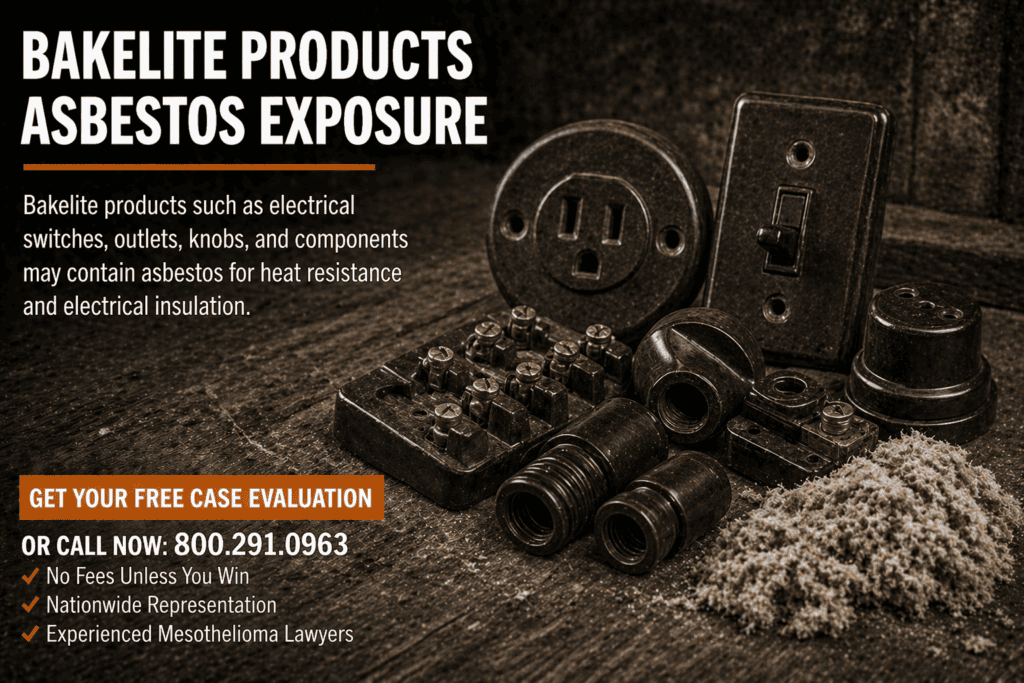
Bakelite Products Asbestos Exposure
Bakelite is a trade name historically associated with phenolic resin products. Some older phenolic molding compounds and industrial electrical components used mineral or fibrous fillers to improve heat resistance, strength or electrical performance. In certain historical formulations, asbestos was used as a filler or reinforcement material.
Not every Bakelite or phenolic product contained asbestos. Many formulations used other fillers, including wood flour, cotton, paper, mineral fillers or other reinforcing materials. Exposure questions therefore depend on the exact product, formulation, manufacturer, application and year.
Historical exposure is most plausible when asbestos-filled phenolic material was sawed, drilled, machined, sanded, ground, broken or otherwise mechanically disturbed during manufacturing, electrical maintenance, equipment repair, replacement or demolition.
Bakelite Products and Historical Asbestos Use
Phenolic resins were widely used in electrical and industrial applications because they can provide heat resistance, dimensional stability and electrical insulation. Bakelite became one of the best-known names associated with molded phenolic products.
Some historical phenolic compounds were reinforced or filled with asbestos fibers, particularly where higher heat resistance, mechanical strength or arc resistance was desired. Other Bakelite products used non-asbestos fillers, so the word “Bakelite” alone does not establish asbestos content.
The most reliable evaluation considers manufacturer literature, molded part numbers, technical specifications, product composition records, industrial catalogs and, when appropriate, laboratory analysis of surviving material.
Bakelite Applications That May Have Involved Asbestos
Depending on manufacturer, formulation and year, asbestos-filled phenolic or Bakelite-type materials may have been used in:
- electrical switchgear components;
- terminal blocks and insulating parts;
- switch and breaker components;
- arc-resistant electrical parts;
- electrical housings and covers;
- machinery control components;
- heat-resistant molded industrial parts;
- insulating handles or knobs for industrial equipment;
- specialty panels or barriers; and
- other molded phenolic components requiring heat or electrical resistance.
These categories are not proof of asbestos content. Product composition varied by manufacturer and application, and many phenolic products used non-asbestos reinforcement.
How Asbestos Exposure Could Occur
A potential exposure pathway requires an asbestos-containing Bakelite or phenolic product and work that disturbs it. An intact molded component may present a different exposure potential than material being machined or broken.
Potential disturbance could occur during tasks such as:
- drilling holes in molded electrical components;
- sawing or trimming phenolic panels or parts;
- machining molded components to fit equipment;
- sanding or grinding edges and surfaces;
- breaking damaged electrical components;
- removing old switchgear or control parts;
- repairing electrical equipment containing molded phenolic parts;
- cleaning dust created by machining or demolition;
- rebuilding industrial machinery; and
- demolishing or replacing older electrical installations.
Actual exposure depends on asbestos content, material condition, work method, frequency, duration, proximity, ventilation and controls.
Worked with older Bakelite or phenolic electrical components? If you are trying to identify historical materials and reconstruct a possible asbestos exposure, Call 800.291.0963. Live chat available 24/7, 365 days a year. Submit Your Case.
Workers and Workplaces That May Have Encountered Bakelite
Workers who manufactured, machined, installed, repaired or removed older phenolic components may have encountered asbestos-filled material if that formulation was present and disturbed. A job title alone does not establish exposure.
Potentially relevant occupations may include electricians, electrical maintenance workers, machinists, equipment repair technicians, switchgear mechanics, industrial maintenance workers, manufacturing employees and demolition workers.
Possible settings include electrical equipment plants, factories, power plants, shipyards, industrial maintenance shops, control rooms, machinery-rebuild facilities and older commercial or industrial electrical installations.
Nearby workers may also be relevant when machining, drilling, grinding or demolition generated dust in shared work areas.
Machining, Repair and Removal Exposure Risks
Drilling and machining
Molded phenolic parts may be drilled or machined to fit electrical or industrial assemblies. If the formulation contained asbestos, these operations could generate dust containing asbestos fibers.
Sanding and grinding
Workers may have sanded or ground edges, surfaces or damaged parts. Mechanical abrasion can disturb fillers within asbestos-containing phenolic material.
Electrical repair
Repair work can involve removing covers, barriers, terminals, switch components or molded insulating pieces. Broken or drilled asbestos-filled parts could create a potential exposure pathway.
Manufacturing and finishing
Workers producing molded phenolic components may have handled raw compounds, trimmed molded parts or machined finished products. Exposure depends on the actual formulation and manufacturing process.
Removal and demolition
Older electrical installations may contain brittle or damaged molded components. Breaking or mechanically removing asbestos-filled phenolic parts could disturb fibers.
Evidence That May Identify Asbestos-Filled Bakelite
Exposure reconstruction is strongest when evidence identifies the exact molded component, manufacturer, product number, formulation, application, service period and work performed.
Useful evidence may include:
- manufacturer names and trademarks;
- molded part numbers or stamped identifiers;
- electrical equipment manuals and parts lists;
- switchgear or control-system documentation;
- phenolic compound technical data sheets;
- historic product catalogs;
- purchase orders, invoices and supplier records;
- manufacturing specifications or composition records;
- maintenance and repair records;
- historic photographs of equipment or components;
- material safety data sheets where available;
- laboratory analysis of surviving phenolic material;
- employer, union or military records documenting assignments; and
- coworker or supervisor statements identifying products and tasks.
Evidence should distinguish asbestos-filled phenolic products from visually similar non-asbestos Bakelite or plastic materials whenever possible.
Medical and pathology records may document an asbestos-related diagnosis but do not establish which historical phenolic product was an exposure source.
Secondhand Exposure and Health Risks
If machining or repair of asbestos-filled Bakelite generated fibers that accumulated on clothing, shoes, tools or belongings, asbestos could potentially have been carried away from the workplace. This is a possible secondhand exposure pathway, but family relationship alone does not establish exposure.
Asbestos exposure is associated with mesothelioma, asbestos-related lung cancer, asbestosis and other asbestos-related disease. Working around old electrical equipment or phenolic components does not diagnose disease and does not establish individual medical causation.
Anyone concerned about historical occupational asbestos exposure should discuss their work history and health with a qualified healthcare professional.
Legal and Compensation Considerations
Depending on the evidence and circumstances, legal options may be available to a person diagnosed with an asbestos-related disease after documented exposure to a specific asbestos-containing Bakelite or phenolic product.
A legal review may consider the phenolic compound manufacturer, molded-part manufacturer, equipment manufacturer where relevant, distributor or supplier, workplace, period of use, tasks performed, frequency and duration of exposure, diagnosis, jurisdiction and filing deadlines.
Identifying an electrical equipment or machinery manufacturer does not automatically establish that every molded phenolic component it used contained asbestos or that the company is legally responsible. Liability is case-specific and depends on product evidence, exposure evidence and governing law.
Some matters may involve asbestos trust funds, but each trust has its own product, exposure and medical documentation requirements. Eligibility is not automatic, and compensation is not guaranteed.
Exposure that occurred decades ago does not by itself determine whether a claim is timely. Statutes of limitation and other deadlines vary by jurisdiction and circumstances and should be reviewed individually.
Bakelite Products Asbestos Exposure FAQs
Did all Bakelite contain asbestos?
No. Some historical phenolic formulations used asbestos fillers, while many Bakelite products used other fillers or reinforcement materials.
Why was asbestos added to some phenolic products?
Asbestos could improve heat resistance, strength and performance in certain high-temperature or electrical applications.
Could electrical Bakelite components contain asbestos?
Some historical molded electrical components may have used asbestos-filled phenolic compounds, depending on manufacturer, part and year.
Can drilling Bakelite release asbestos fibers?
Potentially, if the specific phenolic material contains asbestos and drilling disturbs the asbestos-containing filler.
Can sanding or grinding Bakelite create exposure?
Potentially, when asbestos-filled phenolic material is mechanically abraded and dust is generated.
Can electricians have asbestos exposure from Bakelite products?
Potentially, when their work involved drilling, machining, breaking or removing asbestos-filled phenolic components. Job title alone does not prove exposure.
What evidence can identify asbestos-filled Bakelite?
Useful evidence can include part numbers, manufacturer literature, technical data sheets, equipment manuals, invoices, laboratory analysis and witness testimony.
Does working with old Bakelite automatically qualify someone for compensation?
No. Legal eligibility depends on product identification, asbestos-content evidence, exposure history, diagnosis, jurisdiction and other case-specific facts. Compensation is not guaranteed.
For related information, see Industrial Components & Sealing Products Asbestos Exposure, Electrical Products Asbestos Exposure, Electrical Panels & Switchgear Asbestos Exposure, Arc Chutes Products Asbestos Exposure, Battery Casing Products Asbestos Exposure, Machinery Products Asbestos Exposure, Insulation Products Asbestos Exposure, and the main Asbestos Exposure in Products guide.
Get Help Reviewing Bakelite Product Exposure
If you or a family member has been diagnosed with mesothelioma, asbestos-related lung cancer or another asbestos-related disease and you are trying to identify older Bakelite, phenolic electrical components, switchgear parts or molded industrial products from a factory, power plant, shipyard, machinery shop or electrical maintenance setting, we can help organize the product and exposure history that may be relevant.
Call 800.291.0963 to discuss what you remember about the product, manufacturer, electrical equipment, workplace and work performed. Live chat is available 24/7, 365 days a year. Submit Your Case using the form below.
Prior exposure does not automatically establish a legal claim. Eligibility depends on the evidence, diagnosis, jurisdiction and other circumstances, and compensation is not guaranteed.
⚕️ Legal & Medical Information Disclaimer
This page provides general educational information and is not medical or legal advice. The information does not establish asbestos exposure, diagnosis, causation, liability, claim eligibility or compensation. Medical concerns should be discussed with a qualified healthcare professional, and legal questions should be reviewed with a qualified attorney.