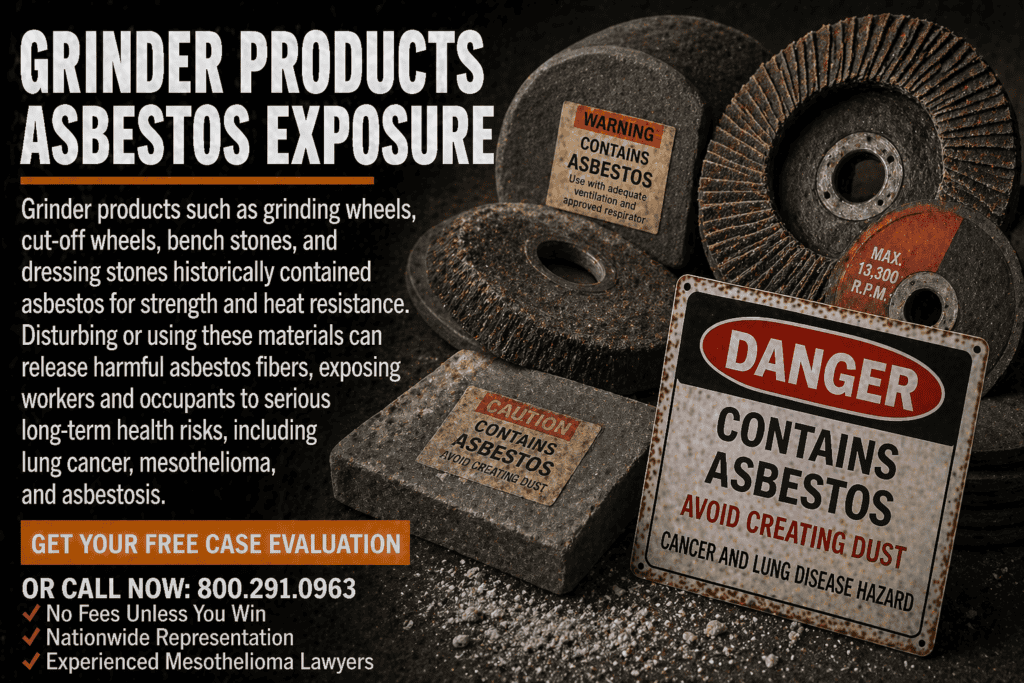
Grinder Products Asbestos Exposure
Grinders themselves were not necessarily asbestos-containing products. However, historical grinding work could disturb asbestos-containing materials used in machinery, vehicles, industrial equipment and building systems. Potentially relevant materials included certain gaskets, friction components, coatings, insulation, packing and heat-resistant products.
Not every grinder, abrasive wheel or material being ground contained asbestos. Exposure questions depend on the exact material being worked, its asbestos content, the type of grinding or abrasion performed, frequency and duration of the task, ventilation, dust controls and worker proximity.
Historical exposure is most plausible when a grinder, sander, wire wheel or other abrasive tool was used directly on an asbestos-containing material. OSHA defines grinding, sanding and abrading as aggressive methods when they break, crumble or disintegrate asbestos-containing material.
Grinder Products and Historical Asbestos Exposure
Grinding equipment is used to remove material, clean surfaces, shape components and prepare parts for repair or replacement. In historical industrial settings, these tools sometimes contacted asbestos-containing products because asbestos was used in friction materials, gaskets, coatings, insulation, packing and other heat-resistant manufactured goods.
The potential exposure source was generally the asbestos-containing product being ground rather than the grinder itself. In some cases, adjacent guards, insulation, gaskets or other equipment components could also contain asbestos, depending on manufacturer, formulation and year.
A grinder’s presence at a job site does not prove asbestos exposure. Product identification and task history are essential.
Materials Grinders May Have Disturbed
Depending on the workplace and time period, grinding or abrasive work may have disturbed asbestos-containing materials such as:
- old gaskets adhered to flanges or machinery surfaces;
- brake and clutch friction materials;
- industrial friction blocks or linings;
- heat-resistant coatings or mastics;
- insulation residue on pipes, boilers or machinery;
- asbestos-containing packing or sealing materials;
- heat-resistant boards, panels or molded products; and
- other legacy materials containing asbestos fibers.
These categories do not mean every product of the same type contained asbestos. Manufacturer, formulation, part number and service period should be evaluated whenever possible.
How Asbestos Exposure Could Occur
A potential exposure pathway requires an asbestos-containing material and abrasive work that disturbs it. Grinding can generate fine airborne dust, particularly when dry methods are used.
Potential disturbance could occur during tasks such as:
- grinding gasket residue from flange faces;
- power sanding old gasket surfaces;
- grinding or resurfacing friction components;
- wire-wheeling asbestos-containing coatings;
- removing insulation residue from metal equipment;
- grinding heat-resistant panels or molded components;
- preparing surfaces before welding or fabrication;
- reconditioning machinery during overhaul work;
- cleaning grinding dust from benches, floors or equipment; and
- demolishing or dismantling older industrial systems.
Actual exposure depends on asbestos content, material condition, grinding method, tool speed, dust generation, frequency, duration, proximity, ventilation and controls.
Performed grinding or abrasive work on older industrial or automotive materials? If you are trying to identify what products were involved and reconstruct a possible asbestos exposure, Call 800.291.0963. Live chat available 24/7, 365 days a year. Submit Your Case.
Workers and Workplaces Where Grinding May Have Occurred
Workers who used grinders or worked nearby may have encountered asbestos fibers if asbestos-containing material was being ground, sanded or abraded. A job title alone does not establish exposure.
Potentially relevant occupations may include machinists, mechanics, millwrights, pipefitters, boilermakers, welders, maintenance workers, brake mechanics, equipment rebuilders and industrial repair technicians.
Possible settings include machine shops, power plants, refineries, factories, shipyards, automotive repair shops, brake shops, boiler rooms, maintenance facilities and equipment-rebuild operations.
Nearby workers may also be relevant when grinding generated airborne dust in shared work areas.
Grinding, Sanding and Surface-Preparation Exposure Risks
Gasket removal
Old gaskets can adhere tightly to flanges and equipment surfaces. If a gasket contained asbestos, dry grinding or power sanding of residue could disturb fibers.
Friction-component work
Some historical brake, clutch and other friction materials contained asbestos. Grinding or resurfacing asbestos-containing friction components could generate dust.
Coating removal
Workers may use grinders or wire wheels to remove protective coatings before repainting, welding or repair. If the coating contained asbestos, abrasion could release fibers.
Machinery overhaul
Equipment rebuilding may involve multiple asbestos-containing materials, including gaskets, insulation and packing. Each possible source should be identified separately.
Dust cleanup
Grinding dust can settle on benches, machinery, floors, clothing and tools. Historical dry sweeping or compressed-air cleanup could increase the potential for dust to become airborne.
Evidence That May Document Grinder-Related Asbestos Exposure
Exposure reconstruction is strongest when evidence identifies both the abrasive task and the material that was ground, sanded or otherwise disturbed.
Useful evidence may include:
- the grinder, sander or abrasive tool used;
- the material or component being worked;
- manufacturer, brand and part numbers;
- equipment manuals and illustrated parts lists;
- gasket, friction-product or coating specifications;
- maintenance procedures and work orders;
- purchase orders, invoices and supplier records;
- outage, overhaul or rebuild logs;
- historic photographs of work areas or components;
- industrial hygiene or asbestos survey records;
- laboratory analysis of surviving material;
- employer, union or military records documenting assignments; and
- coworker or supervisor statements identifying the task and material.
Evidence should distinguish the grinder from the actual asbestos-containing product whenever possible. The abrasive tool may explain how material was disturbed, while product evidence helps identify whether asbestos was present.
Medical and pathology records may document an asbestos-related diagnosis but do not establish which historical grinding task was an exposure source.
Secondhand Exposure and Health Risks
If grinding asbestos-containing material generated fibers that accumulated on clothing, shoes, tools or belongings, asbestos could potentially have been carried away from the workplace. This is a possible secondhand exposure pathway, but family relationship alone does not establish exposure.
Asbestos exposure is associated with mesothelioma, asbestos-related lung cancer, asbestosis and other asbestos-related disease. Using a grinder or working near grinding equipment does not diagnose disease and does not establish individual medical causation.
Anyone concerned about historical occupational asbestos exposure should discuss their work history and health with a qualified healthcare professional.
Legal and Compensation Considerations
Depending on the evidence and circumstances, legal options may be available to a person diagnosed with an asbestos-related disease after documented exposure during grinding or abrasive work involving a specific asbestos-containing product.
A legal review may consider the manufacturer of the asbestos-containing material, equipment manufacturer where relevant, distributor or supplier, workplace, time period, grinding task, frequency and duration of exposure, diagnosis, jurisdiction and filing deadlines.
Identifying the grinder manufacturer does not automatically establish that the grinder itself contained asbestos or that the manufacturer is legally responsible for asbestos in materials ground with the tool. Liability is case-specific and depends on product evidence, exposure evidence and governing law.
Some matters may involve asbestos trust funds, but each trust has its own product, exposure and medical documentation requirements. Eligibility is not automatic, and compensation is not guaranteed.
Exposure that occurred decades ago does not by itself determine whether a claim is timely. Statutes of limitation and other deadlines vary by jurisdiction and circumstances and should be reviewed individually.
Grinder Products Asbestos Exposure FAQs
Did grinders themselves contain asbestos?
Not necessarily. In many cases, the asbestos exposure concern was the material being ground, such as an older gasket, friction component, coating or insulation product.
Can grinding asbestos-containing material release fibers?
Yes. Grinding, sanding or abrading asbestos-containing material can disturb it and release airborne fibers.
Can grinding old gasket residue create asbestos exposure?
Potentially, if the gasket contained asbestos and power sanding or grinding disturbed residue remaining on the sealing surface.
Can brake or clutch grinding create asbestos exposure?
Potentially, when historical asbestos-containing friction materials are ground, resurfaced or otherwise abraded.
Can coating removal with a grinder release asbestos?
Potentially, if the coating contains asbestos and the grinding process breaks or abrades the material.
Can nearby workers be exposed during grinding?
Potentially, depending on the asbestos content, amount of dust generated, worker proximity, ventilation and controls.
What evidence can document grinder-related exposure?
Useful evidence can include the material being ground, manufacturer and part information, work orders, manuals, invoices, asbestos surveys, laboratory reports and witness testimony.
Does using a grinder automatically qualify someone for compensation?
No. Legal eligibility depends on identifying an asbestos-containing product, documenting exposure, diagnosis, jurisdiction and other case-specific facts. Compensation is not guaranteed.
For related information, see Industrial Components & Sealing Products Asbestos Exposure, Gasket Products Asbestos Exposure, Coating Products Asbestos Exposure, Machinery Products Asbestos Exposure, Friction Component Products Asbestos Exposure, Brake Products Asbestos Exposure, Insulation Products Asbestos Exposure, and the main Asbestos Exposure in Products guide.
Get Help Reviewing Grinder-Related Asbestos Exposure
If you or a family member has been diagnosed with mesothelioma, asbestos-related lung cancer or another asbestos-related disease and you are trying to identify older gaskets, friction materials, coatings, insulation or other products that were ground, sanded or abraded in a machine shop, power plant, refinery, factory, shipyard, automotive shop or industrial maintenance setting, we can help organize the product and exposure history that may be relevant.
Call 800.291.0963 to discuss what you remember about the grinder or abrasive tool, the material being worked, the equipment, workplace and work performed. Live chat is available 24/7, 365 days a year. Submit Your Case using the form below.
Prior exposure does not automatically establish a legal claim. Eligibility depends on the evidence, diagnosis, jurisdiction and other circumstances, and compensation is not guaranteed.
⚕️ Legal & Medical Information Disclaimer
This page provides general educational information and is not medical or legal advice. The information does not establish asbestos exposure, diagnosis, causation, liability, claim eligibility or compensation. Medical concerns should be discussed with a qualified healthcare professional, and legal questions should be reviewed with a qualified attorney.