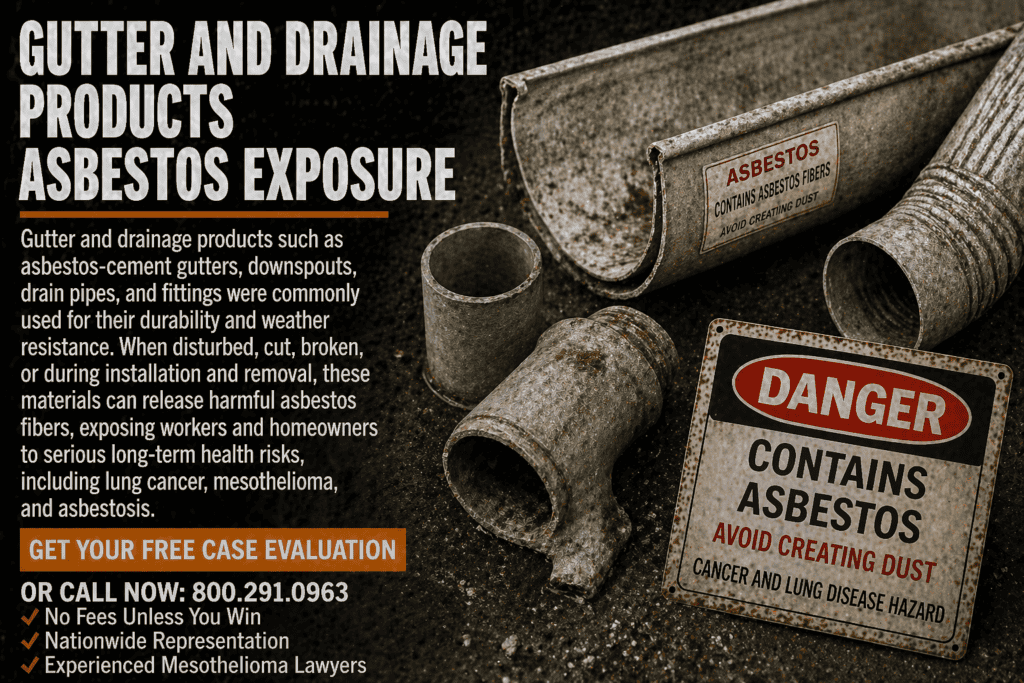
Gutter and Drainage Products Asbestos Exposure
Some historical gutter, downpipe and drainage products were made from asbestos cement, while many other rainwater and drainage products were made from cast iron, steel, aluminum, copper, clay, concrete, plastic or other asbestos-free materials. A worker’s recollection of handling a gray cement-like gutter or pipe does not by itself prove that asbestos was present.
Historical records show that asbestos-cement products were used in drainage applications. U.S. Environmental Protection Agency guidance identifies asbestos-cement pipe as having been used for water and sewer mains and, in some applications, drainage pipe and vent pipe. Guidance from the United Kingdom Health and Safety Executive also documents molded asbestos-cement gutters and downpipes in older buildings. Product type, manufacturer, location, age and the actual work performed remain important when reconstructing exposure.
This guide explains the products and components that may be relevant, how asbestos-containing cement could be disturbed, which workers may have encountered these materials, and what evidence can help identify an old rainwater or drainage product. For a broader overview, see Asbestos Exposure in Products.
Gutter and Drainage Products and Historical Asbestos Use
Asbestos cement combined mineral fibers with a cement binder to create rigid molded products. Historically, this material was used for a variety of building and utility components because it was durable and resistant to corrosion, moisture and weathering.
The best-documented U.S. drainage use involves asbestos-cement pipe. EPA guidance states that asbestos-cement pipe was widely used for water and sewer mains and was also used in some drainage and vent-pipe applications. OSHA likewise identifies asbestos-cement pipe among historical asbestos-containing building products.
Outside the United States, government guidance also documents molded asbestos-cement rainwater goods including gutters, downpipes, rainheads and related fittings. These records are useful for understanding the types of products that existed historically, but they should not be used to assume that every U.S. gutter or downpipe contained asbestos.
Asbestos in cement products was generally bound in a dense matrix. Potential fiber release becomes more plausible when asbestos-containing material is cut, sawed, drilled, ground, broken, weathered, demolished or otherwise disturbed. This same principle applies to other historical cement products associated with asbestos exposure.
Gutters, Downpipes, Drainage Pipe and Related Components
Depending on country, manufacturer, product line and year, historical asbestos-cement rainwater and drainage systems could include several different molded components.
Gutters
Some historical asbestos-cement systems used molded gutters or channels to collect roof runoff. Government building guidance from the United Kingdom specifically identifies asbestos-cement gutters. Their presence should be confirmed from product evidence rather than appearance alone.
Downpipes and rainwater fittings
Molded asbestos-cement downpipes, bends, junctions, outlets, spreaders and rainheads have been documented in historical building systems. These components could connect roof drainage to ground-level drains or other stormwater systems.
Drainage and sewer pipe
EPA guidance identifies asbestos-cement pipe in water, sewer and some drainage applications. Pipe could be buried, installed along structures or incorporated into utility systems. Historical pipe material sometimes remained in service for decades.
Joints, sealants and adjacent materials
A drainage assembly may include more than the pipe or gutter itself. Historical repairs or joints could involve packing, gaskets, compounds or caulking and sealant products. The presence of one asbestos-containing component does not prove that adjacent products also contained asbestos.
Roof-edge work can also place workers near other construction materials. Those products should be evaluated separately rather than treating the entire roof or drainage system as one asbestos-containing product.
How Asbestos Exposure Could Occur
Working near an old gutter or drainage pipe does not automatically establish asbestos exposure. A potential exposure pathway requires an asbestos-containing product and circumstances in which fibers could become airborne and be inhaled or swallowed.
Potential disturbance could occur during tasks such as:
- sawing asbestos-cement pipe to length;
- drilling mounting or connection holes;
- grinding, beveling or machining pipe ends;
- cutting damaged gutter or downpipe sections;
- breaking pipe during excavation or demolition;
- removing corroded, cracked or weathered rainwater components;
- chiseling or prying apart old joints and fittings;
- cleaning debris from damaged asbestos-cement materials; and
- dry sweeping or blowing dust created during cutting or removal.
OSHA historically identified installation of asbestos-cement pipe as a construction activity involving occupational asbestos exposure. Actual exposure in an individual case depends on the product, work method, material condition, tools, frequency, duration, proximity, ventilation, controls and cleanup practices.
Worked with older cement gutters, downpipes or drainage pipe? If you are trying to identify a historical product or reconstruct a possible asbestos exposure, Call 800.291.0963. Live chat available 24/7, 365 days a year. Submit Your Case.
Workers and Job Sites That May Have Encountered These Products
Workers who installed, repaired, replaced, excavated or demolished historical drainage systems may have encountered asbestos-cement materials. Job title alone is not proof of exposure; the product and actual tasks matter.
Potentially relevant occupations may include plumbers, pipefitters, utility workers, municipal water and sewer crews, construction laborers, roofers, maintenance workers, building engineers, excavation crews, demolition workers and workers involved in industrial or military facility maintenance.
Possible settings include older residential and commercial buildings, factories, warehouses, schools, industrial facilities, municipal utility systems, water or sewer projects, storm-drain systems, military installations and agricultural properties.
Roof drainage work may also take place near other older building products, including certain ceiling and interior construction materials during broader renovation projects. Each possible source should be identified separately so that an exposure history does not attribute fibers to the wrong product.
Installation, Repair and Removal Risks
Installation and fitting
Historical asbestos-cement pipe sometimes required cutting, drilling or machining to fit a particular run or connection. When asbestos-containing material was mechanically worked, dust generation could create a potential exposure pathway. OSHA’s historical rulemaking specifically discusses occupational exposure during asbestos-cement pipe installation.
Repair and maintenance
Repair work could involve removing cracked gutter sections, replacing downpipes, cutting into drainage lines, clearing damaged components or modifying connections. Weathered material may be more susceptible to cracking or breakage than intact material.
Excavation and underground drainage
Buried asbestos-cement drainage or sewer pipe can be encountered during utility repair, trenching or redevelopment. Excavation may expose pipe that workers did not know was present. Breaking or power-cutting unidentified pipe can create dust if the material contains asbestos.
Demolition and replacement
Whole-building demolition or roof replacement can disturb gutters, downpipes and associated fittings. Controlled removal that minimizes breakage is different from smashing or pulverizing material. Current asbestos requirements and local rules should be followed whenever suspect material may be disturbed.
Evidence That May Identify Historical Gutter or Drainage Products
Identifying an old drainage product can be difficult because pipe may be buried, gutters may have been replaced, and weathering can erase labels. Exposure reconstruction is stronger when several kinds of records point to the same material and time period.
Useful evidence may include:
- manufacturer names, stamps or markings on surviving pipe or fittings;
- brand names and product catalog numbers;
- historic product catalogs or technical literature;
- municipal water, sewer or storm-drain maps;
- utility construction and repair records;
- building plans, plumbing schedules and specifications;
- purchase orders, invoices and supplier records;
- maintenance and replacement records;
- photographs showing gutters, downpipes, pipe joints or packaging;
- asbestos surveys, laboratory reports or abatement records;
- employer, union or military records documenting assignments;
- coworker statements describing the product and cutting methods; and
- records establishing when a drainage system was installed or replaced.
Medical and pathology records may document an asbestos-related diagnosis but do not establish which historical gutter or drainage product was present. Product identification, exposure evidence and medical evidence answer different questions.
Secondhand Exposure and Health Risks
If work on asbestos-containing cement pipe or rainwater components created dust that settled on work clothing, shoes, tools or personal belongings, fibers could potentially have been carried away from the job site. This is a possible secondhand exposure pathway, but being related to a worker does not by itself establish exposure.
Asbestos exposure is associated with mesothelioma, asbestos-related lung cancer, asbestosis and other asbestos-related disease. Handling an unidentified drainage product does not diagnose disease or establish individual causation.
Anyone concerned about a past occupational exposure or health symptoms should discuss the history with a qualified healthcare professional.
Legal and Compensation Considerations
Depending on the evidence and circumstances, legal options may be available to a person diagnosed with an asbestos-related disease after documented exposure to a specific asbestos-containing gutter, downpipe, drainage pipe or related component.
A legal review may consider the product manufacturer, brand, product type, installation period, employer or job site, work methods, frequency and duration of exposure, medical diagnosis, jurisdiction and applicable filing deadlines.
Manufacturer identification is not the same as proving legal responsibility. Historical records may identify who made, supplied or installed a product, but liability is case-specific and depends on the evidence and governing law.
Some claims may involve asbestos trust funds. Each trust has its own product, exposure and medical documentation requirements. A diagnosis or job history does not automatically establish eligibility, and compensation is not guaranteed.
Exposure that occurred many years ago does not by itself determine whether a claim is timely. Statutes of limitation and other deadlines vary by jurisdiction and circumstances and should be reviewed individually.
Gutter and Drainage Products Asbestos Exposure FAQs
Were gutters ever made with asbestos?
Yes. Government building guidance outside the United States documents historical molded asbestos-cement gutters and downpipes. That does not mean every old gutter contained asbestos or that a particular U.S. gutter did.
Was asbestos-cement pipe used for drainage?
Yes. EPA guidance states that asbestos-cement pipe was widely used for water and sewer mains and was also used in some drainage and vent-pipe applications.
Can asbestos-cement pipe release fibers when cut?
If the pipe contains asbestos, sawing, drilling, grinding, breaking or machining the cement matrix can potentially release fibers. The amount depends on the product and work method.
Can you identify asbestos gutters or drainage pipe by appearance?
No. Gray, cement-like appearance alone is not enough. Product markings, historical records or appropriate laboratory analysis may be needed.
Are intact asbestos-cement products friable?
Asbestos-cement products are generally dense and nonfriable when intact because fibers are bound in the cement matrix. Damage, weathering or aggressive mechanical work can increase the possibility of fiber release.
Who may have worked around asbestos-cement drainage products?
Plumbers, pipefitters, utility crews, construction laborers, maintenance workers, roofers, excavation workers and demolition crews are examples, but occupation alone does not prove exposure.
What evidence can identify old drainage products?
Useful evidence can include product markings, utility maps, plans, specifications, invoices, maintenance records, photographs, asbestos surveys and coworker statements.
Does historical drainage work automatically qualify someone for compensation?
No. Eligibility depends on asbestos-product identification, exposure evidence, diagnosis, jurisdiction and other facts. Compensation is not automatic or guaranteed.
Get Help Reviewing Historical Gutter or Drainage Product Exposure
If you or a family member has been diagnosed with mesothelioma, asbestos-related lung cancer or another asbestos-related disease and you are trying to identify old gutters, downpipes, drainage pipe or other cement rainwater components from a workplace, utility project, building or military facility, we can help organize the product and exposure history that may be relevant.
Call 800.291.0963 to discuss what you remember about the product, manufacturer, job site and work performed. Live chat is available 24/7, 365 days a year. Submit Your Case using the form below.
Prior exposure does not automatically establish a legal claim. Eligibility depends on the evidence, diagnosis, jurisdiction and other circumstances, and compensation is not guaranteed.
⚕️ Legal & Medical Information Disclaimer
This page provides general educational information and is not medical or legal advice. The information does not establish asbestos exposure, diagnosis, causation, liability, claim eligibility or compensation. Medical concerns should be discussed with a qualified healthcare professional, and legal questions should be reviewed with a qualified attorney.