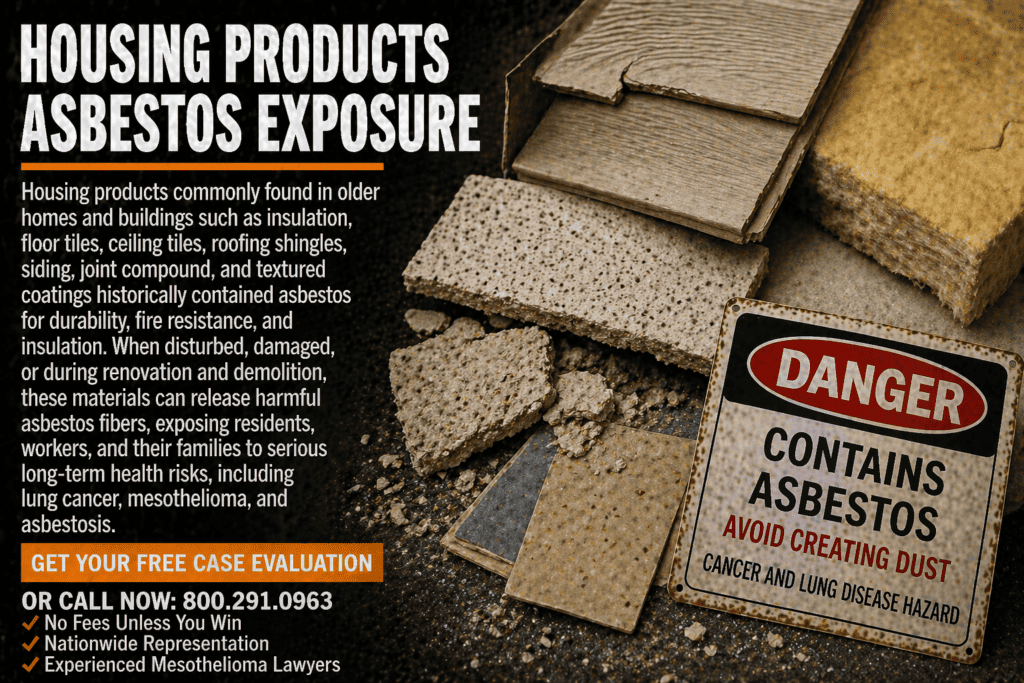
Housing Products Asbestos Exposure
Asbestos was historically used in some residential construction and repair products because it resisted heat, fire, wear and deterioration. In older homes, potential asbestos-containing materials may be found in walls, ceilings, floors, roofs, siding, insulation, heating systems and other building components.
An older house does not automatically contain asbestos, and the presence of asbestos-containing material does not by itself establish that a person was exposed. Product type, manufacturer, installation year, condition and the work performed all matter.
Potential exposure is most plausible when asbestos-containing housing material is cut, drilled, sanded, scraped, broken, removed, deteriorated or otherwise disturbed during remodeling, maintenance, repair or demolition.
Housing Products and Historical Asbestos Use
Asbestos-containing construction products were widely used in the United States during much of the twentieth century. Residential materials could incorporate asbestos for fire resistance, strength, insulation, sound control or durability.
Potential asbestos-containing materials can be visible, such as flooring or siding, or concealed behind walls, under floors, around pipes, inside heating systems or beneath later renovations.
Many non-asbestos products look similar to asbestos-containing products. Age and appearance alone usually cannot establish composition.
Housing Materials That May Have Contained Asbestos
Depending on manufacturer, formulation and year, historical housing products that may have contained asbestos include:
- vinyl floor tile and some sheet flooring;
- flooring mastics and adhesives;
- drywall joint compound and patching material;
- textured wall and ceiling finishes;
- asbestos-cement siding and shingles;
- roofing felt, roofing cement and shingles;
- pipe and boiler insulation;
- furnace and duct insulation;
- wallboard, millboard and heat-resistant panels;
- acoustic ceiling products;
- some plaster and cement products; and
- other specialty heat- or fire-resistant residential materials.
These categories do not mean that every product of the same type contained asbestos. Product-specific evidence is important whenever possible.
How Asbestos Exposure Could Occur in Homes
A potential exposure pathway requires asbestos-containing material and disturbance or deterioration that releases fibers. Simply living in an older home does not establish exposure.
Potentially relevant activities may include:
- sanding drywall joint compound or patching material;
- scraping textured ceilings or wall finishes;
- breaking or removing floor tile;
- scraping old flooring mastic;
- cutting or drilling asbestos-cement siding;
- tearing off old roofing materials;
- removing pipe or furnace insulation;
- opening walls that conceal asbestos-containing products;
- repairing older heating or duct systems; and
- cleaning dust after renovation or demolition work.
Actual exposure depends on asbestos content, material condition, disturbance method, amount of dust generated, frequency, duration, proximity, ventilation and controls.
Renovated or repaired an older home? If you are trying to identify flooring, siding, wall materials, insulation or other housing products that may have contained asbestos, Call 800.291.0963. Live chat available 24/7, 365 days a year. Submit Your Case.
Workers and Occupants Who May Encounter Asbestos Housing Materials
People who directly cut, sanded, drilled, removed or repaired older housing materials may have had greater opportunity for exposure when asbestos-containing products were present. A job title, home address or building age alone does not prove exposure.
Potentially relevant workers may include carpenters, remodelers, drywall workers, flooring installers, roofers, plumbers, electricians, HVAC workers, painters, insulators, maintenance workers and demolition crews.
Homeowners and do-it-yourself renovators may also encounter asbestos-containing materials during remodeling projects, especially when original products have been covered by later construction.
Nearby occupants may be relevant if renovation generated asbestos-containing dust in shared living areas, but exposure requires case-specific evidence.
Renovation, Repair and Demolition Exposure Risks
Walls and ceilings
Removing cabinets, wallboard, textured finishes or old patching materials can disturb asbestos-containing compounds or panels hidden by newer finishes.
Floors
Old floor tile and mastic may remain beneath carpet, laminate, wood flooring or newer tile. Mechanical scraping, sanding or grinding can increase dust if asbestos is present.
Roofing and siding
Cutting, breaking or removing asbestos-cement siding or historical asbestos-containing roofing products can disturb fibers, particularly when materials are brittle or damaged.
Heating and plumbing systems
Older homes may contain asbestos insulation around pipes, boilers, furnaces, ducts or heat-producing equipment. Repair work can disturb these materials.
Demolition and cleanup
Whole-house renovation or demolition can disturb multiple materials at once. Dry sweeping, brushing or compressed-air cleanup may redistribute asbestos-containing dust.
Evidence That May Identify Asbestos-Containing Housing Products
Exposure reconstruction is strongest when evidence identifies the exact residential product, manufacturer, installation period, location in the house and the activity that disturbed it.
Useful evidence may include:
- product labels, packaging or manufacturer names;
- building permits and renovation records;
- contractor invoices and receipts;
- architectural plans and specifications;
- historic photographs of rooms or materials;
- flooring, siding or roofing manufacturer records;
- maintenance and repair records;
- property inspection and asbestos survey reports;
- abatement records;
- laboratory analysis of surviving material;
- home purchase or disclosure documents where relevant; and
- witness statements identifying products and renovation work.
Evidence should distinguish original construction materials from later replacements whenever possible.
Medical and pathology records may document an asbestos-related diagnosis but do not establish which historical housing product was an exposure source.
Secondhand Exposure and Health Risks
If work with asbestos-containing housing products generated fibers that accumulated on clothing, shoes, tools or belongings, asbestos could potentially have been carried into other areas of the home or another location. This is a possible secondhand exposure pathway, but household relationship alone does not establish exposure.
Asbestos exposure is associated with mesothelioma, asbestos-related lung cancer, asbestosis and other asbestos-related disease. Living in or renovating an older house does not diagnose disease and does not establish individual medical causation.
Anyone concerned about possible residential or occupational asbestos exposure should discuss their exposure history and health with a qualified healthcare professional.
Legal and Compensation Considerations
Depending on the evidence and circumstances, legal options may be available to a person diagnosed with an asbestos-related disease after documented exposure to a specific asbestos-containing housing product.
A legal review may consider the product manufacturer, distributor or supplier, contractor or property owner where relevant, installation or renovation period, tasks performed, frequency and duration of exposure, diagnosis, jurisdiction and filing deadlines.
Identifying an older house, contractor, retailer or product category does not automatically establish that asbestos was present or that any particular company or person is legally responsible. Liability is case-specific and depends on product evidence, exposure evidence and governing law.
Some matters may involve asbestos trust funds, but each trust has its own product, exposure and medical documentation requirements. Eligibility is not automatic, and compensation is not guaranteed.
Exposure that occurred decades ago does not by itself determine whether a claim is timely. Statutes of limitation and other deadlines vary by jurisdiction and circumstances and should be reviewed individually.
Housing Products Asbestos Exposure FAQs
Did older homes contain asbestos products?
Some did. Asbestos was used in certain flooring, siding, roofing, wall, ceiling, insulation and heating-related products, depending on manufacturer and year.
Does an old house automatically contain asbestos?
No. Building age can help identify which materials deserve investigation, but age alone cannot establish asbestos content.
Can asbestos be hidden behind newer remodeling?
Yes. Older flooring, wall materials, insulation or siding may remain beneath or behind newer construction.
Can remodeling create asbestos exposure?
Potentially, if renovation cuts, sands, drills, scrapes, breaks or removes asbestos-containing material.
Can asbestos flooring be covered by newer flooring?
Yes. Historical floor tile or mastic may remain beneath carpet, laminate, wood or newer tile.
Can asbestos-containing siding release fibers?
Potentially, especially when asbestos-cement siding is cut, drilled, broken, heavily weathered or demolished.
What evidence can identify asbestos products in an older house?
Useful evidence can include permits, invoices, product labels, photographs, asbestos surveys, laboratory reports, building plans and witness statements.
Does living in an old house automatically qualify someone for compensation?
No. Legal eligibility depends on identifying asbestos-containing material, documenting exposure, diagnosis, jurisdiction and other case-specific facts. Compensation is not guaranteed.
For related information, see Consumer, Household & Commercial Products Asbestos Exposure, Wallboard Products Asbestos Exposure, Drywall Joint Compound Asbestos Exposure, Textured Products Asbestos Exposure, Siding Products Asbestos Exposure, Cement Board Siding Asbestos Exposure, Flooring Products Asbestos Exposure, Flooring Tile & Mastic Asbestos Exposure, Roofing Products Asbestos Exposure, Insulation Products Asbestos Exposure, and the main Asbestos Exposure in Products guide.
Get Help Reviewing Housing Product Exposure
If you or a family member has been diagnosed with mesothelioma, asbestos-related lung cancer or another asbestos-related disease and you are trying to identify older flooring, siding, roofing, wall materials, insulation or other residential products disturbed during home construction, repair or remodeling, we can help organize the product and exposure history that may be relevant.
Call 800.291.0963 to discuss what you remember about the house, materials, renovation period and work performed. Live chat is available 24/7, 365 days a year. Submit Your Case using the form below.
Prior exposure does not automatically establish a legal claim. Eligibility depends on the evidence, diagnosis, jurisdiction and other circumstances, and compensation is not guaranteed.
⚕️ Legal & Medical Information Disclaimer
This page provides general educational information and is not medical or legal advice. The information does not establish asbestos exposure, diagnosis, causation, liability, claim eligibility or compensation. Medical concerns should be discussed with a qualified healthcare professional, and legal questions should be reviewed with a qualified attorney.