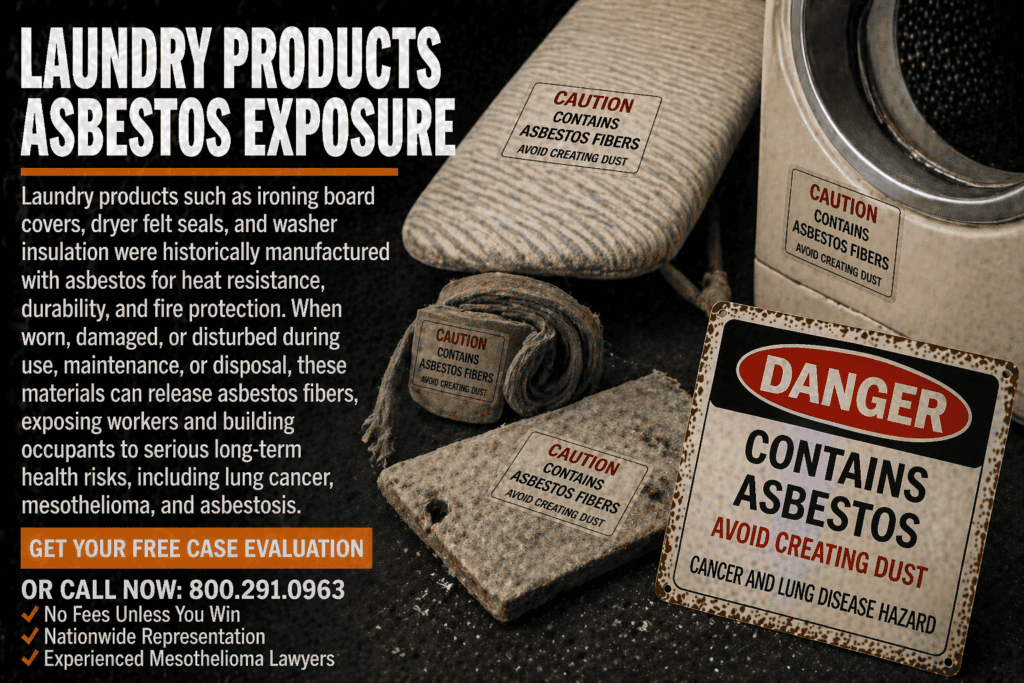
Laundry Products Asbestos Exposure
Historical asbestos concerns involving laundry products can arise in two different ways. Some older household products used around laundering and ironing may have contained asbestos or asbestos-containing heat-resistant materials, while contaminated work clothing could carry asbestos fibers home from occupational settings and expose the person handling the laundry.
Ordinary modern laundry products should not be assumed to contain asbestos. Product-specific questions depend on the exact appliance, textile, pad, cover, component, manufacturer, year and condition. Take-home exposure questions depend on whether clothing or other items were actually contaminated with asbestos fibers at work.
Potential exposure is most plausible when asbestos-containing textiles or appliance materials were worn, torn, cut, removed or disturbed, or when contaminated work clothes were shaken, sorted, handled or laundered at home.
Laundry Products and Historical Asbestos Concerns
Laundry-related asbestos exposure is different from many product exposures because the source may be either a household product or contamination brought home from a workplace. Federal agencies have specifically recognized contaminated clothing as a potential pathway for take-home asbestos exposure.
Historical consumer-product investigations also examined asbestos use in household appliances, including clothes washers and dryers, while older household guidance identified asbestos-containing ironing-board covers and other heat-resistant products as possible concerns.
The presence of an older washer, dryer, ironing board or laundry room does not by itself establish asbestos exposure. The specific material or contamination pathway must be identified.
Laundry and Household Products Associated With Asbestos
Depending on product, manufacturer and year, historical asbestos concerns in or around laundry activities may include:
- older ironing-board covers or pads containing asbestos;
- heat-resistant textile products used during ironing;
- asbestos-containing insulation or heat shields in some older appliances;
- electrical insulation or heat-resistant components inside certain appliances;
- dryer-related insulation, gaskets or heat-protection materials;
- asbestos-containing blankets, cloth or tape stored or used in utility areas;
- work clothes contaminated with asbestos fibers from occupational exposure; and
- laundry-room building materials containing asbestos, such as older flooring, wall materials or pipe insulation.
These examples do not mean that every older laundry appliance, ironing product or textile contained asbestos. Historical product identification is important.
Take-Home Asbestos and Laundering Work Clothes
Workers exposed to asbestos on the job could carry fibers home on contaminated clothing, shoes, tools or other belongings. Handling contaminated work clothes before washing could resuspend fibers and create a possible exposure pathway for the worker or another household member.
Potentially relevant laundry activities may include:
- shaking dusty work clothes before washing;
- sorting or folding contaminated garments;
- brushing dust from work clothing;
- carrying contaminated clothing through the home;
- washing dusty workwear with household laundry;
- cleaning laundry areas where contaminated clothing was handled; and
- repeatedly laundering work clothes over many years.
Take-home exposure is not established merely because someone did laundry for a worker. Evidence must connect the worker to asbestos-containing materials or an asbestos-contaminated workplace and show a plausible pathway by which fibers reached the clothing.
Laundered dusty work clothes or used older heat-resistant laundry products? If you are trying to reconstruct a possible asbestos exposure, Call 800.291.0963. Live chat available 24/7, 365 days a year. Submit Your Case.
Older Washers, Dryers and Appliance Components
Historical consumer-product investigations included clothes washers and dryers among appliance categories examined for possible asbestos use. In appliances that did contain asbestos, the concern would generally involve specific heat-resistant, insulating or electrical components rather than the entire machine.
Potentially relevant components could include:
- heat shields or insulating boards;
- gaskets or seals near heated components;
- electrical insulation;
- high-temperature wiring or protective coverings;
- insulation around dryer heating systems; and
- other heat-resistant internal materials.
Normal use of an intact appliance is different from repair, disassembly or replacement of an asbestos-containing component. Maintenance work that cuts, scrapes, removes or breaks such material could create a more direct exposure pathway.
Ironing-Board Covers, Pads and Heat-Resistant Textiles
Older consumer guidance identified asbestos-containing ironing-board covers as a household product of concern. Asbestos was valued for heat resistance, making it useful historically in some pads, cloths and textile products exposed to high temperatures.
Potential exposure would be more plausible if an asbestos-containing cover or pad became worn, frayed, torn, cut or deteriorated. Repeated handling of damaged textile material could release fibers more readily than leaving an intact product undisturbed.
Modern ironing-board covers and pads should not be assumed to contain asbestos. Brand, age, construction and surviving product evidence matter.
Evidence That May Identify Asbestos-Related Laundry Exposure
Exposure reconstruction is strongest when evidence identifies either the specific asbestos-containing laundry product or the occupational source of fibers brought home on clothing.
Useful evidence may include:
- manufacturer and brand names for washers, dryers or ironing products;
- model numbers, serial numbers and appliance manuals;
- product labels, packaging or historic catalogs;
- photographs of ironing-board covers, pads or appliances;
- repair records and replacement-part information;
- laboratory analysis of surviving textile or appliance material;
- the worker’s employer, job title and work location;
- records identifying asbestos-containing products used at the workplace;
- union, military or employment records;
- coworker statements describing dusty asbestos work;
- household witness statements describing laundering practices; and
- medical records documenting an asbestos-related diagnosis.
Medical records may establish diagnosis but do not by themselves establish that laundry handling, an appliance or an ironing product was the source of exposure.
Health Risks and Secondhand Exposure
Take-home asbestos exposure can occur when occupationally contaminated clothing or other items carry fibers into the household. A person who handled or laundered those clothes may have had an opportunity for exposure if fibers became airborne during sorting, shaking or washing preparation.
Asbestos exposure is associated with mesothelioma, asbestos-related lung cancer, asbestosis and other asbestos-related disease. Doing laundry for a worker, owning an older appliance or using an old ironing board does not diagnose disease and does not establish individual medical causation.
Anyone concerned about historical asbestos exposure should discuss the exposure history and health concerns with a qualified healthcare professional.
Legal and Compensation Considerations
Depending on the evidence and circumstances, legal options may be available to a person diagnosed with an asbestos-related disease after documented exposure involving contaminated work clothes or a specific asbestos-containing household product.
A legal review may consider the occupational asbestos source, product manufacturer, appliance or textile manufacturer where relevant, years of exposure, laundering practices, frequency and duration, diagnosis, jurisdiction and filing deadlines.
Identifying an employer, appliance brand or household product does not automatically establish asbestos exposure or legal responsibility. Liability is case-specific and depends on product evidence, exposure evidence and governing law.
Some matters may involve asbestos trust funds, but each trust has its own exposure and medical documentation requirements. Eligibility is not automatic, and compensation is not guaranteed.
Exposure that occurred decades ago does not by itself determine whether a claim is timely. Statutes of limitation and other deadlines vary by jurisdiction and circumstances and should be reviewed individually.
Laundry Products Asbestos Exposure FAQs
Can asbestos be brought home on work clothes?
Yes. Asbestos fibers can contaminate clothing in workplaces where asbestos is disturbed and may be carried into the home if contaminated garments are taken home.
Can laundering asbestos-contaminated clothes create exposure?
Potentially. Handling, shaking, sorting or preparing contaminated clothing for washing can resuspend fibers and create an inhalation pathway.
Did some ironing-board covers contain asbestos?
Yes. Historical consumer safety guidance identified asbestos-containing ironing-board covers as a product of concern.
Did old washers and dryers contain asbestos?
Some historical appliances were investigated for asbestos-containing heat-resistant or insulating components, but not every washer or dryer contained asbestos.
Does using an old dryer prove asbestos exposure?
No. Exposure depends on whether an asbestos-containing component was present and whether fibers were released or disturbed.
What jobs could lead to asbestos-contaminated work clothes?
Potential examples include shipyard, construction, insulation, refinery, power-plant, factory, boiler, maintenance and other jobs where asbestos-containing materials were disturbed.
What evidence can help document take-home laundry exposure?
Employment records, product records, coworker statements, household witness statements, work practices and medical records may all be relevant.
Does laundering a worker’s clothes automatically qualify someone for compensation?
No. Legal eligibility depends on evidence of occupational asbestos contamination, a plausible take-home pathway, diagnosis, jurisdiction and other case-specific facts. Compensation is not guaranteed.
For related information, see Consumer, Household & Commercial Products Asbestos Exposure, Textile Products Asbestos Exposure, Blanket Products Asbestos Exposure, Tape Products Asbestos Exposure, Electrical Products Asbestos Exposure, Heating Products Asbestos Exposure, and the main Asbestos Exposure in Products guide.
Get Help Reviewing Laundry-Related Asbestos Exposure
If you or a family member has been diagnosed with mesothelioma, asbestos-related lung cancer or another asbestos-related disease and you are trying to document asbestos-contaminated work clothes, an older ironing product, appliance component or another laundry-related exposure pathway, we can help organize the product and exposure history that may be relevant.
Call 800.291.0963 to discuss what you remember about the product, workplace, work clothing, laundering practices and years of possible exposure. Live chat is available 24/7, 365 days a year. Submit Your Case using the form below.
Prior exposure does not automatically establish a legal claim. Eligibility depends on the evidence, diagnosis, jurisdiction and other circumstances, and compensation is not guaranteed.
⚕️ Legal & Medical Information Disclaimer
This page provides general educational information and is not medical or legal advice. The information does not establish asbestos exposure, diagnosis, causation, liability, claim eligibility or compensation. Medical concerns should be discussed with a qualified healthcare professional, and legal questions should be reviewed with a qualified attorney.