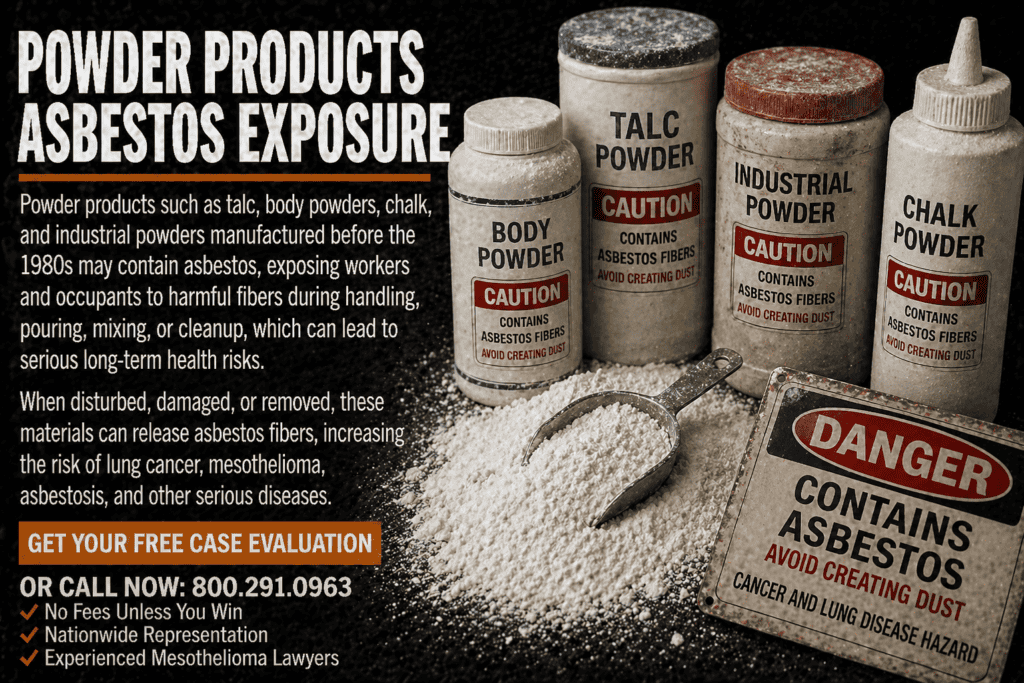
Powder Products Asbestos Exposure
Some historical powder-form products present asbestos concerns for two different reasons. Certain dry industrial or construction compounds may have intentionally used asbestos as a filler or reinforcing ingredient, while some talc products have raised concerns about contamination with asbestos because talc and asbestos can occur in close geological proximity.
Ordinary powders should not be assumed to contain asbestos. Product type, raw-material source, manufacturer, formulation, production period, testing history and actual use all matter.
Potential exposure is most plausible when an asbestos-containing or asbestos-contaminated powder becomes airborne during pouring, mixing, shaking, application, cleanup or other dusty handling.
Powder Products and Historical Asbestos Concerns
Asbestos fibers were historically incorporated into some dry mixtures and compound formulations because they could provide reinforcement, heat resistance or other physical properties. Dry powder products can create particular inhalation concerns because fine particles may become airborne during normal handling or mixing.
Another distinct issue involves talc. Talc itself is not asbestos, but naturally occurring talc deposits can be located near asbestos deposits. This creates a potential contamination concern that depends on the mine source, processing and product testing.
The label “powder product” is therefore broad. Exposure reconstruction should identify the exact product rather than assuming all powders posed the same risk.
Talc Products and Asbestos Contamination Concerns
Talc is a mineral used historically in personal-care, cosmetic, industrial and manufacturing products. Talc and asbestos are different minerals, but they can occur near one another geologically.
For that reason, some historical talc products have been investigated for possible asbestos contamination. Whether a specific talc product contained asbestos depends on its source, processing, manufacturing controls and testing.
Potentially relevant talc-containing product categories can include cosmetic powders, body powders, industrial talc and talc used as a filler in manufactured goods. Product category alone does not establish contamination.
Testing records, mine-source information, product formulation records and laboratory analysis can be important when evaluating a specific talc product.
Dry Compounds and Powdered Asbestos-Containing Materials
Historical dry construction and industrial compounds could also create asbestos concerns. Depending on manufacturer and year, asbestos may have been used in certain dry mixes or fillers that were combined with water or another binder before application.
Potential examples may include:
- some historical joint compounds;
- patching and repair compounds;
- certain spackling materials;
- specialty coatings supplied as dry mixes;
- industrial fillers and reinforcing powders;
- some heat-resistant compounds;
- powdered ingredients used in plastics or resins; and
- other dry formulations in which asbestos was intentionally added.
These examples do not mean every product in the category contained asbestos. Manufacturer, formulation and production date matter.
How Asbestos Exposure Could Occur From Powder Products
A potential inhalation pathway exists when asbestos fibers are present in a powder and handling causes them to become airborne.
Potentially relevant activities may include:
- opening bags, cans or containers of dry product;
- pouring or scooping powder;
- mixing dry compound with water or another liquid;
- shaking cosmetic or body powder into the air;
- measuring industrial powders during manufacturing;
- dumping bags into mixers or hoppers;
- sweeping spilled powder;
- cleaning dusty equipment or work areas;
- emptying collection systems or dust-control equipment; and
- handling contaminated clothing or packaging.
Actual exposure depends on whether asbestos was present, fiber concentration, frequency and duration of use, proximity, ventilation and work practices.
Used historical talc, dry compounds or powdered industrial products? If you are trying to identify a possible asbestos-containing or asbestos-contaminated product, Call 800.291.0963. Live chat available 24/7, 365 days a year. Submit Your Case.
Workers and Settings Where Powder Exposure May Occur
Workers who handled dry asbestos-containing compounds or potentially contaminated mineral powders may have had an opportunity for inhalation exposure. A job title alone does not establish exposure.
Potentially relevant workers may include drywall workers, plasterers, painters, construction laborers, factory workers, compound mixers, packaging workers, cosmetic-product workers, miners, mill workers, maintenance employees and cleanup crews.
Possible settings include construction sites, factories, mineral-processing facilities, warehouses, cosmetic manufacturing plants, industrial mixing operations and home renovation projects.
Consumers may also be relevant in some situations involving repeated use of a specific historical powder product, but product identification and contamination evidence are essential.
Evidence That May Identify Asbestos-Related Powder Exposure
Exposure reconstruction is strongest when evidence identifies the exact powder, manufacturer, formulation, source material, production period and use pattern.
Useful evidence may include:
- product brand and manufacturer;
- containers, labels and packaging;
- lot, batch or formulation numbers;
- purchase receipts and invoices;
- historic catalogs and technical literature;
- ingredient or formulation records;
- mine-source or raw-material records for talc;
- laboratory testing of product samples;
- quality-control or contamination-testing records;
- employment, union or military records;
- coworker or household witness statements; and
- medical records documenting an asbestos-related diagnosis.
Medical and pathology records may establish diagnosis but do not identify which powder product, if any, was the asbestos source.
Secondhand Exposure and Health Risks
If handling an asbestos-containing powder generated fibers that accumulated on clothing, shoes, tools, containers or belongings, asbestos could potentially have been carried into another environment. This is a possible secondhand pathway, but household relationship alone does not establish exposure.
Asbestos exposure is associated with mesothelioma, asbestos-related lung cancer, asbestosis and other asbestos-related disease. Using talc, body powder, construction compound or another powder does not diagnose disease and does not establish individual medical causation.
Anyone concerned about historical exposure should discuss their product history and health concerns with a qualified healthcare professional.
Legal and Compensation Considerations
Depending on the evidence and circumstances, legal options may be available to a person diagnosed with an asbestos-related disease after documented exposure to a specific asbestos-containing or asbestos-contaminated powder product.
A legal review may consider the product manufacturer, distributor or supplier, raw-material source, production period, frequency and duration of use, exposure pathway, diagnosis, jurisdiction and filing deadlines.
Identifying a talc brand, dry compound, employer or product category does not automatically establish asbestos contamination or legal responsibility. Liability is case-specific and depends on product evidence, exposure evidence and governing law.
Some matters may involve asbestos trust funds, but each trust has its own exposure and medical documentation requirements. Eligibility is not automatic, and compensation is not guaranteed.
Exposure that occurred decades ago does not by itself determine whether a claim is timely. Statutes of limitation and other deadlines vary by jurisdiction and circumstances and should be reviewed individually.
Powder Products Asbestos Exposure FAQs
Did some historical powder products contain asbestos?
Yes. Certain dry industrial and construction compounds historically used asbestos as an ingredient, depending on manufacturer, formulation and year.
Is talc the same thing as asbestos?
No. Talc and asbestos are different minerals, although they can occur near one another geologically.
Can talc be contaminated with asbestos?
Potentially. Contamination depends on the talc source, mining conditions, processing and product testing.
Did all body powders contain asbestos?
No. A body powder or cosmetic powder should not be assumed to contain asbestos without product-specific evidence.
Can mixing dry joint compound release asbestos fibers?
Potentially, if the historical dry compound contained asbestos. Pouring and mixing can create airborne dust.
Can sweeping spilled powder increase exposure?
Potentially. Dry sweeping can resuspend fine particles and fibers when asbestos is present.
What evidence can identify asbestos in a powder product?
Useful evidence may include product containers, formulation records, lot information, raw-material records, laboratory testing, receipts and witness statements.
Does using an old powder product automatically qualify someone for compensation?
No. Legal eligibility depends on product identification, evidence of asbestos content or contamination, exposure history, diagnosis, jurisdiction and other case-specific facts. Compensation is not guaranteed.
For related information, see Consumer, Household & Commercial Products Asbestos Exposure, Spackling Products Asbestos Exposure, Drywall Joint Compound Asbestos Exposure, Coating Products Asbestos Exposure, Plastic Products Asbestos Exposure, Resin Products Asbestos Exposure, and the main Asbestos Exposure in Products guide.
Get Help Reviewing Powder Product Exposure
If you or a family member has been diagnosed with mesothelioma, asbestos-related lung cancer or another asbestos-related disease and you are trying to identify a historical talc product, dry compound, industrial powder or other powder-form material that may have contained or been contaminated with asbestos, we can help organize the product and exposure history that may be relevant.
Call 800.291.0963 to discuss what you remember about the product, manufacturer, years of use, work setting and possible exposure pathway. Live chat is available 24/7, 365 days a year. Submit Your Case using the form below.
Prior exposure does not automatically establish a legal claim. Eligibility depends on the evidence, diagnosis, jurisdiction and other circumstances, and compensation is not guaranteed.
⚕️ Legal & Medical Information Disclaimer
This page provides general educational information and is not medical or legal advice. The information does not establish asbestos exposure, diagnosis, causation, liability, claim eligibility or compensation. Medical concerns should be discussed with a qualified healthcare professional, and legal questions should be reviewed with a qualified attorney.