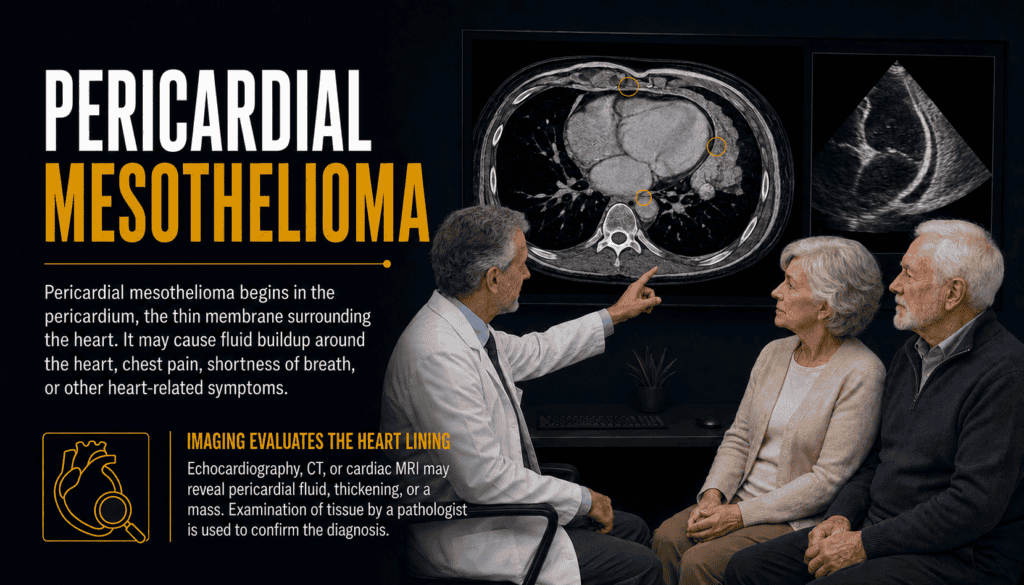
🫀 What Is Pericardial Mesothelioma?
Understanding Pericardial Mesothelioma: From Exposure to Legal Help
Pericardial mesothelioma is an extremely rare cancer that forms in the lining around the heart (pericardium). It is caused by asbestos fibers that are inhaled or swallowed, eventually reaching the pericardium and causing chronic irritation and cellular damage. It accounts for less than 1% of all mesothelioma cases, and most diagnoses occur during autopsy or surgery.
Source: American Cancer Society
🛠️ How Do People Get Pericardial Mesothelioma? (Causes & Progression)
The cause of pericardial mesothelioma is exposure to asbestos — typically through inhalation or ingestion of airborne fibers on the job or at home.
Here’s how exposure turns into disease:
Asbestos materials are disturbed
Construction, ship repair, or product use releases asbestos dust from insulation, brake linings, and equipment.
Fibers are inhaled or swallowed
Sharp asbestos fibers are taken into the body unknowingly, often through breathing in contaminated environments.
Fibers migrate to the pericardium
Fibers travel via the bloodstream or lymphatic system to the heart lining, embedding themselves in pericardial tissue.
Dormant for decades
The fibers cause no immediate symptoms but silently inflame and damage the pericardial lining over 20–50 years.
Symptoms eventually develop
Chest pain, fatigue, and heart irregularities appear as fluid builds up and tumors begin forming around the heart.
Mesothelioma is diagnosed
Due to its location, pericardial mesothelioma is typically confirmed during surgery, imaging, or autopsy.
🏗️ Common Sources of Exposure:
-
Shipyards and Navy vessels
-
Power plants and mechanical rooms
-
Oil refineries and chemical plants
-
Construction and demolition sites
-
Auto shops (brake and clutch exposure)
Even small exposures decades earlier can lead to this rare cancer.
Source: OSHA – Occupational Safety and Health Administration
⚠️ Early Signs and Symptoms
Pericardial mesothelioma symptoms mimic other cardiac conditions:
-
Chest pain or tightness
-
Irregular heartbeat (arrhythmia)
-
Fatigue or shortness of breath
-
Cough or difficulty breathing
-
Heart murmurs
-
Fluid buildup around the heart (pericardial effusion)
Symptoms often appear suddenly and are frequently misdiagnosed.
🧪 How Pericardial Mesothelioma Diagnosed
Because it affects the heart, diagnosis is more complex:
-
Imaging: Echocardiograms, CT scans, and MRIs detect thickening or fluid around the heart
-
Fluid Testing: Pericardiocentesis may drain and test fluid
-
Biopsy: Often occurs during surgery or autopsy
-
Pathology: Identifies mesothelioma cell types
Source: NIH Study
📊 Stages of Pericardial Mesothelioma
No formal staging system exists, but doctors assess the extent:
-
Early Stage: Tumors localized to the pericardium and possibly operable, although rarely caught this early.
-
Intermediate Stage: Tumors begin infiltrating nearby heart tissues and pericardial space.
-
Advanced Stage: Cancer spreads to the lungs, chest wall, or other organs, limiting treatment to symptom control.
Most cases are diagnosed in later stages due to subtle early symptoms.
💉 Treatment Options for Pericardial Mesothelioma
Treatment is difficult due to the heart’s sensitivity and tumor location:
Surgery:
Pericardiectomy may remove part or all of the pericardium to relieve pressure and improve heart function.
Chemotherapy:
Cisplatin and Pemetrexed may help slow tumor growth when surgery isn’t possible.
Radiation Therapy:
Rarely used because of potential heart damage but may help reduce tumor size in select cases.
Palliative Care:
Used to reduce fluid buildup and manage pain or breathing difficulties.
Clinical Trials:
Few exist due to rarity but may explore targeted therapy or minimally invasive approaches.
📈 Life Expectancy & Survival Rates for Pericardial Mesothelioma
-
Average survival: 6–12 months
-
With surgery & chemo: Up to 2 years in rare cases
-
Without treatment: Often less than 6 months
-
Epithelioid subtype fares slightly better
Source: American Cancer Society
💰 Cost of Treatment for Pericardial Mesothelioma
Treatment can cost between $50,000–$300,000+:
-
Surgery: $40K–$100K
-
Chemotherapy: $30K–$70K
-
ICU/hospitalization costs: High due to heart monitoring
-
Palliative care, imaging, prescriptions
Legal aid can help families with these steep medical expenses.
⚖️ Legal Help and Compensation
Even rare cases like pericardial mesothelioma qualify for legal support:
-
Asbestos Trust Funds – Part of $30+ billion reserve
-
Lawsuits or Settlements – Common verdicts exceed $1M
-
VA Claims – For military asbestos exposure
-
Wrongful Death Claims – For families after loss
MesotheliomaHelp.org – Legal Guide
📚 Lawsuit Examples for Pericardial Mesothelioma
Navy Veteran — $5.8 Million Settlement (2020)
Details: Diagnosed with pericardial mesothelioma after engine room exposure.
Outcome: Compensation awarded from ship insulation manufacturers.
Source: Mealey’s Litigation Report
Auto Mechanic — $4.2 Million Verdict (2019)
Details: Exposed to brake linings and asbestos dust during decades of auto work.
Outcome: Jury found product manufacturer liable for failure to warn.
Source: HarrisMartin Publishing
Boiler Room Operator — $3.9 Million Verdict (2021)
Details: Developed pericardial mesothelioma after working around asbestos-insulated turbines.
Outcome: Jury held multiple equipment suppliers responsible.
Source: VerdictSearch
Construction Worker — $4.7 Million Verdict (2018)
Details: Exposure occurred during demolition and pipe insulation removal.
Outcome: Found liable parties responsible for occupational exposure.
Source: Lexis Legal News
School Maintenance Staff — $3.5 Million Verdict (2022)
Details: Diagnosed after years of work around aging HVAC and boiler systems in public schools.
Outcome: Contractor and supplier held jointly liable.
Source: National Law Review
🔬 Research and Ongoing Studies
-
NIH Case Studies: Documenting rare pericardial cases for improved diagnosis
-
Liquid Biopsy Research: Exploring early blood-based detection
-
Immunotherapy Trials: Testing effectiveness in rare tumor types
-
Genetic Profiling: Identifying targetable mutations
Find current trials: ClinicalTrials.gov
📍 Final Prognosis
There is no cure, but some patients achieve comfort and life extension through surgery and supportive care.
Due to the disease’s rarity, expert consultation and early symptom recognition are crucial. Legal aid can ease financial burdens.
👨⚖️ How a Mesothelioma Lawyer Can Help
An experienced mesothelioma attorney can help by:
-
Researching past asbestos exposure and job history
-
Filing lawsuits or asbestos trust claims for rare mesothelioma types
-
Assisting families of deceased workers with wrongful death claims
-
Navigating deadlines and state-specific procedures
-
Charging no fee unless your case wins
📞 Free Legal Help for Pericardial Mesothelioma Victims
If you or a loved one were exposed to asbestos and now face pericardial mesothelioma, you may qualify for major financial compensation.
Call Now: 800.291.0963
• No upfront costs
• No fees unless we win
• Rare cancer legal support included
• Help for veterans, workers, and families
Or request help online 24/7