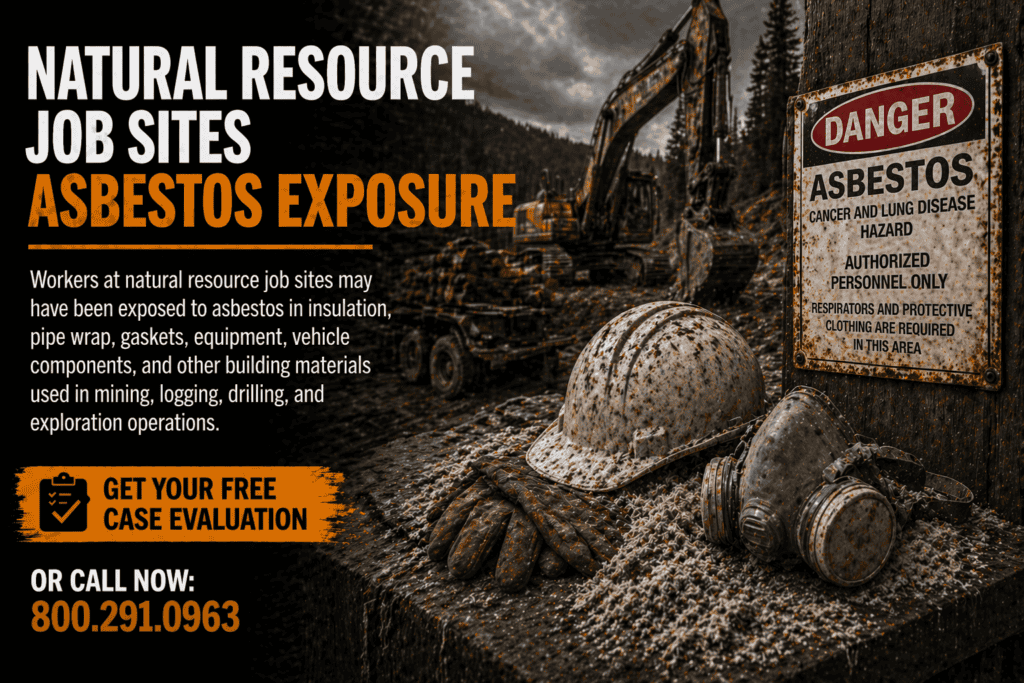
🌲 Natural Resource Job Sites Asbestos Exposure
People who worked at natural resource extraction and processing sites sometimes encountered asbestos-containing insulation, seals, friction materials or older building products during repairs and demolition. If you have been diagnosed with mesothelioma or asbestos-related lung cancer, a detailed history of actual work and materials can help clarify potential exposure.
This guide explains the distinct areas, workers and equipment associated with natural resource extraction and processing sites, along with medical information, evidence, compensation options and questions to ask qualified professionals. A job title or site name alone does not prove exposure or legal responsibility.
🏭 Where Asbestos Was Found
Timber processing workers can find more information about boilers, kilns, and machinery in Timber Mill Job Site Asbestos Exposure. This guide covers relevant asbestos-containing equipment, affected work, and options for workers and families after a diagnosis.
Agricultural maintenance and processing facilities are covered in Agricultural Sites Asbestos Exposure. The page explains relevant work tasks, asbestos-containing equipment, or available assistance for affected workers and families.
For pulp-processing boilers and maintenance shops, Pulp Mill Job Sites Asbestos Exposure. The page explains relevant work tasks, asbestos-containing equipment, or available assistance for affected workers and families.
Timber and Sawmill Boiler Rooms
At timber and sawmill boiler rooms, the relevant question is which insulation, machinery components or building products were actually installed during the period of employment. Work orders, drawings and supplier specifications can distinguish an asbestos-containing product from a non-asbestos substitute. Workers should identify who performed any removal, how debris was handled, and whether adjacent spaces remained occupied.
For natural resource extraction and processing sites, dates and task descriptions matter more than the age of the site alone. An exposure chronology should distinguish ordinary operation, scheduled servicing, major overhaul and demolition. Airflow, enclosure and cleanup methods can change the potential for bystander contact.
Quarry and Mineral Processing Workshops
At quarry and mineral processing workshops, the relevant question is which insulation, machinery components or building products were actually installed during the period of employment. Work orders, drawings and supplier specifications can distinguish an asbestos-containing product from a non-asbestos substitute. Workers should identify who performed any removal, how debris was handled, and whether adjacent spaces remained occupied.
For natural resource extraction and processing sites, dates and task descriptions matter more than the age of the site alone. An exposure chronology should distinguish ordinary operation, scheduled servicing, major overhaul and demolition. Airflow, enclosure and cleanup methods can change the potential for bystander contact.
Oil and Gas Field Compressor Stations
At oil and gas field compressor stations, the relevant question is which insulation, machinery components or building products were actually installed during the period of employment. Work orders, drawings and supplier specifications can distinguish an asbestos-containing product from a non-asbestos substitute. Workers should identify who performed any removal, how debris was handled, and whether adjacent spaces remained occupied.
For natural resource extraction and processing sites, dates and task descriptions matter more than the age of the site alone. An exposure chronology should distinguish ordinary operation, scheduled servicing, major overhaul and demolition. Airflow, enclosure and cleanup methods can change the potential for bystander contact.
Pulp and Wood-Products Process Buildings
At pulp and wood-products process buildings, the relevant question is which insulation, machinery components or building products were actually installed during the period of employment. Work orders, drawings and supplier specifications can distinguish an asbestos-containing product from a non-asbestos substitute. Workers should identify who performed any removal, how debris was handled, and whether adjacent spaces remained occupied.
For natural resource extraction and processing sites, dates and task descriptions matter more than the age of the site alone. An exposure chronology should distinguish ordinary operation, scheduled servicing, major overhaul and demolition. Airflow, enclosure and cleanup methods can change the potential for bystander contact.
Remote Power Generation and Maintenance Camps
At remote power generation and maintenance camps, the relevant question is which insulation, machinery components or building products were actually installed during the period of employment. Work orders, drawings and supplier specifications can distinguish an asbestos-containing product from a non-asbestos substitute. Workers should identify who performed any removal, how debris was handled, and whether adjacent spaces remained occupied.
For natural resource extraction and processing sites, dates and task descriptions matter more than the age of the site alone. An exposure chronology should distinguish ordinary operation, scheduled servicing, major overhaul and demolition. Airflow, enclosure and cleanup methods can change the potential for bystander contact.
Natural resource operations span forestry, quarrying, extraction and primary processing. Historical asbestos risk generally depends on the machinery and building materials actually present; naturally occurring mineral fibers are a separate site-specific question.
The goal is to identify a particular material, a particular disturbance and a particular worker rather than infer exposure from a broad industry label.
👷 Workers and Daily Jobs
Mining crews and mine maintenance workers can review Mining Job Sites Asbestos Exposure. This guide covers relevant asbestos-containing equipment, affected work, and options for workers and families after a diagnosis.
For boiler maintenance, Boilermakers Asbestos Exposure. The page explains relevant work tasks, asbestos-containing equipment, or available assistance for affected workers and families.
Pipefitters working around steam systems can review Pipefitters Asbestos Exposure. The page explains relevant work tasks, asbestos-containing equipment, or available assistance for affected workers and families.
Machinery repair personnel can find trade-specific information in Millwrights Asbestos Exposure. The page explains relevant work tasks, asbestos-containing equipment, or available assistance for affected workers and families.
Forestry and agricultural workers can review Agricultural, Forestry & Natural Resource Workers Asbestos Exposure. The page explains relevant work tasks, asbestos-containing equipment, or available assistance for affected workers and families.
For extraction and refinery occupations, Mining, Oil, Gas & Refinery Workers Asbestos Exposure. The page explains relevant work tasks, asbestos-containing equipment, or available assistance for affected workers and families.
Sawmill and Processing Operators
Sawmill and processing operators could encounter suspect materials while maintaining equipment, entering repair zones or working near other trades. The worker’s specific tasks, shifts and proximity to the disturbance are more useful than the occupational title alone. Employment files, union records and coworkers may help establish these details.
Where a maintenance event is remembered, record the equipment identifier, product appearance without handling it, employer or contractor involved, and whether dust was visible. A former worker should distinguish firsthand observation from later recollection or speculation.
Field Mechanics and Equipment Technicians
Field mechanics and equipment technicians could encounter suspect materials while maintaining equipment, entering repair zones or working near other trades. The worker’s specific tasks, shifts and proximity to the disturbance are more useful than the occupational title alone. Employment files, union records and coworkers may help establish these details.
Where a maintenance event is remembered, record the equipment identifier, product appearance without handling it, employer or contractor involved, and whether dust was visible. A former worker should distinguish firsthand observation from later recollection or speculation.
Boiler Operators and Stationary Engineers
Boiler operators and stationary engineers could encounter suspect materials while maintaining equipment, entering repair zones or working near other trades. The worker’s specific tasks, shifts and proximity to the disturbance are more useful than the occupational title alone. Employment files, union records and coworkers may help establish these details.
Where a maintenance event is remembered, record the equipment identifier, product appearance without handling it, employer or contractor involved, and whether dust was visible. A former worker should distinguish firsthand observation from later recollection or speculation.
Pipefitters and Insulators
Pipefitters and insulators could encounter suspect materials while maintaining equipment, entering repair zones or working near other trades. The worker’s specific tasks, shifts and proximity to the disturbance are more useful than the occupational title alone. Employment files, union records and coworkers may help establish these details.
Where a maintenance event is remembered, record the equipment identifier, product appearance without handling it, employer or contractor involved, and whether dust was visible. A former worker should distinguish firsthand observation from later recollection or speculation.
Contractors and Transport Maintenance Crews
Contractors and transport maintenance crews could encounter suspect materials while maintaining equipment, entering repair zones or working near other trades. The worker’s specific tasks, shifts and proximity to the disturbance are more useful than the occupational title alone. Employment files, union records and coworkers may help establish these details.
Where a maintenance event is remembered, record the equipment identifier, product appearance without handling it, employer or contractor involved, and whether dust was visible. A former worker should distinguish firsthand observation from later recollection or speculation.
Direct handling and nearby work are separate exposure scenarios. The same job title at two facilities can reflect very different assignments.
🧱 Products and Equipment
For farm machinery manufacturing and maintenance, see Agricultural Equipment Manufacturing Job Sites Asbestos Exposure. This guide covers relevant asbestos-containing equipment, affected work, and options for workers and families after a diagnosis.
Workers who maintained extraction equipment can review Construction, Demolition & Mining Machinery Asbestos Exposure. The page explains relevant work tasks, asbestos-containing equipment, or available assistance for affected workers and families.
For valve packing and sealing components, Valve Products Asbestos Exposure. The page explains relevant work tasks, asbestos-containing equipment, or available assistance for affected workers and families.
Pump components used at remote sites are addressed in Pump Products Asbestos Exposure. The page explains relevant work tasks, asbestos-containing equipment, or available assistance for affected workers and families.
Historical asbestos was used in certain heat-resistant, sealing and friction applications. The categories below are prompts for documentation, not a claim that each product at this workplace contained asbestos.
| Material or equipment category | Evidence to examine |
|---|---|
| Boiler and steam-pipe insulation | Equipment manuals, specifications and installation dates |
| Pump and valve packing | Replacement invoices, part numbers and vendor catalogs |
| Compressor gaskets and seals | Maintenance logs and photographs |
| Heavy equipment brake and clutch linings | Building surveys and laboratory reports |
| Older building and roofing materials | Contractor records and historical procurement files |
Boiler and Steam-Pipe Insulation
For boiler and steam-pipe insulation, identify manufacturer, product model, date of installation, and any replacement or removal. Products that served similar functions sometimes used different formulations. Documentary evidence or qualified material analysis is necessary to determine asbestos content.
Pump and Valve Packing
For pump and valve packing, identify manufacturer, product model, date of installation, and any replacement or removal. Products that served similar functions sometimes used different formulations. Documentary evidence or qualified material analysis is necessary to determine asbestos content.
Compressor Gaskets and Seals
For compressor gaskets and seals, identify manufacturer, product model, date of installation, and any replacement or removal. Products that served similar functions sometimes used different formulations. Documentary evidence or qualified material analysis is necessary to determine asbestos content.
Do not scrape, break or sample suspect materials yourself. A qualified professional can advise on identification and safe handling.
🌫️ How Exposure Occurred
Direct Maintenance and Removal
Removal of insulation, old gaskets, packing or friction components can disturb fibers when those materials actually contain asbestos.
At natural resource extraction and processing sites, establish the specific date and location of the task, who performed it, the material disturbed and the time spent nearby. An old structure or a dusty job alone does not identify asbestos. Photographs, permits and witness accounts may help distinguish asbestos-containing materials from other industrial dust.
Bystander Work
Dust from a nearby task can travel into adjoining work areas, depending on ventilation, distance, duration and controls.
At natural resource extraction and processing sites, establish the specific date and location of the task, who performed it, the material disturbed and the time spent nearby. An old structure or a dusty job alone does not identify asbestos. Photographs, permits and witness accounts may help distinguish asbestos-containing materials from other industrial dust.
Shutdowns and Renovations
Outages, building alterations and equipment replacements can bring multiple employers into a common workspace.
At natural resource extraction and processing sites, establish the specific date and location of the task, who performed it, the material disturbed and the time spent nearby. An old structure or a dusty job alone does not identify asbestos. Photographs, permits and witness accounts may help distinguish asbestos-containing materials from other industrial dust.
Cleanup and Clothing
Historical dry sweeping or contaminated work clothing could redistribute dust, creating a different exposure pathway from the original repair.
At natural resource extraction and processing sites, establish the specific date and location of the task, who performed it, the material disturbed and the time spent nearby. An old structure or a dusty job alone does not identify asbestos. Photographs, permits and witness accounts may help distinguish asbestos-containing materials from other industrial dust.
Different exposures must be evaluated separately, particularly at sites where silica, metal fumes, diesel emissions or other hazards were also present.
🩺 Mesothelioma After Workplace Exposure
If you have received a mesothelioma diagnosis after working in this industry, see Mesothelioma Diagnosis for information about testing, pathology, specialist care, and the next questions to ask your medical team.
Diagnosis and Latency
Mesothelioma is a cancer of the mesothelial lining, commonly affecting the pleura. Asbestos is an established major cause, and diagnosis can follow exposure by decades. Specialist evaluation may include imaging, biopsy and pathology review. A diagnosis establishes a medical condition, but does not by itself identify a responsible product, company or workplace.
People who worked at natural resource extraction and processing sites can preserve employment histories alongside medical records. Record dates, departments, specific products and any documented disturbances. The medical team addresses diagnosis and treatment; qualified counsel separately evaluates legal evidence and deadlines.
Medical Records and Pathology
Mesothelioma is a cancer of the mesothelial lining, commonly affecting the pleura. Asbestos is an established major cause, and diagnosis can follow exposure by decades. Specialist evaluation may include imaging, biopsy and pathology review. A diagnosis establishes a medical condition, but does not by itself identify a responsible product, company or workplace.
People who worked at natural resource extraction and processing sites can preserve employment histories alongside medical records. Record dates, departments, specific products and any documented disturbances. The medical team addresses diagnosis and treatment; qualified counsel separately evaluates legal evidence and deadlines.
Linking a Work History to Potential Exposure
Mesothelioma is a cancer of the mesothelial lining, commonly affecting the pleura. Asbestos is an established major cause, and diagnosis can follow exposure by decades. Specialist evaluation may include imaging, biopsy and pathology review. A diagnosis establishes a medical condition, but does not by itself identify a responsible product, company or workplace.
People who worked at natural resource extraction and processing sites can preserve employment histories alongside medical records. Record dates, departments, specific products and any documented disturbances. The medical team addresses diagnosis and treatment; qualified counsel separately evaluates legal evidence and deadlines.
🫁 Asbestos-Related Lung Cancer
Workers and families dealing with an asbestos-related lung cancer diagnosis can read Asbestos Lung Cancer Lawsuits to understand potential legal options, filing deadlines, and the records that may help support a claim.
Asbestos and Lung Cancer
Asbestos is an established cause of lung cancer. Smoking is a separate risk factor, and combined asbestos exposure and smoking can increase risk. A smoking history does not automatically exclude asbestos as a contributor. Occupational exposures other than asbestos should also be disclosed to treating clinicians.
The diagnosis and possible causes require individualized medical evaluation, including pathology and relevant imaging. A separate legal assessment considers evidence, applicable law and potentially responsible products. Neither diagnosis nor employment in an older industry guarantees a claim.
Smoking and Other Exposures
Asbestos is an established cause of lung cancer. Smoking is a separate risk factor, and combined asbestos exposure and smoking can increase risk. A smoking history does not automatically exclude asbestos as a contributor. Occupational exposures other than asbestos should also be disclosed to treating clinicians.
The diagnosis and possible causes require individualized medical evaluation, including pathology and relevant imaging. A separate legal assessment considers evidence, applicable law and potentially responsible products. Neither diagnosis nor employment in an older industry guarantees a claim.
Medical and Legal Questions
Asbestos is an established cause of lung cancer. Smoking is a separate risk factor, and combined asbestos exposure and smoking can increase risk. A smoking history does not automatically exclude asbestos as a contributor. Occupational exposures other than asbestos should also be disclosed to treating clinicians.
The diagnosis and possible causes require individualized medical evaluation, including pathology and relevant imaging. A separate legal assessment considers evidence, applicable law and potentially responsible products. Neither diagnosis nor employment in an older industry guarantees a claim.
📋 Work History and Evidence
Identify the resource handled, geographic location, processing plant, field equipment, dates and any geological or industrial hygiene testing. Do not assume a quarry or forest operation contained asbestos simply because it involved dust.
| Record | Potential use |
|---|---|
| Employer and payroll history | Places the worker at a location and date |
| Job descriptions and shift rosters | Clarifies assignments and nearby activities |
| Maintenance and contractor logs | Identifies equipment overhauls and removal work |
| Product invoices and manuals | May identify manufacturers and asbestos content |
| Coworker or supervisor accounts | Describes particular events and proximity |
Building a Reliable Chronology
A useful timeline names each site, department, employer, contractor and equipment area. Describe firsthand observations separately from facts established by documents. Historical records may survive through unions, archives, vendors or former coworkers even when the operation has closed.
Preserve originals, identify the source of each record, and do not guess about unknown product names. Detailed descriptions of a specific repair, including who performed it and when, are more informative than general statements about a dusty workplace.
Records After Closures or Ownership Changes
A useful timeline names each site, department, employer, contractor and equipment area. Describe firsthand observations separately from facts established by documents. Historical records may survive through unions, archives, vendors or former coworkers even when the operation has closed.
Preserve originals, identify the source of each record, and do not guess about unknown product names. Detailed descriptions of a specific repair, including who performed it and when, are more informative than general statements about a dusty workplace.
Preserving Evidence Without Assumptions
A useful timeline names each site, department, employer, contractor and equipment area. Describe firsthand observations separately from facts established by documents. Historical records may survive through unions, archives, vendors or former coworkers even when the operation has closed.
Preserve originals, identify the source of each record, and do not guess about unknown product names. Detailed descriptions of a specific repair, including who performed it and when, are more informative than general statements about a dusty workplace.
⚖️ Compensation and Legal Options
Personal-Injury and Wrongful-Death Lawsuits
Possible legal avenues depend on the diagnosis, evidence of exposure to particular products, potentially responsible parties and the applicable jurisdiction. A lawsuit and an asbestos bankruptcy trust claim are different procedures with distinct proof requirements. Wrongful-death claims have additional legal rules. No outcome or payment is guaranteed.
Veterans may also have options described in VA Benefits & Claims for Veterans with Mesothelioma. The page explains relevant work tasks, asbestos-containing equipment, or available assistance for affected workers and families.
When an asbestos-containing product and manufacturer can be identified, What Are Asbestos Trust Funds?. The page explains relevant work tasks, asbestos-containing equipment, or available assistance for affected workers and families.
For a history involving natural resource extraction and processing sites, identify employers and worksites across all relevant years, not only the most recent job. State filing deadlines vary and may be short. Qualified counsel can explain which records matter, whether claims interact, and whether a particular option is available.
Asbestos Bankruptcy Trust Claims
Possible legal avenues depend on the diagnosis, evidence of exposure to particular products, potentially responsible parties and the applicable jurisdiction. A lawsuit and an asbestos bankruptcy trust claim are different procedures with distinct proof requirements. Wrongful-death claims have additional legal rules. No outcome or payment is guaranteed.
For a history involving natural resource extraction and processing sites, identify employers and worksites across all relevant years, not only the most recent job. State filing deadlines vary and may be short. Qualified counsel can explain which records matter, whether claims interact, and whether a particular option is available.
Filing Deadlines and Overlapping Exposure Histories
Possible legal avenues depend on the diagnosis, evidence of exposure to particular products, potentially responsible parties and the applicable jurisdiction. A lawsuit and an asbestos bankruptcy trust claim are different procedures with distinct proof requirements. Wrongful-death claims have additional legal rules. No outcome or payment is guaranteed.
For a history involving natural resource extraction and processing sites, identify employers and worksites across all relevant years, not only the most recent job. State filing deadlines vary and may be short. Qualified counsel can explain which records matter, whether claims interact, and whether a particular option is available.
Preparing for a Qualified Legal Consultation
Possible legal avenues depend on the diagnosis, evidence of exposure to particular products, potentially responsible parties and the applicable jurisdiction. A lawsuit and an asbestos bankruptcy trust claim are different procedures with distinct proof requirements. Wrongful-death claims have additional legal rules. No outcome or payment is guaranteed.
For a history involving natural resource extraction and processing sites, identify employers and worksites across all relevant years, not only the most recent job. State filing deadlines vary and may be short. Qualified counsel can explain which records matter, whether claims interact, and whether a particular option is available.
📚 Confirmed Sources
These sources support general occupational and medical information; they do not establish exposure or eligibility for any individual person.
- OSHA — Asbestos Overview
- OSHA — General Industry Asbestos Standard
- NCI — Asbestos Exposure and Cancer Risk
❓ Frequently Asked Questions
Did Every Natural Resource Extraction and Processing Site Contain Asbestos?
No. Material content depended on equipment, building products and installation dates. Specific documents or professional testing are needed.
Could Someone Who Did Not Handle Insulation Have Been Exposed?
Nearby work can be relevant when a confirmed asbestos-containing product was disturbed and fibers reached an occupied area.
What If the Employer or Facility No Longer Exists?
Unions, archives, contractors, manufacturers and former coworkers may retain records that help reconstruct the work history.
Does a Diagnosis Automatically Establish a Legal Claim?
No. Diagnosis, exposure evidence, product identification, applicable law and filing deadlines require individualized assessment.
🧭 Summary
For natural resource extraction and processing sites, the strongest history connects a named material, a specific task, a location and a time period. Medical care and qualified legal review serve different purposes. Preserve records and seek advice promptly rather than relying on assumptions about a job title.
GET the COMPENSATION YOU DESERVE
Find out if you may qualify for asbestos compensation today. Call 800.291.0963 or Submit Your Case Here.
Helping people for more than 25 years. Open 24/7, 365 days!
Disclaimer: Mesothelioma Help Center is not a law firm or medical provider and does not determine legal or VA eligibility. This information is not individualized medical or legal advice.