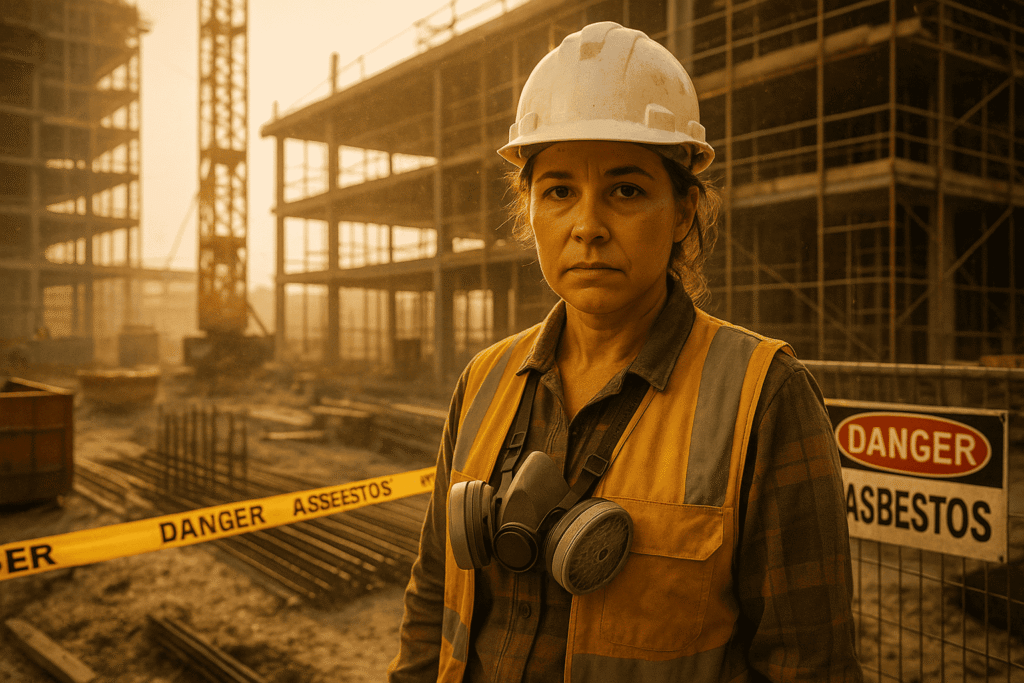
Construction Building Sites Mesothelioma Lawsuit
Construction building sites across the U.S. used asbestos extensively from the 1930s through the late 1970s. Asbestos was built into roofing, flooring, drywall, cement, adhesives, insulation, and fireproofing materials. Cutting, drilling, sanding, or demolishing these products released asbestos fibers—endangering workers and nearby residents.
Carpenters, plumbers, electricians, roofers, and laborers were exposed daily without being warned of the dangers. Inhaled asbestos fibers can remain in the body for decades, leading to deadly illnesses such as:
• Mesothelioma
• Asbestos-related lung cancer
• Asbestosis
Construction Building Sites – What You’ll Learn From This Page:
-
Asbestos was used in roofing, siding, insulation, and wall materials.
-
Workers were exposed during cutting, sanding, and demolition.
-
Carpenters, plumbers, and electricians disturbed asbestos products regularly.
-
Renovation and demolition projects released asbestos dust into the air.
-
Construction workers diagnosed with asbestos illnesses may qualify for compensation.
Estimated Number of People Exposed to Asbestos in U.S. Construction
| Exposure Category | Estimated Number of People Exposed |
|---|---|
| Occupational Exposure (construction workers, tradesmen, contractors) | Around 3 million workers exposed |
| Secondary Exposure (families of workers) | Estimated 1 million exposed |
| Environmental Exposure (residents near job sites) | Around 1.5 million people exposed |
Total Estimated Exposure:
Over 5.5 million people were exposed at construction building sites.
Facts About Asbestos in Construction
• Nearly all major construction materials once contained asbestos.
• Asbestos Exposure: Roofing shingles, drywall, flooring, adhesives, and insulation.
• Asbestos-Related Disease Risk: Highest among demolition crews, roofers, and insulation workers.
• Renovations in older buildings remain a major exposure risk today.
• Similar Occupations: Painters, masons, HVAC workers, welders, and general contractors.
History of Asbestos Use in Construction
Asbestos was long considered a “miracle material” in building construction because of its durability and fire resistance. It was installed in drywall, plaster, ceiling tiles, boilers, HVAC systems, and roofing.
Although restrictions began in the late 1970s, millions of homes, schools, and commercial buildings still contain asbestos. Renovation and demolition in older structures continue to endanger workers.
Mesothelioma Risk in Construction Building Sites
Exposure risks included:
• Cutting and sanding asbestos drywall and joint compound
• Installing or removing asbestos floor and ceiling tiles
• Roofing work with asbestos shingles and adhesives
• Plumbing and HVAC repairs involving asbestos insulation
• Demolition of asbestos-laden buildings
• Electrical installations requiring drilling into asbestos walls and ceilings
These activities created airborne asbestos dust, exposing workers and nearby communities.
Asbestos Materials Found in Construction Building Sites
-
Drywall and Joint Compound – Released fibers when sanded.
-
Ceiling and Floor Tiles – Dangerous when cracked, cut, or removed.
-
Roofing Shingles and Adhesives – Exposed roofers during installation and repair.
-
Pipe and Boiler Insulation – Contained asbestos in basements and mechanical rooms.
-
Cement and Plaster – Applied throughout residential and commercial projects.
-
Spray-On Fireproofing – Coated beams and ceilings; deteriorated over time.
Who Was Exposed in Construction Building Sites
-
Carpenters and Drywall Workers – Installed and sanded asbestos drywall.
-
Roofers – Worked with asbestos shingles and adhesives.
-
Plumbers and Pipefitters – Repaired asbestos-insulated piping.
-
Electricians – Drilled into asbestos ceilings and walls.
-
Demolition Crews – Released fibers during tear-downs.
-
General Contractors – Oversaw asbestos-filled job sites.
-
Nearby Residents – Inhaled asbestos dust from nearby construction.
Types of Construction Building Sites With Asbestos Risk
-
Residential Homes – Roofing, siding, flooring, and insulation.
-
Apartments and Housing Complexes – Flooring, ceilings, and HVAC insulation.
-
Commercial Buildings – Offices, banks, and stores built with asbestos.
-
Schools and Universities – Classrooms, boiler rooms, and gyms.
-
Hospitals and Government Buildings – Structural insulation and ceiling tiles.
-
Industrial Construction Projects – Asbestos in machinery rooms and factories.
Common Questions About Construction Asbestos Exposure
Can construction workers file a claim?
Yes — tradesmen exposed to asbestos on building sites may qualify.
Does short-term exposure matter?
Yes — even brief exposure can cause disease years later.
Are families at risk from secondhand exposure?
Yes — fibers carried home on clothing caused widespread secondary illnesses.
Do I need documentation of exposure?
No — attorneys can verify asbestos use through building permits and records.
Can families seek compensation?
Yes — wrongful death lawsuits may be filed by survivors.
How a Mesothelioma Attorney Can Help
An experienced lawyer can:
• Review construction site records and permits
• Confirm asbestos-containing products used
• File asbestos trust claims or lawsuits
• Support families throughout the process
• Work on contingency (no fee unless you win)
Free Legal Help for Construction Workers and Families
If you or a loved one worked at a construction building site and now face a mesothelioma or asbestos-related diagnosis, help is available.
Call Now: 800.291.0963
• No upfront costs
• No legal fees unless we win
• Exposure investigation included
• Support for families, retirees, and secondhand victims
Or request help online 24/7