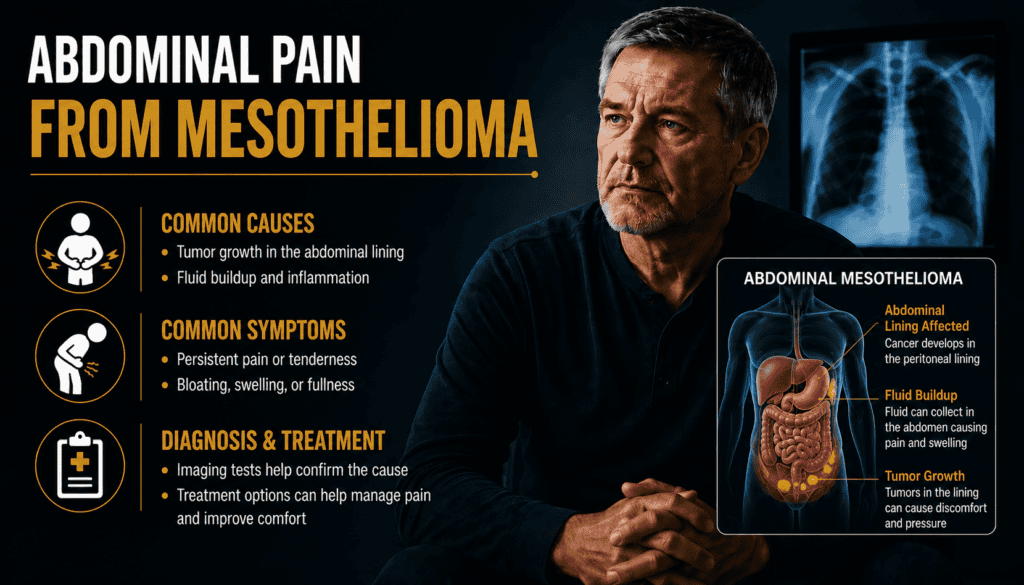
Abdominal Pain from Mesothelioma
🩻 Why It Happens, What It Feels Like & How Doctors Treat It
Abdominal pain is one of the most common and distressing symptoms of peritoneal mesothelioma — the type that develops in the lining of the abdomen. This pain can range from mild discomfort to severe pressure that affects appetite, digestion, sleep, and quality of life.
This guide explains why mesothelioma causes abdominal pain, the different types of pain patients experience, how doctors diagnose the cause, and the treatments that help relieve discomfort.
📘 Why Mesothelioma Causes Abdominal Pain
Peritoneal mesothelioma forms in the peritoneum, a thin membrane that protects abdominal organs such as:
-
Stomach
-
Intestines
-
Liver
-
Gallbladder
-
Pancreas
-
Spleen
-
Kidneys
Tumors spread along this lining, creating pressure, inflammation, and fluid buildup. As cancer progresses, pain becomes more noticeable.
🧬 Common Causes of Abdominal Pain in Mesothelioma
There are four main reasons mesothelioma creates abdominal pain.
1️⃣ Tumor Growth & Pressure on Organs
🩺 Direct compression causes sharp, dull, or constant discomfort.
As tumors grow across the lining, they press against organs, nerves, and muscles. This can cause:
-
Cramping
-
Sharp pains
-
Dull aches
-
Pressure across the abdomen
-
Pain when bending or eating
The larger the tumor burden, the more intense the pain.
2️⃣ Fluid Buildup (Ascites)
💧 One of the most common causes of abdominal swelling and pain.
Mesothelioma triggers inflammation, causing fluid to accumulate in the abdomen.
Symptoms of ascites:
-
Tightness
-
Visible swelling
-
Shortness of breath
-
Abdominal pressure
-
Loss of appetite
Ascites can make the abdomen feel heavy and painful, especially during movement or after meals.
3️⃣ Digestive System Disruption
🍽️ Tumors can affect digestion and bowel function.
Mesothelioma may press on:
-
Intestines
-
Stomach
-
Colon
-
Liver
This leads to:
-
Bloating
-
Cramping
-
Indigestion
-
Acid reflux
-
Nausea
Digestive discomfort often appears before sharp pain.
4️⃣ Bowel Obstruction
⚠️ A serious late-stage complication requiring medical attention.
Large tumors or severe inflammation may block the intestines.
Symptoms include:
-
Sudden severe pain
-
Vomiting
-
Inability to pass gas or stool
-
Swelling
-
Constipation
This condition must be treated quickly to avoid complications.
🔍 What Abdominal Pain Feels Like
Patients describe mesothelioma abdominal pain in many ways. Common descriptions include:
🔹 Dull, Persistent Ache
A constant, uncomfortable pressure.
🔹 Sharp, Stabbing Pain
Caused by organ compression or nerve irritation.
🔹 Cramping or Spasms
Often related to bowel involvement.
🔹 Feeling of Fullness
Even after small meals.
🔹 Heaviness in the Abdomen
Often caused by fluid buildup.
🔹 Pain While Moving
Bending forward, sitting up, or lifting legs can worsen pain.
🔹 Radiating Pain
Pain extending into the back or lower ribs.
Each patient’s experience is unique, depending on tumor size, fluid buildup, and overall progression.
🩺 Other Signs That Accompany Abdominal Pain
Most patients experience additional symptoms along with abdominal discomfort.
🔸 Bloating or distention
🔸 Nausea or vomiting
🔸 Loss of appetite
🔸 Fatigue
🔸 Constipation or diarrhea
🔸 Weight loss
🔸 Fever or night sweats
🔸 Difficulty sleeping
These signs help doctors identify the underlying cause and the severity of the disease.
🩻 How Doctors Diagnose the Cause of Abdominal Pain
Accurate diagnosis leads to better pain relief. Doctors use several tools:
📸 Imaging Tests
CT Scan
Shows tumor growth, fluid levels, and organ involvement.
Ultrasound
Helps detect ascites and organ pressure.
MRI
Used when detailed images of soft tissues are needed.
PET Scan
Shows where cancer is active.
🧪 Fluid Analysis (Paracentesis)
Fluid is drained to:
-
Reduce pressure
-
Test for cancer cells
-
Identify infections
This procedure also provides temporary pain relief.
🔬 Biopsy
If needed, doctors take tissue samples to confirm tumor spread.
💉 Treatments That Help Relieve Abdominal Pain
Pain management depends on the cause. Below are the most effective treatments used today.
1️⃣ Draining Abdominal Fluid (Paracentesis)
💧 Immediate relief for pressure-related pain.
Paracentesis removes fluid through a small needle.
Benefits include:
-
Reduced swelling
-
Less pressure
-
Better appetite
-
Easier breathing
-
Less cramping
Fluid often returns, so repeated procedures may be necessary.
2️⃣ Surgery (CRS + HIPEC)
🔪 Best long-term treatment for suitable patients.
Cytoreductive surgery removes visible tumors, and HIPEC delivers heated chemotherapy directly into the abdomen.
This treatment:
-
Reduces tumor burden
-
Lowers recurrence
-
Relieves long-term abdominal pain
-
Extends survival
Many patients experience dramatic improvements after this procedure.
3️⃣ Chemotherapy
💊 Reduces tumor size and inflammation.
Common medications:
-
Pemetrexed
-
Cisplatin
-
Carboplatin
Chemotherapy helps:
-
Shrink tumors
-
Reduce pain
-
Slow disease progression
4️⃣ Immunotherapy
🧬 Boosts the immune system to target cancer.
Medications include:
-
Keytruda
-
Opdivo
-
Yervoy
Immunotherapy may reduce abdominal pain by shrinking tumors and controlling inflammation.
5️⃣ Pain Medication
💊 Custom pain plan based on symptom severity.
Options include:
-
NSAIDs
-
Acetaminophen
-
Opioids
-
Steroids
-
Nerve pain medications
Doctors tailor pain management to each patient’s needs.
6️⃣ Nutrition & Digestive Support
🥗 Essential for reducing discomfort and supporting healing.
Dietary strategies:
-
Smaller, frequent meals
-
High-calorie foods
-
Soft or easily digestible options
-
Hydration
-
Avoiding gas-triggering foods
Nutritionists play a key role in comfort and recovery.
7️⃣ Complementary Therapies
🧘 Helps reduce tension and improve overall comfort.
Patients often benefit from:
-
Gentle stretching
-
Heat therapy
-
Meditation
-
Acupuncture
-
Deep breathing
These therapies ease stress and help with pain control.
🚨 When Abdominal Pain Requires Immediate Care
Seek urgent medical help if you experience:
-
Sudden, sharp abdominal pain
-
Vomiting that doesn’t stop
-
Hard, swollen abdomen
-
Inability to pass stool or gas
-
Fever with abdominal tenderness
-
Blood in stool or vomit
These may indicate bowel obstruction or infection.
⚖️ Legal Impact of Abdominal Pain
Severe abdominal pain significantly strengthens legal claims by documenting:
💰 Pain and suffering damages
Courts consider prolonged or severe pain as a major loss.
📑 Medical necessity
-
Fluid drainage
-
Surgery
-
Medications
-
Imaging
-
Emergency care
These increase claim values.
🕒 Accelerated case handling
Patients with severe symptoms may qualify for expedited legal processing.
🏭 Exposure identification
The presence of peritoneal mesothelioma often connects to:
-
Industrial asbestos
-
Construction work
-
Shipyards
-
HVAC and insulation
-
Military service
Your diagnosis helps attorneys identify the companies responsible.
📞 🚨 Urgent: Get Legal Help for Mesothelioma or Asbestos Lung Cancer
If you or a loved one is losing sleep, struggling to breathe, or suffering because of mesothelioma or asbestos-related lung cancer, do not wait.
You may qualify for significant financial compensation — but deadlines apply.
⚖️ What Our Legal Team Can Do Right Now
- 🏭 Pinpoint where asbestos exposure occurred
- 🧾 File asbestos trust fund claims worth millions
- 💼 Pursue lawsuits against responsible companies
- 🚀 Fast-track your case due to severe symptoms
- 💰 Recover compensation for treatment, bills & pain
⏳ Time matters. Your rights may depend on acting quickly.
📞 Call Now for Immediate Legal Help: 800.291.0963
Your case review is free, confidential, and available 24/7.
🛑 Disclaimer:
This 50-page guide provides general information only. It should not be used as medical or legal advice. If you suspect mesothelioma or have related symptoms, seek medical evaluation right away. For legal concerns, including asbestos exposure and compensation, consult a licensed attorney.