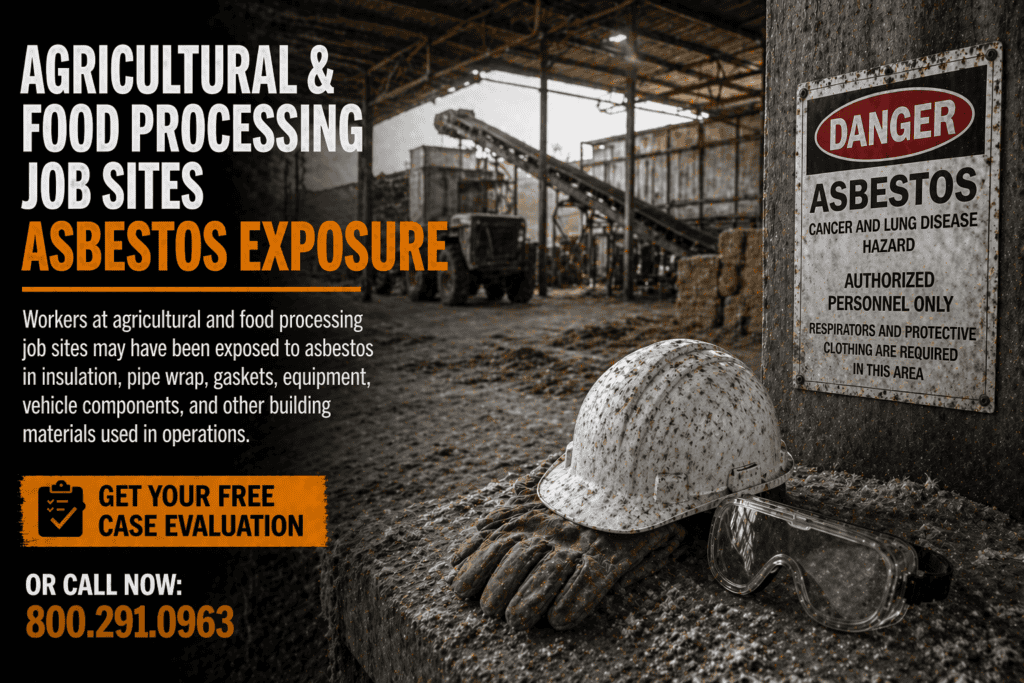
🌾 Agricultural Sites Asbestos Exposure
Farms and agricultural facilities across the United States used asbestos-containing materials for decades in barns, silos, sheds, greenhouses, and utility structures. These materials—especially in roofing, insulation, and heating systems—gradually degraded over time. During repairs, demolition, or seasonal maintenance, workers and property owners unknowingly disturbed these materials, releasing dangerous asbestos fibers into the air.
Once inhaled, these microscopic fibers can embed in the lungs and cause life-threatening illnesses decades later, such as:
• Mesothelioma
• Asbestos-related lung cancer
• Asbestosis
🚜 Agricultural Sites – What You’ll Learn From This Page:
🌾 Asbestos was used in farm buildings—barns, silos, sheds, and storage areas—for insulation, roofing, and siding.
🛠️ Farmhands and repair crews disturbed asbestos while fixing leaky roofs, replacing heaters, or updating older structures.
🔥 Insulated grain dryers and heating units contained asbestos that broke down over time.
👨🌾 Exposure also occurred during storms or disasters when asbestos was released from damaged farm buildings.
💰 Farmers or agricultural workers diagnosed with asbestos illness may qualify for trust payouts or legal claims.
Estimated Number of People Exposed to Asbestos on U.S. Agricultural Sites
| Exposure Category | Estimated Number of People Exposed |
|---|---|
| Occupational Exposure (farmers, repair workers, ranchers) | Over 1,200,000 workers exposed |
| Secondary Exposure (families, helpers, seasonal staff) | Estimated 500,000 exposed |
| Environmental Exposure (rural property zones, open-air barns) | Around 800,000 people exposed |
👉 Total Estimated Exposure:
Over 2.5 million people were exposed on agricultural job sites.
📊 Facts About Asbestos in Agricultural Work
• Over 2 million farms operated in the U.S. during the height of asbestos use (1940s–1980s).
• Asbestos Exposure: Common in roofing, insulation, barn heaters, and silo linings.
• Asbestos-Related Disease Risk: High among farmers, ranch hands, equipment mechanics, and seasonal workers.
• Exposure often occurred during maintenance, heating system repairs, and structure demolition.
• Similar Occupations: Farm owners, repair crews, equipment techs, rural electricians, contractors
🏗️ History of Asbestos Use on Farms
Asbestos was widely used in agricultural buildings because it was cheap, durable, and resistant to heat and moisture. It appeared in corrugated roofing sheets, insulation wraps, wall panels, heater ducts, and cement sidings on barns, silos, and livestock sheds.
When these materials aged, cracked, or broke, they released asbestos fibers—especially during cleaning, renovations, or heating system upgrades in colder seasons.
⚠️ Mesothelioma Risk at Agricultural Sites
Exposure happened frequently on farms during:
• Repairs to barns, greenhouses, and outbuildings
• Replacing old roofing, ceiling boards, or silo linings
• Servicing space heaters or heating systems with asbestos insulation
• Cutting or drilling through cement-asbestos panels
• Cleaning sheds with deteriorated asbestos tiles or pipe wrap
Even short-term exposure could result in a long-term health condition, with symptoms sometimes appearing 30–50 years later.
🧪 Asbestos Products Found on Agricultural Properties
🏠 Corrugated Asbestos Roofing Sheets
Installed on barns and sheds; released dust during removal or breakage.
🧱 Cement-Asbestos Siding Panels
Lined farmhouses and feed buildings; cracked during storms or upgrades.
🔥 Heater and Boiler Insulation
Used in greenhouses, dairies, and livestock areas; exposure during servicing or replacement.
💨 Duct and Pipe Wrapping
Wrapped around water or heat lines in sheds and greenhouses; often frayed or crumbling.
🪵 Ceiling and Wall Panels
Fire-resistant panels found in farm utility rooms and workshops.
🧰 Sealants and Adhesives
Used around pipe joints and wall seams; degraded with age.
🧯 Fireproof Coatings
Sprayed on walls or ceiling beams in hay storage areas.
🚜 Brake Pads on Farm Equipment
Tractors and harvesters used asbestos-based brake linings.
👷 Who Was Exposed on Agricultural Sites
👨🌾 Farm Owners and Operators
Performed routine repairs, insulation removal, and heater servicing.
🪛 Maintenance Workers
Fixed leaks, heating ducts, and barn siding lined with asbestos.
🔨 Construction Crews
Demolished or repaired old outbuildings without knowing materials contained asbestos.
🧑🔧 Equipment Mechanics
Worked on brakes and gaskets in tractors and combines containing asbestos.
🔌 Rural Electricians
Drilled into asbestos-backed control panels and fuse boxes in farm buildings.
📦 Feed and Supply Workers
Handled bags and crates stored in asbestos-lined rooms or facilities.
🧹 Cleaners and Seasonal Laborers
Swept or cleaned areas with broken asbestos tiles or deteriorated siding.
🏠 Family Members and Children
Lived or worked near disturbed asbestos, often facing secondhand exposure.
🏞️ Types of Agricultural Sites With Asbestos Exposure
🏚 Barns and Animal Sheds
Roofing, insulation, and heaters contained asbestos—disturbed during winter repairs and re-roofing.
🌽 Silos and Grain Bins
Lined with fireproof asbestos boards and insulation; disturbed during cleanouts or repairs.
🌱 Greenhouses
Heaters and ductwork were insulated with asbestos; cracked during maintenance or retrofitting.
🚜 Equipment Sheds and Garages
Housed tractors and gear with asbestos brakes and gaskets; dust released during servicing.
🏠 Farmhouses and Utility Rooms
Asbestos panels used in kitchens, water heaters, and ceilings; damaged during remodels.
🐄 Milking Parlors and Dairies
Used asbestos cement for walls and ceilings to resist moisture and heat.
🔧 Workshop Buildings
Included fireproof wall panels and insulation for welding or repair tasks.
❓ Common Questions About Agricultural Asbestos Exposure
Can I file if I was exposed on a private farm?
Yes — claims target the manufacturers of asbestos products, not property owners.
What if exposure happened decades ago?
You still may qualify; most states allow claims within 1–3 years of diagnosis.
Do I need to prove the exact product?
No — attorneys use industry records and historical data to trace asbestos sources.
Can I file for a family member who passed away?
Yes — wrongful death claims are available for eligible spouses and children.
Is compensation available if I worked seasonally?
Yes — even short-term exposure may qualify if linked to a diagnosis.
⚖️ How a Mesothelioma Attorney Can Help Agricultural Workers
Experienced asbestos attorneys help victims and families by:
• Reviewing your exposure history and job activities
• Finding asbestos products used in farming and ranching
• Filing trust fund claims or lawsuits for compensation
• Navigating state laws and filing deadlines
• Assisting with wrongful death claims
• Charging no legal fees unless compensation is won
📞 Free Legal Help for Farmers, Workers & Families
If you or a loved one worked on an agricultural site and later developed mesothelioma, lung cancer, or asbestosis, you may be entitled to significant financial help.
Don’t wait—these diseases often appear decades after exposure.
Call Now: 800.291.0963
• Free consultation
• No fees unless we win
• Full investigation of farm asbestos exposure
• Trust fund and lawsuit options available
Or request help online 24/7