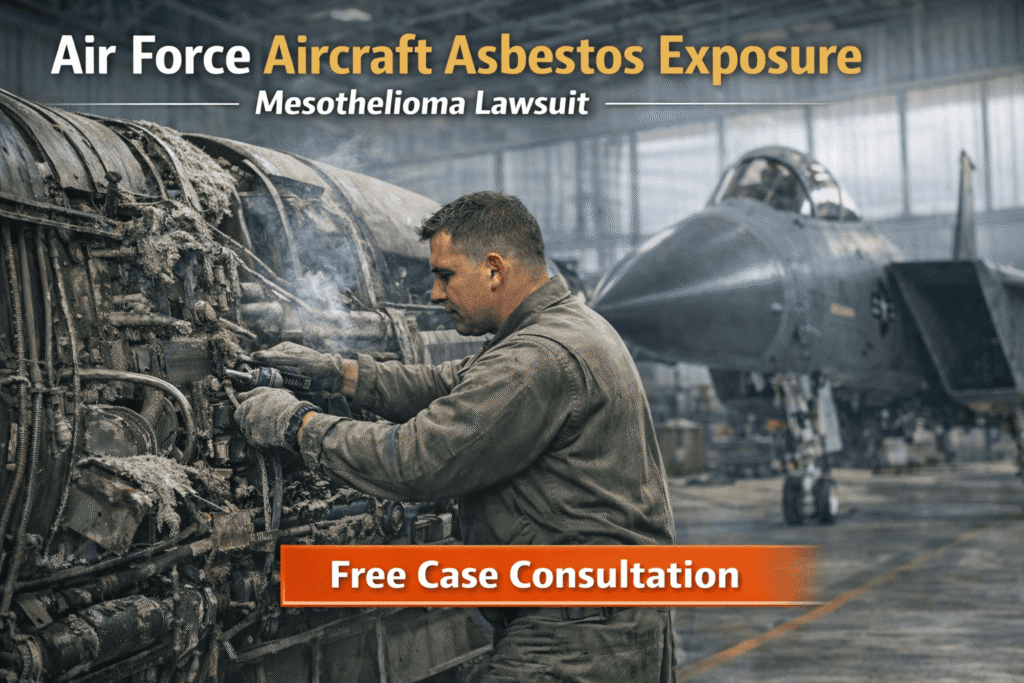
✈️ Air Force Aircraft Asbestos Exposure Mesothelioma Lawsuit
For decades, U.S. Air Force aircraft operations exposed thousands of service members to asbestos-containing materials. From World War II through the late Cold War era, asbestos was widely used in aircraft engines, brakes, insulation, heat shields, wiring, and fireproofing systems. At the time, asbestos was viewed as a necessary aerospace material—not a health hazard.
Air Force mechanics, crew chiefs, avionics technicians, and maintenance personnel were routinely exposed to asbestos while servicing aircraft on flight lines, in hangars, and at maintenance depots. These exposures often occurred daily, repeatedly, and without protective respiratory equipment or warnings.
Today, many Air Force veterans are being diagnosed with mesothelioma and other asbestos-related diseases decades after service, leading to VA disability claims, asbestos trust fund filings, and Air Force aircraft mesothelioma lawsuits against negligent manufacturers.
⚙️ Why Asbestos Was Used in Air Force Aircraft
From the 1930s through the 1980s, asbestos was heavily relied upon in military aircraft manufacturing and maintenance because it offered:
-
Exceptional heat resistance
-
Fireproofing under extreme conditions
-
Durability during vibration and stress
-
Lightweight insulation properties
-
Cost efficiency for large-scale military use
Jet engines, braking systems, and aircraft electrical components generated intense heat and friction. Asbestos was therefore incorporated into nearly every aircraft system that required thermal protection or fire resistance.
Unfortunately, when these asbestos-containing materials were disturbed during maintenance, microscopic fibers were released into the air and inhaled by service members.
🧱 Aircraft Components That Contained Asbestos
Air Force aircraft contained asbestos in numerous high-risk systems that required constant servicing.
🔥 Aircraft Engines & Heat Shields
Engine compartments used asbestos insulation and heat shields to protect surrounding components. Over time, heat degradation caused these materials to crack and shed fibers during inspections and overhauls.
🛑 Aircraft Brakes, Pads & Linings
Asbestos brake components released fibers during routine servicing, grinding, and replacement—especially on heavy aircraft and high-speed jets.
⚡ Electrical Wiring, Panels & Fireproofing
Electrical systems were insulated with asbestos-containing materials to reduce fire risk. Fibers were released when panels were opened or wiring was replaced.
🧱 Insulation, Gaskets & Seals
Asbestos gaskets, seals, and packing were used throughout aircraft systems and disturbed during removal and maintenance.
⚙️ Clutches & Friction Components
Aircraft clutch systems relied on asbestos-based friction materials that released dust during wear and servicing.
🛠️ How Air Force Aircraft Maintenance Caused Exposure
Asbestos exposure did not require direct contact with raw asbestos. Routine aircraft maintenance alone was enough.
Common exposure tasks included:
-
Engine inspections and tear-downs
-
Brake replacement and adjustment
-
Heat shield and insulation removal
-
Electrical troubleshooting and upgrades
-
Component overhauls and retrofits
-
Aircraft modernization and rebuilds
These tasks were often performed inside enclosed hangars or aircraft fuselages, where asbestos dust accumulated and remained airborne for extended periods.
👨✈️ Air Force Personnel Most at Risk
Aircraft-related asbestos exposure affected multiple Air Force career fields.
High-risk Air Force occupations include:
-
Aircraft maintenance technicians
-
Jet and aircraft mechanics
-
Crew chiefs
-
Aerospace propulsion specialists
-
Avionics and electrical technicians
-
Flight line maintenance personnel
-
Air Force Veterans Mesothelioma Lawsuit claimants
Many veterans worked on aircraft daily for years, creating long-term cumulative asbestos exposure.
🏢 Where Aircraft Asbestos Exposure Occurred
Exposure occurred at:
-
Air Force bases and flight lines
-
Aircraft maintenance hangars
-
Depots and overhaul facilities
-
Technical training schools
-
Overseas bases and combat deployments
Asbestos fibers often clung to uniforms, gloves, and tools, extending exposure beyond the work area.
🦠 Diseases Linked to Air Force Aircraft Asbestos Exposure
Asbestos-related illnesses have a long latency period—typically 20 to 50 years—which is why many Air Force veterans are diagnosed later in life.
🦠 Mesothelioma
A rare and aggressive cancer affecting the lining of the lungs or abdomen. Aircraft mechanics are a well-documented high-risk group.
🫁 Asbestos-Related Lung Cancer
Distinct from smoking-related lung cancer and directly linked to asbestos inhalation.
🫁 Asbestosis
A chronic lung disease that causes scarring, reduced lung capacity, and long-term breathing problems.
🧪 Why Aircraft Exposure Was Especially Dangerous
Aircraft maintenance environments created perfect conditions for asbestos exposure:
-
High heat degraded asbestos insulation
-
Brake servicing released concentrated fiber dust
-
Enclosed aircraft trapped airborne fibers
-
Frequent maintenance caused repeated exposure
-
Respirators were rarely provided
Because asbestos fibers are microscopic, most Air Force personnel were unaware exposure was occurring.
⚖️ Legal Options for Air Force Aircraft Asbestos Exposure
Veterans diagnosed with mesothelioma or asbestos-related disease may qualify for multiple compensation options.
⚖️ Air Force Aircraft Mesothelioma Lawsuits
Lawsuits against manufacturers that supplied asbestos-containing aircraft parts, engines, brakes, insulation, and materials to the military.
These claims do not sue the Air Force.
🏦 Asbestos Trust Fund Claims
Many aerospace and materials manufacturers declared bankruptcy and were required to establish trust funds. Veterans may qualify for multiple trust claims.
🎖️ VA Disability & Survivor Benefits
Eligible benefits may include:
-
Monthly VA disability compensation
-
VA medical care
-
Dependency and Indemnity Compensation (DIC) for surviving spouses
VA benefits do not prevent lawsuits or trust fund claims.
❓ Frequently Asked Questions – Air Force Aircraft Asbestos Exposure
1️⃣ Did Air Force aircraft contain asbestos?
Yes. Asbestos was widely used in engines, brakes, insulation, wiring, and fireproofing.
2️⃣ Can exposure from decades ago still qualify?
Yes. Mesothelioma often develops 20–50 years after exposure.
3️⃣ I wasn’t a pilot—do I still qualify?
Yes. Maintenance personnel faced the highest exposure risk.
4️⃣ Can I file VA claims and lawsuits together?
Yes. VA benefits and legal claims are separate.
5️⃣ Will I have to go to court?
Most cases resolve through settlements.
📞 Legal Help for Air Force Aircraft Asbestos Exposure
If you served in the U.S. Air Force and worked on or around aircraft and were later diagnosed with mesothelioma or an asbestos-related lung disease, you may be entitled to substantial financial compensation.
📞 Call 800-291-0963 for a free, confidential Air Force veteran case review.
⚖️ How an Air Force Mesothelioma Lawyer Can Help
An experienced military asbestos lawyer can:
🔍 Prove exposure using service records and aircraft histories
🏦 Identify all trust funds and lawsuit eligibility
🎖️ Coordinate VA and legal compensation
💰 Maximize recovery for veterans and families
📞 Call 800-291-0963 today for a free case review.