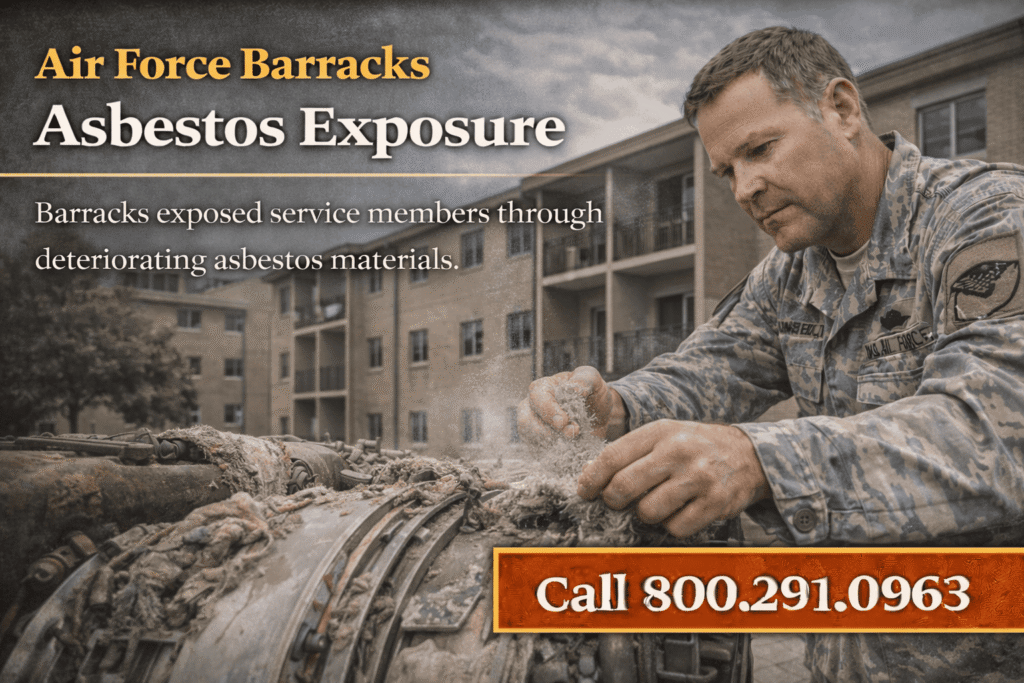
🛏️ Air Force Barracks Asbestos Exposure
Barracks Exposed Service Members Through Deteriorating Asbestos Materials
For decades, U.S. Air Force barracks exposed enlisted personnel to asbestos-containing materials. From World War II through the late Cold War era, asbestos was widely used in military barracks construction because it was inexpensive, fire-resistant, and durable under heavy daily use.
Air Force service members often lived in barracks 24 hours a day for months or years, unknowingly inhaling asbestos fibers released from aging insulation, flooring, ceilings, pipes, and heating systems. Exposure did not require maintenance work—routine daily living and building wear were enough.
Today, many former Air Force veterans are being diagnosed with mesothelioma, asbestos-related lung cancer, and asbestosis decades after living in barracks, leading to VA disability claims, asbestos trust fund filings, and Air Force barracks asbestos lawsuits against manufacturers that supplied asbestos-containing building materials to the military.
⚙️ Why Asbestos Was Used in Air Force Barracks
Military barracks were built quickly to house large numbers of service members, especially during wartime expansions and Cold War mobilization. Asbestos was considered a standard construction material.
Asbestos was used in barracks because it provided:
-
Fire resistance in high-occupancy buildings
-
Thermal insulation for year-round housing
-
Durability under constant foot traffic
-
Sound dampening between sleeping areas
-
Low-cost materials for mass construction
As a result, asbestos was incorporated into nearly every structural component of Air Force barracks.
🧱 Where Asbestos Was Found in Air Force Barracks
Barracks contained asbestos in numerous high-risk materials.
🧱 Insulation & Pipe Coverings
Asbestos insulation was used around:
-
Steam pipes and hot-water lines
-
Boilers and furnaces
-
Radiators and heating units
As insulation aged, cracked, or vibrated loose, fibers were released into sleeping quarters.
🪵 Flooring, Tiles & Adhesives
Asbestos was commonly used in:
-
Vinyl floor tiles
-
Linoleum backing
-
Floor mastics and adhesives
Normal foot traffic, wear, and repairs released asbestos dust into living areas.
🧱 Walls, Ceilings & Joint Compounds
Barracks interiors often contained asbestos in:
-
Plaster and wallboard
-
Joint compound
-
Ceiling tiles
Drilling, cracks, or minor repairs disturbed these materials.
🏠 Roofing & Exterior Panels
Barracks roofs and siding frequently used asbestos cement panels and roofing felts that deteriorated over time.
🛠️ How Living in Barracks Caused Asbestos Exposure
Unlike workplace exposure, barracks exposure was continuous.
Common exposure scenarios included:
-
Sleeping in asbestos-containing rooms
-
HVAC systems circulating fibers
-
Vibration from nearby aircraft loosening insulation
-
Maintenance work conducted while barracks remained occupied
-
Aging materials shedding fibers daily
Because exposure occurred where service members lived, asbestos exposure continued during rest, sleep, and off-duty hours.
👉 Related: Air Force Housing Asbestos Exposure
👨✈️ Who Was Exposed in Air Force Barracks
Barracks asbestos exposure primarily affected enlisted personnel but extended beyond.
High-risk groups include:
-
Enlisted Air Force service members
-
Trainees and technical school students
-
Non-commissioned officers assigned to barracks
-
Drill instructors and training staff
-
Barracks maintenance workers
-
Civilian employees assigned to dormitory facilities
-
Air Force Veterans Mesothelioma Lawsuit claimants
Many veterans lived in barracks during their earliest and longest service years, creating early cumulative exposure.
🏢 Barracks Exposure Occurred at Bases Worldwide
Asbestos exposure has been documented in barracks at:
-
Basic training bases
-
Technical training installations
-
Overseas Air Force bases
-
Cold War–era housing complexes
-
Remote duty stations
Large installations such as Wright-Patterson, Eglin, Tinker, Hill, Andrews, Luke, and Elmendorf included barracks built during peak asbestos-use decades.
👉 Related: Major Air Force Bases Asbestos Exposure & Mesothelioma Lawsuits
🦠 Diseases Linked to Air Force Barracks Asbestos Exposure
Asbestos-related illnesses typically develop 20 to 50 years after exposure.
🦠 Mesothelioma
A rare and aggressive cancer of the lung or abdominal lining. Long-term residential exposure is a recognized cause.
👉 Learn more: Air Force Mesothelioma Lawsuits & Asbestos Exposure
🫁 Asbestos-Related Lung Cancer
Caused by prolonged inhalation of fibers from insulation and building materials.
🫁 Asbestosis
A chronic lung disease marked by scarring, reduced lung capacity, and progressive breathing impairment.
🧪 Why Barracks Exposure Was Especially Dangerous
Air Force barracks created unique asbestos exposure risks:
-
Continuous, 24-hour occupancy
-
Sleeping in fiber-contaminated air
-
Aging buildings shedding asbestos daily
-
Maintenance work performed while occupied
-
Aircraft vibration loosening materials
-
No asbestos warnings or respirators
Because asbestos fibers are microscopic, most service members had no idea exposure was occurring.
⚖️ Legal Options for Air Force Barracks Asbestos Exposure
Veterans diagnosed with asbestos-related diseases may qualify for multiple compensation options.
⚖️ Air Force Barracks Asbestos Lawsuits
Claims against manufacturers of asbestos-containing insulation, flooring, roofing, and construction materials used in military barracks.
These lawsuits do not sue the U.S. Air Force.
🏦 Asbestos Trust Fund Claims
Many building-material manufacturers created trust funds. Claimants may qualify for multiple trust payments.
🎖️ VA Disability & Survivor Benefits
Eligible benefits may include:
-
Monthly VA disability compensation
-
VA medical care
-
Dependency and Indemnity Compensation (DIC)
VA benefits do not prevent lawsuits or trust fund claims.
❓ Frequently Asked Questions – Air Force Barracks Asbestos Exposure
1️⃣ Did Air Force barracks contain asbestos?
Yes. Asbestos was widely used in insulation, flooring, ceilings, and walls.
2️⃣ Can exposure from barracks decades ago still qualify?
Yes. Mesothelioma often appears 20–50 years after exposure.
3️⃣ I lived in barracks only early in my service—does that matter?
No. Even early exposure can cause later disease.
4️⃣ Can I file VA and legal claims together?
Yes. These claims are separate and complementary.
5️⃣ Will I need to go to court?
Most asbestos cases settle without trial.
📞 Legal Help for Air Force Barracks Asbestos Exposure
If you lived in Air Force barracks and were later diagnosed with mesothelioma or an asbestos-related lung disease, you may be entitled to significant financial compensation.
📞 Call 800-291-0963 for a free, confidential Air Force veteran case review.
⚖️ How an Air Force Asbestos Lawyer Can Help
An experienced asbestos lawyer can:
🔍 Trace exposure to specific barracks materials
🏦 Identify all applicable trust funds
🎖️ Coordinate VA benefits with legal claims
💰 Maximize compensation for long-term residential exposure
📞 Call 800-291-0963 today for a free case review.