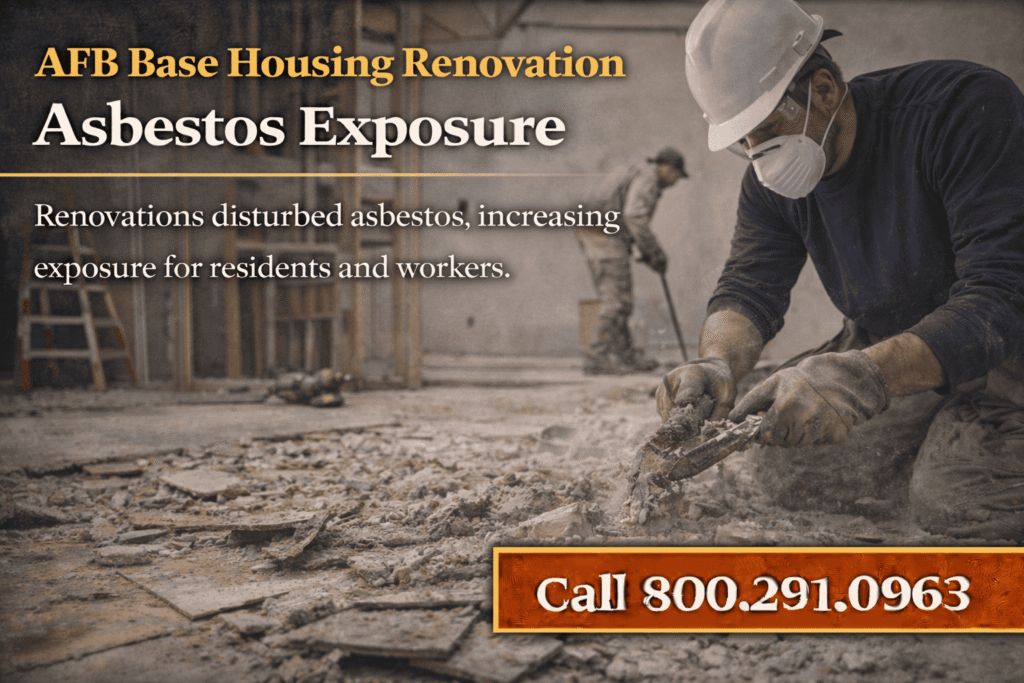
🏠 Air Force Housing Asbestos Exposure
Base Housing Contained Asbestos Insulation, Flooring, and Roofing Materials
For decades, U.S. Air Force base housing exposed service members, spouses, children, and civilian residents to asbestos-containing materials. From World War II through the late Cold War era, asbestos was widely used in military housing construction because it was inexpensive, fire-resistant, and durable.
Air Force families often lived in base housing for years at a time, unknowingly breathing asbestos fibers released from aging insulation, flooring, roofing, pipes, and heating systems. Exposure did not require maintenance work—normal daily living was enough as materials deteriorated or were disturbed during repairs.
Today, many Air Force veterans and family members are being diagnosed with mesothelioma, asbestos-related lung cancer, and asbestosis decades after living in base housing, leading to VA disability claims, asbestos trust fund filings, and Air Force housing asbestos lawsuits against manufacturers that supplied asbestos-containing building materials to the military.
⚙️ Why Asbestos Was Used in Air Force Housing
Military housing was built quickly to support expanding forces, especially during wartime and Cold War mobilization. Asbestos was viewed as an ideal material for large-scale residential construction on bases.
Asbestos was used in Air Force housing because it provided:
-
Fire resistance in family residences
-
Thermal insulation for year-round occupancy
-
Durability in harsh climates
-
Soundproofing between units
-
Cost-effective materials for mass housing projects
As a result, asbestos was incorporated into nearly every component of base housing, often without any warnings to residents.
🧱 Where Asbestos Was Found in Air Force Base Housing
Base housing contained asbestos in multiple high-risk materials.
🧱 Insulation & Pipe Coverings
Asbestos insulation was used around:
-
Hot-water pipes
-
Steam lines
-
Boilers and furnaces
-
Water heaters
As insulation aged or cracked, fibers were released into living spaces.
🪵 Flooring, Tile & Mastics
Asbestos was commonly used in:
-
Vinyl floor tiles
-
Linoleum backing
-
Adhesives and mastics
Walking, wear, or replacement released asbestos dust into the home.
🏠 Roofing & Exterior Materials
Roof shingles, felts, siding panels, and exterior cement boards often contained asbestos that degraded over time.
🧱 Walls, Ceilings & Joint Compounds
Interior walls and ceilings used asbestos in:
-
Joint compound
-
Plaster
-
Ceiling tiles
Repairs, nail holes, or remodeling disturbed these materials.
🛠️ How Living in Base Housing Caused Asbestos Exposure
Unlike occupational exposure, housing exposure was continuous.
Common exposure scenarios included:
-
Daily breathing of indoor air
-
Children playing on asbestos-containing floors
-
Heating systems circulating asbestos fibers
-
Small repairs performed by residents
-
Maintenance work conducted while homes were occupied
-
Renovations disturbing hidden asbestos
Because exposure occurred inside the home, families were exposed during sleep, meals, and everyday activities.
👉 Related: Base Housing Renovation Asbestos Exposure (Air Force)
👨👩👧 Who Was Exposed in Air Force Housing
Housing asbestos exposure affected more than just service members.
High-risk groups include:
-
Active-duty Air Force personnel
-
Military spouses
-
Children living on base
-
Retired service members
-
Civilian employees in base housing
-
Maintenance and housing repair workers
-
Air Force Veterans Mesothelioma Lawsuit claimants
Children experienced exposure during critical developmental years, while spouses faced long-term indoor exposure.
🏢 Housing Exposure Occurred at Air Force Bases Worldwide
Asbestos exposure has been documented in base housing at:
-
Major U.S. Air Force bases
-
Overseas installations in Europe and Asia
-
Cold War–era housing complexes
-
Remote and long-term duty stations
Large installations such as Wright-Patterson, Eglin, Tinker, Hill, Andrews, Luke, and Elmendorf included extensive housing neighborhoods built during peak asbestos use.
👉 Related: Major Air Force Bases Asbestos Exposure & Mesothelioma Lawsuits
🦠 Diseases Linked to Air Force Housing Asbestos Exposure
Asbestos-related illnesses typically develop 20 to 50 years after exposure, meaning many diagnoses occur long after families leave base housing.
🦠 Mesothelioma
A rare and aggressive cancer affecting the lining of the lungs or abdomen. Residential asbestos exposure is a recognized cause.
🫁 Asbestos-Related Lung Cancer
Caused by prolonged inhalation of fibers released from insulation and building materials.
🫁 Asbestosis
A chronic lung disease marked by scarring, reduced lung capacity, and long-term breathing impairment.
👉 Learn more: Air Force Mesothelioma Lawsuits & Asbestos Exposure
🧪 Why Base Housing Exposure Was Especially Dangerous
Air Force housing created unique asbestos risks:
-
Continuous, long-term exposure
-
Children and spouses exposed unknowingly
-
Aging materials shedding fibers daily
-
Renovations performed while occupied
-
HVAC systems spreading fibers
-
No asbestos warnings to residents
Because asbestos fibers are microscopic, families often had no idea exposure was occurring.
⚖️ Legal Options for Air Force Housing Asbestos Exposure
Veterans and family members diagnosed with asbestos-related diseases may qualify for multiple compensation options.
⚖️ Air Force Housing Asbestos Lawsuits
Claims against manufacturers of asbestos-containing insulation, flooring, roofing, and construction materials used in base housing.
These lawsuits do not sue the U.S. Air Force.
🏦 Asbestos Trust Fund Claims
Many housing-material manufacturers established trust funds. Families may qualify for multiple trust payouts.
🎖️ VA Disability & Survivor Benefits
Eligible benefits may include:
-
Monthly VA disability compensation
-
VA medical treatment
-
Dependency and Indemnity Compensation (DIC)
VA benefits do not prevent lawsuits or trust claims.
❓ Frequently Asked Questions – Air Force Housing Asbestos Exposure
1️⃣ Did Air Force base housing contain asbestos?
Yes. Asbestos was widely used in insulation, flooring, roofing, and walls.
2️⃣ Can spouses or children file claims?
Yes. Family members exposed in housing may qualify.
3️⃣ What if exposure happened decades ago?
Mesothelioma commonly develops 20–50 years after exposure.
4️⃣ Does living on base count as exposure?
Yes. Residential exposure is well-documented in asbestos claims.
5️⃣ Will families need to go to court?
Most cases settle without trial.
📞 Legal Help for Air Force Housing Asbestos Exposure
If you or a family member lived in Air Force base housing and were later diagnosed with mesothelioma or an asbestos-related lung disease, you may be entitled to significant financial compensation.
📞 Call 800-291-0963 for a free, confidential Air Force case review.
⚖️ How an Air Force Asbestos Lawyer Can Help Families
An experienced asbestos lawyer can:
🔍 Trace exposure to specific base housing materials
🏦 Identify applicable trust funds
🎖️ Coordinate VA and family claims
💰 Maximize compensation for long-term household exposure
📞 Call 800-291-0963 today for a free case review.