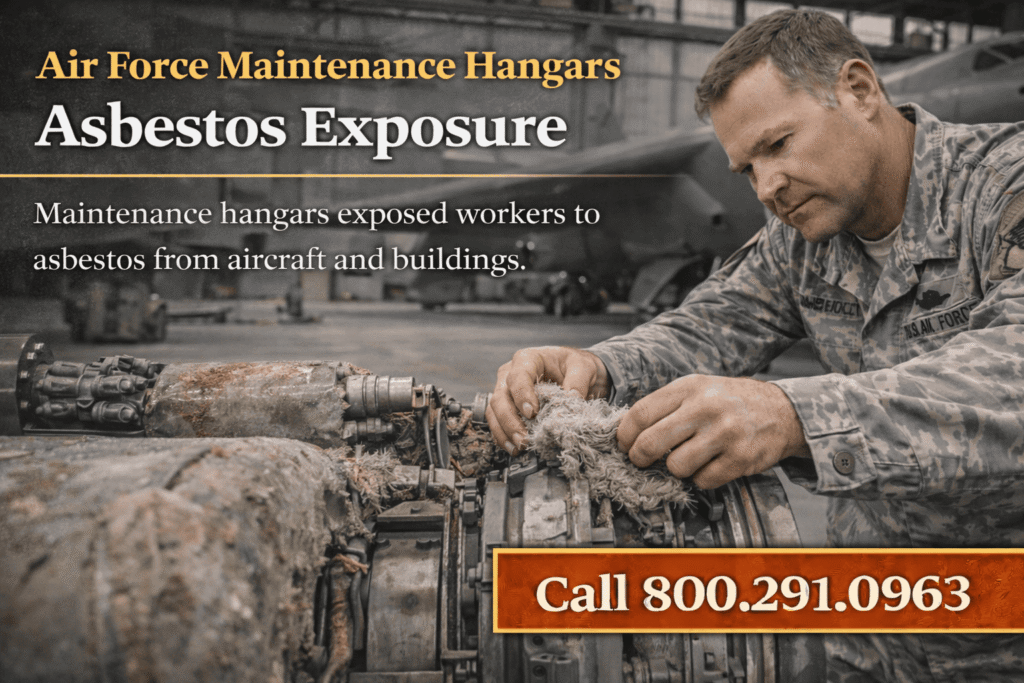
🛠️ Air Force Maintenance Hangars Asbestos Exposure
Maintenance Hangars Exposed Workers to Asbestos from Aircraft and Buildings
For decades, U.S. Air Force maintenance hangars exposed thousands of service members, civilian employees, and contractors to asbestos-containing materials. Unlike general aircraft hangars, maintenance hangars combined heavy aircraft repair with aging industrial buildings, creating some of the highest asbestos exposure risks on Air Force bases.
From World War II through the late Cold War era, asbestos was heavily used in maintenance hangar construction, fireproofing, insulation, utilities, and aircraft components. Air Force personnel working inside these facilities were exposed both to building-based asbestos and aircraft-related asbestos released during inspections, repairs, and overhauls.
Today, many former Air Force mechanics and maintenance personnel are being diagnosed with mesothelioma and other asbestos-related diseases decades after service, leading to VA disability claims, asbestos trust fund filings, and Air Force maintenance hangar mesothelioma lawsuits against manufacturers that supplied asbestos-containing materials to the military.
⚙️ Why Asbestos Was Used in Air Force Maintenance Hangars
Maintenance hangars were designed for intensive, around-the-clock aircraft servicing, structural repairs, engine work, and system overhauls. These facilities housed fuel systems, electrical equipment, heavy machinery, and fire-prone operations—making asbestos a preferred construction and safety material.
Asbestos was used because it provided:
-
Fire resistance in fuel and engine environments
-
Thermal insulation for large industrial spaces
-
Durability under vibration and constant use
-
Soundproofing for testing and repair operations
-
Cost-effective materials for military-scale construction
As a result, asbestos was incorporated extensively into maintenance hangar buildings and the aircraft serviced inside them.
🧱 Where Asbestos Was Found in Maintenance Hangars
Air Force maintenance hangars contained asbestos from multiple overlapping exposure sources.
🧱 Building Fireproofing & Insulation
Maintenance hangars often used spray-applied asbestos fireproofing on steel beams, ceilings, and walls. As these materials aged, they became friable and released fibers during daily activity.
🏢 Structural Materials & Interior Systems
Asbestos was used in:
-
Wall panels and insulation boards
-
Joint compounds and sealants
-
Ceiling tiles and backing materials
-
Fire-rated doors and partitions
Routine repairs, drilling, or retrofits disturbed these materials.
🔥 Boilers, Pipes & Utility Systems
Maintenance hangars relied on asbestos-insulated systems:
-
Steam pipes and hot-water lines
-
Boilers and heat exchangers
-
Valve rooms and pump systems
Repairs released asbestos fibers into confined utility areas.
⚡ Electrical Panels & Cable Systems
Electrical infrastructure often included asbestos insulation around panels, conduits, and cable trays—disturbed during troubleshooting and upgrades.
✈️ Aircraft-Related Asbestos Inside Maintenance Hangars
Maintenance hangars also exposed workers to aircraft asbestos, compounding risk.
🔥 Engine Insulation & Heat Shields
Aircraft engines serviced inside hangars released asbestos fibers when insulation blankets and heat shields were removed or repositioned.
🛑 Brake Systems & Friction Components
Brake pads, linings, and heat shields released asbestos dust during inspections, grinding, and replacement—often inside enclosed hangar spaces.
⚙️ Gaskets, Seals & Packing
Asbestos gaskets and seals were disturbed during routine aircraft system maintenance.
⚡ Electrical & Avionics Insulation
Aircraft electrical systems contained asbestos insulation that became airborne during access and repairs.
🛠️ How Maintenance Hangar Work Caused Asbestos Exposure
Asbestos exposure did not require direct handling of asbestos materials. Normal maintenance hangar work was enough.
Common exposure scenarios included:
-
Aircraft engine inspections and tear-downs
-
Brake and landing-gear servicing
-
Structural repairs and modifications
-
Electrical and avionics troubleshooting
-
HVAC and utility system maintenance
-
Hangar renovations and upgrades
-
Cleaning accumulated dust and debris
Because maintenance hangars are enclosed industrial spaces, asbestos fibers often accumulated and remained airborne for extended periods.
👨✈️ Who Was Most Exposed in Maintenance Hangars
Maintenance hangar asbestos exposure affected a wide range of Air Force roles.
High-risk occupations include:
-
Aircraft and engine mechanics
-
Crew chiefs
-
Brake and wheel specialists
-
Avionics and electrical technicians
-
Structural repair and sheet-metal workers
-
Civil engineering and base maintenance crews
-
Depot-level overhaul technicians
-
Air Force Veterans Mesothelioma Lawsuit claimants
Many veterans worked in maintenance hangars daily for years, resulting in cumulative asbestos exposure.
🏢 Exposure Occurred at Maintenance Hangars Worldwide
Asbestos exposure has been documented in maintenance hangars at:
-
Strategic Air Command (SAC) bases
-
Fighter, bomber, and transport aircraft installations
-
Depot-level maintenance and overhaul facilities
-
Training bases and technical schools
-
Overseas Air Force installations
Because asbestos was standard in military construction and aircraft manufacturing, maintenance hangar exposure was widespread across the Air Force.
🦠 Diseases Linked to Maintenance Hangar Asbestos Exposure
Asbestos-related diseases typically develop 20 to 50 years after exposure, meaning many Air Force veterans are diagnosed long after service ends.
🦠 Mesothelioma
A rare and aggressive cancer affecting the lining of the lungs or abdomen. Maintenance hangar exposure is a recognized cause.
🫁 Asbestos-Related Lung Cancer
Lung cancer caused by prolonged inhalation of asbestos fibers released from buildings and aircraft.
🫁 Asbestosis
A chronic lung disease marked by scarring, reduced lung capacity, and progressive breathing impairment.
🧪 Why Maintenance Hangar Exposure Was Especially Dangerous
Maintenance hangars created extreme asbestos exposure conditions:
-
Combined building and aircraft asbestos sources
-
Aging fireproofing and insulation materials
-
Frequent aircraft servicing disturbing asbestos repeatedly
-
Enclosed spaces trapping airborne fibers
-
Long work shifts increasing exposure duration
-
Lack of respirators or asbestos warnings
Because asbestos fibers are microscopic and invisible, many Air Force personnel were exposed without knowing it.
⚖️ Legal Options for Air Force Maintenance Hangar Asbestos Exposure
Veterans and civilian workers diagnosed with mesothelioma may qualify for multiple compensation options.
⚖️ Air Force Maintenance Hangar Mesothelioma Lawsuits
Claims against manufacturers that supplied asbestos-containing construction materials, insulation, aircraft components, and industrial equipment to the military.
These lawsuits do not sue the Air Force.
🏦 Asbestos Trust Fund Claims
Many manufacturers filed bankruptcy and established trust funds. Claimants may qualify for multiple trust fund payments.
🎖️ VA Disability & Survivor Benefits
Eligible benefits may include:
-
Monthly VA disability compensation
-
VA medical care
-
Dependency and Indemnity Compensation (DIC) for surviving spouses
VA benefits do not prevent filing lawsuits or trust fund claims.
❓ Frequently Asked Questions – Air Force Maintenance Hangar Asbestos Exposure
1️⃣ Did Air Force maintenance hangars contain asbestos?
Yes. Asbestos was widely used in hangar buildings and aircraft components serviced inside them.
2️⃣ Can exposure from decades ago still qualify?
Yes. Mesothelioma often develops 20–50 years after exposure.
3️⃣ Was aircraft asbestos worse than building asbestos?
Both were dangerous. Maintenance hangars exposed workers to both simultaneously.
4️⃣ Can I file VA claims and lawsuits together?
Yes. These claims are separate and complementary.
5️⃣ Will I need to go to court?
Most asbestos cases settle without trial.
📞 Legal Help for Air Force Maintenance Hangar Asbestos Exposure
If you worked inside Air Force maintenance hangars and were later diagnosed with mesothelioma or an asbestos-related lung disease, you may be entitled to substantial financial compensation.
📞 Call 800-291-0963 for a free, confidential Air Force veteran case review.
⚖️ How an Air Force Mesothelioma Lawyer Can Help
An experienced military asbestos lawyer can:
🔍 Identify exposure from both aircraft and hangar facilities
🏦 Access trust funds tied to maintenance hangars and aircraft parts
🎖️ Coordinate VA benefits with legal claims
💰 Maximize compensation for veterans and families
📞 Call 800-291-0963 today for a free case review.