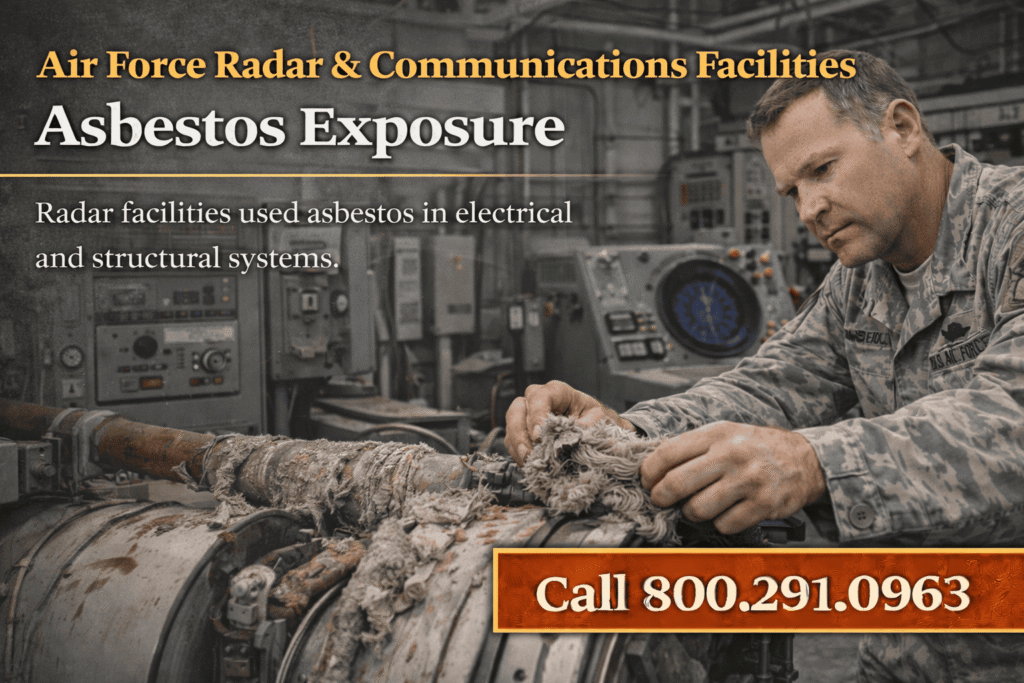
📡 Air Force Radar & Communications Facilities Asbestos Exposure
Radar Facilities Used Asbestos in Electrical, Insulation, and Structural Systems
For decades, U.S. Air Force radar and communications facilities exposed thousands of service members, civilian employees, and contractors to asbestos-containing materials. From World War II through the late Cold War era, asbestos was widely used in radar stations, communications buildings, control rooms, antenna facilities, and electronic support structures because of its fire resistance, insulation properties, and durability around heat-producing electrical equipment.
Air Force personnel assigned to radar operations, communications maintenance, electronics repair, and facility support roles were routinely exposed to asbestos while working inside aging radar and communications facilities. These exposures often occurred daily, over many years, and without respiratory protection or health warnings.
Today, many former Air Force veterans are being diagnosed with mesothelioma and other asbestos-related diseases decades after radar and communications facility exposure, leading to VA disability claims, asbestos trust fund filings, and Air Force radar facility mesothelioma lawsuits against manufacturers that supplied asbestos-containing materials to the military.
⚙️ Why Asbestos Was Used in Air Force Radar & Communications Facilities
Radar and communications systems were mission-critical to national defense, airspace monitoring, early-warning systems, and command-and-control operations. These facilities housed high-voltage electronics, transmitters, generators, and cooling systems that produced constant heat and electrical load.
Asbestos was used because it provided:
-
Fire resistance around electrical equipment
-
Thermal insulation for heat-generating systems
-
Electrical insulation and arc protection
-
Soundproofing in control and equipment rooms
-
Structural durability in remote and harsh environments
-
Cost-effective materials for rapid military construction
As a result, asbestos was incorporated extensively into radar towers, communications buildings, equipment rooms, and supporting infrastructure.
🧱 Where Asbestos Was Found in Radar & Communications Facilities
Air Force radar and communications facilities contained asbestos in multiple high-risk components.
⚡ Electrical Panels, Switchgear & Cable Systems
Asbestos was used to insulate electrical panels, transformers, switchgear, and cable trays. Fibers were released when panels were opened, wiring was replaced, or systems were upgraded.
🧱 Building Insulation & Fireproofing
Radar facilities used asbestos insulation in:
-
Walls, ceilings, and floors
-
Spray-applied fireproofing on structural steel
-
Insulation boards and cement panels
Over time, vibration and age caused these materials to deteriorate and release fibers.
🔥 Equipment Rooms & Transmitter Areas
Radar transmitters and communications equipment generated significant heat. Asbestos insulation and heat shields were installed around equipment racks and cooling systems and released fibers during maintenance.
🧱 Roofing, Siding & Structural Materials
Many radar installations—especially remote or early-warning sites—used asbestos-containing roofing felts, siding, and cement panels that degraded with weather exposure.
🔧 HVAC & Cooling Systems
Cooling systems relied on asbestos-insulated ductwork, pipes, and boilers. Maintenance work disturbed insulation and released airborne asbestos.
🛠️ How Radar & Communications Work Caused Asbestos Exposure
Asbestos exposure did not require direct handling of raw asbestos. Routine radar and communications facility work was enough.
Common exposure scenarios included:
-
Electronics troubleshooting and repairs
-
Opening electrical panels and switchgear
-
Equipment upgrades and modernization projects
-
HVAC and cooling system maintenance
-
Structural repairs and renovations
-
Cable routing and conduit installation
-
Emergency repairs during system outages
These tasks were often performed in confined control rooms, equipment shelters, underground facilities, and remote radar stations, allowing asbestos fibers to accumulate in the air.
👨✈️ Who Was Most Exposed in Radar & Communications Facilities
Radar and communications asbestos exposure affected a wide range of Air Force roles.
High-risk occupations include:
-
Radar operators and technicians
-
Communications and electronics specialists
-
Avionics and electrical technicians
-
Power and generator maintenance personnel
-
HVAC and facility maintenance crews
-
Civil engineering personnel
-
Contractors assigned to radar sites
-
Air Force Veterans Mesothelioma Lawsuit claimants
Many individuals worked in radar facilities daily for years, resulting in cumulative asbestos exposure.
🏢 Exposure Occurred at Radar Sites Worldwide
Asbestos exposure has been documented at radar and communications facilities located at:
-
Stateside Air Force bases
-
Remote radar stations and early-warning sites
-
NORAD and Cold War defense installations
-
Overseas bases in Europe, Asia, and the Arctic
-
Training and communications support facilities
Because asbestos was standard in military electrical and structural construction, radar facility exposure was widespread across the Air Force.
🦠 Diseases Linked to Radar & Communications Asbestos Exposure
Asbestos-related diseases typically develop 20 to 50 years after exposure, meaning many Air Force veterans are diagnosed long after leaving service.
🦠 Mesothelioma
A rare and aggressive cancer affecting the lining of the lungs or abdomen. Long-term exposure in radar and communications facilities is a recognized cause.
🫁 Asbestos-Related Lung Cancer
Lung cancer caused by prolonged inhalation of asbestos fibers released from insulation and electrical systems.
🫁 Asbestosis
A chronic lung disease marked by scarring, reduced lung capacity, and progressive breathing impairment.
🧪 Why Radar & Communications Exposure Was Especially Dangerous
Radar and communications facilities created high-risk asbestos exposure conditions:
-
Continuous heat degraded insulation over time
-
Electrical work disturbed asbestos repeatedly
-
Enclosed equipment rooms trapped airborne fibers
-
Remote sites limited ventilation and safety oversight
-
Long shifts increased cumulative exposure
-
Protective equipment was rarely provided
Because asbestos fibers are microscopic and invisible, many Air Force personnel were exposed without knowing it.
⚖️ Legal Options for Air Force Radar & Communications Asbestos Exposure
Veterans and civilian workers diagnosed with mesothelioma may qualify for multiple compensation options.
⚖️ Air Force Radar Facility Mesothelioma Lawsuits
Claims against manufacturers that supplied asbestos-containing electrical equipment, insulation, construction materials, and systems to the military.
These lawsuits do not sue the Air Force.
🏦 Asbestos Trust Fund Claims
Many electrical, insulation, and construction manufacturers filed bankruptcy and established trust funds. Claimants may qualify for multiple trust fund payments.
🎖️ VA Disability & Survivor Benefits
Eligible benefits may include:
-
Monthly VA disability compensation
-
VA medical care
-
Dependency and Indemnity Compensation (DIC) for surviving spouses
VA benefits do not prevent filing lawsuits or trust fund claims.
❓ Frequently Asked Questions – Air Force Radar & Communications Asbestos Exposure
1️⃣ Did Air Force radar facilities contain asbestos?
Yes. Asbestos was widely used in electrical systems, insulation, fireproofing, and building materials.
2️⃣ Can exposure from decades ago still qualify?
Yes. Mesothelioma often develops 20–50 years after exposure.
3️⃣ I worked electronics, not construction—am I at risk?
Yes. Electrical and electronics work frequently disturbed asbestos materials.
4️⃣ Can I file VA claims and lawsuits together?
Yes. These claims are separate and complementary.
5️⃣ Will I need to go to court?
Most asbestos cases settle without trial.
📞 Legal Help for Air Force Radar & Communications Asbestos Exposure
If you worked in Air Force radar or communications facilities and were later diagnosed with mesothelioma or an asbestos-related lung disease, you may be entitled to substantial financial compensation.
📞 Call 800-291-0963 for a free, confidential Air Force veteran case review.
⚖️ How an Air Force Mesothelioma Lawyer Can Help
An experienced military asbestos lawyer can:
🔍 Identify exposure at radar and communications sites
🏦 Access trust funds tied to electrical and construction materials
🎖️ Coordinate VA benefits with legal claims
💰 Maximize compensation for veterans and families
📞 Call 800-291-0963 today for a free case review.